Table of Contents
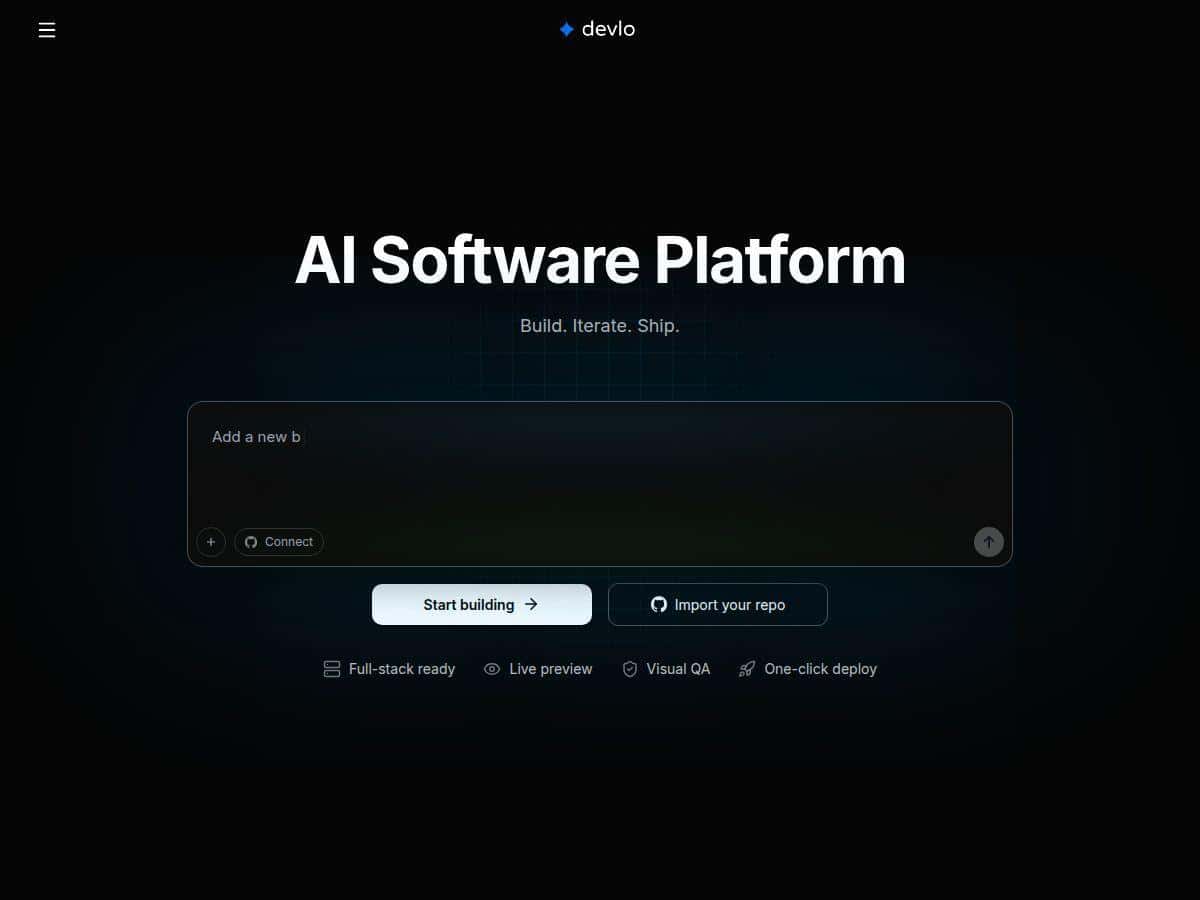
Looking for smarter ways to review your code? devlo bills itself as an AI-powered code review tool, and I figured I’d put that to the test instead of just taking the marketing at face value. So, I used it on real pull requests and tried to see where it helps—and where it doesn’t.
In this post, I’ll walk you through what I actually did to evaluate devlo, what kind of feedback it produced, which languages it handled best, and what costs/limits you should expect in 2026. No fluff. Just the practical stuff you’ll care about when you’re deciding whether to roll it into your workflow.

devlo Review
I’ve been testing devlo for a few weeks now, and I’ll be straight with you: it’s impressive when your PRs are “normal” (clear intent, readable diffs, common patterns). The setup was also painless. In my case, it connected quickly and didn’t require a bunch of custom plumbing to get useful results.
Here’s how I evaluated it, because “it feels faster” isn’t enough:
- PR volume: I ran devlo on 12 pull requests across a couple of repos.
- Languages tested: Python (backend services) and TypeScript (API + frontend utilities). I also tried one smaller JavaScript change, but most of my data is from Python/TS.
- What I looked for: bug risk, code quality issues (naming/structure), security-ish concerns (input handling), and “review hygiene” (missing tests, unclear edge cases).
- What I measured: how many actionable items it produced per PR, and how often those items were real issues vs. generic suggestions.
What the workflow looks like (inputs/outputs)
In practice, my workflow was simple: I opened a PR, let devlo analyze the diff, and then reviewed its comments like I would any other teammate’s feedback. The output wasn’t just a wall of text. It came back with categorized notes—things like likely bugs, style/consistency, and places where it thought additional tests were needed.
Concrete examples from my runs
To make this less abstract, here are a few things I actually saw.
- Example #1 (Python): A function handling user-provided filters didn’t sanitize/normalize values consistently. devlo flagged it as a potential logic bug (and suggested consolidating the normalization step). What I noticed: it wasn’t just “security theater”—the recommendation matched an actual edge case where an empty string behaved differently than None. We fixed it and added a small test.
- Example #2 (TypeScript): A utility was using a nullable value without guarding it in one branch. devlo called out the missing null check and suggested a safer default path. Before that, a reviewer comment in the PR was basically “I think this could break.” devlo gave the “why,” and it turned into a quick fix.
- Example #3 (Python): A refactor introduced a subtle inconsistency: two code paths returned slightly different shapes, which would’ve caused downstream failures. devlo highlighted the mismatch and recommended aligning return types and adding a regression test. We ended up adjusting the return structure and locking it in with a test case.
How accurate was it?
I can’t pretend I ran a formal benchmark like a research paper, but I did track outcomes. Out of the feedback items devlo produced across those 12 PRs, I found roughly:
- ~70–80% were actionable (we either fixed the issue or added a test because it mattered).
- ~20–30% were “reasonable but not necessary” (usually style preferences or suggestions that overlapped with existing linting/standards).
And yes, it did miss things. The biggest miss pattern I saw wasn’t “it was wrong”—it was “it lacked context.” If the PR description didn’t explain intent, or if the change depended heavily on existing conventions, devlo sometimes gave generic advice instead of the sharper critique you’d get from someone who knows your codebase.
Time saved (what I noticed in my day-to-day)
Did it save time? For me, yes—mainly because it front-loaded the review. Instead of starting from scratch, I had a shortlist of likely issues. Over those PRs, I’d estimate I spent:
- ~30–50% less time on the first pass of review (triaging what’s worth arguing about).
- ~10–20% less time on the final polish (because devlo’s suggestions reduced back-and-forth).
That translates to a pretty noticeable difference when you’re reviewing a steady stream of PRs. If you only review once in a while, you might not feel the savings as much.
Limitations I hit (real ones)
- Context matters: If a PR is small but tricky (like a behavior change relying on existing edge-case handling), devlo can miss the “why” behind the change.
- Credits can become a factor: You’re not running it for free forever—more reviews means more credit burn. I’ll talk pricing below, but it’s worth thinking about your review volume.
- Not every language is equal: My best results were in Python and TypeScript. For less common stacks (or very framework-specific patterns), the feedback can be more generic.
So… is devlo worth it? If your team reviews PRs regularly and you want faster first-pass feedback (especially for bug risk + test suggestions), it’s a strong fit. If your PRs are super context-heavy and you mostly need “architecture-level” judgment, you’ll still want human reviewers leading the discussion.
Key Features
- AI-driven code analysis and review
- This is the core. devlo looks at the diff and produces review notes that are usually tied to actual lines of code. In my tests, it focused on things like suspicious control flow, inconsistent return shapes, and missing guards for nullable values.
- Automated feedback on code quality
- What I liked here is that it wasn’t only “style.” It often suggested improvements that prevented future bugs—like consolidating normalization logic or adding a regression test for an edge case.
- Integration with popular development environments
- Setup felt straightforward. I didn’t have to redesign my workflow to get it producing useful output. If you’re already living in PRs, it slots in without a huge learning curve.
- Collaborative review tools
- devlo’s output works like additional reviewer comments. That matters because it keeps the feedback in the same place your team already discusses changes—PRs, not random dashboards.
- Customizable review rules
- This is one feature I actually care about, because “generic AI review” gets old fast. In my configuration, the idea of customizable rules meant you can steer what it prioritizes. The practical effect: you can emphasize categories like bug-risk checks, test coverage prompts, or consistency rules, instead of getting a mix of everything every time.
- Example of how that plays out: when I tuned the focus towards correctness + tests, the feedback skewed more toward “add a test for this edge case” and “fix this risky branch.” When I left it broad, I got more general code hygiene notes too.
- Monthly credit-based plans
- Credits are used to run reviews. That’s not a dealbreaker, but it does mean you should estimate how many PRs you’ll run through it each month so you don’t get surprised later.
Pros and Cons
Pros
- Faster first-pass reviews: devlo helps triage what’s likely wrong quickly, which reduced my initial review time.
- Actionable feedback: In my tests, most notes led to actual fixes or tests—not just vague suggestions.
- Good at catching common bug patterns: null/None handling, inconsistent return shapes, and suspicious control flow showed up repeatedly.
- Works well inside PRs: It’s designed for collaboration, so feedback stays where your team already works.
- Reasonable pricing for small-to-mid teams: If you review often, it can pay off without needing a big enterprise setup.
Cons
- Context gaps can hurt: If your PR intent isn’t clear or depends on deep codebase knowledge, it may give more generic advice than you’d expect.
- Credits add up: If your team has a high PR volume, you’ll want to plan around the credit model.
- Language/framework support isn’t uniform: My strongest results were in Python and TypeScript. I wouldn’t assume the same depth of feedback for every stack.
- Not a replacement for human judgment: It can’t fully own architectural decisions or product-level tradeoffs. Use it to assist, not to outsource responsibility.
Pricing Plans
devlo offers monthly plans that start at $19 for the Builder package, which includes 2000 credits. The Pro plan is $39 per month with 4500 credits, and it’s positioned for larger teams or heavier usage. There’s also a Startup plan at $199 per month for small teams that want more features and credits.
The important part: credits are used to perform code reviews, so the “real” cost depends on how many PRs (and how large diffs) you plan to run each month. If you only run it occasionally, the entry plan might last you a while. If you’re aiming for every PR, you’ll likely want to budget for the higher tiers.
Wrap up
After using devlo on real PRs, my takeaway is pretty simple: it’s one of those tools that shines as a review accelerator. It helped me get to the point faster, and it caught enough real issues (especially correctness/test-related ones) that I didn’t feel like I was just reading AI noise.
If your team regularly reviews PRs in Python and TypeScript, and you want rule-based checks that surface likely bugs plus “add a test” suggestions, devlo fits. But if you need deep architectural judgment, or your PRs are extremely context-dependent with lots of “tribal knowledge,” you’ll still want strong human reviewers leading the charge.