Table of Contents
Let’s be honest—some days you don’t need a full therapy session. You need something quicker. Something you can open at 11:30 at night when your brain won’t shut up and you just want to talk through what you’re feeling. That’s exactly why I wanted to try Abby.
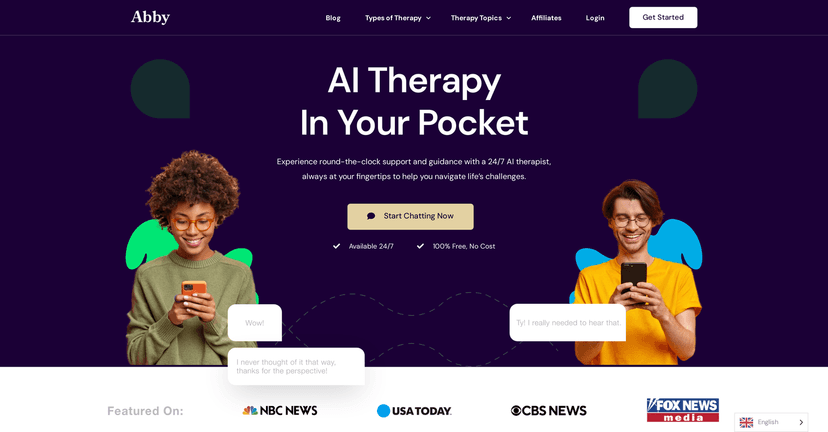
Abby is an AI-powered mental health companion that’s available 24/7. It’s freemium (so you can start without paying), and the main idea is to give you personalized prompts and support whenever you need it. In my experience, the biggest value isn’t “solving everything.” It’s having a low-friction place to vent, reflect, and get nudged toward healthier thinking patterns.
Abby Review: What It’s Like to Use as a Mental Health Companion
Abby is built to be a helping hand when things feel messy. The promise is pretty straightforward: you can talk in a judgment-free space, get support whenever you need it, and use it alongside your real-life mental health care (if you have it).
One thing I appreciated right away is the “no pressure” feeling. I didn’t have to schedule anything. I didn’t have to explain my whole history from scratch just to get started. If you’ve ever tried booking a therapist and then had your mood crash before your first appointment, you’ll understand why that matters.
Also, Abby isn’t pretending to be a licensed clinician. It’s meant to help you reflect and cope, not replace therapy. So if you’re in crisis or need urgent help, you still need real-world support. Still, for day-to-day stress, anxiety spirals, or just wanting to process your thoughts, it can be a useful companion.
Key Features That Actually Matter
- 24/7 availability for those late-night moments when you don’t want to wait until morning.
- Free to use (freemium) so you can test it without committing money upfront.
- Encrypted and anonymized to help protect privacy. I like seeing this called out clearly—mental health data is sensitive.
- Daily check-ins that encourage consistency. In my experience, even a short routine like this can help you notice patterns you’d normally miss.
- Multilingual support (26+ languages)—this is a big deal if you don’t want to do everything in English.
- Judgment-free conversations designed to make it easier to open up, especially when you feel embarrassed about what you’re thinking.
Pros and Cons (My Honest Take)
Pros
- Free access means you can try it when you’re curious—or when you’re struggling and money is tight.
- Convenient support you can use right when the feeling hits. No waiting for office hours.
- Easy to start—the interface is simple enough that you won’t waste time trying to figure out “how to use it.”
Cons
- It’s not therapy. If you need structured treatment, diagnosis, or a real therapeutic relationship, Abby can’t replace that.
- AI limitations are real. Sometimes the guidance can feel generic, especially if you’re looking for something very specific (like a detailed plan for a complex situation).
What I noticed most: Abby works best as a support tool for reflection and coping—not as the only solution. If you treat it like that, you’ll probably get more out of it.
Pricing Plans: Is Abby Really Free?
Abby is entirely free, which is honestly refreshing. You can access it without hitting a paywall the moment you want to try it. For anyone who’s been hesitant to explore mental health tools because of cost, that alone is a strong reason to give it a shot.
Just keep expectations realistic: free access doesn’t mean it’s a substitute for professional care. But it can still be a practical daily companion.
Wrap up
So, is Abby worth your time? If you want quick, judgment-free support you can use anytime—and you’re looking for a mental health tool that encourages daily check-ins—then yes, it’s a solid option. In my experience, it’s best when you use it consistently and treat it like an extra layer of support, not a replacement for therapy.
If you’re dealing with stress, anxiety, or just need a place to sort your thoughts, Abby might be exactly the kind of “right now” support you’ve been looking for.
Promote Abby