Table of Contents
In today’s fast-paced development world, streamlining workflows is crucial for success. Agentic emerges as a solution to help improve code reviews, collaboration, and overall team efficiency. With features designed to simplify routine tasks, Agentic promises to be a game-changer for developers looking to enhance their workflow.
In this review, we’ll explore how Agentic tackles code reviews, boosts team learning, and integrates with your existing tools. By the end, you’ll know whether Agentic is the right fit for your development team.
Agentic Review
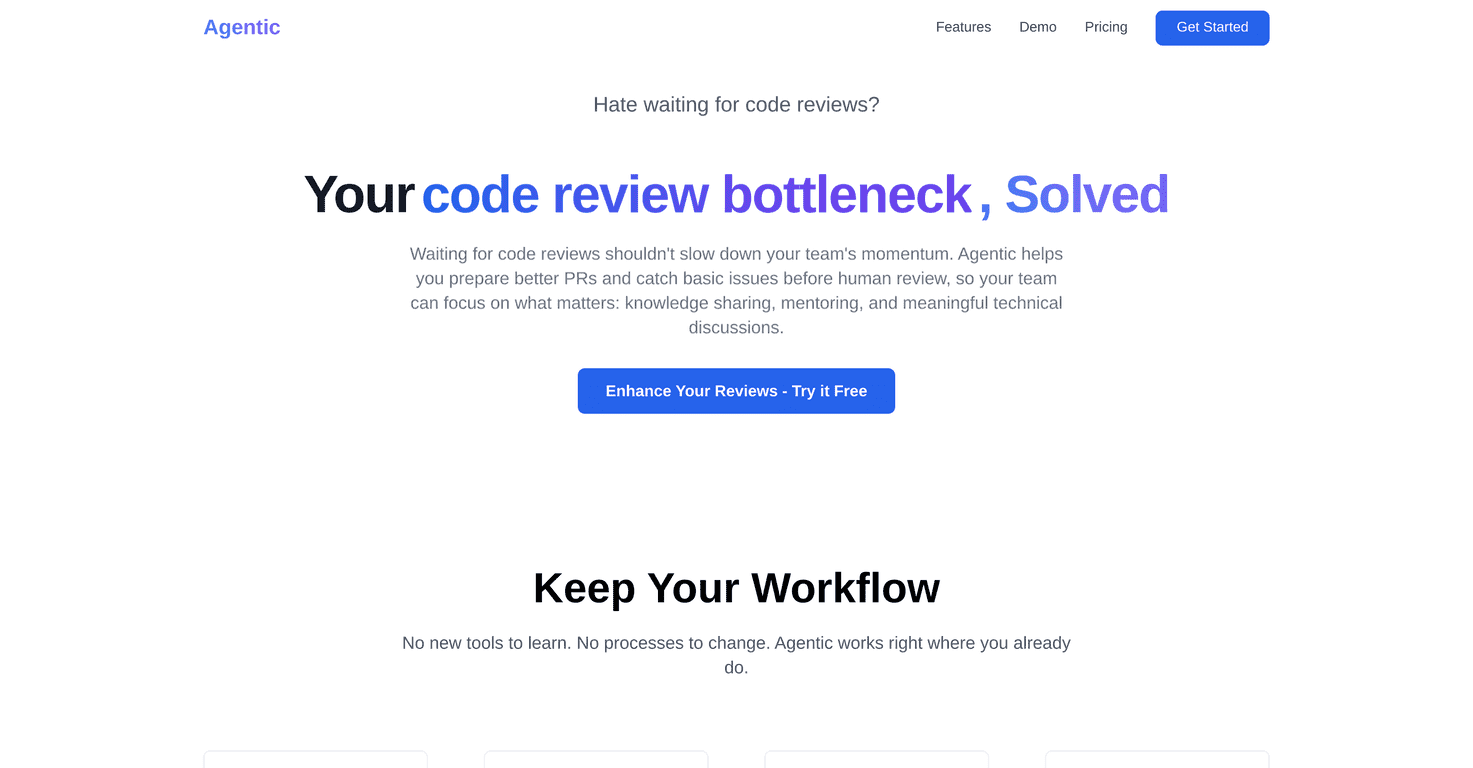
Agentic is a software delivery tool aimed at accelerating the code review process while enhancing root cause analysis and streamlining sprint retrospectives. It stands out for its ability to integrate seamlessly with popular platforms like GitHub, GitLab, Jira, and Confluence. This integration is key, as it allows teams to maintain familiar workflows without the disruption of learning an entirely new system.
One of the standout features of Agentic is its ability to free senior developers from everyday issues, allowing them to focus on mentoring team members and providing architectural guidance. Additionally, the tool generates instant feedback on code style and potential bugs, ensuring that pull requests are well-prepared before they reach human reviewers. This not only enhances the quality of code submissions but also reduces friction during the review process.
Moreover, Agentic provides AI-powered templates for essential coding components, saving developers precious time on routine documentation tasks. On the security front, the real-time scanning for vulnerabilities like SQL injections or weak authentication patterns is an essential feature that ensures safer code outputs.
All these features combined make Agentic a robust tool that transforms how development teams collaborate and learn from each other while improving the overall quality of their work.
Key Features
- Enhanced team learning by freeing up senior developers
- Instant feedback for better prepared pull requests
- Streamlined collaboration and knowledge sharing
- AI-powered templates for quick code generation
- Real-time security scanning for vulnerabilities
Pros and Cons
Pros
- Increased team efficiency
- Integration-friendly with existing tools
- Comprehensive feature set for various needs
- Customizable plans for different team sizes
Cons
- Monthly subscription costs may be high for small teams
- Some users may face a learning curve
Pricing Plans
Agentic offers three pricing plans suitable for various team sizes. The Starter Plan is priced at $49/month for up to 5 team members with basic features. The Pro Plan, at $99/month, accommodates up to 15 members and includes advanced features and priority support. For larger teams, the Enterprise Plan offers custom pricing with unlimited members and tailored support options. All plans come with a 30-day money-back guarantee and easy cancellation.
Wrap up
In conclusion, Agentic is a promising tool for development teams looking to enhance their code review processes and team collaboration. With its comprehensive features and seamless integration, it can significantly boost efficiency while ensuring code quality. If your team is grappling with common workflow challenges, Agentic might just be the solution you need.
Promote Agentic