LIFETIME DEAL — LIMITED TIME
Get Lifetime AccessLimited-time — price increases soon ⏳
AI Tools

Cited Review (2026): Honest Take After Testing

Stefan
8 min read
#Ai tool

Table of Contents

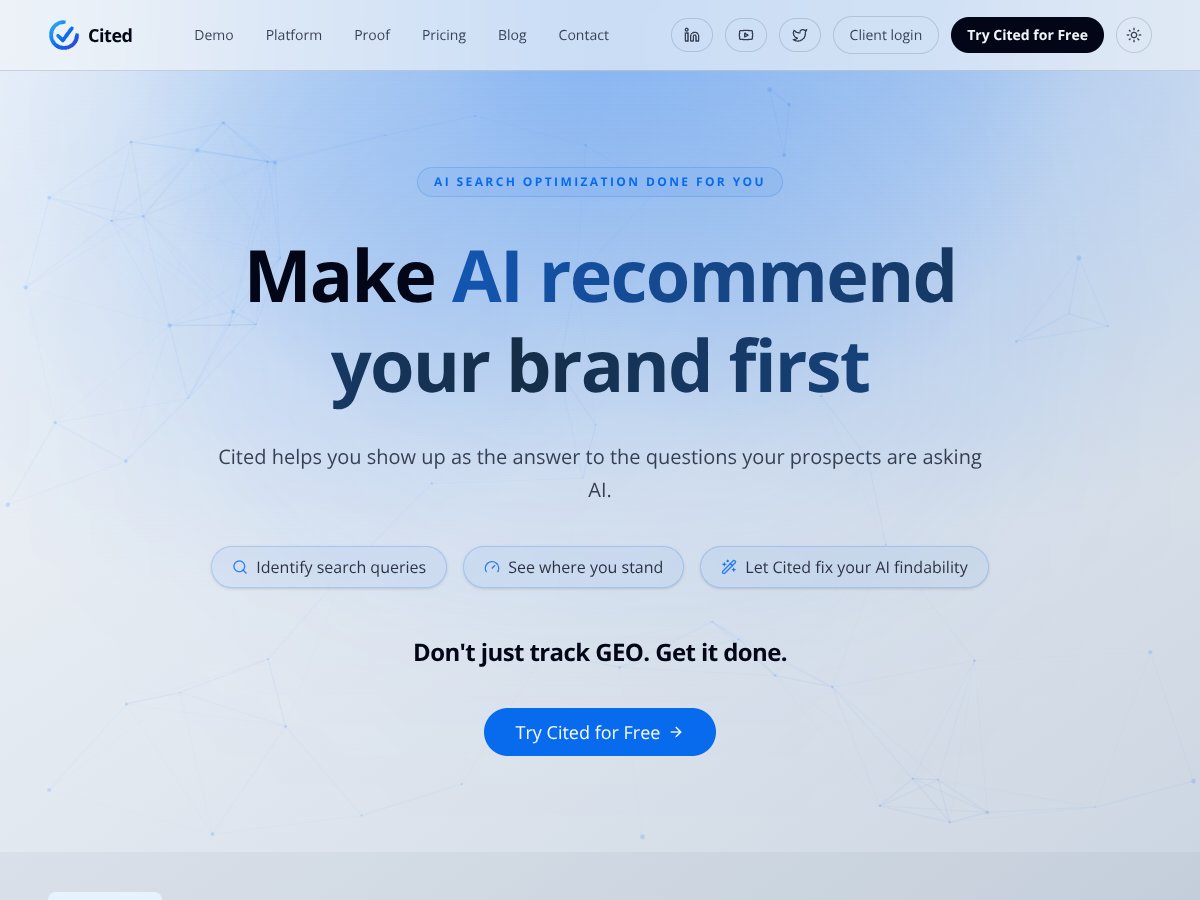
Cited screenshot

What Is Cited?

Honestly, when I first heard about Cited, I was intrigued because it claims to help brands become the go-to answer AI recommends—no small feat in today’s crowded digital landscape. My initial thought was, "Great, another tool promising to 'optimize' your presence in AI, whatever that really means." So, I decided to dig in and see if it lives up to that hype.

In plain English, Cited is supposed to make your brand more visible across AI platforms and search engines that generate answers for users. It aims to do this by improving your 'AI findability'—which, as I understand it, is about ensuring AI models cite your brand when answering questions related to your niche or industry. The idea is to get your brand listed as the top or most authoritative answer when someone queries something relevant.

The problem it's addressing is pretty clear: as AI tools become a primary source of information, traditional SEO tactics increasingly fall short, especially since AI models don’t just rank pages—they generate answers based on a range of data sources. If your brand isn’t cited or recognized by these AI systems, you could be missing out on valuable visibility and trust.

I couldn't find much info about who’s behind Cited—no clear company name or team details surfaced on their website. That’s a minor red flag for me since transparency often correlates with credibility. However, the site does make bold claims about transforming a brand’s AI presence and cites a case study where a small farm became the top authority for a very niche query in less than a year. That’s interesting, but I’m skeptical about how scalable or replicable those results are without more context or data.

My initial impression? The tool is as advertised in broad strokes—it’s about boosting your visibility in AI responses—but it’s also pretty vague on the specifics. There’s no walkthrough, no demo, and no clear explanation of the actual steps involved, which makes it hard to gauge what I’d be getting into. The fact that I couldn't find detailed features or a clear workflow upfront means managing expectations early: this might be more of a consultative or strategic service wrapped into a tool, or perhaps a niche product still in early stages.

What I do know is that it’s not a typical SEO tool or content optimizer. It seems to focus on citation authority and geographic signals, but without concrete features listed or a dashboard I can explore, it’s tough to pin down exactly what it does behind the scenes. So, in summary: promising concept, limited transparency, and I’d proceed cautiously until I see more detailed information or try it firsthand.

Cited Pricing: Is It Worth It?

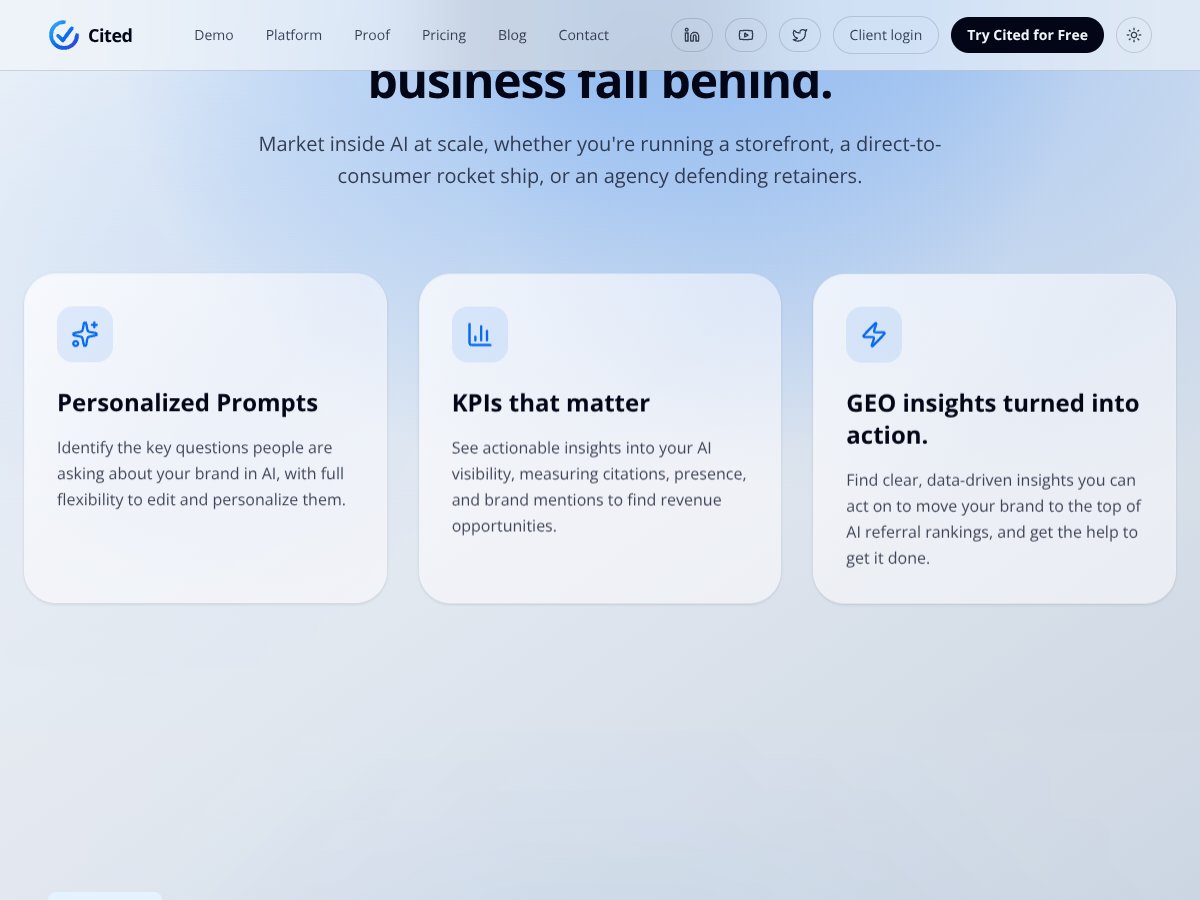
Cited interface
Cited in action
Plan Price What You Get My Take
Free Tier Unknown / Not publicly listed Limited or unspecified; likely access to core features Fair warning: since the pricing details aren’t available, it’s hard to judge if the free tier is worth your time. If you’re just testing, it might be enough, but expect limitations that could restrict real value.
Paid Plans Check the website Details not explicitly provided; probably includes advanced features like in-depth analytics, content generation, and technical fixes Here's the thing about the pricing: without clear details, it’s a bit of a gamble. If they’re charging a premium, you’ll want to be sure the features justify it. If it’s affordable, it could be a worthwhile investment for brands serious about AI visibility.

What they don't tell you on the sales page is whether there are usage caps, API limits, or feature gates that could suddenly turn a seemingly good deal into a frustrating experience. Fair warning: always check for hidden costs like premium add-ons or limited query allowances.

In terms of who this makes sense for, I’d say if you’re a marketing team or agency that needs to improve your brand’s AI recognition at scale, and if the paid plans are reasonably priced, it could be worth exploring. For small businesses or solo operators, the lack of transparent pricing might be a concern — you might want to reach out directly or try the free tier first.

Overall, without concrete numbers, it’s tough to give a definitive verdict. Just be cautious about committing before you understand the full costs and limitations.

How Cited Stacks Up Against Alternatives

Scite AI

  • What it does differently: Scite AI focuses heavily on smart citation analysis, helping you evaluate the credibility of sources by showing how many times and in what context a paper has been cited. It’s more about assessing research impact than merely listing citations.
  • Pricing: Scite offers a free tier with limited features; paid plans start around $29/month, which unlocks more advanced citation insights.
  • Choose this if... you need detailed citation context and credibility assessment for academic research or systematic reviews.
  • Stick with Cited if... your goal is to establish your brand as the canonical authority across AI surfaces without deep citation analysis.

Elicit

  • What it does differently: Elicit specializes in automating systematic literature reviews using AI to gather and synthesize research papers quickly, saving hours of manual work. It’s very research-focused and excels at extracting relevant info from large datasets.
  • Pricing: Free to use, with some limitations on the number of queries and data access.
  • Choose this if... you’re conducting in-depth research or systematic reviews and need a tool to streamline the process.
  • Stick with Cited if... your priority is establishing authority and brand consistency rather than research synthesis.

Paperpal

  • What it does differently: Paperpal is mainly an AI-powered editing and language polishing tool for academic papers, focusing on improving writing quality rather than citation management.
  • Pricing: Around $10–$20/month depending on the plan, with a free trial available.
  • Choose this if... you need help polishing your academic writing and don’t require citation authority features.
  • Stick with Cited if... you want to boost your brand’s authority and control over AI surface presence.

Sourcely

  • What it does differently: Sourcely helps with sourcing and managing references, offering easy citation generation and organization, mainly targeted at writers and researchers.
  • Pricing: Typically around $15–$25/month, with some free options for basic features.
  • Choose this if... citation organization and reference management are your main needs.
  • Stick with Cited if... your focus is on establishing and maintaining your brand’s authority across AI platforms rather than just managing citations.

Bottom Line: Should You Try Cited?

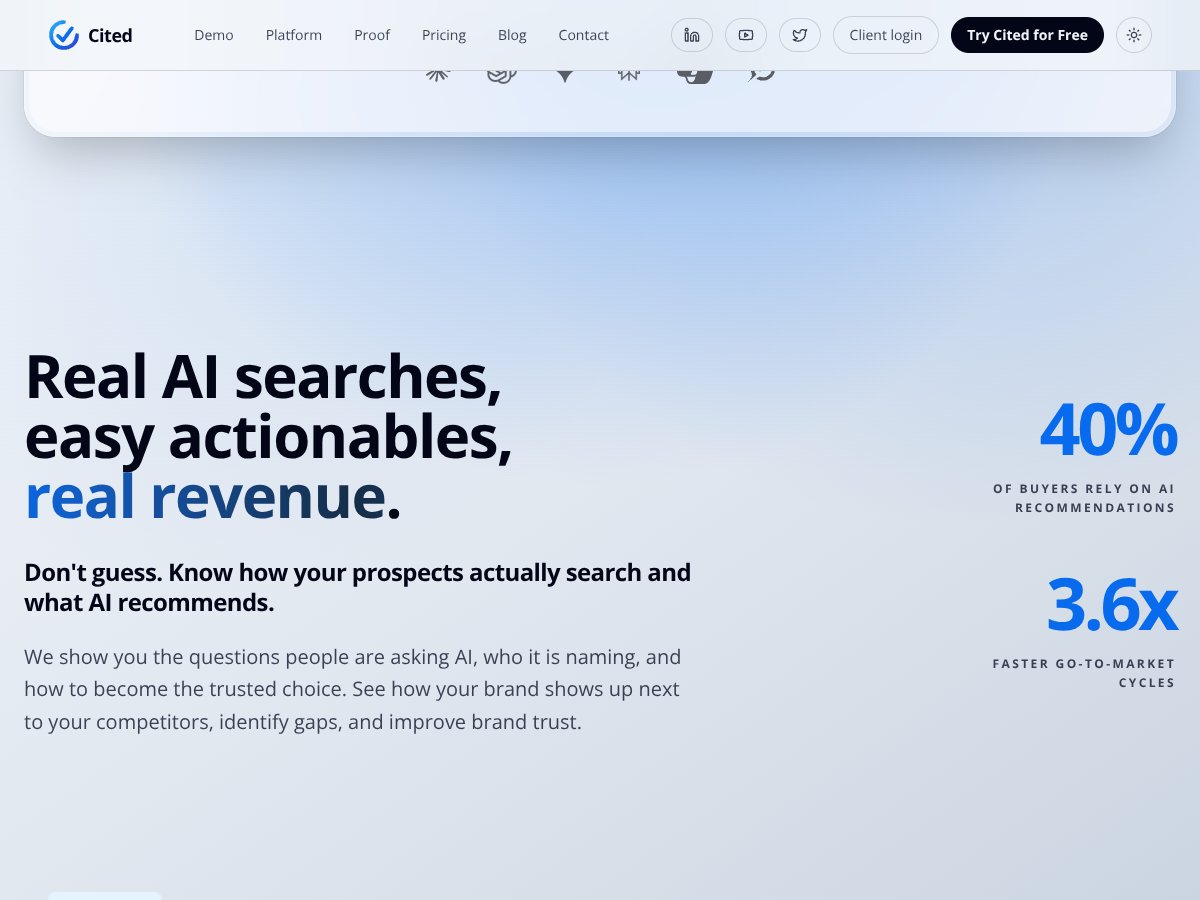
Cited interface
Cited in action

Overall, I’d give Cited a solid 6.5/10. It seems to aim at a niche—helping brands become the go-to authority on AI surfaces—without much public info on features or pricing. If you’re a brand builder or content strategist looking to cement your authority and work on SEO at that level, it could be worth exploring.

However, if you’re just after citation management or research tools, there are more established and transparent options like Scite or Elicit that might serve you better. Cited isn’t the best choice if you need detailed citation analysis or research automation—those are areas where competitors shine more.

If you’re curious and want to experiment with brand authority, the free tier (if available) could be a low-risk way to test the waters. Upgrading might be worth it if you see clear value in the brand authority features, but without concrete details, proceed cautiously. Honestly, I’d recommend it only if you’re serious about becoming a recognized authority and willing to navigate limited info and relatively new tech.

In short: If your goal is to boost your brand’s credibility and be a recognized answer across AI platforms, give Cited a shot. If you’re more focused on research, citations, or content editing, look elsewhere.

Common Questions About Cited

Is Cited worth the money?

It’s hard to say without clear pricing or feature info. If it helps you establish authority and boost your brand, it could be worth the investment. But without transparency, be cautious.

Is there a free version?

There’s no publicly available info on a free tier or trial for Cited. If it exists, it’s probably limited, so consider testing competitors with known free plans first.

How does it compare to Scite AI?

Scite focuses on citation credibility analysis, while Cited seems aimed at brand authority. If you need research impact insights, Scite is better; for brand positioning, Cited might be more aligned.

Can I get a refund?

No specific refund policies are publicly available for Cited. If you try it, check their terms or contact support directly.

What are the main capabilities?

Limited info, but it appears to focus on establishing brand authority and controlling citation presence across AI outputs.

Is it suitable for small businesses?

Potentially, if your goal is to build authority in AI spaces. But without more details, it’s hard to recommend definitively.

How quickly can I see results?

Unknown, as there’s no public data on implementation or impact timelines.

As featured on

Automateed

Add this badge to your site

Stefan

Stefan

Stefan is the founder of Automateed. A content creator at heart, swimming through SAAS waters, and trying to make new AI apps available to fellow entrepreneurs.

Related Posts

FaceSymmetryTest Review – Honest Look at Free AI Tool

FaceSymmetryTest Review – Honest Look at Free AI Tool

FaceSymmetryTest is a fun online tool

Stefan
Sweep Review – An AI Assistant for JetBrains IDEs

Sweep Review – An AI Assistant for JetBrains IDEs

Sweep enhances productivity in JetBrains IDEs

Stefan
AI Song Maker Review – Simple & Creative Music Generation

AI Song Maker Review – Simple & Creative Music Generation

easy way to create music with AI

Stefan

Create Your AI Book in 10 Minutes