Table of Contents
I’ve definitely had drafts where my “supporting” characters felt like extras. You know the type—there for a scene, saying the right lines, then disappearing like they never existed. And honestly? That’s usually not because the character idea is bad. It’s because I didn’t give them a job, a voice, or a reason to show up in the story.
So let me show you how I’ve fixed that in my own writing. Below are 7 simple steps I use to develop side characters who feel real, show up with purpose, and stick in readers’ minds.
Key Takeaways
- Clarify their purpose: decide what they do for the plot (humor, friction, insight, stakes). Example: Before—“Sam tells jokes.” After—“Sam jokes while hiding the fact he’s the reason the hero is late.”
- Build a distinct voice: give them a consistent speech pattern and emotional baseline. Sample line contrast: “Sure, whatever you say” (flat, agreeable) vs “I’ve seen where that leads—don’t” (protective, specific).
- Pick one memorable quirk: make it behavior-based, not random. Example: Instead of “wears mismatched socks,” use “always counts exits twice” because of a past incident.
- Use visuals and humor strategically: a single repeatable visual cue (a ring, a tattoo, a nervous habit) + one running joke. Example: they always mispronounce the hero’s name—every time it matters.
- Add a small subplot: give them a mini-goal that runs alongside the main plot. Example: a side character tries to return a stolen item, and that choice complicates the hero’s plan.
- Make them help or challenge the main character: influence the protagonist’s decisions. Example: they don’t just “support”—they force a tradeoff the hero can’t avoid.
1) Clarify the Role of Your Side Characters
First thing: I make sure I know what the side character is meant to do in the story. Are they there to bring comedy, create obstacles, or reveal something about the protagonist? If I can’t answer that in one sentence, the character usually ends up floating around.
Here’s a quick way I do it: I write a “job line” for them.
Job line template: “In this scene, [Name] exists to [cause / reveal / block / push] so the protagonist has to [choose / react / change].”
Example (courtroom drama):
- Before: “Darla is the witness.”
- After: “Darla is the witness who can’t remember the key detail—forcing the lawyer to improvise, and showing how desperate the protagonist is to win.”
What I noticed in my last draft is that the moment I gave a side character a job, their scenes stopped feeling like filler. Readers don’t need them to be “important” in a big way. They need them to be useful to the story’s movement.
2) Create Distinctive Voices and Dialogue
Next, I build a voice that sounds like it belongs to that person—not just to “a character.” Even if two people are friendly, they don’t speak the same way when they’re scared, angry, or trying to hide something.
My voice checklist (fast, but effective):
- Vocabulary: Do they use big words, slang, jargon, or short plain phrases?
- Rhythm: Are they long-winded or quick bursts?
- Emotional default: Do they sound amused, defensive, hopeful, bitter?
- Habit words: “Honestly,” “Look,” “Anyway,” “Sweetheart,” etc.
- What they avoid: What topic makes them clam up or change the subject?
Then I test it with dialogue contrast. I’ll write the same situation twice—once as the protagonist, once as the side character—so I can see if they’re distinguishable.
Mini worksheet:
- Scene: The hero asks for help.
- Side character goal: protect themselves.
- Side character line (draft): “I can’t. Not tonight.”
- Side character line (upgrade): “I can’t. Not tonight. If you say it out loud, it’ll become real.”
In my experience, the “upgrade” is where the character becomes memorable. It’s not the sentence length—it’s the specificity.
3) Add Memorable Traits and Quirks
Quirks work best when they’re connected to the character’s inner life. Otherwise, they feel like costume jewelry—fun to notice, but not meaningful.
Here’s what I mean by “connected”:
- Behavioral hook: they do something repeatedly.
- Emotional reason: the behavior makes sense for what they fear, want, or regret.
- Scene payoff: the quirk creates tension or reveals information.
So instead of “mismatched socks,” I’ll write something like: “They wear mismatched socks because they learned to survive chaos by turning it into a joke.” Now the detail tells you something.
Another example from a recent revision I did: I had a side character who was “grumpy.” That was it. Readers didn’t latch on. I changed one thing: I gave him a ritual—he re-sorts the same stack of paperwork every time he’s nervous. Suddenly the grumpiness had a reason, and the reader had a pattern to watch.
When you’re stuck, ask: What do they do when nobody’s watching? That’s usually where the real quirk lives.
4) Use Visuals and Humor to Make Them Stand Out
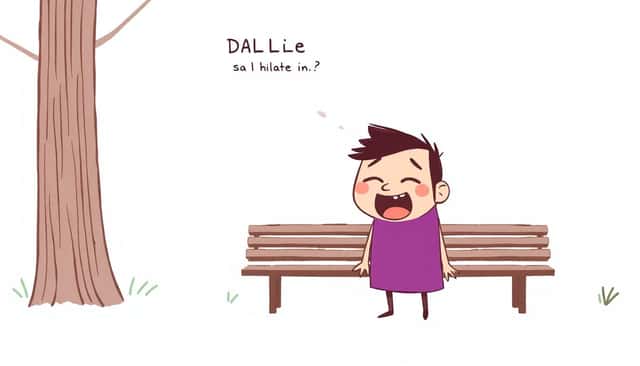
I’m a big believer that side characters need at least one “easy to spot” signal. Not a whole costume, just one visual cue that your brain can grab quickly.
That could be:
- a signature accessory (ring, scarf, weirdly specific watch)
- a body language tell (always leaning forward, always tapping a thumb)
- a physical habit (adjusting glasses, chewing the inside of a cheek)
Now add humor carefully. Humor is great, but if it’s random, it doesn’t land. In my drafts, I use humor to do one of three things: relieve tension, hide fear, or underline a character flaw.
Example (fantasy): a side character cracks jokes while they’re actively panicking. The humor becomes a mask, and readers remember the contrast.
Quick scene trick: give them a catchphrase or a recurring joke that changes meaning depending on the situation. A line that’s funny in Chapter 2 can feel ominous in Chapter 8. That’s how you make “minor” characters stick.
5) Use Subplots to Deepen Their Personas
Subplots are where side characters stop feeling like background noise. But here’s the thing: you don’t need a full novel-length arc. You need a mini-arc that runs alongside the main plot.
In practice, I keep side subplots to:
- one goal (what they want)
- one obstacle (what blocks them)
- one choice (what they decide by the end)
Example (mystery story):
- Side character goal: return a missing key.
- Obstacle: every time they try, they lose time and look suspicious.
- Choice: they either lie to protect someone—or tell the truth and risk getting hurt.
What I like about this is it naturally reveals backstory without info-dumps. Readers feel like they discovered the character, not that you explained them.
And yes—keep it relevant. If the subplot doesn’t change decisions, stakes, or relationships, it’s probably just taking up space.
6) Make Them Help or Challenge the Main Character
This is the step that turns “interesting” into “unforgettable.” Side characters become memorable when they force something to happen to the protagonist—either by helping them succeed or challenging their assumptions.
I usually design the relationship around a tension:
- They want something different.
- They trust different evidence.
- They have different values under pressure.
Example (romantic tension): a supportive friend keeps pushing the hero to be honest, even when it costs them. The friend isn’t just “nice.” They’re a moral pressure point.
Or flip it: a rival side character challenges the hero’s plan with a better idea—only for it to come with a tradeoff the hero can’t ignore.
In my experience, readers remember the side character’s impact more than they remember the side character’s biography. So I ask myself: What did they change? A decision? A relationship? A belief? If you can’t point to a change, the character might be floating again.
When the influence feels natural, it doesn’t read as forced—it reads as real human dynamics. People don’t always agree. They push. They bend. They test each other. That’s the magic.
FAQs
If you only do one thing, do this: give them a purpose in the scene and a specific voice. Then show one quirk that connects to emotion. Try it with a simple test—write a 6–8 line scene where the side character speaks once. Can you tell it’s them without tags like “he said” or “she added”? If not, your voice isn’t distinct enough yet.
I use a “dialogue contrast” method. Take one moment (same setting, same goal), then write three versions of the side character:
- Version A: they want something (but won’t say it).
- Version B: they’re scared (they over-explain or dodge).
- Version C: they’re angry (they go blunt or sarcastic).
Pick the version that matches the scene’s emotional need. That’s usually where the dialogue becomes believable instead of generic.
Keep a short profile you actually use during revisions. I recommend filling out just six questions:
- What do they want?
- What do they fear?
- What’s their default emotion?
- What’s their one quirk?
- How do they speak (3 traits)?
- What do they believe about the protagonist?
Then do a quick consistency audit: search your draft for their catchphrase/quirk and make sure it shows up for the right reasons—not randomly.
Give them an inner contradiction. Real people want two things at once—comfort and change, safety and truth. Build that into their choices.
Try this: write one scene where they do something they’ll regret later, and one scene where they’re kinder than they “should” be. That contrast is what makes readers trust the character.