Table of Contents
Title: Human Intelligence and AI Working in Tandem for Smarter PPC
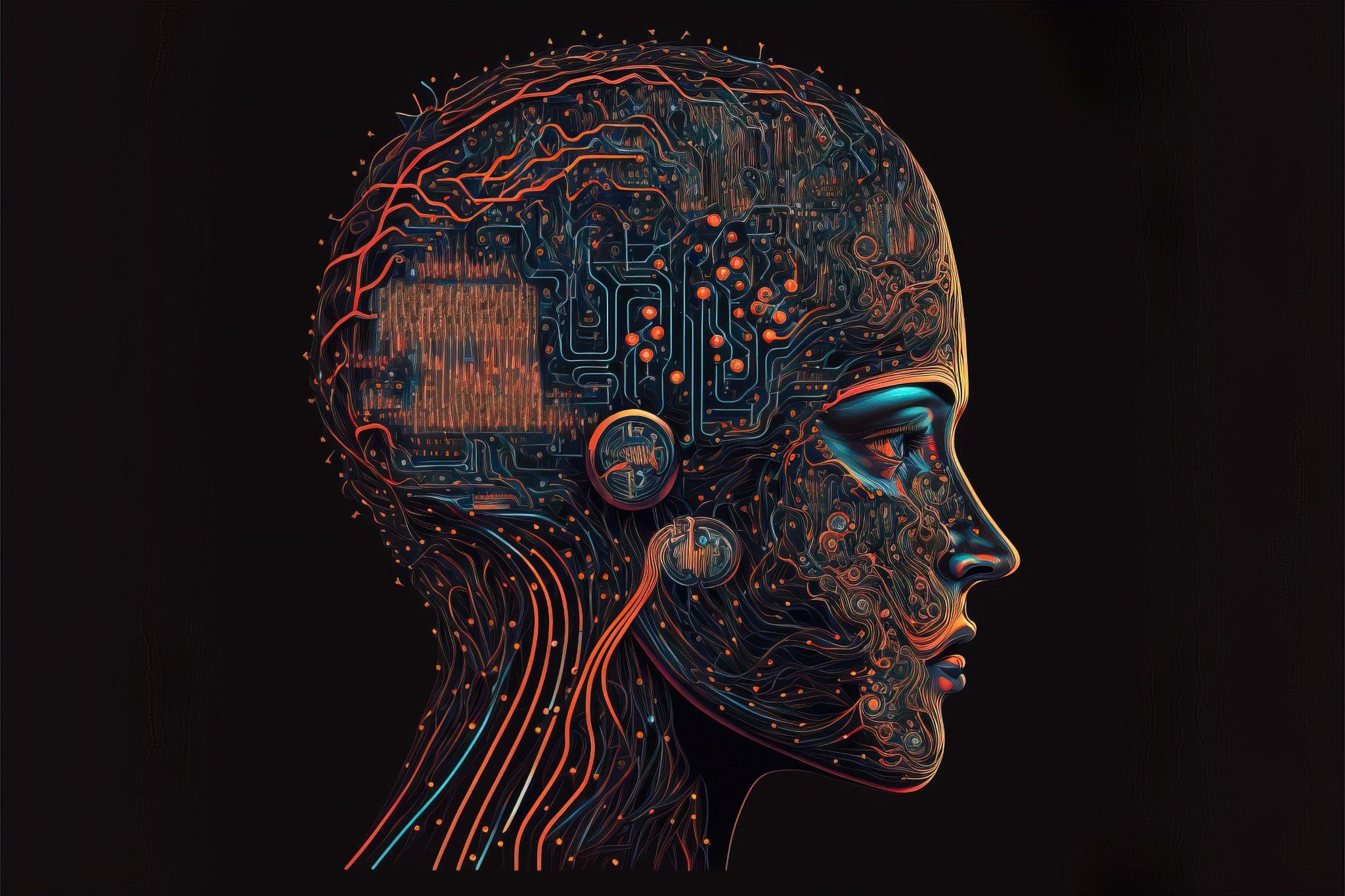
Description: A digital illustration of a human head in side profile, with glowing circuit board pathways and neural network patterns woven across the entire surface, against a black background.
Alt Text: A side-profile digital artwork of a human head composed of intricate glowing circuit lines in deep orange and blue, with a visible processor chip embedded in the skull and branching neural pathways radiating outward, against a black background, representing the fusion of human strategic expertise and AI automation that defines high-performance PPC management.
Photographer: Deltaworks
Most marketing teams now rely on automation. They use CRM pipelines, lifecycle automation, attribution models, and content workflows that connect well, except for one area. Many teams still handle PPC as a separate channel with its own KPIs and reporting schedules.
This disconnect can cost more than you think. It affects ROAS, audience insights, and the quality of decisions made by the rest of your system. Specialist PPC agencies recognise that the success of your campaign depends on how well data flows in and out, and how closely it connects to the broader automated systems of the business.
The Shift to AI-Driven Growth Systems
The businesses performing best in paid acquisition right now are not necessarily spending more than their competitors. They have built tighter systems.
Recently, growth-focused SaaS companies and DTC brands have redesigned their marketing operations to include interconnected automated workflows, from paid acquisition through to AI-assisted cold email outreach. Product usage data feeds into lead scoring. Lead scores trigger sales sequences. The lifecycle stage decides which creative a prospect sees and when. Each part of the system communicates with the others, and the entire setup improves over time as more data flows through it.
McKinsey's research on AI in marketing found that organisations developing these integrated workflows can expect a revenue growth of 10% to 30% from more personalised and better-timed marketing. AI execution works ten to fifteen times faster than traditional manual campaign management.
The main idea is compounding feedback. Each campaign generates data, which enhances the model. The improved model performs better, leading to higher-quality data. Teams that have created this feedback loop across their marketing stack are gaining an edge over those that haven’t.
Where PPC Fits in the Stack
Every campaign generates information. You see which messages resonate with which audience segments, which queries indicate high commercial intent, and which creative combinations convert at what cost. This data can be valuable beyond the ad platform. High-intent search queries can inform product positioning. Conversion patterns can adjust lead scoring thresholds. Ad creative performance data can inform lookalike models and improve email segmentation.
When PPC is integrated properly into the growth stack, it does two things at once. It acquires customers while generating behavioural signals that increase accuracy for every other system in the stack. First-party intent data from paid campaigns is one of the most valuable assets available to a growth team, but only if there is a way to capture, organise, and send it upstream.
Think with Google's framework for AI in marketing shows how the most advanced marketing teams combine clear KPIs, historical performance data, and first-party data to create outcome-based planning engines. They use paid media as a continuous input into the models that enhance performance across the full mix.
The signal value of PPC is wasted when campaigns are managed separately. The structural opportunity is to make paid acquisition the point where real-world market intent enters your automation stack and flows through it.
What AI Does Well (and Where It Fails)
Title: The Machine Intelligence Powering Automated PPC Bidding
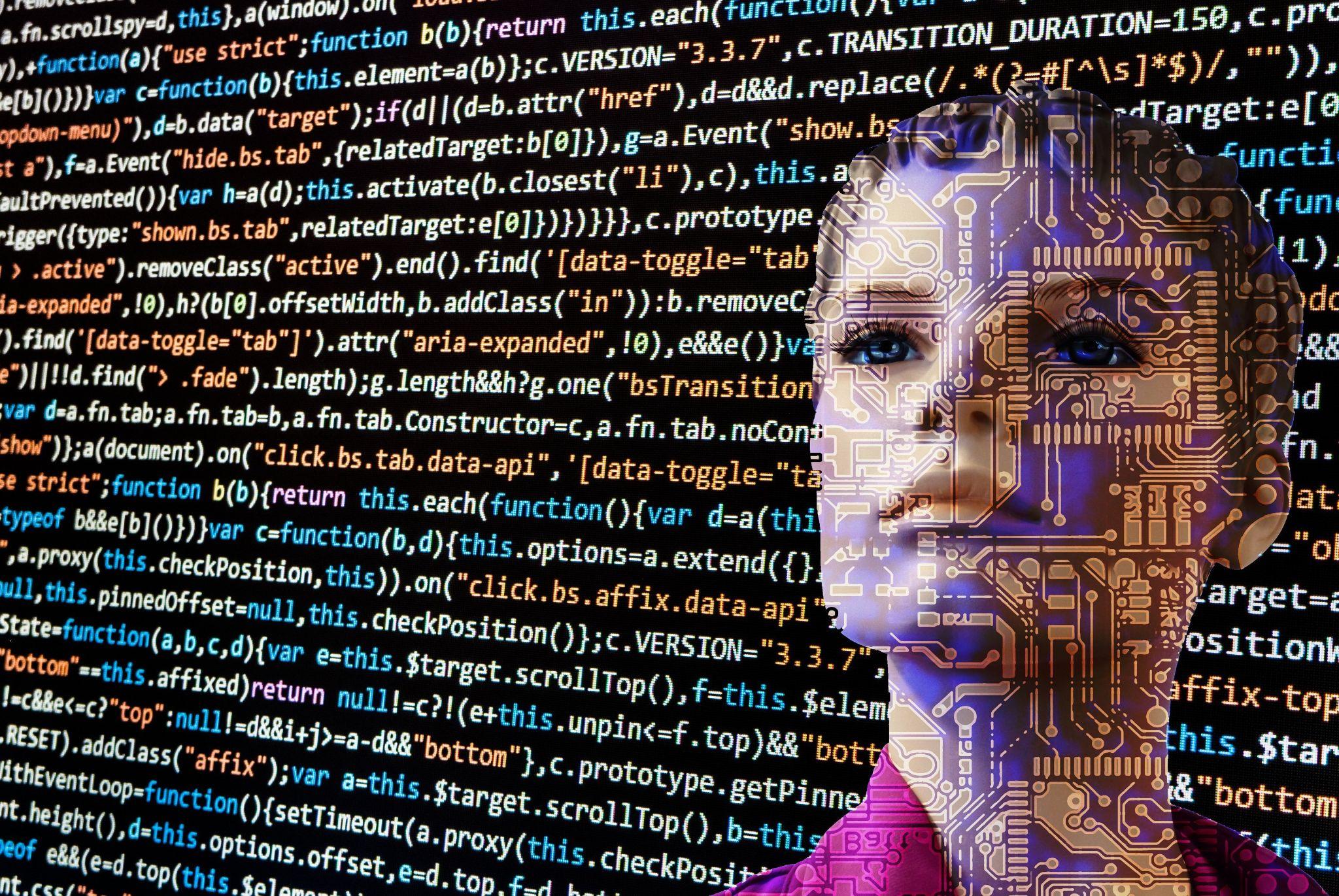
Description: A digital composite of a humanoid face with circuit board patterns mapped across the skin, set against a dark background filled with scrolling multicoloured code.
Alt Text: humanoid face with blue eyes and gold circuit board traces layered across one side, set against a black screen filled with lines of orange, blue, and white code, representing the AI systems behind automated bidding and the risks of optimising without proper human oversight.
Photographer: Geralt
AI excels at pattern recognition at scale. Smart Bidding processes millions of auction-level signals (device, location, time of day, user behaviour) and adjusts bids in ways that no manual process can replicate. Performance Max campaigns distribute budget and creative across Google's entire inventory, finding conversion opportunities that siloed campaigns would miss. These are genuine capabilities, and teams still resisting them are paying a performance tax.
But AI optimises within the parameters it is given. It cannot question whether those parameters are right. A Smart Bidding strategy set to maximise conversions will do exactly that, including funnelling budget towards low-value form fills that look like conversions but do not close. A Performance Max campaign with underspecified audience signals will interpret "performance" however the data leads it, which may have nothing to do with your actual business goals.
The deeper problem is data quality. AI performance is bounded by the quality of the inputs it receives. Problems like misconfigured conversion tracking, poorly defined audience signals, and misaligned attribution windows produce AI systems that optimise confidently in the wrong direction. The algorithm is only as intelligent as the framework built around it.
The Role of Human-Led PPC Strategy
AI handles execution. Humans handle everything that makes execution meaningful.
Without the right human input upstream, even the best-configured automation produces fast results in the wrong direction. Here is where human expertise comes in a well-run PPC operation:
- Account structure: How campaigns are organised determines what signals the algorithm receives. Humans provide the clean, intentional structure that gives automation room to perform.
- Conversion definition: Someone has to decide what counts as a valuable conversion, and that decision has to reflect real business outcomes. If the algorithm is optimising towards form fills that never close, the problem is not the AI. It is what you told the AI to chase.
- Business context: An algorithm does not know a product line is being repositioned. It does not know one lead source closes at three times the rate of another despite similar CPA figures. It does not know that a recent attribution change has inflated conversion counts. That context only comes from the people managing the system.
- Objective calibration: AI optimises whatever it is pointed at. Humans are responsible for regularly checking that what it is pointed at still reflects what the business actually needs.
Think with Google found that leading agencies are, on average, 57% more advanced than in-house teams at using AI for campaign measurement. This is because they have built the frameworks for reading platform data in business terms, not just campaign terms. That interpretive layer is where strategic PPC expertise actually lives.
The Hybrid Model: AI + Human Expertise
The key to unlocking performance in PPC is to build the right division of labour between human management and automation.
- Automation handles execution: Tasks that need speed and scale beyond what human teams can match, such as bidding, budget pacing, creative variant testing, and audience signal processing, should be automated. Pushing against platform automation at this level simply slows things down.
- Human expertise manages architecture and interpretation: Humans should manage what the system optimises for, how the objectives connect to business outcomes, where the data model needs adjustment, and how signals from paid campaigns should inform the rest of the growth stack.
Automation improves when it receives better inputs. Better inputs come from human oversight that keeps the system honest and ensures the data flowing through is accurate and commercially relevant.
Practical Takeaways
Here are some priorities for integrating AI into PPC:
- Treat data quality as infrastructure: The systems are only as good as what you feed them. The foundation for successfully running an AI-optimised ad campaign is to have clean conversion tracking, a consistent UTM structure, and accurate audience signals.
- Redefine PPC success at the business level: ROAS targets should connect to margin and customer lifetime value. When the AI system has a commercially grounded signal to optimise toward, its decisions align with what the business actually needs.
- Wire the feedback loop: Pass CRM data back into the ad platform. Let paid conversion signals inform lifecycle triggers. Use ad creative performance data to refine content decisions. Structured, consistent flow between systems creates compounding intelligence. The messaging that converts in your top ads points to what your audience wants more of, which is why some teams turn those insights into lead magnets, often starting with AI tools that surface audience pain points.
- Keep a strategic review cycle even when automation is running: This helps to verify the objectives are still correctly calibrated, catch signals the algorithm cannot read contextually, and update the system inputs when market conditions shift.
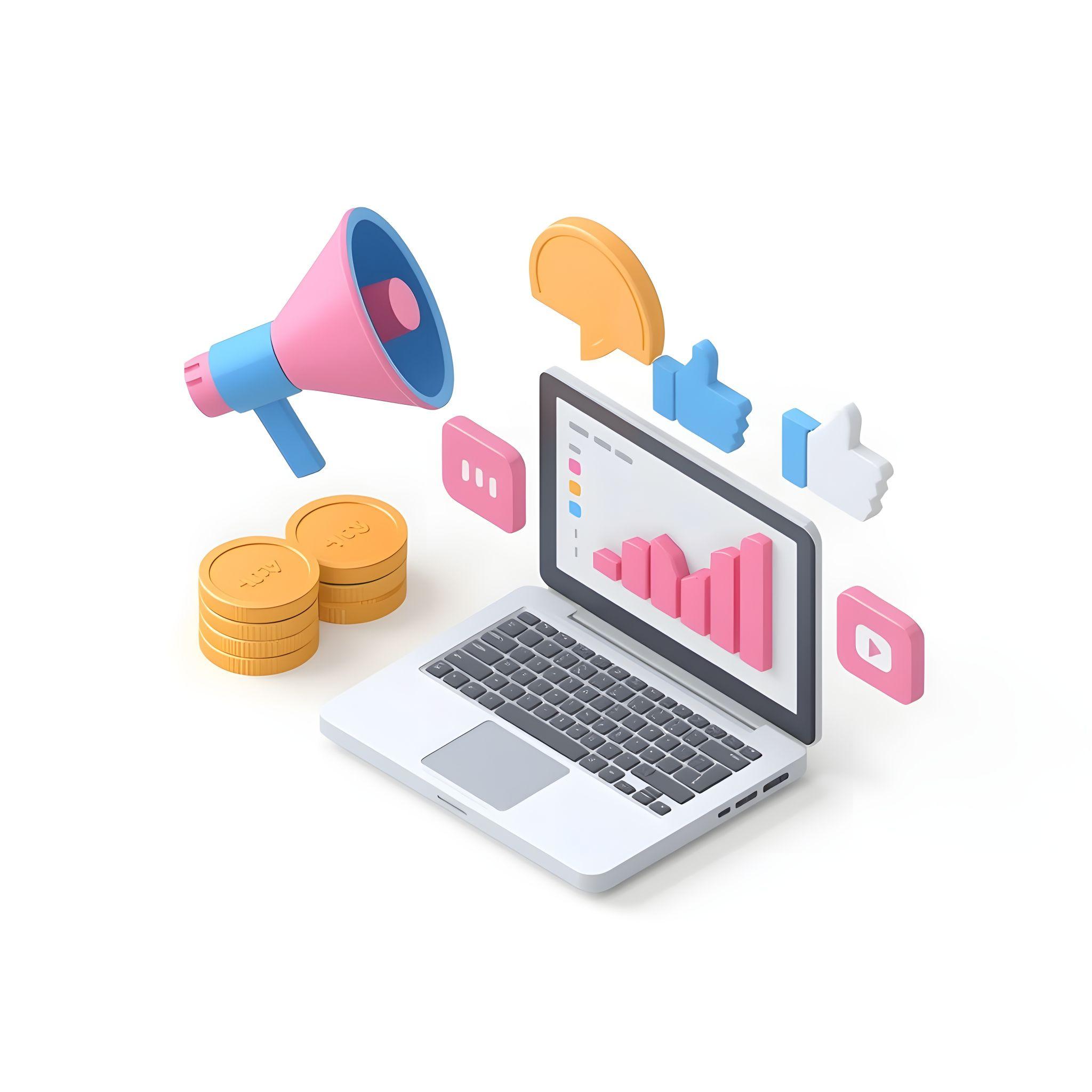
Title: PPC Campaign Data Feeding Into an Integrated Marketing Stack
Description: A 3D isometric illustration of a laptop displaying rising bar charts, surrounded by floating icons including a megaphone, gold coins, thumbs up symbols, and chat bubbles.
Alt Text: A 3D rendered isometric laptop showing a pink rising bar chart on screen, with a pink and blue megaphone, stacked gold coins, blue thumbs up icons, a chat bubble, and a video play button floating around it on a white background, illustrating the interconnected data signals and paid media channels that make up a modern integrated PPC growth stack.
Photographer: MstMonoara
Ready to Close the Gap?
PPC is not getting cheaper, and the advantage no longer belongs to whoever can adjust bids fastest. It belongs to whoever has built the clearest feedback loops between their paid campaigns and the rest of their growth system.
If your business is investing seriously in PPC and performance has plateaued, the issue is rarely the platform, but often the architecture around it. Working with experienced PPC agencies who understand how paid media integrates with AI-driven growth infrastructure is one of the fastest paths to maximising returns on ad spend.