LIFETIME DEAL — LIMITED TIME
Get Lifetime AccessLimited-time — price increases soon ⏳
AI Tools

Doctor Droid Review – Simplifying Kubernetes Management

Updated: April 20, 2026
5 min read
#Ai tool#DevOps

Table of Contents

I’ve worked with Kubernetes long enough to know the real enemy isn’t “Kubernetes” — it’s the constant back-and-forth. One alert pops up, you check logs, then you hop between dashboards, and somehow it turns into a whole afternoon just to figure out why a deployment is stuck. That’s why I wanted to take a closer look at Doctor Droid.

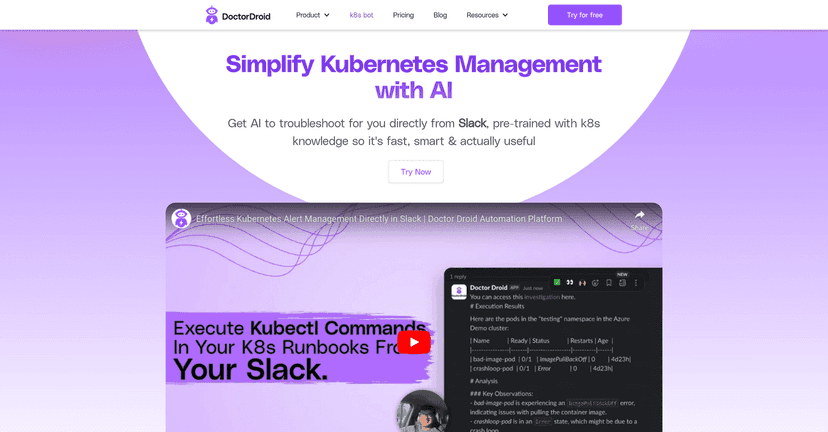
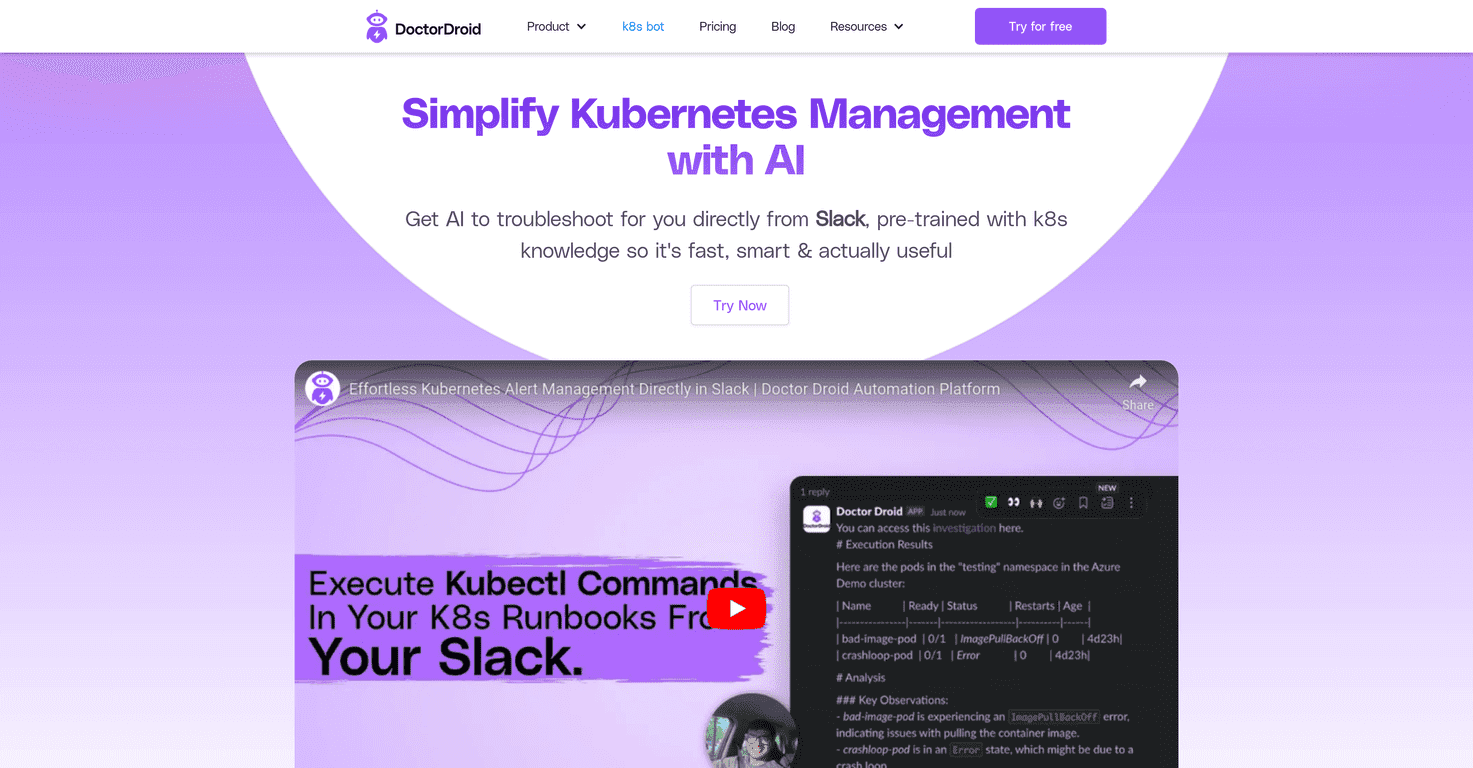
Doctor Droid positions itself as an AI assistant for Kubernetes management, with a big focus on Slack-based troubleshooting and guided remediation. In my experience, that matters more than people expect. If your team already lives in Slack, having incident context show up there (instead of forcing everyone to open yet another console) can genuinely cut down the time-to-diagnosis.

Doctor Droid

Doctor Droid Review

Doctor Droid is basically trying to answer a simple question: “Why is Kubernetes doing this, and what should we do next?” It’s built around a Slack-first workflow, so instead of chasing dashboards, you can investigate and discuss issues right where your team already coordinates.

Here’s what stood out to me about the approach:

  • Slack-based troubleshooting: When incidents happen, the fastest teams don’t just fix faster — they communicate faster. Having the troubleshooting flow in Slack can reduce the “who has the console open?” problem.
  • Automated remediation: The idea isn’t just to suggest steps; it’s to help resolve common issues with less manual work. That’s especially helpful for repeat offenders like misconfigured deployments, failing pods, or resource-related problems.
  • Approval workflows: This is a big one for me. Automated fixes are great until they aren’t. If Doctor Droid uses approvals before taking action, it helps keep humans in the loop—especially in production.

One thing I always ask when evaluating tools like this: will it actually reduce time-to-fix, or will it just add another layer? Doctor Droid’s value depends on how well it fits your team’s incident process. If you already run with Slack for ops and you want faster triage/remediation, it likely feels natural. If your team lives in something else, the benefit may be less obvious.

Key Features

  1. AI Troubleshooting in Slack
    If your alerts and incident threads are already in Slack, this can keep investigation and discussion in one place. In practice, that means fewer context switches and faster alignment on what’s happening.
  2. Automated Issue Remediation
    Doctor Droid aims to handle common recovery steps automatically. I like this when it’s targeted—think “fix the obvious, escalate the weird.”
  3. Approval Workflow
    This is the safety net. You don’t want an AI making production changes without oversight. Approvals also help when you need consistent change management.
  4. Seamless Cluster Access
    The tool’s usefulness depends on how cleanly it connects to your Kubernetes environment. The smoother that setup is, the faster you’ll see results.
  5. Out-of-the-Box Strategies
    Having ready-made remediation patterns can be a big time saver, especially for teams that don’t want to reinvent runbooks for every issue.

Pros and Cons

Pros

  • Slack integration is actually practical: If your team already uses Slack for incident response, Doctor Droid fits into existing workflows instead of forcing a new habit.
  • Approval workflow improves trust: Automated actions are easier to accept when there’s a clear approval step and human oversight.
  • Remediation can reduce manual toil: For recurring Kubernetes issues, cutting down on repetitive investigation steps is where tools like this earn their keep.
  • Secure access to clusters: The “secure by default” angle matters, because nobody wants an ops tool that feels risky to connect.

Cons

  • You’re leaning on Slack: If your team doesn’t use Slack for ops, you might feel like you’re paying for a feature you can’t fully use.
  • There’s still an onboarding period: Even with automation, you’ll need to understand how Doctor Droid interprets issues and what actions it recommends. Expect a learning curve.
  • It’s Kubernetes-focused: That’s not a bad thing, but if you want broader platform coverage (beyond Kubernetes), you may outgrow it or end up using additional tools anyway.

Pricing Plans

Doctor Droid doesn’t list specific pricing in the content I reviewed. For the most accurate number (and to see what’s included for your environment), I’d check their official website or contact their sales team.

If you’re budgeting, I’d also ask a couple of practical questions: how pricing scales with cluster count, whether Slack usage impacts cost, and what level of automation/remediation is included in the plan. Those details can make a big difference once you’re rolling it out across teams.

Wrap up

I like the direction Doctor Droid is taking. Kubernetes debugging is noisy, and anything that helps you triage faster—especially inside Slack—can be genuinely useful. The approval workflow is another strong point in my book, because production automation without guardrails is a hard no.

That said, it’s not a universal fit. If you don’t use Slack for incident response, or if your team expects deep platform coverage beyond Kubernetes, you may find it limiting. But if your day-to-day is Kubernetes + Slack, and you want faster diagnosis with safer remediation, Doctor Droid could be a solid addition to your toolkit.

Promote Doctor Droid

Stefan

Stefan

Stefan is the founder of Automateed. A content creator at heart, swimming through SAAS waters, and trying to make new AI apps available to fellow entrepreneurs.

Related Posts

ScanRelief Review – Simplifying Receipt Management

ScanRelief Review – Simplifying Receipt Management

simplify your life by turning clutter organized

Stefan

Scopey Review – Simplifying Scope Management

Scopey simplifies scope management effectively

Stefan

Kubernetes Guru Review – Simplifying Kubernetes for All

Count of words: 15 Rewrite: “””Steer Kubernetes using a free AI helper that provides questions and answers along with cluster insights”””

Stefan

Create Your AI Book in 10 Minutes