Table of Contents
I tested esotericAI for tarot insights and I’ll be straight with you: it’s the kind of tool that feels easy to use right away, but it still helps to know a little tarot terminology so you can sanity-check what you’re getting. I’m writing this from my own session—tested on April 19, 2026, using Chrome on a Windows laptop. If you’re expecting a “set it and forget it” mystic experience, you might be disappointed. If you want a structured way to explore meanings and get prompts turned into readable guidance, it’s pretty solid.
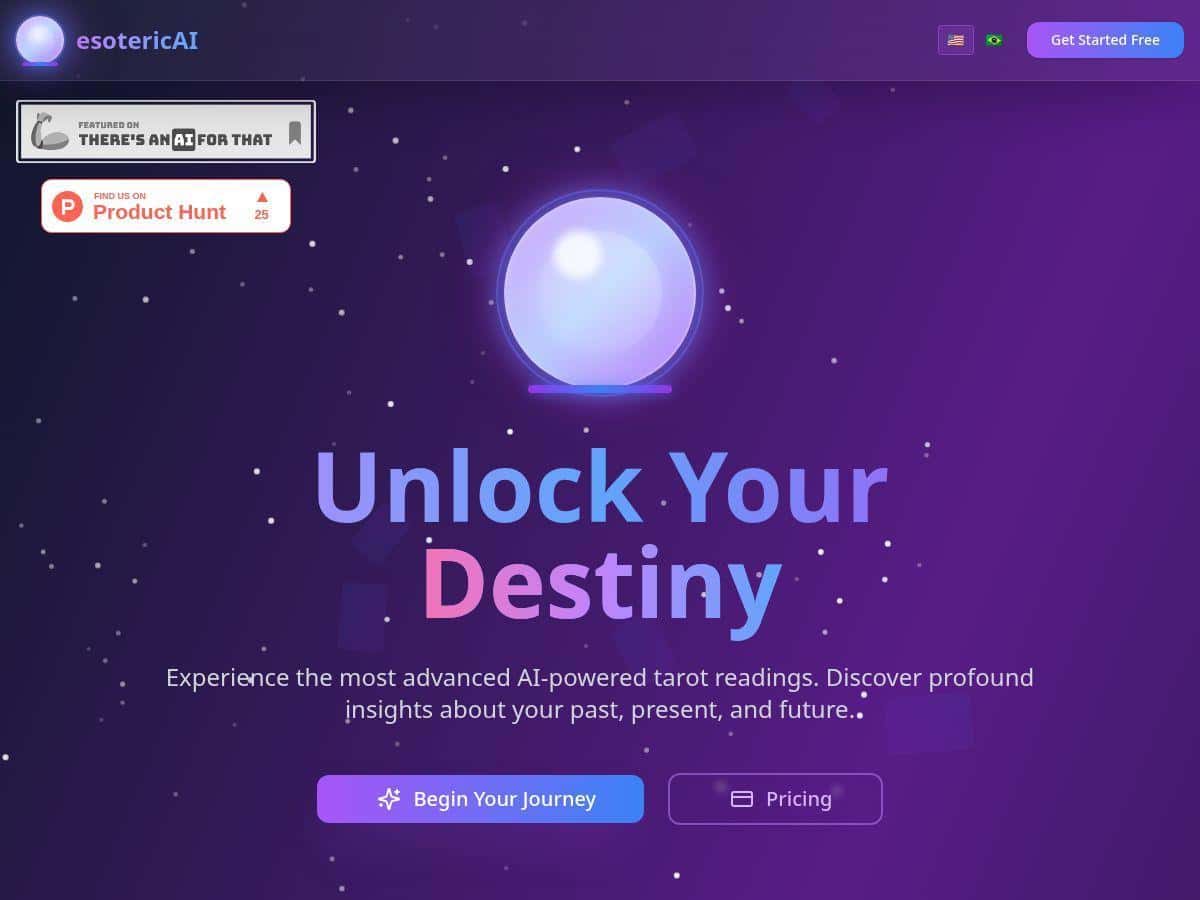
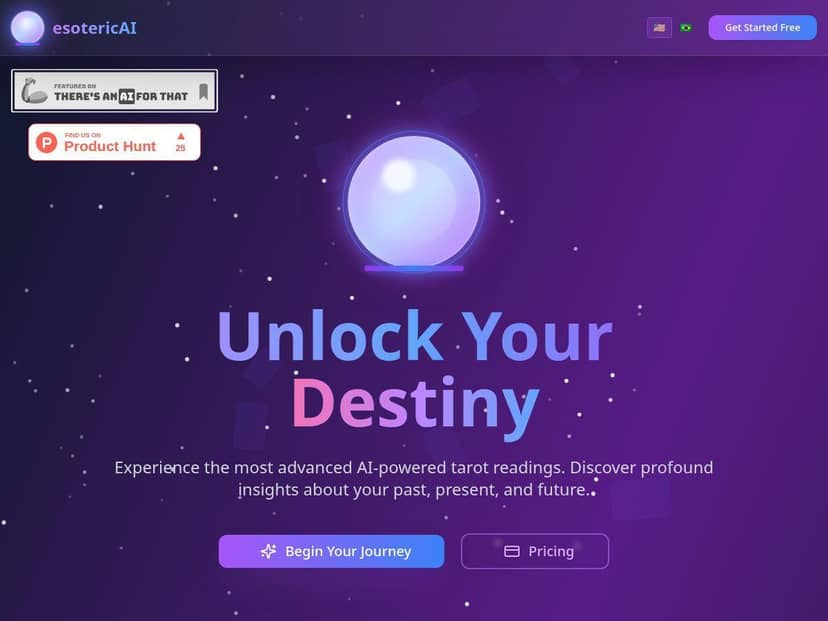
First impression? The deck is front-and-center. You can browse all 78 cards and then switch into reading mode without feeling like you’re fighting the interface. The card pages include meanings and symbolism, and when you generate a reading, the output reads like it’s tailoring the interpretation to what you type in.
esotericAI Review
Let me show you what I actually did, because that’s the only way this kind of review is useful.
How I tested it (prompts + setup)
I ran three separate readings to see how the interpretations changed based on my question and the card I selected. My goal wasn’t to “prove” tarot, but to check whether the AI output stays consistent with the card themes and whether it responds to different angles of the same situation.
- Session 1 (Major Arcana): Card = The Fool. Prompt idea: “I’m starting a new job soon. What should I focus on in my first month?”
- Session 2 (Major Arcana): Card = The Tower. Prompt idea: “A relationship feels unstable. What am I supposed to learn right now?”
- Session 3 (Minor Arcana): Card = Seven of Cups. Prompt idea: “I’m overwhelmed by options and can’t decide. What’s the best next step?”
In each case, I looked for three things: (1) whether the output matches the card’s usual symbolism, (2) whether it uses my prompt details instead of just giving a generic meaning, and (3) whether it offers something actionable (not just “think positive”).
What I noticed about the readings
The Fool reading leaned into themes like new beginnings, curiosity, and taking a leap—exactly what you’d expect from the Major Arcana. What stood out to me was how it framed “first month” as a time window, then translated that into practical advice: start small, stay flexible, and don’t overthink early mistakes. It didn’t just say “be spontaneous.” It actually treated my job context like it mattered.
The Tower reading was more intense (again, not surprising). The output focused on disruption, truth coming out, and letting go of what’s not working. The part I liked: it didn’t only go “everything will fall apart.” Instead, it pushed toward learning and rebuilding—basically reframing the crisis as information. If you’re someone who reads Tower as “avoid this at all costs,” this might be a bit confronting, but that’s also the point of the card.
Seven of Cups was the most “grounded” of the three. It matched the classic meaning—options, distractions, fantasy vs. reality. What I noticed is that it responded to my “can’t decide” angle by steering me toward prioritizing: pick what’s real, limit distractions, and choose one path for now. It felt less dramatic than Tower and more like a decision-support tool, which I personally appreciate when I’m overwhelmed.
Major vs. Minor Arcana: does it feel different?
Yes, and not just in a poetic way. When I used Major Arcana cards, the readings sounded more like they were describing a life lesson or a turning point. With Minor Arcana (like Seven of Cups), it felt more situational—more “what to do next” and “how to manage the moment.” That distinction mattered to me because it made it easier to know what kind of reading I was getting.
Card browsing experience
Browsing the deck was straightforward. I could jump between cards quickly and read the meanings without needing to generate a full reading every time. For me, that’s a big plus—sometimes I just want to refresh symbolism before I ask a question. The deck content also makes it easier for beginners to follow what the card is “about” before they start interpreting spreads.
Limitations (stuff I ran into)
- You’ll get better results if you give context. If your prompt is vague (“What will happen?”), the output tends to be more general. Add details like timeframe, relationship/job context, or what you’re trying to decide.
- It’s not a substitute for your own judgment. I don’t mean that in a dismissive way—more like: treat it as reflective guidance. I wouldn’t make a major life decision purely off one AI tarot reading.
- No clear “spread mode” was obvious to me from the interface. I could generate single-card style readings easily, but I didn’t see a very guided multi-card spread workflow during my test.
Key Features
- Full tarot deck (78 cards) with card meanings and symbolism explanations
- Major and Minor Arcana guidance that distinguishes broad life lessons vs. day-to-day themes li>AI-driven personalized tarot readings based on the question/card you choose
- Educational interpretation style (it tries to explain “why” a card might matter)
- User-friendly interface that works for quick lookups and generated readings
Pros and Cons
Pros
- Quick access to the entire deck—I didn’t have to hunt for cards or meanings.
- Interpretations generally match the card theme (for example, Fool = new beginnings, Tower = upheaval/learning, Seven of Cups = options/distraction).
- Prompts actually influence the reading—it wasn’t copy-paste generic text when I added context like “first month at a new job.”
- Actionable tone—not just “you’ll face challenges,” but more “here’s what to do with that information.”
- Good for self-reflection when you want a structured way to think through decisions.
Cons
- Pricing isn’t clearly listed on the page I checked. I couldn’t find a simple “$X/month” breakdown in the accessible info during my test, so you’ll need to check the official site for current plans.
- Best results require basic tarot literacy. If you don’t know the difference between Major/Minor or typical suit meanings, you may feel like you’re missing context.
- Community proof wasn’t easy to verify. I didn’t see obvious user reviews/testimonials in the info available to me while testing, so I can’t point to third-party feedback here.
Pricing Plans
As of April 19, 2026, I didn’t see a clean, publicly displayed pricing table (like “Basic/Pro” with monthly costs) in the information I could access. What I recommend is simple: go to the official esotericAI site and check for subscription options and whether there’s a free trial or limited free reads. That’s usually where pricing is shown (or hidden behind a sign-up/paywall step).
If you want to compare value, here’s a practical way to test it before committing: try a free trial (if available) and run one Major Arcana question and one Minor Arcana question using the same prompt style. If the outputs feel meaningfully different and more specific than a generic card description, that’s a good sign.
Wrap up
Overall, esotericAI felt like a helpful tarot companion—especially if you like having both card meanings and AI-generated readings that respond to your question. My biggest takeaway is that it’s strongest when you give it context and when you treat the results as reflective guidance, not absolute predictions. If you want a modern way to explore the tarot deck without flipping through notes all night, it’s worth checking out—just don’t skip the prompt details, because that’s where the “personalized” part really shows up.