Table of Contents
Gothic romance works because it hits two buttons at once: unease and yearning. You get a setting that feels alive (and a little hostile), characters who don’t say what they mean, and a love story that’s constantly fighting for air. I’ve read a lot of these over the years, and what I keep noticing is that the “spooky” part isn’t just decoration—it’s what makes the emotional stakes feel sharper.
So, instead of treating gothic romance tropes like a checklist, I’m going to show you how they actually function in the story. For example, in Rebecca (Daphne du Maurier), the mansion and its history pressure the heroine’s identity; in Wuthering Heights (Emily Brontë), the brooding hero’s past poisons every tender moment; in The Fall of Ruin and Wrath (Jennifer L. Armentrout), the gothic mood gets paired with modern pacing and higher-agency heroines; and in Jane Eyre (Charlotte Brontë), the “haunting” energy is tied to power, guilt, and belonging. Different books, same engine.
Key Takeaways
Key Takeaways
- Sinister settings do more than look pretty—they create pressure. In practice, I like to tie one physical detail (a locked wing, a drafty corridor, a portrait) to a character secret.
- The brooding hero’s mystery should have a payoff. If his “dark past” never changes the plot, readers feel it.
- The heroine may start vulnerable, but she should gain competence. Think: she learns the rules of the house (or curse) and starts making choices, not just reacting.
- Forbidden love works best when the obstacle is more than “society said no.” Use curses, class power, family control, or supernatural law.
- Supernatural elements are strongest when they reflect internal conflict. A haunting that mirrors guilt or grief hits harder than random scares.
- Psychological tension (paranoia, hallucinations, dissociation, obsession) can be terrifying and romantic—if you keep it grounded in character.
- Dark villains feel scarier when they’re plausible. A “nice” clergyman or charming relative is a better threat than a mustache-twirler.
- Frame narratives (diaries, letters, manuscripts) let you drip information slowly—and they give you a natural reason for unreliable perception.
- Modern twists keep the trope fresh: agency for the heroine, morally complex antagonists, and themes readers recognize (mental health, power dynamics, identity).
- These tropes endure because they combine familiar emotional needs (belonging, love, truth) with a world that keeps secrets.
Gothic Romance Tropes (and why they actually work)
Gothic romance tropes stick around because they create a specific emotional rhythm. You get dread, then closeness. You get answers, then new questions. And you almost always end up with a relationship that feels tested by time, secrets, and power.
If you’re writing (or outlining) your own story, the big question is simple: How do you make the trope do plot work? Not just vibes. Plot.
1. Sinister Settings Create a Spooky Atmosphere
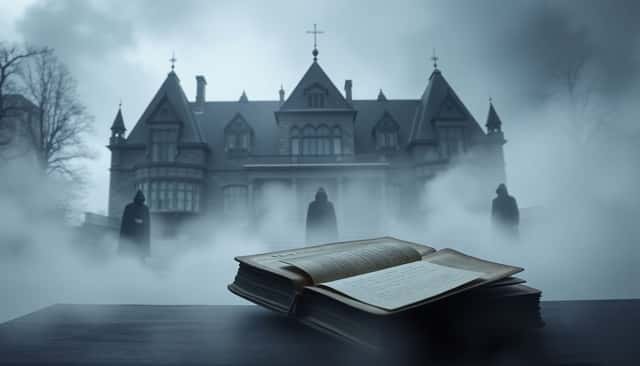
Gothic settings are rarely neutral. A crumbling manor, for instance, doesn’t just “look haunted.” It blocks movement, hides evidence, and pressures characters into making choices they wouldn’t make anywhere else. In Rebecca, the house itself feels like it’s judging the heroine. That’s the trick.
What to do on the page:
- Pick one dominant sensory motif. Mine is usually sound (floorboards, wind through vents, distant laughter) or smell (cold stone, old perfume, damp paper). Repeat it at key emotional beats.
- Give the heroine a “rule” she learns fast. Example: “The east wing stays locked.” Then later, she finds out why—because of a body, a confession, or a curse mechanism.
- Turn objects into clues. Portraits that show a different face at night. A diary with a missing date. A key that doesn’t match any door—until chapter 18.
Quick scene template (chapter-level): Open with movement (arriving, exploring, being led somewhere). Add one unsettling detail that feels personal (a room that’s “wrong,” a draft that follows her, a stain that resembles ink). End the scene with a choice: she can ignore it and keep the peace, or investigate and risk the consequences.
2. The Brooding, Mysterious Hero
The brooding hero is popular for a reason. Readers want someone who feels dangerous and controlled. But here’s what I’ve learned the hard way: if his mystery is just aesthetic, it gets stale fast.
In the best gothic romances, the hero’s secrecy actively shapes the plot. His dark past isn’t just mentioned—it changes what he does.
Make his secret specific:
- Secret as a mechanism: He can’t touch her without triggering the curse. He has to wear gloves. He avoids mirrors because they show the truth.
- Secret as a moral wound: He helped cause the tragedy and believes he doesn’t deserve love.
- Secret as a relationship test: He pushes her away to protect her, but his protection fails—she has to take control.
Do/don’t beats:
- Do: Give him one moment of tenderness that surprises even him.
- Don’t: Let him be cruel “because brooding.” If he hurts her, it should connect to the plot (a lie he tells, a danger he senses, a curse he can’t stop).
- Do: Reveal the secret in layers—small truth early, bigger truth mid-book, and the full cost near the climax.
3. The Innocent Yet Strong Heroine
In a lot of gothic romances, the heroine starts out overwhelmed. That’s not a flaw—it’s fuel. The house is bigger than her. The rules are unclear. The people in charge seem confident, and she doesn’t yet know who’s lying.
But I’m picky about one thing: “innocent” shouldn’t mean “stupid.” She can be inexperienced without being passive.
How her strength shows up (in believable ways):
- Competence grows: She learns the layout, deciphers the letters, notices patterns in the supernatural events.
- Boundaries matter: When the hero tries to control her “for her safety,” she pushes back.
- Emotional courage: She admits fear out loud, then still goes back into the dark room.
Example arc (3 beats): (1) She misreads a clue and gets hurt. (2) She recovers and makes a smarter choice—maybe she sets a trap, not just investigates. (3) She confronts the truth about her identity (inheritance, lineage, or being the “next” in a curse cycle) and chooses what kind of person she’ll be anyway.
4. Forbidden Love That Challenges Norms
Forbidden love is the engine of gothic romance because it creates friction you can feel in every interaction. But “forbidden” needs teeth.
Here are four strong obstacle types I’d actually recommend:
- Social power: Class difference, marriage expectations, or guardianship control.
- Family rule: The heroine is tied to the villain by blood, money, or obligation.
- Supernatural law: Love triggers a curse, breaks a protection, or summons something when two bloodlines mix.
- Personal ethics: One of them believes they’re responsible for past harm and refuses to repeat it.
What makes the romance satisfying: the obstacle should change both people. If they just pine while nothing else shifts, the tension turns into filler.
Practical writing tip: Put one “almost” moment early (they confess, they touch, they plan something), then let the forbidden rule snap back hard. That teaches readers what they’re risking.
5. Supernatural and Mysterious Elements
Ghosts, curses, rituals—sure. But the best gothic supernatural elements do double duty: they’re scary and they explain character behavior.
In other words, don’t just ask, “What’s haunted?” Ask: What does the haunting represent?
Common (and effective) pairings:
- Haunting = guilt: The hero sees apparitions when he lies.
- Curses = identity: The heroine’s lineage determines whether she can break the spell.
- Rituals = control: Someone is using tradition to keep power locked in the family.
- Ambiguous events = uncertainty: Is it supernatural, or trauma? You can keep it unclear for a while, but you’ll need a reveal eventually.
My favorite suspense technique: show the effect before you show the cause. Let readers feel the consequence—missing memories, a door that shouldn’t open, a voice calling a name—then circle back later with the explanation.
6. Psychological Tension and Madness
Psychological tension is where gothic romance gets truly chilling. It’s not only “something is wrong in the house.” It’s “something is wrong in my head.” That’s a scary combo.
What I like to do is keep the mental strain tied to specific triggers:
- Sleep deprivation: She hears footsteps during exhaustion and starts doubting reality.
- Gaslighting: A relative insists she’s “imagining” sounds, then proves she’s right too late.
- Grief responses: The hero’s obsession with the dead makes him act irrationally—then he has to face consequences.
- Trauma echoes: Certain rooms bring back memories that weren’t fully processed.
Do/don’t:
- Do: Show how fear alters perception (time skips, memory gaps, compulsive checking).
- Don’t: Use “madness” as a shortcut for plot twists. If you go that route, make it earned and coherent.
- Do: Let the heroine or hero regain agency at least once. In gothic romance, recovery is romantic too.
7. Dark Villains and Hidden Family Secrets
Villains in gothic romance are at their scariest when they look “respectable.” A charming guardian. A kindly clergy member. A well-dressed relative who never raises their voice. That kind of threat doesn’t feel like a horror movie—it feels like something you could meet in real life.
Make the villain’s power structural: they control access (keys, rooms, inheritance), they control information (letters burned, testimonies rewritten), or they control the narrative (telling everyone the heroine is unstable).
Then layer in hidden family secrets. This is where the genre really shines because the past isn’t over. It’s living in the walls.
- Clues that escalate: a missing page, a portrait that changes, a birth record that doesn’t match.
- Reveals that reframe relationships: the villain isn’t just evil—they’re protecting a secret they believe the heroine must never know.
- Consequences: when the truth comes out, the love story has to survive what it means.
Simple reveal plan: Choose three secrets. Reveal the first in the first half of the book (small, personal). Reveal the second around the midpoint (bigger, tied to the curse or lineage). Reveal the third near the climax (the real cost, the real betrayal, the real bargain).
8. Frame Narratives and Hidden Stories
A “story within a story” is perfect for gothic romance because it naturally supports secrecy and unreliable memory. Diaries, letters, memoirs, oral histories—whatever you choose, it gives you a built-in reason to drip information slowly.
How to make the frame narrative feel seamless:
- Match tone: If the main narration is tense and modern, don’t make the diary sound like a different genre entirely.
- Use the frame to create contrasts: past-you believed one thing; present-you sees the pattern.
- Let the heroine interact with the documents: she deciphers, argues with, or even hides the truth she finds.
Example of a strong frame beat: She finds a letter dated “the night the house stopped breathing.” The letter claims she’ll die if she opens the east wing. She ignores it—then later realizes the letter wasn’t trying to scare her; it was trying to save someone else.
That’s the difference between “cool device” and “plot engine.”
9. Modern Twists on Classic Tropes
Gothic romance doesn’t have to stay frozen in the past. What I’ve noticed reading newer romantasy and gothic-inspired releases is that writers keep the mood, but update the relationship dynamics.
Modern twists that actually land with readers:
- More agency for the heroine: she plans, investigates, and makes choices that aren’t just “wait for the man.”
- Villains with motives that make sense: they’re still wrong, but they’re not random.
- Clearer emotional communication: even in secrecy, there’s a thread of truth the characters can’t fully hide.
- Contemporary themes: power imbalances, consent, mental health, identity, and grief.
- Light humor (sparingly): one sharp line during an otherwise intense scene can make the romance feel more human.
And yes, romantasy audiences often want faster pacing and bigger reveals. If you’re blending genres, keep the gothic atmosphere consistent even as the plot speeds up.
10. Why These Tropes Remain Popular
People come back to gothic romance for a reason: the emotional experience is reliable. You get a world full of secrets, and you get love that has to fight for legitimacy. That combination scratches the same itch every time—fear of the unknown, craving for intimacy, and the hope that someone will choose you anyway.
On the market side, it’s also hard to ignore how consistently gothic-inspired romantasy shows up in bestseller conversations. If you want to see what’s trending right now, check recent lists from major retailers and publisher catalogs, plus public “Most Sold” pages on platforms like Amazon. I’m not going to pretend there’s one single “sales statistics” source that proves everything, because categories shift and reporting varies—but the repeated presence of gothic mood + romance is noticeable across multiple publishers year after year.
Ultimately, the tropes remain popular because they’re adaptable. You can keep the haunted house and swap the curse mechanism. You can keep the brooding hero and make his secret about something new. The genre is flexible enough to grow, but familiar enough to feel comforting.
FAQs
You’ll usually see abandoned mansions, old castles, remote estates, or foggy landscapes—places where the characters can’t easily escape the past. The key is that the setting should create tension, not just scenery.
He’s typically brooding and guarded, with a secret or guilt that shapes his choices. Readers trust his intensity when it connects to the plot and the emotional payoff, not just his vibe.
Because forbidden love naturally creates conflict—social pressure, family control, or supernatural consequences. That tension keeps the romance urgent, and it makes the eventual emotional resolution feel earned.
They heighten suspense and expand the mystery. Even when the supernatural turns out to have a “human” origin, it still works as a dramatic mirror for fear, guilt, and longing.