Table of Contents
If you’ve ever read a story and thought, “Wait… was that magic, or am I just dreaming?”—you’re asking the right question. I’ve wrestled with this exact confusion while outlining scenes for clients, and the difference usually comes down to one thing: how the narrative treats the impossible.
In this guide, I’ll help you tell magical realism vs surrealism apart in a way you can actually use. You’ll get scene-level tests, craft steps, and real examples you can borrow—so you can choose the right style without guessing.
Key Takeaways
- Magical realism treats small supernatural events as normal. Characters don’t freak out; they adapt. The magic often highlights culture, history, or social reality.
- Surrealism deliberately destabilizes reality. The “impossible” isn’t just a detail—it’s the point, and it’s often tied to dreams, the unconscious, or psychological pressure.
- In magical realism, the world stays coherent. In surrealism, logic can bend, fracture, or quietly disappear.
- Magical realism often uses a straight-faced narrator and everyday settings. Surrealism leans more into symbolic images, odd juxtapositions, and dream logic.
- If you want “magic in daily life,” pick magical realism. If you want “reality bending to reveal the mind,” pick surrealism.
1. What is Magical Realism and How Does It Look?
Magical realism is a storytelling style where ordinary life and small supernatural events exist side-by-side. The trick is that the “magic” is presented as part of the everyday world—no big announcement, no “this can’t be happening” panic.
Historically, the term is commonly traced to Arturo Uslar Pietri (often cited around 1940), and the broader movement is linked to 20th-century Latin American literature. You’ll also see the label discussed through the early-to-mid 1900s context in literary criticism. If you want a solid starting point, I recommend checking references like the Encyclopaedia Britannica overview of magical realism (for term usage and context) and then reading the primary works people associate with the label.
In my experience, magical realism “looks like” this: a street scene that feels real and lived-in, plus one or two details that shouldn’t make sense—yet nobody treats them like a rupture.
For example, it might be a house where the trees “whisper” like they’re part of the neighborhood gossip, or a character who speaks to spirits the way they might speak to a neighbor who’s late. Not scary. Not shocking. Just… normal.
Quick craft test (I use this when editing)
Write a 200–300 word scene with one impossible element (a talking object, a prophecy, a sudden miracle). Then ask:
- How do other characters react? If they shrug or carry on like it’s Tuesday, that’s magical realism.
- Does the narration treat it as “strange”? If the narrator stays calm and factual, that points toward magical realism.
- Does the world stay coherent? If cause-and-effect still works inside the story, you’re probably in magical realism territory.
How to write magical realism (5 steps)
- Start with a grounded setting. Give specific details: weather, local routines, family roles, neighborhood geography.
- Pick one “magical” element. Keep it small and repeatable. Big, flashy spells often push you toward fantasy or surrealism.
- Anchor it in culture or lived experience. Magic should feel inherited—myths, rituals, superstitions, community knowledge.
- Keep tone steady. The prose should sound like it’s reporting real life.
- Let the magic reveal a theme. What does the miracle say about grief, belonging, injustice, or identity?
Here’s a mini example rewritten two ways. Same premise, different style.
Premise: A woman returns home and finds her grandmother’s old kitchen table covered in handwritten letters addressed to her.
Magical realism version: The letters were stacked neatly beside the sugar jar, like they’d been there all morning. My aunt said Grandma had been “busy again,” the way people say the radio is acting up. I didn’t ask how the letters got there. I just sat down, smoothed the top page, and recognized my own name in the handwriting I’d spent years trying to forget. Outside, the city kept moving—buses groaned, someone laughed too loud, and the kettle clicked as if it had its own opinion about the past.
Surrealism version: The kitchen table unfolded like a slow breath, and the letters spilled outward, floating just above the wood grain. Every page looked blank until I blinked, and then the ink rearranged itself into new versions of my face. The room tilted, not enough to fall—just enough to make me doubt the angle of my memories. I reached for one letter and felt it tug at my ribs, like it was trying to pull a truth out through my skin.
Notice the difference? Magical realism keeps the physical world stable and treats the impossible as an accepted fact. Surrealism makes the impossible reshape perception.
2. What is Surrealism and What Are Its Main Features?
Surrealism is all about the unconscious: dreams, irrational associations, and the way the mind can turn logic into something symbolic. It’s an art and literature movement that grew out of early 20th-century shock and upheaval—especially in Europe after World War I—when artists and writers were looking for new ways to express inner reality.
In practice, surrealism often looks like:
- Strange juxtapositions (two unrelated things placed together so they feel uncanny)
- Illogical scenes (cause-and-effect feels wrong on purpose)
- Symbolic imagery (objects stand in for emotions or fears)
- Dream logic (time, space, and identity behave like they do in dreams)
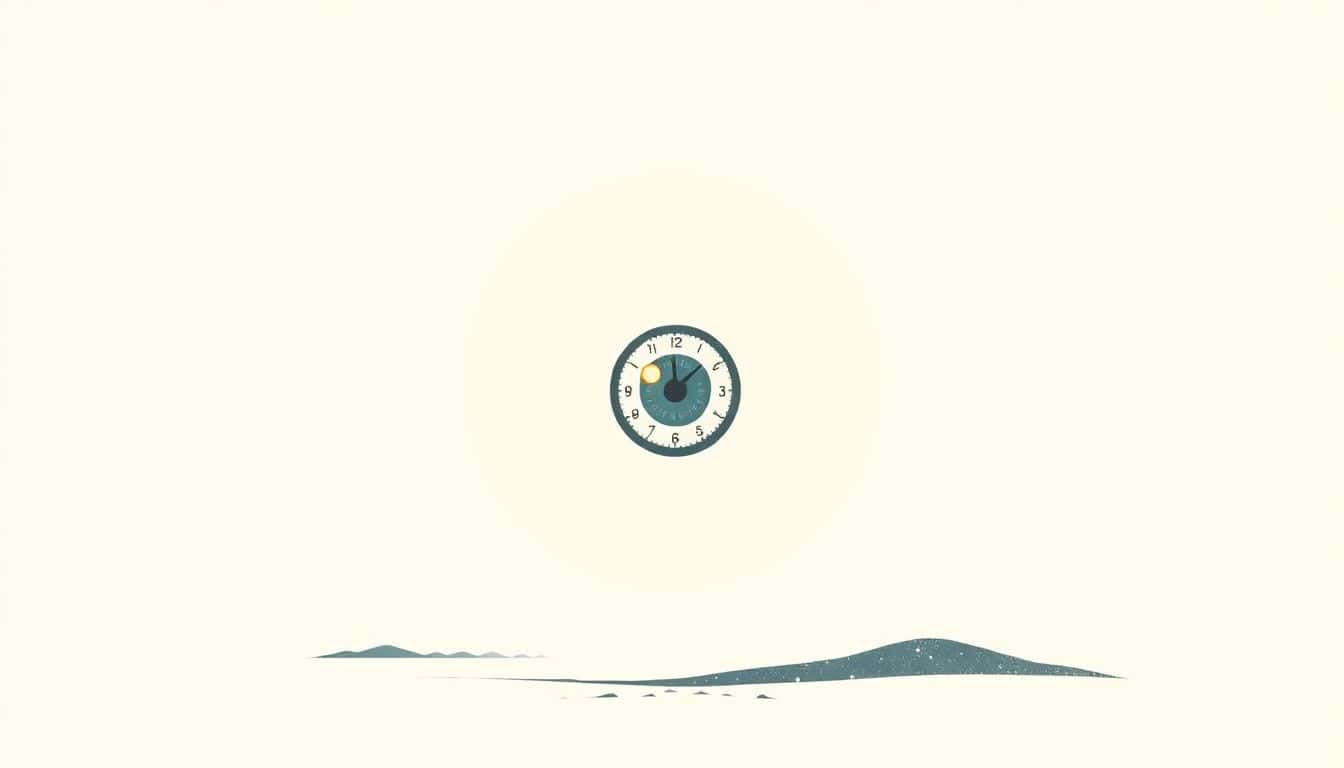
When I think “surrealism,” I think of the way Salvador Dalí’s imagery works—like the famous melting-clock vibe in The Persistence of Memory. It’s not there to be “explained.” It’s there to make you feel disoriented and then invite you to interpret what that disorientation means.
And yes, surrealism can be disorienting by design. That’s not a flaw—it’s the mechanism.
One more decision rule (super practical)
After you write your scene, highlight the moment where the impossible happens. Then ask:
- If the scene still reads like a coherent world where the impossible is “just another fact,” that’s usually surrealism? (No—usually that’s magical realism.)
- If the impossible changes the rules of perception—like the reader starts questioning what’s real—then you’re in surrealism.
It sounds simple because it is. But it’s also the fastest way I know to stop second-guessing.
3. How Do Magical Realism and Surrealism Differ in Their Approach to Reality?
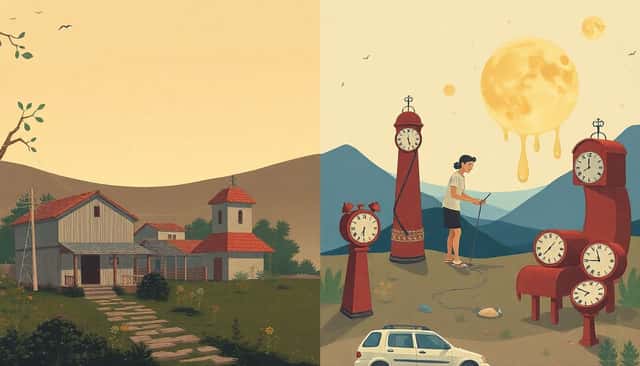
Here’s the core difference in plain terms: magical realism normalizes the impossible, while surrealism weaponizes the impossible to reveal inner truth.
Magical realism: the boundary between real and fantasy stays mostly intact, because the story treats the magical as part of reality.
Surrealism: the boundary breaks. The story’s job is to scramble your usual perception so symbolism can take over.
Scene-level comparison cues
- Character reaction
- Magical realism: “Oh, that.” They adjust.
- Surrealism: The character’s mind fractures, or perception shifts.
- Narrator tone
- Magical realism: calm, observational, grounded.
- Surrealism: lyrical, slippery, or unsettling.
- Causality
- Magical realism: cause-and-effect stays mostly workable.
- Surrealism: logic bends, loops, or turns symbolic.
- Theme delivery
- Magical realism: cultural/social/emotional truth inside a realistic world.
- Surrealism: subconscious truth via dream imagery and symbolic displacement.
If you want a quick decision rule: write a 200-word scene with one impossible element. If your characters treat it like normal life, you’re likely writing magical realism. If the scene destabilizes perception—time warps, identity blurs, reality feels unsafe—that’s likely surrealism.
4. What Are the Main Themes and Focus of Each Style?
Both styles can deal with emotion and identity. The difference is where the emotion lands and how it’s communicated.
Magical realism often focuses on:
- Cultural identity (belonging, inheritance, language, family history)
- Tradition and social reality (rituals, community beliefs, historical weight)
- Human emotions inside a stable world (grief, love, shame—still “real,” just heightened)
In other words, the magic tends to act like a spotlight. It illuminates what’s already there in society—just with a mythic glow.
Surrealism often focuses on:
- Hidden desires and fears
- Dream states and unconscious conflict
- Perception itself (identity shifting, memory reassembling, cause-and-effect dissolving)
So instead of “magic as social truth,” it’s more like “imagery as psychological truth.”
Comparison table (concrete indicators)
- Tone: Magical realism = steady, matter-of-fact. Surrealism = strange, uncanny, often lyrical.
- Reality rules: Magical realism = reality stays coherent; magic is accepted. Surrealism = reality rules bend; perception changes.
- What the narrator does with impossibilities: Magical realism = treats them as normal. Surrealism = uses them to destabilize meaning.
- Primary “job” of the magic: Magical realism = reveal cultural/social/emotional truths. Surrealism = reveal unconscious meaning.
5. How Do Their Storytelling and Visual Styles Vary?
This is where most people get tripped up, because both can include “weird” elements. But the craft choices are different.
Storytelling in magical realism usually feels:
- Straightforward in sentence rhythm and perspective
- Comfortably grounded in a recognizable setting
- Calm about the impossible (no frantic explanation)
Visual style in magical realism tends to:
- Look realistic
- Add subtle magical details that could be missed on a first glance
- Keep the “camera” steady—no obvious dream distortions
Storytelling in surrealism often feels:
- Fragmented or associative
- More concerned with symbol than with plot logic
- Like the reader’s expectations are being gently (or not gently) sabotaged
Visual style in surrealism tends to:
- Use disorienting composition
- Pair unrelated objects
- Show symbolic distortions (melting time, floating bodies, impossible spaces)
6. Examples That Show the Key Differences Between the Two Styles
Let’s get specific. Here are familiar examples, plus what to look for so you can tell them apart at a glance.
*Like Water for Chocolate* (magical realism)
- Everyday life first: family routines and emotional tension drive the story.
- Magic stays “normal” inside the world: the supernatural events function as part of life, not an interruption.
- Magic supports theme: desire, grief, and tradition get expressed through magical incidents rather than dream distortion.
*Pan’s Labyrinth* (often discussed at the intersection; frequently treated as surreal/fantastical overlays, but it’s useful for comparison)
- Harsh real world: the story’s reality is brutal and grounded in history.
- Myth/fantasy intercuts: the “other world” behaves like a separate symbolic space.
- Effect on perception: the fantasy isn’t just a detail—it changes how the story means pain and power.
Salvador Dalí’s *The Persistence of Memory* (surrealism)
- Dream logic: clocks melt, time becomes physical, and the scene doesn’t ask to be “explained.”
- Symbolic distortion: the image feels like a mind-state, not a normal physical environment.
- Causality is irrelevant: the “why” doesn’t matter; the emotional/psychological charge does.
Luis Buñuel’s surrealist film sequences (surrealism)
- Uncanny juxtapositions: ordinary forms collide with irrational events.
- Disruption is the point: the viewer is meant to question perception and meaning.
- Symbol over realism: scenes often behave like metaphors you can’t fully decode.
If you want a quick “disqualifier” for magical realism: if the magic forces the story to become dreamlike—with shifting physical laws and unstable perspective—you’re drifting toward surrealism.
7. When Should You Use Magical Realism or Surrealism in Art and Writing?
Use magical realism when you want:
- A grounded setting (small town, apartment building, family kitchen, workplace)
- A theme tied to culture, history, or social reality
- Magic that works like a cultural lens—accepted by the characters
- A tone that stays steady even when events turn supernatural
In my own drafting, magical realism really shines when the emotional stakes are human and specific. The magic becomes an amplifier, not a replacement for character.
Use surrealism when you want:
- To explore fear, desire, grief, or identity in a symbolic way
- To bend perception—time, space, body, or memory
- To make the reader feel uncertainty on purpose
- Dream logic as a structural tool (not just a vibe)
Surrealism is also great for experimental fiction and psychological work, because it lets you externalize inner states without needing to “prove” anything to the laws of the world.
A simple planning exercise
- Write two versions of the same scene premise.
- In version A, keep the narrator calm and the world coherent—characters accept the impossible.
- In version B, make the impossible change perception—the scene should feel unstable, symbolic, or dreamlike.
- Read them back-to-back. Which one makes your theme land harder?
8. Summary: Comparing the Core Points of Magical Realism and Surrealism
Magical realism weaves subtle magic into a familiar, realistic world. The impossible is treated like normal life, often reflecting culture, tradition, and social/emotional truth.
Surrealism breaks or reshapes reality to express the unconscious. The impossible isn’t a detail—it’s a mechanism for dream logic, symbolism, and psychological meaning.
The difference comes down to how the story handles the boundary between real and imagined: magical realism blends it smoothly, while surrealism fractures it.
And honestly? Both can be powerful. The “right” choice is the one that matches what you’re trying to say—about society, or about the mind.
FAQs
Magical realism mixes realistic settings with supernatural elements that are treated as normal. The narration stays grounded and matter-of-fact, and the “magic” usually supports a theme—often cultural identity, tradition, or social reality—rather than turning the whole story into a dream.
Surrealism emphasizes dream-like visuals, unexpected juxtapositions, and imagery that challenges how reality works. It often uses symbolic distortions and irrational connections to express unconscious fears, desires, and psychological states.
Magical realism incorporates the extraordinary into an otherwise realistic context without treating it as a rupture. Surrealism intentionally distorts reality and perception, using the impossible to reveal subconscious meaning—often with dream logic and unstable causality.
Use magical realism when you want magic to feel like part of everyday life—especially to highlight cultural or social truths. Use surrealism when you want to explore inner landscapes, dreams, or psychological themes where perception itself can shift and logic can bend.