Table of Contents
In today’s fast-paced world, AI tools are gaining traction and transforming how we interact with technology. With various large language models available, it can be challenging to find the right one for your needs. That’s where The Ultimate AI Comparison Tool comes in, making it easier to explore your options.
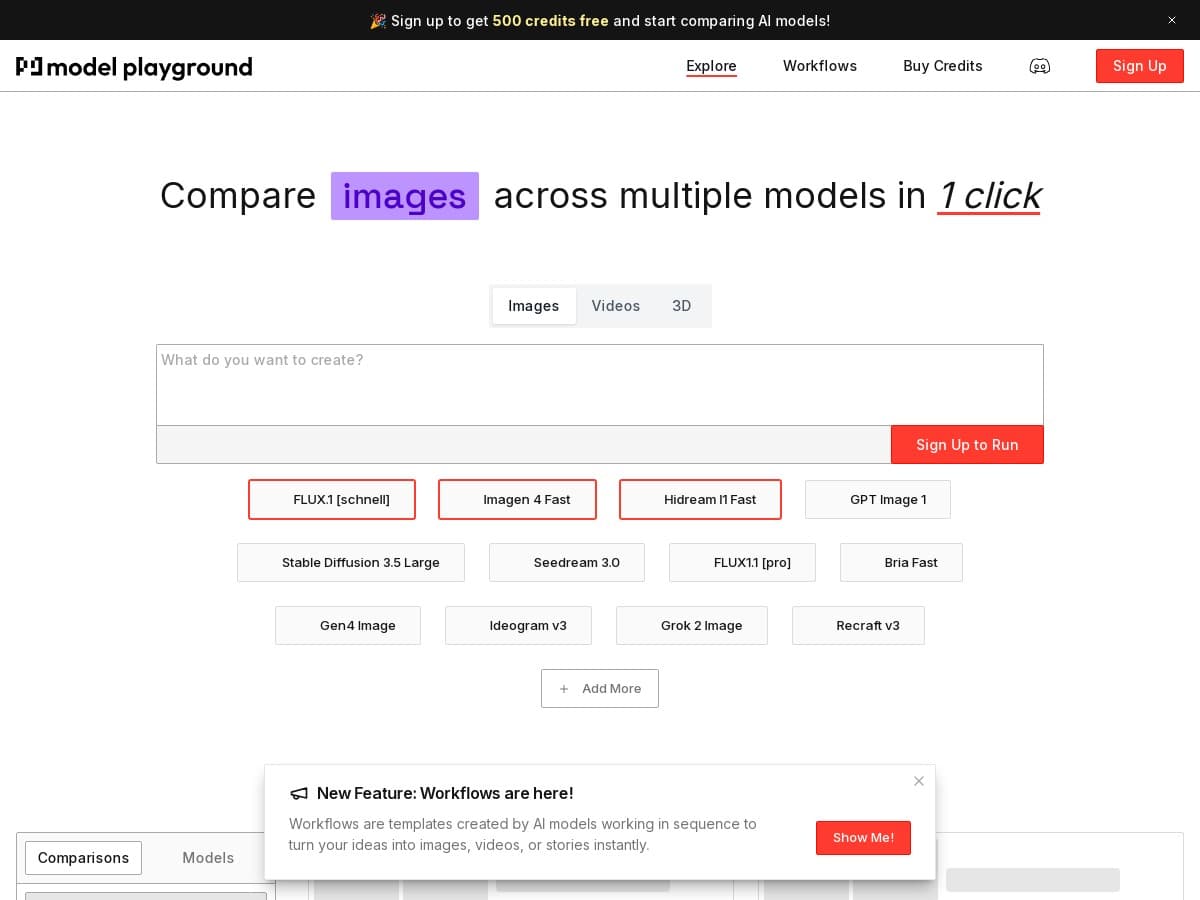
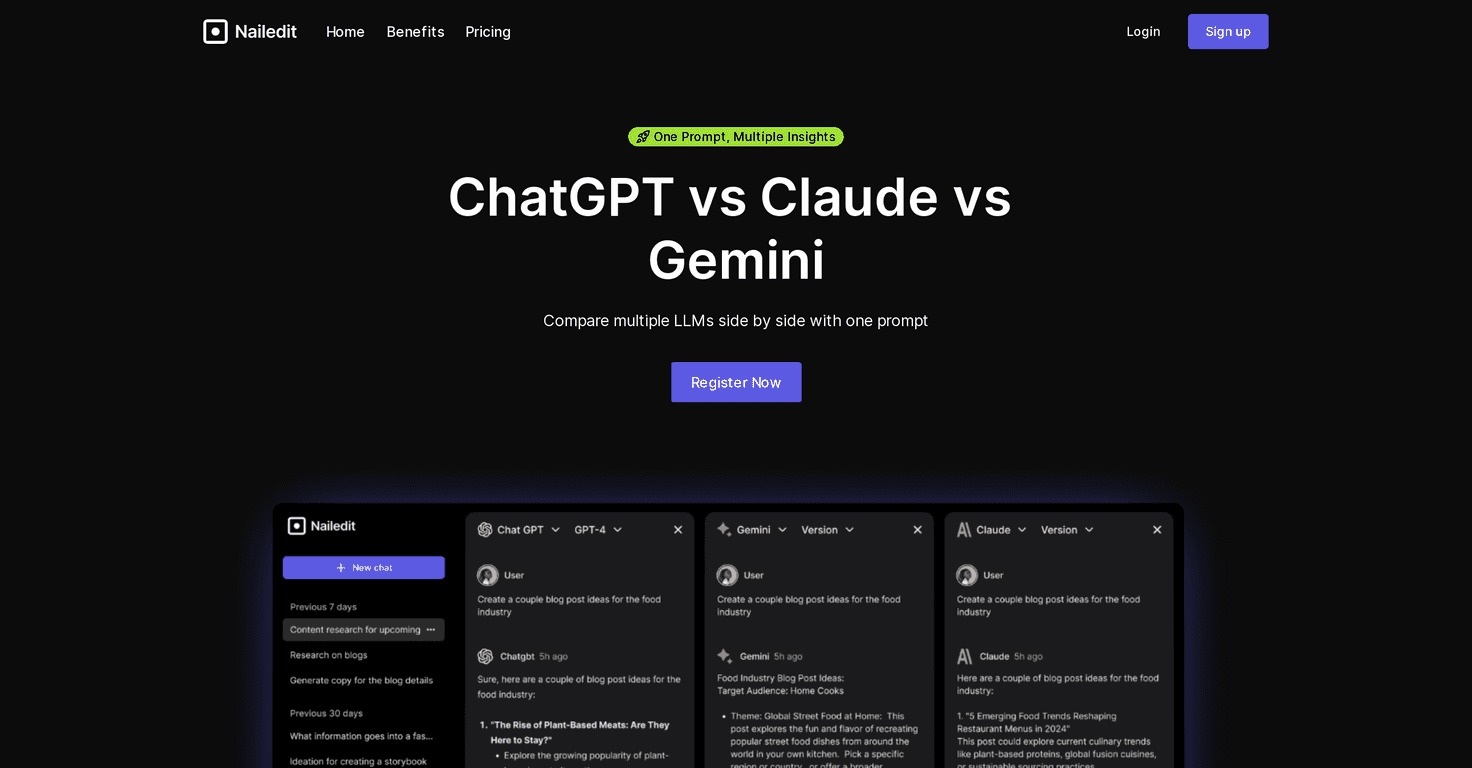
This intuitive platform allows you to compare three popular models—ChatGPT, Claude, and Gemini—all at once. Ready to dive into the details? Let’s see how this unique tool can help you make informed decisions.
Nailedit Review
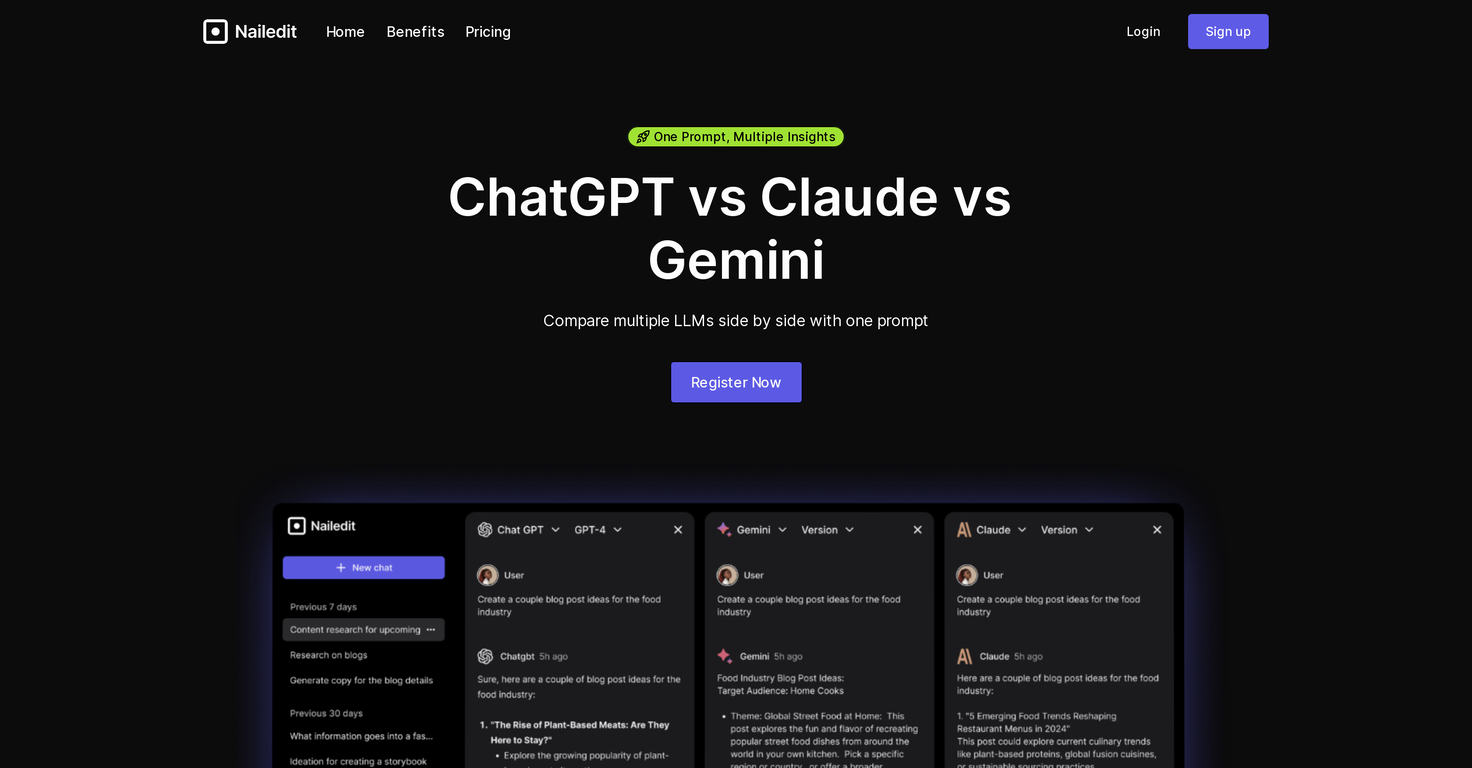
The Ultimate AI Comparison Tool is truly a game-changer for anyone looking to understand the differences between top AI models. With just a single prompt, users can see how each model responds, providing immediate insights into their strengths and weaknesses.
What I love most about this tool is its user-friendly design. It’s perfect for both seasoned tech enthusiasts and those new to AI. Simply input your prompt and watch the magic unfold as you see real-time responses from ChatGPT, Claude, and Gemini side by side. This side-by-side comparison makes it so much easier to evaluate which model truly fits your needs.
However, it’s essential to acknowledge that the experience may vary depending on each model’s performance. Users might also need some background on reading and interpreting AI-generated responses to fully benefit from the comparisons. Even though you can only compare three models at a time, the insights gained are definitely worth it.
Key Features
- Input one prompt to receive responses from multiple LLMs simultaneously
- Instantly compare results across ChatGPT, Claude, and Gemini
- User-friendly interface designed for straightforward interaction
Pros and Cons
Pros
- Simplifies the process of comparing different AI technologies
- Provides insight into how various prompts yield different responses
- Helps users make informed decisions about suitable LLMs
Cons
- Effectiveness depends on the performance of the respective models
- Requires some understanding of AI output interpretation
- Limited to comparison of only three models simultaneously
Pricing Plans
Currently, there are no specific pricing plans or options detailed for using this tool, making it unclear if there are any associated costs or subscription models.
Wrap up
In conclusion, The Ultimate AI Comparison Tool is an innovative and accessible way to explore the capabilities of leading AI language models. While it has its limitations, it offers valuable insights that can guide users in selecting the best AI solution for their needs. If you’re considering diving into the world of AI or seeking to optimize your workflow, this tool is certainly worth checking out!
Promote Nailedit