LIFETIME DEAL — LIMITED TIME
Get Lifetime AccessLimited-time — price increases soon ⏳
AI Tools

OpenBox Review (2026): Honest Take After Testing

11 min read
#Ai tool

Table of Contents

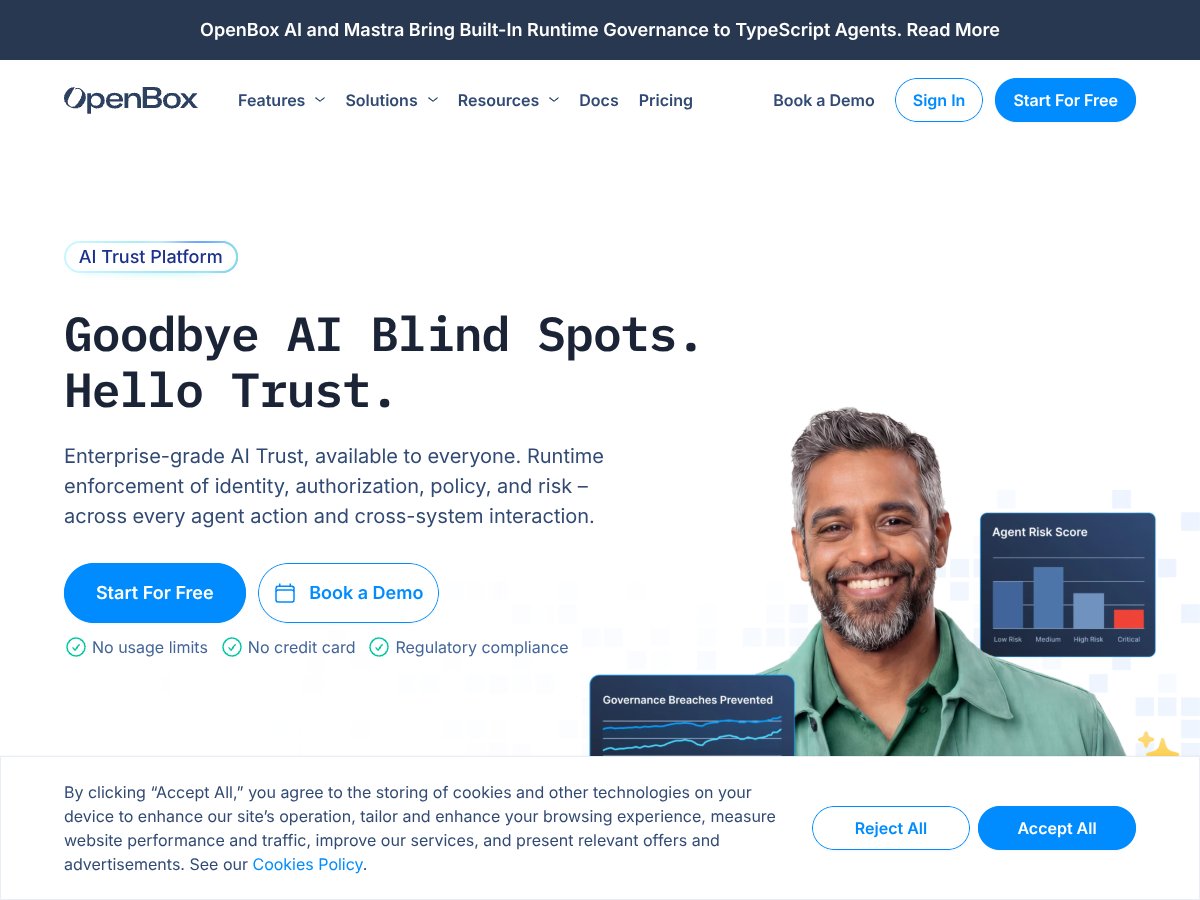
OpenBox screenshot

What Is OpenBox?

Honestly, when I first heard about OpenBox, I was pretty skeptical. The whole idea of adding trust and governance layers on top of AI systems sounds good in theory, but in practice, it’s often just another set of tools that promise a lot but deliver little. So, I decided to give OpenBox a spin, mainly because I was curious whether it could genuinely add transparency and accountability to AI agent deployments without turning into a bureaucratic nightmare.

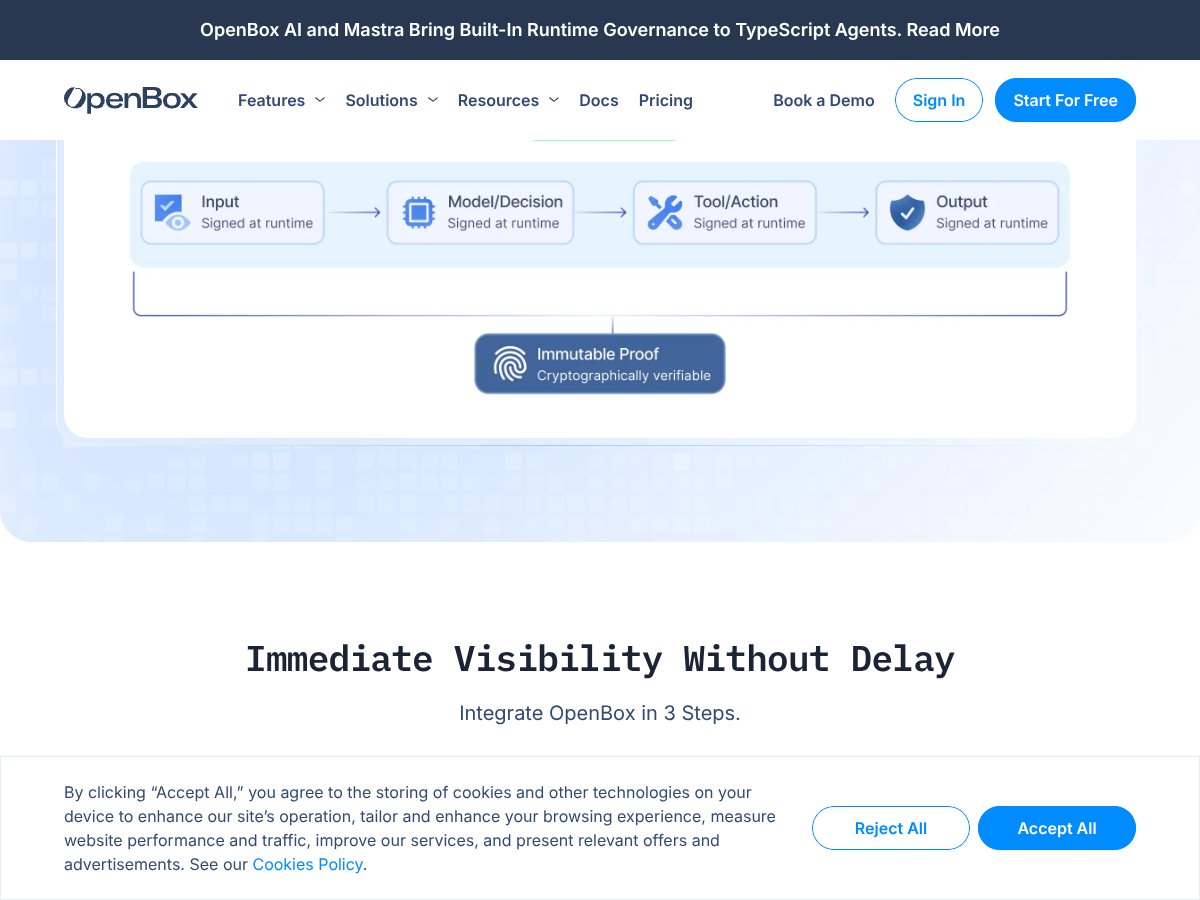
In plain English, OpenBox is a platform that claims to help enterprises keep an eye on their AI agents as they run—kind of like a security camera, but for AI actions. It offers runtime governance, cryptographic verification, and audit trails, aiming to make every decision or output from an AI agent traceable and verifiable. The big idea is to prevent those “black box” moments where you don’t really know how your AI made a decision or what risks it might be introducing.

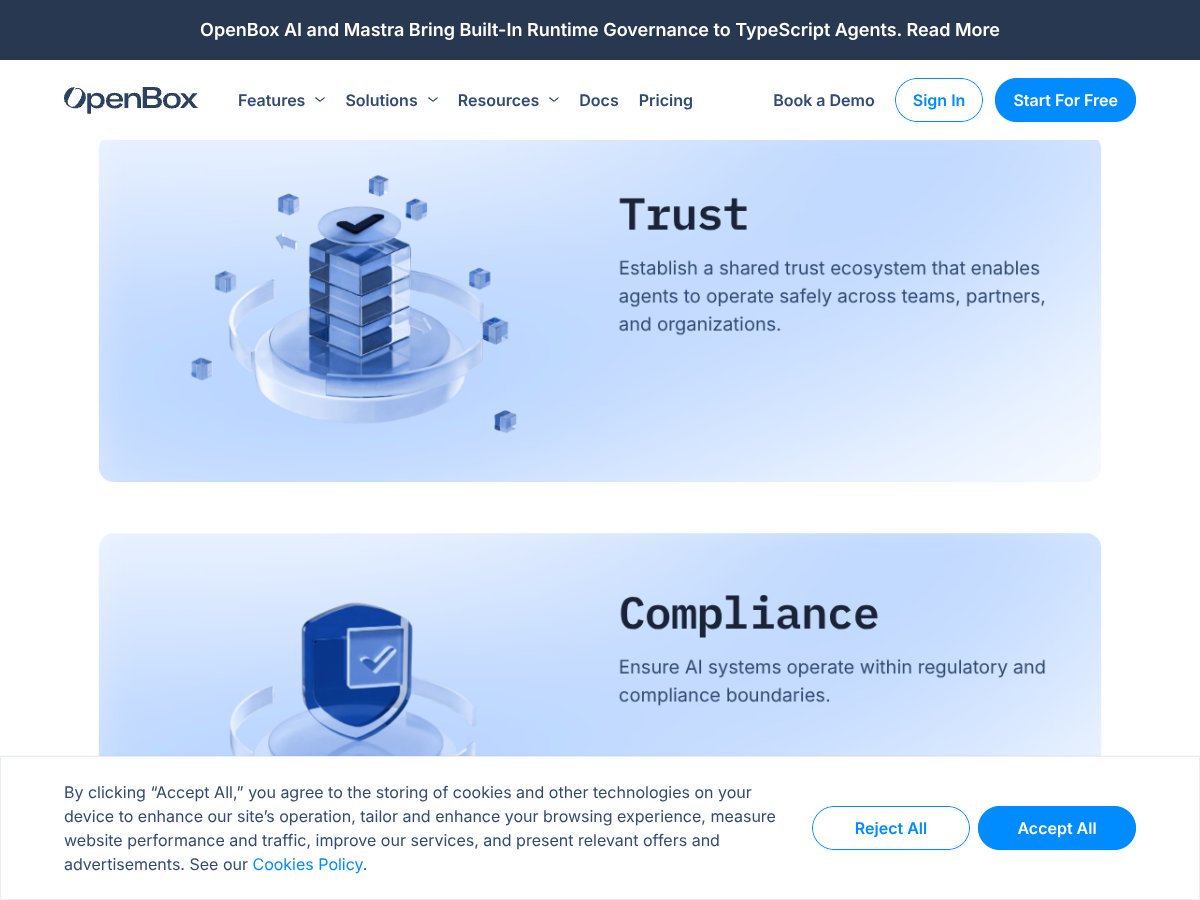
The problem it’s tackling is pretty clear: AI systems are complex, often opaque, and deploying them at scale in regulated environments is tricky. Companies need to show compliance, understand how decisions are made, and ensure that actions can be audited later. The thing is, most existing tools are fragmented—compliance systems, monitoring dashboards, and logs are scattered across different platforms. OpenBox tries to unify all that into one platform, offering a single trust layer.

As for who’s behind it, OpenBox is developed by a company called Mastra, which is focused on AI governance and trust solutions. I couldn’t find a lot of detailed background info or a team bios page, which is a minor red flag, but the platform appears to be in a production-ready state, and they promote integrations with popular AI frameworks like LangChain and Temporal.

My initial impression was that it’s not just marketing fluff—there’s something tangible here. The platform claims to work with existing AI systems with minimal fuss, and I found they do offer a straightforward SDK. But, I want to be upfront: it’s primarily focused on governance and verification, not on building or training AI models. If you’re expecting it to do the actual AI work, that’s not what this is about.

Also, it’s worth managing expectations early: there’s no detailed pricing info beyond a free tier, and no clear enterprise plans or advanced features are openly described. So, it feels like they’re still positioning themselves as a trust layer—an add-on—rather than a full-stack solution.

In summary, what I noticed was that OpenBox ticks the box for enterprise trust and compliance, but it doesn’t claim to be a full AI management platform. It’s about adding a transparent, verifiable layer on top of your existing AI workflows—if that’s what you’re after, it might be worth exploring. Just don’t expect a one-click miracle or all-in-one dashboard; it’s more of a specialized tool than a comprehensive AI platform.

OpenBox Pricing: Is It Worth It?

OpenBox interface
OpenBox in action
Plan Price What You Get My Take
Free Tier Free No usage limits, core SDK, basic runtime governance, cryptographic audit trails On paper, this sounds like a great way to get started without any commitment. But details are sparse—no info on what advanced features or support might be restricted afterward. It's a solid entry point if your needs are modest and you want to test the waters.
Enterprise/Pro Plans Not publicly specified Likely includes additional features like tailored compliance, dedicated support, custom integrations, and advanced governance controls Here's the thing about the pricing: OpenBox doesn't openly publish detailed tiers beyond the free offering. If you're considering enterprise deployment, you'll need to contact them directly for a quote. This might be a dealbreaker for some—especially if you're trying to budget upfront or compare alternatives easily.

My honest assessment? The free tier could be enough for small teams or proof-of-concept projects. But if you're an enterprise needing comprehensive, customizable governance, you'll want to clarify costs upfront. Be prepared for potential additional charges for premium features or support, which aren't transparent at this stage. Fair warning: without clear pricing details, you'll need a direct conversation with OpenBox to understand the true cost of scaling.

The Good and The Bad

What I Liked

  • Seamless SDK integration: The single SDK approach means minimal architectural fuss—install, configure, and go. That’s a real time-saver, especially when integrating with existing AI workflows.
  • Cryptographic verification: Having built-in cryptographic audit trails is a standout feature. It provides verifiable evidence of every agent action, which is invaluable for compliance and trust.
  • Real-time visibility: Unlike many governance tools that only flag issues post-mortem, OpenBox offers immediate oversight of all actions. This transparency is crucial for high-stakes environments.
  • Support for cross-system interactions: The platform’s ability to monitor agent actions across different systems and tools helps create a unified governance layer—no more silos or blind spots.
  • Flexible governance rules: Configurable policies mean you can tailor the platform to your specific compliance needs, whether that’s risk management, regulatory adherence, or operational controls.
  • Support for decentralized identity (DID): This adds an extra layer of trust, making agent identities cryptographically verifiable—great for multi-party or multi-organization setups.

What Could Be Better

  • Limited public info on enterprise plans: Without clear pricing or feature tiers, it’s hard to evaluate value or compare with competitors. You’ll need to reach out directly, which adds friction.
  • Focus mainly on governance: While robust on runtime controls, it doesn’t seem to offer built-in tools for AI development, training, or model management. That could be a limitation if you're looking for a full-stack solution.
  • Early-stage features: Some features appear to be in beta or less mature, which might lead to stability concerns or missing capabilities for mission-critical deployments.
  • Potential complexity for small teams: If your organization is tiny or just experimenting, the governance layer might feel overkill or overly complex to implement and manage.
  • Pricing opacity: The lack of transparent enterprise pricing could be a red flag, especially if you're trying to do a quick ROI analysis or compare alternatives.

Who Is OpenBox Actually For?

OpenBox interface
OpenBox in action

If your team is already deploying agentic AI at scale and needs to ensure strict oversight, OpenBox could be a game-changer. It's best suited for enterprise environments where compliance, auditability, and trust are non-negotiable. For example, a financial services firm deploying automated trading agents or a healthcare organization managing sensitive patient data with AI assistants—these would benefit from the platform’s cryptographic verification and real-time governance.

Additionally, organizations that require cross-system oversight—say, integrating AI workflows across multiple cloud providers, APIs, or internal tools—will appreciate the unified control OpenBox offers. If you're a CTO or compliance officer concerned about proving AI decisions to regulators or internal auditors, this platform is worth investigating.

However, if you're a solo developer, a small startup, or just experimenting with AI prototypes, OpenBox’s focus on enterprise-grade governance might be overkill. You might find the setup and cost structure too cumbersome or unnecessary for early-stage projects.

Who Should Look Elsewhere

This platform isn't ideal for those seeking a full AI development environment or model training tools. If your main goal is building, training, and deploying models without the need for strict runtime governance, alternatives like LangChain or standard cloud ML tools may serve you better.

Similarly, if you’re looking for a lightweight workflow automation or a simple monitoring solution, OpenBox’s enterprise focus might be overkill—especially given the lack of detailed pricing transparency. It’s also not suitable if you need mature, off-the-shelf solutions for non-enterprise use cases, or if you rely heavily on community plugins and integrations that OpenBox hasn't publicly announced support for.

Fair warning: If you expect a plug-and-play experience with extensive customization options out of the box, you might be disappointed. The platform appears to be geared towards organizations with complex governance needs and the resources to implement them.

}

How OpenBox Stacks Up Against Alternatives

LangChain

- LangChain is primarily an AI agent framework that helps you build, manage, and orchestrate AI workflows. While it offers some governance extensions, it doesn’t focus as heavily on runtime verification or cryptographic audit trails. Think of LangChain as a toolkit for building AI agents, rather than a dedicated trust platform. - Price-wise, LangChain is open-source and free at its core, but if you want advanced governance or enterprise features, you'd need to layer on additional tools or services, which can add costs. - Choose this if... you need a flexible, open framework for building AI agents and are okay managing your compliance and governance separately. - Stick with OpenBox if... you want integrated, enterprise-grade governance with real-time controls and cryptographic verification built-in.

LangGraph

- LangGraph offers orchestration and monitoring for AI workflows, with a focus on visual management and interaction tracing. It’s more about managing complex AI pipelines than enforcing trust policies, though it does include some oversight features. - Pricing varies, often based on enterprise deployment and scale, but it’s generally aimed at larger organizations investing in AI orchestration. - Choose this if... your priority is managing complex AI workflows with visual tools and you’re okay with adding separate security layers. - Stick with OpenBox if... you need a trust platform that directly enforces policies and provides cryptographic proof of actions.

CrewAI

- CrewAI focuses on autonomous AI agent orchestration, enabling multiple agents to work together, often in enterprise contexts. It emphasizes collaboration and scaled automation but less on detailed runtime governance. - Pricing details are less transparent, generally tailored to enterprise clients. - Choose this if... you want scalable autonomous agents working in harmony and are less concerned about cryptographic verification. - Stick with OpenBox if... you want rigorous governance, real-time controls, and compliance features.

n8n

- n8n is an open workflow automation platform with AI integrations, designed for automating tasks across systems. It’s very flexible but lacks specialized features for AI governance or cryptographic audit trails. - It’s free for most use cases, with paid plans for enterprise features. - Choose this if... you need automation and workflow management with occasional AI integration. - Stick with OpenBox if... you need dedicated AI trust and security features that n8n doesn’t offer.

Temporal

- Temporal provides durable, reliable execution environments for complex workflows, including AI tasks. It’s more about ensuring processes run reliably than about governance or verification. - Pricing is usually enterprise-tier, based on usage and scale. - Choose this if... your main concern is reliable, fault-tolerant execution of AI workflows. - Stick with OpenBox if... you need governance, verification, and compliance features alongside workflow execution.

Bottom Line: Should You Try OpenBox?

Overall, I’d rate OpenBox a solid 7/10. It’s not perfect—particularly if you’re looking for a full-blown AI development platform—but for enterprise-grade trust, it hits many key points. The real strength here is its focus on runtime governance, cryptographic verification, and compliance, which are critical for sensitive or regulated deployments.

If you’re an enterprise or a team handling high-stakes AI applications that require strict oversight, OpenBox is definitely worth a shot—especially since it offers a free tier with no limits. The SDK is straightforward to integrate, and the cryptographic audit trails add peace of mind.

On the flip side, if your focus is more on building and deploying AI models rather than governance, or if you need a more mature, full-stack platform with extensive development tools, you might want to consider other options like LangChain or Temporal. OpenBox isn’t the best choice if you’re just experimenting or don’t need enterprise-level trust features.

Personally, I’d recommend trying the free tier first. If the governance and security features align with your needs, upgrading could be worth it. But if your main concern is rapid development or flexible automation without heavy compliance requirements, other tools might serve you better.

If your priority is rigorous oversight and auditability for sensitive AI tasks, give OpenBox a shot. If you’re more interested in building and iterating on models quickly, your money is probably better spent elsewhere.

Common Questions About OpenBox

  • Is OpenBox worth the money? It depends on your needs. For enterprises requiring strict governance and cryptographic verification, it’s a solid investment. For lighter use, the free tier might suffice.
  • Is there a free version? Yes, OpenBox offers a free tier with no usage limits, including their core SDK. However, premium features may require a paid plan.
  • How does it compare to LangChain? LangChain is more about building AI workflows and less about governance. OpenBox provides integrated trust features, making it more suitable for regulated environments.
  • Can I get a refund? Specific refund policies are not publicly detailed. Typically, enterprise plans may have custom agreements—check with OpenBox directly for details.
  • What kind of compliance does it support? OpenBox helps enforce policies and provides audit trails, making it suitable for regulations like GDPR, HIPAA, or PCI depending on your configured rules.
  • Is it scalable for large organizations? Yes, especially with enterprise integrations. Its architecture supports multi-team, cross-system governance.
  • Does it work with existing AI tools? Yes, it offers SDKs compatible with popular frameworks like LangChain, Temporal, and others, enabling easy integration.

As featured on

Automateed

Add this badge to your site

Stefan

Stefan

Stefan is the founder of Automateed. A content creator at heart, swimming through SAAS waters, and trying to make new AI apps available to fellow entrepreneurs.

Related Posts

best practices for honest affiliate reviews featured image

Best Practices for Honest Affiliate Reviews in 2026

Discover proven strategies for creating honest, transparent affiliate reviews that build trust, boost conversions, and ensure compliance in 2026. Learn more now!

Stefan
Verdent Review – Honest Insights on Verdent

Verdent Review – Honest Insights on Verdent

reliable tool to boost your gardening skills

Stefan
FaceSymmetryTest Review – Honest Look at Free AI Tool

FaceSymmetryTest Review – Honest Look at Free AI Tool

FaceSymmetryTest is a fun online tool

Stefan

Create Your AI Book in 10 Minutes