Table of Contents
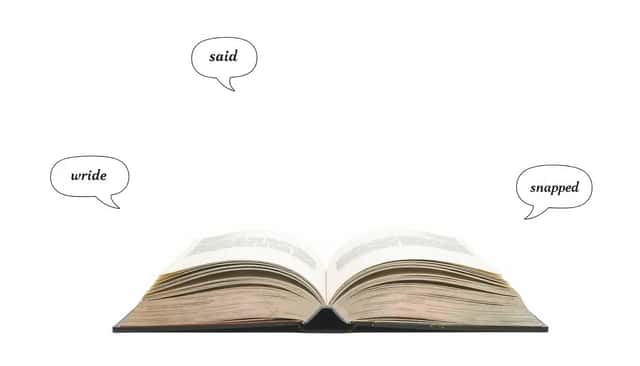
I’ll be honest: the first time I tried swapping out “said” everywhere, my dialogue got weird fast. I ended up with tags that didn’t fit the scene, and readers probably felt it even if they couldn’t name why. What changed everything for me was treating dialogue tags like a tool—not a decoration. You’ll see exactly how I’d revise a draft so the right tag (or no tag) shows emotion, keeps clarity, and doesn’t shove itself into the spotlight.
After reading, you should be able to make two quick decisions in under 10 seconds: (1) when “said” is doing the job, and (2) when an alternative will add meaning instead of noise. I’ll also walk you through a simple editing workflow with examples so you can apply it immediately.
Key Takeaways
Key Takeaways
- Use “said” as your default. It’s the invisible tag. If the dialogue already makes the emotion clear, “said” keeps pacing clean and stops your prose from sounding melodramatic.
- Swap in alternatives only when they add specific information. Think volume (shouted), secrecy/intimacy (whispered), or intensity (growled). If the word doesn’t change the reader’s understanding, don’t use it.
- Match the tag to character voice and scene context. “Declared” can work for formal, confident characters—but it’ll feel off for someone who speaks casually. When in doubt, use an action beat instead of a flashy tag.

Dialogue tags are supposed to do one job: help readers track who’s speaking and how the speaker is coming across. According to Merriam-Webster, there are about 184 synonyms for “said”—which is exactly why it’s easy to overdo it. The trick isn’t finding the most dramatic word. It’s picking the one that matches what’s actually happening in the scene.
In my experience, the best alternatives are the ones that carry specific meaning. For example, if someone is furious, “he snapped” or “he barked” can communicate speed and sharpness without extra exposition. If someone is hiding something, “she murmured” or “she whispered” instantly changes the atmosphere.
Here’s the rule set I use when revising: Use “said” when the dialogue already communicates emotion clearly. Use an alternative when the tag adds a new layer (volume, secrecy, formality, intensity). And never swap in a flashier tag just because you’re tired of “said.” If the new word doesn’t change what the reader understands, it’s clutter.
How to Effectively Use Dialogue Tags to Enhance Clarity and Tone
When dialogue is clean, readers should barely notice the tag. That’s why “said” works so well as a baseline. I start by asking: Is it obvious who’s speaking? If yes, I’m usually fine with “said.” If no—or if multiple characters are trading lines quickly—I rely on the tag to keep the conversation readable.
Then I check tone. If the line is tense, I look for a tag (or action beat) that matches the energy. For example, instead of “he said angrily,” I’d consider “he snapped.” That small change signals impatience and sharpness, and it also saves me from adding extra descriptors.
One more thing I learned the hard way: adverbs can get out of hand fast. “He said angrily” + “she whispered softly” + “he shouted loudly” starts to feel like the narrator is waving a flag. Sometimes the action or the phrasing does the heavy lifting—“he slammed the door” tells you plenty.
And yes, sometimes the best choice is no tag at all. If the speaker is obvious, removing the tag can make the exchange feel more immediate and natural. Think of it like pacing: every tag is a beat, and too many beats slow the scene down.
Common Mistakes to Avoid When Choosing Synonyms for “Said”
Variety is good. But wrong variety is distracting.
Here are the mistakes I see most often when people try to “fix” their dialogue:
- Using obscure or overly theatrical tags in casual scenes. “Bellowed” in a normal argument can feel comical unless the context truly supports it.
- Picking a word that doesn’t match the meaning of the line. If the character isn’t asserting anything, “claimed” can confuse readers by implying proof, certainty, or accusation.
- Forcing a tag to do what the dialogue already does. If the character’s words are already unmistakably angry, “growled” might be redundant.
- Ignoring character voice. “Declared” might fit a formal, authoritative character. It won’t fit someone who speaks in short, casual sentences.
- Using the wrong intensity. “Shrieked” can be perfect in a horror moment—but in a calm, reflective scene it’ll feel like someone turned the volume knob to 11.
Quick gut check: does this word clarify the tone, or is it just making noise? If it’s noise, keep “said” or switch to an action beat.
How to Incorporate Synonyms Naturally into Your Writing
If you want this to feel natural (and not like you’re “showing off” your vocabulary), you need a method. Here’s a simple 3-step workflow I use when editing dialogue-heavy scenes:
- Step 1: Read for clarity first. Scan the page and circle any moment where it’s not immediately obvious who’s speaking. In those spots, “said” is totally fine—or you can use a neutral tag like “replied” or “answered” to make the speaker clear.
- Step 2: Read for tone next. Ask what the scene is doing emotionally: tension, fear, excitement, embarrassment. If the emotion isn’t obvious from the words, that’s when an alternative tag earns its place.
- Step 3: Replace only what adds meaning. Swap “said” for a more precise word only if it changes the reader’s understanding. Otherwise, keep the default and let the dialogue do its job.
Here’s what that looks like in a real-style revision. I once had a draft line that read:
Before: “I can’t believe you did this,” she said.
After: “I can’t believe you did this,” she whispered.
Same words. Different impact. “Whispered” tells the reader this isn’t just surprise—it’s fear, secrecy, or shock held back. That’s the kind of tag swap that actually helps.
If the dialogue still feels stiff after swapping tags, I’ll often try a different approach: replace the tag with an action beat. For example:
Before: “She shouted,” he said.
After: She threw her hands up and shouted. “Don’t do that again.”
Notice what happened? The action carries the energy, and the dialogue lands without sounding like the narrator is constantly labeling emotions.
Examples of How Different Synonyms Create Different Impressions
Let’s make this concrete. Here are a few swaps that change the reader’s interpretation instantly:
- “I won’t tolerate this,” he said. — Neutral, straightforward.
- “I won’t tolerate this,” he snapped. — Sharp, impatient, likely defensive.
- “I won’t tolerate this,” he declared. — Formal, confident, almost performative.
- “I won’t tolerate this,” he growled. — Low, angry intensity; frustration that’s been building.
- “I won’t tolerate this,” he whispered. — Secretive, intimate, or scared of being overheard.
That last one is a good reminder: the tag can change the scene’s “camera angle.” Whispered doesn’t just mean soft—it suggests closeness or risk.
Strategies for Balancing “Said” and Its Alternatives for Natural Dialogue
Moderation is the whole game.
I usually aim for something like this: “said” appears most of the time, especially in exchanges where the emotion is already clear. Then I sprinkle in alternatives when they provide a specific cue the dialogue doesn’t already give.
To make that easier, here are a few practical constraints I follow for common tone tags:
- Neutral/formal (stated, replied, remarked, announced): Use when the character sounds controlled, polite, or measured. If your character is casual and messy, these can feel too “business meeting.”
- Low volume/intimacy (whispered, murmured): Works best when there’s a reason—someone’s hiding, the room is quiet, or the character is close to someone else.
- High volume (shouted, yelled): Use when the scene supports it. If everyone’s in a library and nobody reacts, the tag will feel out of place.
- Anger intensity (snapped, barked, roared, growled): These imply stronger emotion than “said angrily.” If the character is just annoyed, “snapped” might be too intense.
- Fear/hesitation (hesitated, stammered, quivered): These tags should match physical behavior. If the character doesn’t show fear elsewhere, the tag can feel random.
- Surprise/excitement (gasped, exhaled, exclaimed): Great for sudden reactions. If the character is steadily excited, you may not need a “surprise” tag for every line.
Here’s a quick “decision checklist” I actually use while editing:
- Does this tag clarify something the dialogue doesn’t?
- Does it match the character’s voice?
- Is the intensity consistent with the scene?
- If I remove the tag, would the meaning change? (If no, keep “said” or cut it.)
If the answer is yes to the first three questions, swap it. If not, don’t force it.
How to Edit Your Dialogue for Maximum Impact
When I revise dialogue, I don’t start by hunting synonyms. I start by fixing rhythm.
Here’s what I do:
- Read dialogue out loud. If a tag feels awkward when spoken, it’s probably awkward on the page.
- Spot repetition. If you’ve got 12 “said” tags in a row, that’s not automatically bad—but if the scene is also slow or repetitive, consider replacing 1–3 with action beats or a neutral alternative like “replied.”
- Replace tags with action beats when it improves pacing. Action beats can carry emotion without sounding like the narrator is constantly interpreting.
- Cut tags when the speaker is obvious. In fast back-and-forth, fewer tags often makes the scene feel more immediate.
Example:
Before: “I didn’t mean it,” she said nervously.
After: “I didn’t mean it.” She fidgeted and wouldn’t meet his eyes.
The second version gives the reader emotion through behavior, not through labeling. In my experience, that usually reads smoother and feels more “in-world.”
Where to Find Reliable Lists of Synonyms and How to Use Them Effectively
Yes, you can use thesauri and writing resources for lists. I still do. But I treat lists like a menu, not a script.
Merriam-Webster is a solid starting point for synonyms, and it’s where the “180+” idea comes from. If you want categorized guidance, you can also use resources like how to improve your dialogue tags and techniques as a reference point for structuring and revising your voice. The key is to pick a word based on what your scene needs—not on what sounds impressive.
Also, keep your own “approved” list. After you revise a few drafts, you’ll notice which tags actually fit your style. That’s the real shortcut: your personal list becomes faster than searching every time you edit.
FAQs
Use “said” when the dialogue is doing the emotional work already, or when you mainly need clarity. It’s the safest default—especially in scenes where the tone is consistent across multiple lines.
Match the tag to what’s actually happening: volume (shouted), secrecy or closeness (whispered), hesitation (stammered), or intensity (snapped). If the scene doesn’t support that cue, stick with “said” or use an action beat instead.
Skip tags when the speaker is unmistakable and the dialogue is moving fast. Use “said” when you need to prevent confusion—especially if multiple characters speak in quick succession.
Sure—common options include “whispered,” “shouted,” “mumbled,” “exclaimed,” “sighed,” “cried,” “replied,” and “answered.” Use them when the tag adds a clear cue (volume, emotion, or intention), not just because it’s different.