Table of Contents
Quick question: have you ever finished a poetry draft and thought, “It’s good… but why doesn’t it land the way it should?” That’s usually where a real poetry editor earns their keep. And no, it’s not just about catching typos.
I’m also going to skip the shaky “85%” stat here because it’s not something I can verify from the content you provided. What I can say confidently is that many poetry submissions (to magazines, contests, and presses) get rejected for reasons like weak cohesion, unclear line-level choices, or a collection that doesn’t hold together as a reading experience.
⚡ TL;DR – Key Takeaways
- •Poetry editors don’t just “fix grammar.” They help shape structure, imagery, and rhythm—while trying hard not to erase your voice.
- •Most strong collections use staged editing: developmental (big picture) → line editing (craft/voice) → proofreading (typos/format).
- •Get outside eyes early: beta readers for audience impact, then paid editors for craft and polish.
- •Budgeting is easier when you break work into rounds and decide what you’ll outsource (and what you won’t).
- •In 2026, you’ll see more bundled indie packages—but you still need to compare deliverables (rounds, tracked changes, formatting scope).
What Poetry Book Editors Actually Do (Beyond Proofreading)
Poetry editing is a different beast than editing a novel. You’re working with line breaks, white space, pacing, and the way a poem “breathes” on the page. A good editor pays attention to that whole reading experience, not just whether commas are in the right place.
Here are the main types you’ll run into:
- Developmental editing: big-picture work—poem selection, order, thematic cohesion, and whether the collection builds emotional momentum.
- Line editing: craft-level work—word choice, syntax, imagery precision, repetition control, and rhythm/flow at the line level.
- Proofreading: final cleanup—typos, punctuation consistency, and formatting checks (especially important for ebooks and print PDFs).
Also, a lot of poets underestimate the “collection” part. A single strong poem can still fail as a book if the ordering doesn’t create a satisfying arc. Editors often help with:
- deciding which poems belong (and which ones are “good but not book-good”)
- shaping the order so the reader moves through tension, release, and variation
- ensuring the book doesn’t repeat the same idea in the same way too often
And yes—many freelance editors are flexible and cost-effective because they’ll tailor the scope to your goals. If you’re browsing platforms like Fiverr or Upwork, just don’t assume “poetry editor” means “poetry book editor.” The difference matters.

The Poetry Editing Process (A Practical, Step-by-Step Plan)
Before you pay anyone, do your own first pass. Not a “quick skim.” A real one.
1) Self-edit like a reader, not like a writer
I recommend reading your poems aloud (even if you feel a little silly doing it). You’ll notice rhythm problems immediately—lines that drag, images that land oddly, and places where the poem’s sound doesn’t match its meaning.
Then check the visual side: spacing, line breaks, and whether the poem’s layout supports the reading pace. If you’re not sure where to start, pick one poem and mark:
- lines that feel “too explained”
- images that repeat without adding anything new
- moments where a reader might pause for the wrong reason
2) Developmental editing: build the collection first
Developmental editing usually starts with the collection as a whole: which poems stay, which get cut, and how the order changes the emotional arc.
In a typical developmental edit, you might expect:
- feedback on theme cohesion and audience clarity
- notes on transitions between poems (yes, even in poetry)
- suggestions for grouping poems (sequences, sections, or “mini-arcs”)
If you want background on the publishing side, this pairs well with poetry publishing.
3) Line editing: tighten craft while protecting your voice
Line editing is where you’ll feel the difference most. A strong line editor doesn’t just replace words—they preserve intent and voice while sharpening precision.
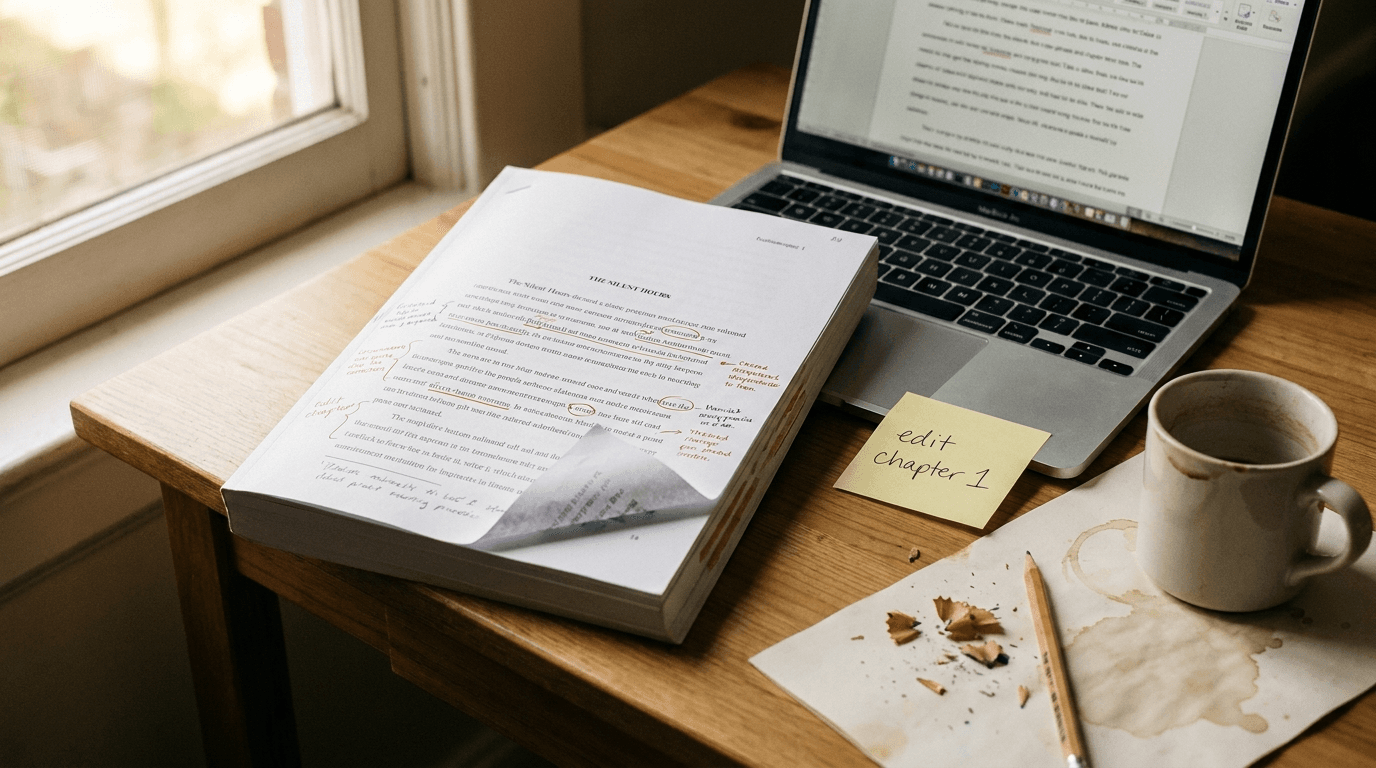
Ask for tracked changes (or an equivalent format) and detailed comments. If the editor only gives high-level notes like “this doesn’t work,” you’ll end up guessing.
4) Poem ordering: test it like a storyboard
Here’s a simple method I’ve seen work well: print your poems and rearrange them. You’re basically building a storyboard for emotion and pacing.
Don’t just shuffle once. Do a few “what if” sequences:
- what if the book opens with your most accessible poem?
- what if the book opens with your most surprising poem?
- where does the reader’s attention peak—and where does it sag?
5) Proofreading: final checks for print and ebook
Proofreading is easy to skip—until you catch a formatting problem that ruins spacing or breaks line layout. For poetry, formatting isn’t cosmetic; it’s part of the work.
If you’re using tools to speed up the early formatting stage, that can help. For example, AI-assisted formatting workflows can reduce repetitive cleanup, but you’ll still want a human pass for meaning-level issues. (If you want to use automation, use it for drafts and consistency—not for final editorial judgment.)
How to Find and Hire the Right Poetry Editors (With a Checklist)
There are a lot of editors out there. The trick is finding one who’s actually aligned with your goals and your kind of poetry.
Start with vetting, not vibes
When you’re looking at editor bios and portfolios, I’d treat these as non-negotiables:
- Poetry-specific experience: not just “I edit books,” but “I’ve edited poetry collections.”
- Visible sample work: ideally a before/after or annotated excerpt (even 1–2 pages).
- Clear scope: developmental vs line vs proofreading should be spelled out.
- Revision policy: do you get one revision round? two? what’s included?
- Confidentiality: at least a written agreement or explicit policy.
Ask the right questions (and watch for red flags)
Instead of a vague “What do you do?” use a decision framework. Here’s what to ask, plus what a bad answer sounds like:
- What editing stages do you offer?
Good: they clearly separate developmental, line, and proofreading.
Red flag: they say they “do everything” with the same process. - What does formatting include?
Good: they specify whether they handle ebook reflow, print PDF prep, or just basic consistency checks.
Red flag: they say “formatting” but can’t explain deliverables. - How many rounds are typical?
Good: they outline rounds (for example, Round 1 feedback + Round 2 polish).
Red flag: they offer one pass and call it “done,” even for developmental edits. - What’s a realistic turnaround time?
Good: they give a timeline based on word/page count and their current workload.
Red flag: they promise “ASAP” without any capacity details. - How do you preserve my voice?
Good: they explain their approach to substitutions and how they communicate intent.
Red flag: they rewrite heavily without showing rationale. - What tools do you use?
Good: they mention style sheets, tracked changes, and consistency checks; AI is optional for formatting support.
Red flag: they rely on AI as the main editorial method.
Send this message to editors (copy/paste template)
Hi [Name],
I’m looking for help editing a poetry collection of about [X] pages / [X] words. My goal is [developmental/line/proofreading], and I’m especially focused on [ordering/cohesion/rhythm/imagery].
Can you share: (1) what deliverables you provide (tracked changes, notes, style consistency), (2) how many rounds are included, and (3) your turnaround time for a project this size?
If possible, I’d also like a sample edit of 1–2 pages so I can see how you work.
Thanks!
[Your name]
And one more thing: recommendations from reputable small presses can be a strong shortcut. Organizations like Alice James Books and Cave Canem are often involved in poetry ecosystems where editorial standards are taken seriously.
Best Platforms and Services for Poetry Editing in 2026 (How to Compare)
Fiverr and Upwork can be useful for finding freelance editors quickly, especially if you’re comparing multiple bids. But don’t treat these platforms like a lottery. Your job is to verify poetry-relevant experience.
Here’s how I’d compare services in practice:
- Compare deliverables: Do they provide tracked changes? A line-by-line rationale? A summary report?
- Compare scope: developmental + line in one package is different from two separate projects.
- Compare rounds: “one edit” vs “one edit + revision” can change your final quality a lot.
- Compare formatting responsibility: ebooks and print aren’t identical tasks.
Also, keep in mind that self-publishing packages sometimes bundle editing, design, and marketing. That can be convenient, but convenience isn’t the same thing as quality. Ask exactly what’s included and whether the editor doing the work is the same person you’ll actually communicate with.
If you’re mapping budgets for indie publishing, this can also help: much does cost.

Costs and Budgeting for Poetry Book Editing (A More Realistic Model)
Let’s talk money. Poetry editing pricing can look confusing because manuscripts vary wildly and editors scope differently.
You’ll often see line editing quoted per word, and yes—many editors land in roughly the $0.02–$0.05 per word range depending on experience and complexity. But here’s the part that matters: what you’re actually getting.
A quick example budget (so you can compare bids apples-to-apples)
Say your collection is about 70 pages (roughly 10,000–14,000 words, depending on formatting). A line edit might be quoted like this:
- 10,000 words × $0.03/word = $300
- 14,000 words × $0.05/word = $700
That’s just line editing. Developmental editing often costs more because it’s more strategic and usually requires deeper reading time.
What to ask so quotes are comparable
- How many rounds? (Round 1 feedback only vs Round 1 + revision)
- What format? tracked changes, PDF comments, or a separate editorial memo
- What’s included? style consistency, line-level notes, glossary/style sheet, etc.
- What’s excluded? cover design, marketing copy, formatting for print templates, indexing
Staged editing can save you money
Work smarter, not harder. A common budget-friendly path looks like:
- Self-edit + beta readers (cheap, but helps you decide what to fix)
- Developmental edit to solve collection-level problems
- Line edit to sharpen craft
- Proofread for final errors and formatting
And because poetry collections are often under 100 pages, early feedback can be manageable. If you have a tight budget, you can even start with a smaller sample edit (1–2 poems or 10–20 pages) before committing to the full manuscript.
Common Challenges (and How to Fix Them Without Over-Editing)
Poetry has its own traps. If you don’t plan for them, you’ll waste money or—worse—damage what makes your work yours.
Formatting and layout issues
Line breaks, spacing, and visual elements can get weird in ebooks and print. The fix is not “hope for the best.” It’s either:
- hire a typesetter who understands poetry layouts, or
- learn the basics of your publishing platform’s formatting rules
If you use automation for early formatting cleanup, use it for consistency, not for final artistic decisions.
Poem ordering blind spots
It’s easy to miss thematic arcs when you’ve stared at the same poems for weeks. One practical method: print and rearrange, then track what changes.
Try keeping a simple log like:
- “After poem 5, the emotional peak drops—why?”
- “Poem 8 repeats the same image as poem 2 (too close together).”
- “The ending feels abrupt because the last two poems don’t echo each other.”
If you want more on organizing your community resources, this may help: author facebook groups.
Over-editing (the silent voice killer)
Over-editing is real. I’ve seen manuscripts where every line becomes “correct,” but the poems stop sounding like the poet. A good editor should push clarity without stripping your personality.
Ask editors how they handle substitutions. Do they replace words aggressively? Do they explain intent? Do they leave room for your original voice? Those answers tell you a lot.
Latest Trends and Industry Standards in Poetry Editing (2023–2026)
Here’s what I’ve noticed in the last few years: editing is getting more staged and more tailored, especially for indie poets. Instead of one all-purpose service, you’ll see packages broken into clear phases with specific deliverables.
In practice, trends include:
- More tracked-change workflows so poets can actually learn from edits (not just accept them).
- Sound-first revision: reading aloud is treated like a craft tool, not a “nice extra.”
- Visual-aware layout: contemporary poetry books often treat spacing as meaning.
- More indie bundles (editing + design + distribution), but quality varies—compare scope carefully.
- ARCs (Advance Review Copies) used for reviews and visibility
About ARCs: if you’re doing them for poetry, make sure your ebook/print formatting is stable before you send copies. A review copy with broken spacing or inconsistent line breaks is a fast way to look unprofessional.

Final Tips: Get Submission-Ready (and Keep Your Poetry Intact)
If you want your collection to stand a chance—whether you’re querying publishers or going indie—focus on submission-ready criteria that editors and readers actually notice.
Use this quick submission checklist
- Theme cohesion: the collection should feel like one book, not a folder of poems.
- Audience fit: does your work match the publication’s taste and formatting standards?
- Ordering logic: the first and last poems should do real work.
- White space + line breaks: they should be consistent and intentional.
- Professional presentation: clean formatting, consistent punctuation, and no obvious typos.
When querying, include editor feedback if it’s relevant and allowed by the publisher’s guidelines. And yes—pick contemporary, original work that feels specific. Generic themes aren’t what get attention; specificity does.
FAQs
How do I find a good poetry editor?
Start with platforms like Fiverr or Upwork, but vet hard. Look for editors who specifically mention poetry collections, show sample work, and explain what stage they’ll edit (developmental vs line vs proofreading). Recommendations from poetry communities and small presses can also help you find editors with real standards.
What should I look for in a poetry editing service?
Look for poetry-specific experience, clear communication, and transparent scope. You want deliverables like tracked changes, line-level notes, and a revision plan. If an editor can’t explain how they preserve your voice, that’s a sign to keep looking.
How much does poetry editing cost?
Line edits are often quoted around $0.02–$0.05 per word, depending on the editor and project complexity. Developmental editing and full packages vary more, so always compare what’s included (rounds, formatting scope, and deliverable format).
Can I hire a freelance poetry editor online?
Yes. Fiverr and Upwork make it easy to find freelance editors, but you’ll need to review bios, portfolios, and client feedback carefully. If possible, request a small sample edit before you commit to the full project.
What are the best platforms to hire poetry editors?
Fiverr, Upwork, and poetry-focused networks are common options. You can also look for editors connected to organizations like Alice James Books or Cave Canem, especially if you want genre-specific sensibilities.
How do I prepare my poetry manuscript for editing?
Do a solid self-edit first: read aloud, check line breaks and white space, and make sure the collection order is at least intentional. Then incorporate feedback from beta readers or critique partners so your paid edit targets the right problems—not everything at once.