
Table of Contents
Choosing a print-on-demand service can honestly feel like trying to pick the “best” restaurant in a city you don’t know. Everyone’s promising the same thing—great quality, fast shipping, easy setup—but the real differences show up after you’ve ordered, waited, and dealt with customer questions.
And yeah, picking the wrong POD provider can get messy. You might end up with prints that look dull in real life, shipping that takes way longer than you expected, or products that don’t match your brand at all. That’s not just annoying—it can hurt sales and customer trust fast.
So what do I do when I’m evaluating POD companies? I focus on a few things: product quality (not mockups), actual turnaround times, pricing transparency, and whether the integration feels smooth. That’s what I’ll walk you through here—reviews of the big players, plus a practical way to choose the right match for your store.
Ready? Let’s get into it.
Key Takeaways
- Printful is a solid “set it and forget it” option. In my experience, it’s especially dependable for apparel and it integrates cleanly with Shopify and WooCommerce.
- Printify is often the go-to when you care most about profit margins. Many sellers report around 40–50% margins depending on product and pricing, thanks to its flexible producer network and upfront pricing.
- SPOD (Spreadshirt Print on Demand) is a good fit if you’re building an eco-conscious brand. They’re projected to have about 30% of items using eco-friendly materials by late 2025.
- Always order samples first. Don’t skip this. You’ll want to check color accuracy, print sharpness, fabric feel, and durability (especially after a wash).
- Match the POD provider to your platform. If your store setup is Shopify, WooCommerce, Etsy, etc., choose a provider with integrations that don’t require weird workarounds.

Best Print-on-Demand Services in 2025 (Ranked and Reviewed)
Print-on-demand is growing fast—by the end of 2025 it’s expected to hit around $12.96 billion, with growth near 27% per year. That’s great news… but it also means more companies, more catalogs, and more “looks good on the website” claims.
Here’s what I’d actually consider if I were starting fresh today. These three come up again and again for good reasons.
Printful is one of the most consistent picks. In my experience, it’s the least stressful if you want reliable product quality and shipping that matches what they say. They also keep expanding their catalog—by 2025 they’d added about 2,550 new items in the past year, so you’re not stuck with the same handful of designs forever.
Then there’s Printify. If you’re trying to build a store where profit margins matter more than anything, Printify is often the better lever. Many sellers report 40–50% profit margins, and some product types can go even higher depending on your pricing and how you choose producers. The big thing I like? You can often see costs clearly before you commit.
Finally, SPOD (Spreadshirt Print on Demand) stands out when sustainability is part of your brand story. They’re expected to use eco-friendly materials on around 30% of their products by the end of 2025. If your audience cares about sourcing and materials, this is the type of provider you’ll feel good about putting on your product pages.
Step-by-Step Guide to Selecting the Right Print-on-Demand Provider
Choosing a POD provider shouldn’t feel like guesswork. I treat it like picking a supplier: you want quality, speed, fair pricing, and an easy workflow. Here’s the exact approach I use.
Step 1: Know Your Niche and Products
Start with what you’re actually selling. If you’re planning custom kids’ books or journals, you’ll want platforms built for that format (like Amazon KDP or Lulu). But if you’re doing apparel, you’ll care a lot more about garment options, print methods, and how consistent the results are across sizes.
Step 2: Order Samples to Check Quality
I can’t stress this enough. You can’t fully judge print quality from a product photo on your screen. I’ve learned that the hard way. Order samples and check:
- fabric feel (especially for shirts—weight and softness matter)
- color accuracy (watch for “looks fine online, off in real life” issues)
- print sharpness (is text crisp or fuzzy?)
- durability (do a basic wash test if possible)
- packaging (do items arrive protected, or do they show up beat up?)
Step 3: Examine Profit Margins and Pricing Transparency
This is where a lot of people get burned. Make sure you understand the full cost per item—base product cost plus printing, shipping, and any add-ons. Some providers make certain charges feel “optional” until you’re already pricing products.
Printify is popular because costs are often shown upfront, which makes it easier to calculate pricing without guessing. Still, I always run the math for my own product price points (especially if you’re targeting a specific margin like 35% or 45%).
Step 4: Evaluate Integrations and Ease-of-Use
If your store is on Shopify, WooCommerce, or Etsy, you don’t want to wrestle with importing products or syncing orders. In my experience, the “easy integration” providers reduce mistakes—fewer failed orders, fewer missing variants, fewer “why didn’t this sync?” emails.
Step 5: Check Reviews and Community Support
Don’t rely only on marketing claims. I like to search for real seller experiences on places like Reddit and Facebook groups. What you’re looking for is patterns: repeated complaints about late shipments, poor print quality on certain products, or support that takes too long to respond.
Compare Shipping Speeds and Costs Between Top Print-on-Demand Companies
Shipping is where customers either stay happy… or bounce to competitors. If your delivery estimates are consistently wrong, you’ll feel it in refunds and customer support tickets.
Printful: Typically delivers US orders in about 3–7 business days. International shipping can take 10–15 days. What I like is that the pricing and delivery times are usually clear when you’re setting up shipping options.
Printify: Shipping depends on which production partner you select (Printify uses multiple producers). In general, you’re looking at around 3–8 business days for domestic (US) shipments. If you choose US-based options, you can often reduce both transit time and shipping cost—worth doing if most of your customers are in the same country.
SPOD (Spreadshirt): Known for fast production—often around 48-hour production on many orders. Standard US shipping is frequently 3–6 business days, while international is often about 7–14 business days. If speed is your selling point, SPOD is one I’d seriously compare.
One practical tip I follow: I don’t just set shipping times—I also write them clearly on the product page (or in your shipping policy). Customers don’t read fine print anyway, so your estimate should be easy to find. Saves you from “Where’s my order?” emails that could’ve been prevented.
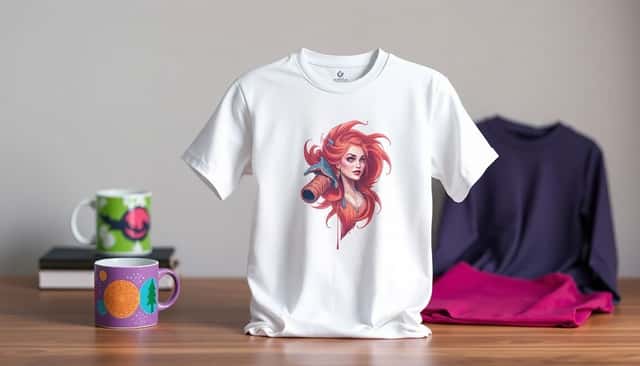
Understand Product Quality and Print Methods Offered by POD Platforms
If the print quality is off, customers don’t just complain—they stop buying. It’s that simple.
So instead of guessing, I focus on the print methods, because that’s what determines how your design will actually look on the final item.
There are two printing methods you’ll see constantly:
Direct-to-garment (DTG) printing
DTG is great for detailed designs on cotton apparel. The ink goes directly into the fabric, so you usually get vibrant colors and a more natural feel compared to older “sticker-like” methods.
Sublimation printing
Sublimation works best for polyester-based products like mugs, phone cases, and athletic wear. Instead of sitting on top, the ink fuses into the material. That usually means better durability—especially if your customers wash items often.
Before you commit, order samples and look at the details that matter:
- stitching quality (especially for shirts and hoodies)
- fabric weight (thin fabric can make a design look cheaper)
- color vibrancy (do the colors match your mockup?)
- print durability after washing (does it crack or fade quickly?)
- how the design edges look (are they sharp or slightly blurred?)
Most providers (including Printful and Printify) make sample ordering pretty straightforward. I still recommend you treat this like a test, not a formality.
Tips for Matching Your POD Provider to Your eCommerce Store Platform
Integration might sound boring, but it’s one of the biggest “hidden” reasons POD stores run smoothly—or fall apart. If orders don’t sync right, you’ll spend your time fixing issues instead of selling.
If you’re using Shopify or WooCommerce, providers like Printful and SPOD are popular because they offer plugins and fairly simple setup. You’re not just adding products—you’re also syncing orders and variants, and that’s where time gets saved.
If you’re selling on Etsy or Amazon, double-check integration behavior. Those platforms can be picky with product data. I always recommend doing a quick test listing first (even if you don’t publish it publicly) just to verify variants, pricing, and fulfillment details behave the way you expect.
And don’t ignore support. When something goes wrong (and it will, at some point), good documentation and fast help can be the difference between “fixed in 10 minutes” and “spending hours on it.”
Quick tip: create test orders to yourself. It’s the fastest way to confirm the whole chain works.
How to Choose a Print-on-Demand Service Based on Your Brand Style and Customization Options
Customization is what helps your store feel like a brand instead of a template. If you want customers to recognize your products instantly, you need options that go beyond “upload design and pray.”
If your style is more premium—clean, designer, consistent—look at providers like Gelato, which is known for high-end materials and custom packaging options. In my view, packaging is underrated. A better unboxing experience can turn a one-time buyer into a repeat customer.
For brands that rely on unique art or complex layouts, you’ll want providers that support deeper customization of print areas. Things like placement control, sizing options, and how designs handle color gradients can make or break the final look.
And if you’re selling personalized products—like custom journals, notebooks, or coloring books—you’ll likely need a provider that’s strong in that category. Lulu is a good example for book printing and binding, depending on what you’re making.
Also, don’t forget the “small” details that customers actually notice:
- custom inserts
- neck labels
- packaging options (especially for gifting)
Those touches add up. They’re also the easiest way to make your products feel intentional.
Recommendations for Print-on-Demand Services by Product Type and Audience
Not every POD company is equally strong across every product type. Here’s how I’d match them up based on what you’re selling and who you’re selling to.
Apparel and Fashion: Printful tends to be a reliable choice for DTG apparel quality, turnaround, and variety. If you’re selling t-shirts, hoodies, and similar items, it’s usually the provider I’d start with for consistency.
Stationery and Books: If you’re making planners, journals, or niche notebooks, a book-focused option like Lulu or Amazon KDP often fits better than an apparel-first catalog. You get the right tooling for book printing and distribution.
Home Decor Items (Canvases, Posters): Gelato is a strong option for wall art. The print clarity is usually excellent, and because printing can be done locally in more locations worldwide, shipping can come faster and cost less.
Sustainable Products: SPOD is a great pick if sustainability matters to your audience. Eco-friendly options are becoming a bigger part of buying decisions, and you’ll want a provider that can back that up.
If you’re targeting a specific niche—like children’s books—this can be especially important. You might find it helpful to check out this guide on becoming a children’s book author, because it can help you choose a platform that matches how you’ll publish and distribute your work.
Next Steps: Ordering Product Samples and Testing POD Providers
Once you’ve narrowed down your shortlist, it’s time to test for real. Not “test” like uploading mockups—test like you’re a customer.
Order samples for two reasons:
- to check quality (colors, print sharpness, fabric feel)
- to experience packaging and unboxing (what will your customer actually see?)
One thing I’ve learned: quality can vary by printing location and timing. So if you can, order more than one sample set. Even ordering the same item twice can reveal how consistent the provider is.
Pay attention to shipping notifications and tracking too. Are updates actually helpful, or do they go quiet until the package arrives? That’s a customer experience issue, not just a logistics one.
To test customer support, contact their help channel with a basic question. Ask something simple like “What’s the production time for this exact product?” or “How do I handle sizing changes?” Then judge:
- how fast they respond
- whether the answer is actually useful
- how clearly they communicate next steps
Lastly, show the samples to people you trust and ask for honest feedback. You might be too close to your brand, and outsiders catch the small things—like “the ink looks darker than expected” or “the shirt feels scratchy.”
When your samples look good and your workflow holds up, you’ll be in a much better position to launch confidently and scale without constant surprises.
FAQs
Start by reviewing their product selection and the customization tools they offer. Then order samples—seriously. It’s the only way to verify print quality, color accuracy, and overall aesthetics so the finished product matches your brand message and your audience’s expectations.
Most major POD providers offer integrations with popular platforms like Shopify and Etsy. Still, don’t assume—check the provider’s integration options and test their app/plugin if possible before you commit, especially if you use custom themes or specific product variants.
Compare each provider’s shipping pages for delivery estimates and rates, then place a couple of test orders to the regions you care about most. That way you’re not relying on generic numbers—you’ll see the real turnaround time and final cost for your use case.
Yes. Samples help you confirm print clarity, material quality, color accuracy, durability, packaging condition, and how shipping looks in practice. It’s the best way to avoid customer disappointment later.