
Table of Contents
So, you’re thinking about PublishDrive? Picture this: You’ve got a book, and you’re ready to share it with the world. The writing part’s done, but the journey’s just beginning. Enter PublishDrive .
Want a shortcut? Our AI book creator takes your topic and builds a structured book you can refine.
PublishDrive is here to take the headache out of getting your book out there. It’s all about making sure your story finds its way onto bookshelves around the globe, digital and otherwise, without you needing to become an expert in publishing overnight. From getting your book listed on big platforms to figuring out who’s reading your stuff, PublishDrive has got your back.
Now, we’re diving into this PublishDrive review to see what it brings to the table. Whether it’s your debut novel or you’ve been around the block a few times but still looking for that big break, we’re going to get into the nitty-gritty of how PublishDrive might just be the game-changer you need.
PublishDrive Review
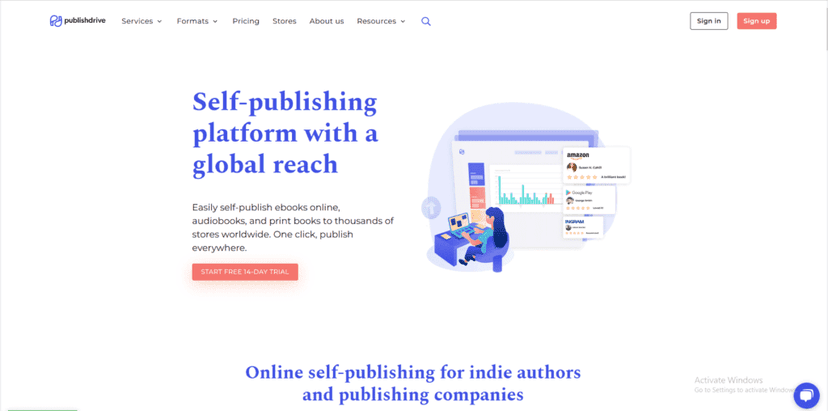
When you first look into PublishDrive for publishing your book, you’ll notice it’s built to handle a lot of the heavy lifting that comes with self-publishing.
What sets PublishDrive apart is its broad distribution network. The platform makes it simple for authors to get their books not just on major e-retailers like Amazon and Barnes & Noble but also on a global scale, including hundreds of smaller retailers and libraries across different countries.
This wide net is invaluable for authors aiming to reach readers far beyond their own backyards.
Another aspect where PublishDrive shines is in its marketing and promotion support. The platform understands that a great book needs to be seen to sell, so it equips authors with tools to boost their book’s visibility.
This includes features for running price promotions, which can be a game-changer for attracting new readers and climbing up the bestseller lists.
Moreover, PublishDrive offers analytics that helps authors understand their sales data, offering insights into how, when, and where books are selling. This data is gold for authors planning their marketing strategy, as it helps pinpoint what’s working and what isn’t.
PublishDrive also simplifies the financial side of publishing. The platform operates on a subscription model, which is somewhat unique in the publishing world.
Instead of taking a cut from each sale, PublishDrive allows authors to keep 100% of their royalties for a monthly fee. For authors who sell books in high volumes, this model can be more financially beneficial than traditional royalty splits offered by other platforms.
But what really makes PublishDrive stand out is its commitment to innovation and author success. The platform regularly updates its services and tools to meet the changing needs of the digital publishing landscape, showing a clear understanding of what authors need to succeed in today’s competitive market.
In essence, PublishDrive isn’t just another self-publishing platform. It’s a comprehensive solution designed to take the guesswork out of distribution, marketing, and sales analytics, offering a path for authors to publish globally, understand their readers, and ultimately, sell more books.
For authors ready to take their work worldwide and keen on keeping a close eye on their sales progress, PublishDrive might just be the partner they’re looking for.
How Does PublishDrive Work

At the heart of it, PublishDrive takes the complex process of getting your book from a final draft to being available on bookshelves around the world and simplifies it into a few manageable steps.
First off, after you’ve poured your heart and soul into writing, the next step is to sign up for PublishDrive and upload your manuscript. This platform is welcoming to a wide array of formats, ensuring that your book, in whatever shape it currently is, can be easily submitted.
Once your book is uploaded, PublishDrive does a bit of magic. It converts your manuscript into various formats that different e-retailers and libraries require.
This means you don’t have to worry about the nitty-gritty details of digital book formats and specifications; PublishDrive handles all of that, ensuring your book looks its best no matter where it’s sold.
The distribution process is where PublishDrive really shines. With just a few clicks, your book can be sent to hundreds of stores and libraries across the globe. This includes major players like Amazon and Google Play, as well as local and niche markets you might not have considered on your own.
It’s a game-changer for authors aiming for an international audience, as PublishDrive makes global distribution both achievable and surprisingly simple.
But it’s not just about getting your book out there. PublishDrive also offers tools to help you track sales and manage royalties.
With comprehensive analytics, you can see how your book is performing across different platforms and regions. This insight is invaluable for understanding your market, refining your promotional strategies, and planning future projects.
In essence, PublishDrive streamlines the self-publishing process by handling the technical details of book formatting and distribution, opening up global markets for your work, and providing you with data to help guide your publishing journey.
For authors who want to focus on writing and leave the complexities of publishing to someone else, PublishDrive presents a compelling solution.
Key Features of PublishDrive
PublishDrive offers several key features designed to support authors at every stage of their publishing journey, emphasizing simplicity, wide distribution, and insightful analytics.
One of the platform’s standout features is its ability to distribute to a global network.
With connections to over 400 online stores and 240,000 libraries worldwide, PublishDrive offers unprecedented reach for authors, making it possible to access markets that would be difficult to tap into individually.
This includes major e-book retailers, subscription services, and library distributors, covering regions beyond the usual U.S. and European markets to include Asia, Latin America, and Africa.
Another significant aspect is PublishDrive’s approach to royalties. Unlike traditional publishing or some self-publishing platforms that take a cut of your sales, PublishDrive operates on a subscription model.
This means authors pay a monthly fee and keep 100% of their net royalties. For authors who sell their books at higher volumes, this can result in more earnings over time compared to platforms that take a percentage of each sale.
PublishDrive also emphasizes the importance of data with its analytics tools.
Authors have access to detailed sales reports that break down performance by country, store, and book. This data is critical for making informed decisions about marketing strategies and understanding your audience better.
Knowing which regions or platforms are the most receptive to your books can help tailor your promotional efforts more effectively.
Marketing and promotion tools within PublishDrive give authors additional support in getting their books noticed. From price promotions to Amazon advertising, the platform provides resources to boost book visibility.
These tools are integrated into the PublishDrive system, making it easier for authors to manage their marketing efforts alongside their distribution efforts.
Finally, PublishDrive makes the publishing process smoother with its conversion and aggregation services. Authors can upload their manuscript in various formats, and PublishDrive will convert it to the necessary formats for different retailers and libraries.
This simplifies the technical aspects of publishing, allowing authors to focus more on writing and less on formatting.
In summary, PublishDrive is packed with features that tackle the primary challenges of self-publishing: broad distribution, financial transparency, market intelligence, promotional support, and technical ease.
For authors looking for a comprehensive platform to manage their publishing and marketing needs, PublishDrive presents a compelling option.
Benefits of Using PublishDrive
Using PublishDrive comes with a host of benefits that cater to both new and experienced authors looking to maximize their reach and simplify their publishing process.
Here’s how authors can gain from leveraging PublishDrive’s services:
Firstly, the global distribution capability of PublishDrive is a game-changer. Authors get to tap into a vast network that spans hundreds of retailers and libraries across different continents.
This broad reach means your work can be accessed by readers around the world, opening up opportunities for international recognition and sales that would be hard to achieve through more localized or limited platforms.
Another significant benefit is the financial model PublishDrive employs. By allowing authors to keep 100% of their net royalties while operating on a subscription basis, it aligns the platform’s interests with those of the authors.
This model can be particularly advantageous for authors with high sales volumes, as it allows them to retain more of their earnings over time compared to platforms that take a cut from each sale.
The analytics tools provided by PublishDrive offer deep insights into sales and performance metrics. Authors can see how their books are performing in real-time, with data broken down by regions, stores, and more.
This level of detail is invaluable for refining marketing strategies, targeting the right audiences, and planning future projects with a data-driven approach.
Furthermore, PublishDrive’s suite of marketing and promotional tools assists authors in increasing their books’ visibility. Whether it’s through running price promotions or leveraging advertising options, authors have at their disposal effective ways to boost their book’s profile among potential readers.
These integrated marketing tools can help authors navigate the often complex and crowded book marketing landscape more effectively.
Lastly, the ease of use and technical support offered by PublishDrive cannot be overstated. From book conversion to ensuring your manuscript meets the various requirements of different platforms, PublishDrive simplifies what can often be a technical and time-consuming part of the self-publishing process.
This lets authors focus more on their writing and less on the operational aspects of publishing.
Limitations and Considerations
While PublishDrive offers numerous advantages for authors looking to self-publish, there are a few limitations and considerations worth noting before diving in.
One notable consideration is the subscription-based model.
While this can be financially advantageous for authors with high sales volumes, it may not be the best fit for everyone, especially new authors who are still building their audience and may not see immediate high sales.
The upfront monthly fee, regardless of sales performance, could be a barrier for those just starting out or those on a tight budget.
Another point to consider is the wide but not universal reach of PublishDrive’s distribution network.
While it covers a vast array of retailers and libraries, there might still be specific platforms or niche markets that are not included. Authors aiming for maximum coverage might need to complement PublishDrive’s distribution with additional efforts to cover any gaps.
The effectiveness of marketing and promotional tools can also vary.
While PublishDrive provides authors with resources to boost their book’s visibility, the success of these marketing efforts isn’t guaranteed. Authors need to have a clear marketing plan and may need to experiment with different strategies to find what works best for their book.
Additionally, the platform’s comprehensive nature means there might be a learning curve for authors new to self-publishing.
Lastly, while PublishDrive does offer customer support, the level of one-on-one assistance or personalized advice might not match that of a traditional publishing house or a dedicated literary agent.
Authors using PublishDrive are taking a more independent route, which demands a proactive approach to learning, marketing, and sales analysis.
PublishDrive vs. Other Writing Tools
When comparing PublishDrive to other writing and publishing tools available in the market, it’s important to look at what sets each apart, focusing on their unique features, target audience, and overall value they bring to authors and publishers.
Amazon KDP (Kindle Direct Publishing)
KDP is one of the most popular platforms for self-publishing authors, mainly because it directly taps into the Amazon ecosystem, the largest book retailer globally. KDP excels in simplicity and integration with Amazon’s Kindle and print-on-demand for physical books.
However, it primarily focuses on Amazon’s marketplace, which can be limiting for authors seeking broader distribution.
In contrast, PublishDrive offers a wider distribution network that includes hundreds of retailers and libraries beyond Amazon, making it ideal for authors looking to maximize their global reach.
Smashwords
Another major player in the self-publishing field, Smashwords, provides extensive distribution options, similar to PublishDrive. It distributes to major retailers as well as libraries.
Smashwords also offers authors a high degree of control over pricing and promotional campaigns.
However, PublishDrive distinguishes itself with its subscription model that lets authors retain 100% of net royalties, which can be more beneficial financially for authors with higher sales volumes.
Additionally, PublishDrive’s analytics and marketing tools are more advanced, offering authors deeper insights into their sales and performance.
Draft2Digital
Known for its user-friendly interface and no upfront costs, Draft2Digital offers distribution to a wide range of e-book retailers.
Like PublishDrive, it automates the conversion of manuscripts into various e-book formats. Draft2Digital also provides authors with promotional tools, such as universal book links.
However, PublishDrive covers a more extensive range of services in marketing, analytics, and even offers a unique subscription model.
For authors looking for a broader suite of tools to manage their publishing journey end-to-end, PublishDrive might offer a more comprehensive solution.
While PublishDrive, Amazon KDP, Smashwords, and Draft2Digital each have their strengths, PublishDrive’s global distribution network, subscription model for retaining royalties, and analytics and marketing tools make it a strong contender for authors who are serious about maximizing their book’s potential across the global market.
Who Should Use PublishDrive?
PublishDrive is an ideal platform for a variety of individuals in the publishing world, catering especially to those who are looking for a comprehensive solution to reach a global audience.
Here’s who can benefit the most from using PublishDrive:
- Indie Authors and Self-Publishers: Individuals who are venturing into self-publishing without the backing of a traditional publishing house will find PublishDrive particularly useful. Its wide distribution network, including hundreds of retailers and libraries around the world, provides a level of reach that would be difficult to achieve independently. The platform’s simplicity and automation of many publishing processes make it accessible for authors at any experience level.
- Small to Medium-sized Publishers: PublishDrive can also be a valuable asset for small to medium-sized publishing firms aiming to expand their catalog’s reach without significantly increasing overhead. The platform’s analytics and royalty management tools make it easier to manage multiple authors and titles efficiently, providing insights into performance across various markets.
- Authors Looking to Expand Globally: For authors who already have a presence in their home market and are looking to expand internationally, PublishDrive offers a seamless way to enter new markets. With its extensive global distribution network, authors can make their work available in territories they hadn’t accessed before, increasing the potential for discovery and sales worldwide.
- Data-Driven Authors: Authors who love diving into the details and understanding the nuances of their book’s performance will appreciate PublishDrive’s analytics capabilities. The platform provides detailed reports on sales, reader demographics, and more, allowing authors to make informed decisions about marketing strategies and future projects.
- Authors Interested in Marketing Support: Lastly, authors who recognize the importance of marketing but might not have the expertise or resources to execute effective campaigns will find PublishDrive’s promotional tools beneficial. From price promotions to Amazon ads, the platform offers various ways to increase visibility and attract readers.
Conclusion
To conclude this PublishDrive review, it’s clear the platform offers an impressive suite of features tailored for authors and publishers aiming for a global audience. With its extensive distribution network, robust analytics, and marketing tools, PublishDrive stands out as a comprehensive solution for navigating the complexities of self-publishing and reaching readers worldwide.
For anyone looking to simplify their publishing process while maximizing reach and earnings, PublishDrive presents a compelling option. It’s a platform that not only broadens your book’s potential audience but also equips you with the data and tools necessary for informed decision-making and effective marketing strategies.