Table of Contents
Imagine a movie where a young Robert De Niro appears alongside his older self, without needing time travel or makeup tricks.
Or think about Kendrick Lamar transforming into Kanye West during a music video—all possible with just a few clicks.
This is not just a fantasy; it’s face swap AI in action.
This technology is changing the game in Hollywood and the music industry.
Face swap AI allows for various creative uses, from rejuvenating actors to creating digital influencers.
In this article, we’ll look at how face swap AI is impacting Hollywood and other fields.
You’ll see its role in films, its creativity in music videos, and its growing significance in digital marketing.
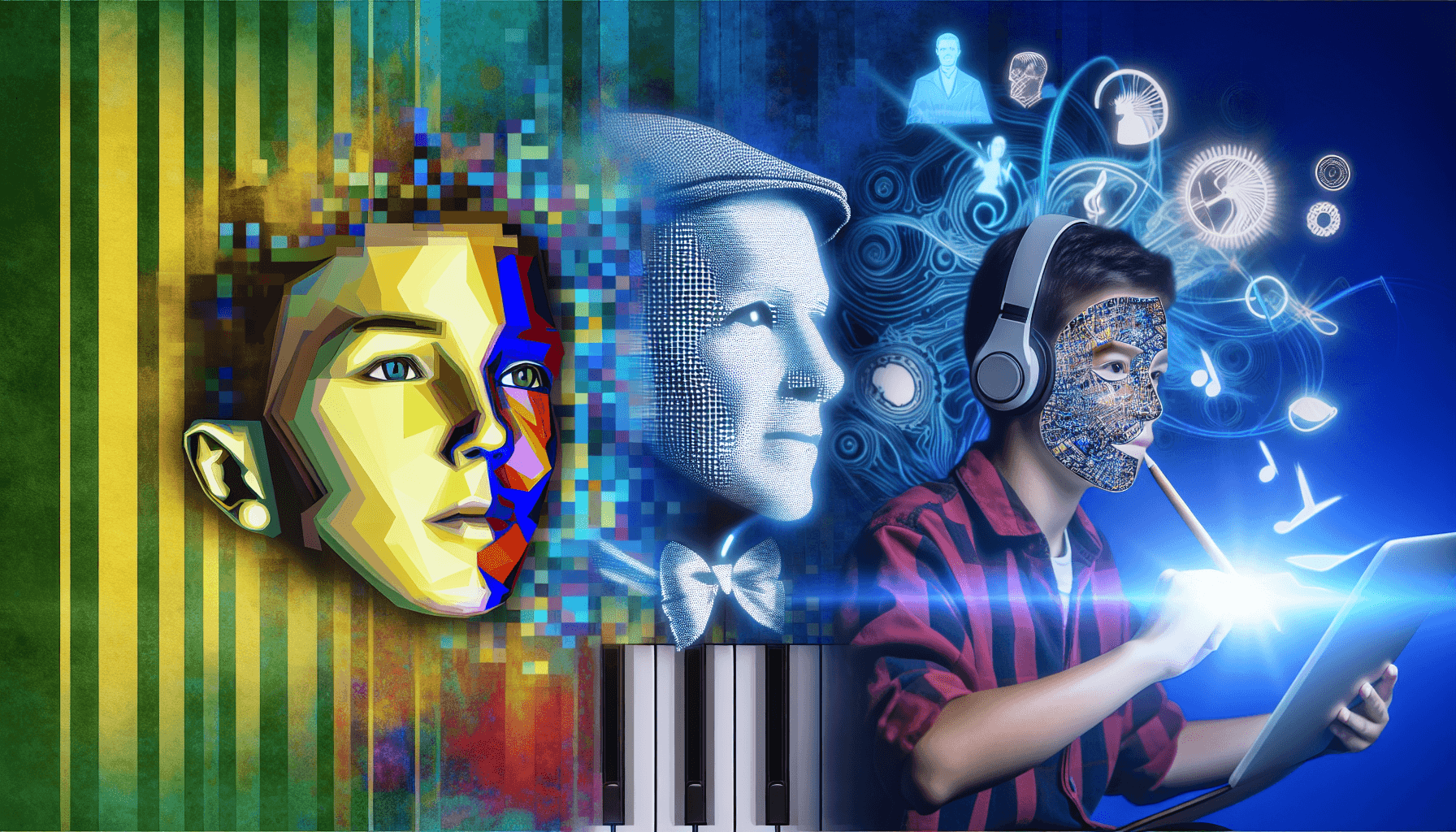
Face swap AI is a clever blend of artificial intelligence and visual effects.
It can replace one person’s face with another in images or videos.
The results are so realistic that it can be hard to tell they are altered.
This technology is based on deepfake technology, using neural networks trained on a lot of facial data.
It accurately captures expressions, lighting, and distinct facial features.
Hollywood uses it to provide younger appearances for actors.
Marketers use it to build virtual personalities who are not real.
It is a creative tool that combines technology and imagination.
You can even try face swap AI yourself.
There are platforms available that allow users to swap faces in images or videos without needing any technical skills.
This tech is making waves, from big-screen blockbusters to trendy music videos.
Let’s dive into some high-profile examples in Hollywood.
In the film “The Irishman,” Hollywood adjusted the age of Robert De Niro using AI.
Instead of using bulky masks, teams mapped De Niro’s younger features onto his current face frame by frame.
The outcome was a seamless mix of past and present, showcasing how AI can revolutionize historical storytelling.
In “Fast & Furious 7,” after Paul Walker passed away, his brothers stepped in as digital doubles.
The production team used face swap technology to integrate their features with Paul’s likeness.
They trained models on previous footage to ensure his expressions were accurately replicated.
This effort was a heartfelt tribute, showcasing the potential of deepfake technology.
For “Indiana Jones 5,” filmmakers used AI and 3D scans to make Harrison Ford look younger.
They analyzed decades of his films to recreate his youthful appearance, creating realistic transformations.
In the 2024 movie “Here,” AI was used to make Tom Hanks appear younger across several decades.
This technology allowed for real-time changes, enabling actors to modify performances during filming.
Face swap AI isn’t limited to just movies; it’s also making waves in the music industry and beyond. Artists are utilizing this technology in music videos to create captivating visuals that gain attention and inspire conversation.
For instance, in Kendrick Lamar’s “The Heart Part 5,” his face seamlessly transitions between various iconic figures, a result of advanced deepfake techniques. This not only created a striking visual effect but aligned perfectly with the song’s themes, making it a significant cultural moment.
Moreover, virtual influencers have emerged thanks to face swap AI, demonstrating the technology’s versatility. These digital characters, such as Lil Miquela, are designed to look and act human. They promote brands and release music, sparking discussions about identity and reality in the digital age. Shudu, known as the world’s first digital supermodel, further highlights the blend of AI and fashion, walking virtual runways and participating in advertising campaigns.
Brands are also exploring face swap AI in advertising, allowing them to craft unique commercials featuring both familiar and entirely new faces without the need for traditional actors. This innovation adds a personal touch to marketing strategies, but it also raises important questions about privacy and consent.
Moving beyond the glamour of Hollywood and music, the ethical implications of using face swap AI are crucial to consider. Questions about consent arise, especially when a deceased person’s likeness is used. For instance, the film “Alien: Romulus” featured Ian Holm’s likeness with approval from his estate but not himself, leading to mixed reactions from audiences.
The venture to digitally recreate James Dean sparked controversy as many argued it’s inappropriate to manipulate the likeness of legends who can no longer speak for themselves. Additionally, non-consensual deepfakes, particularly in adult content, are an urgent concern, with public figures advocating for improved regulations to safeguard individual rights in this new digital landscape.
As face swap AI becomes more prevalent, we can expect its evolution to continue shaping various sectors. Technologies that allow real-time facial adjustments in environments like virtual reality and gaming may soon become commonplace, enhancing personal engagement in digital experiences.
Looking ahead, we can anticipate sleeker results from AI, potentially leading to seamless face swaps so realistic that distinguishing them from reality will be increasingly challenging. While these advancements are exciting, they also call for establishing appropriate boundaries and regulations to ensure ethical use.
As the landscape of media evolves, face swap AI stands on the brink of a transformative moment, pushing the boundaries of creativity and technology while also necessitating conversations about its implications. The future beckons, and it invites us all to explore what is possible while remaining cautious of the paths we tread.