Table of Contents
ISBN stands for International Standard Book Number. It's the 13-digit number that identifies a particular edition and format of a book. If you publish the same story as a paperback and a hardback, each needs its own ISBN. If you simply print more copies of an unchanged edition, you normally keep the number you already assigned. isbn.org
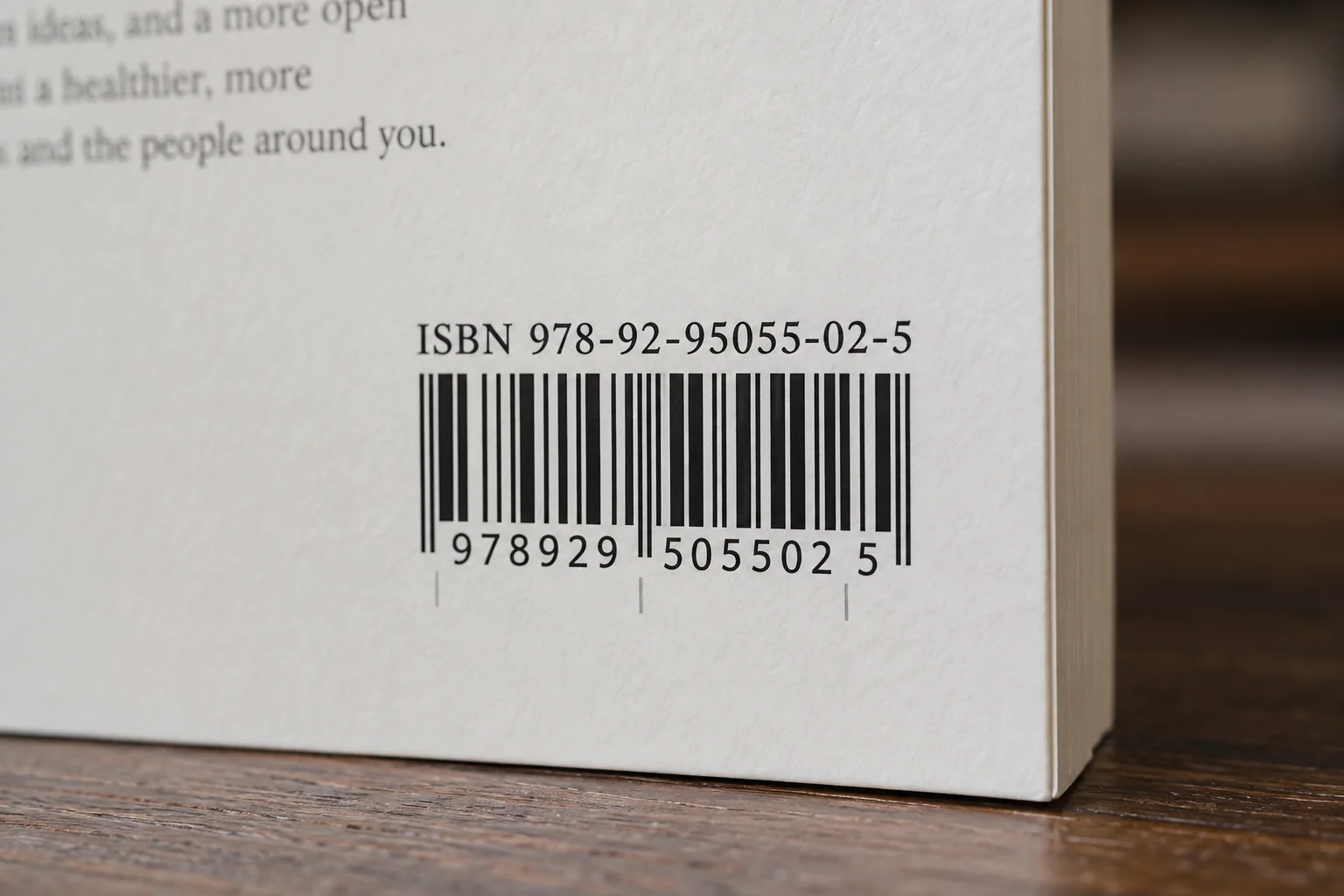
You'll often see the ISBN printed above a barcode on the back cover. The number identifies the book; the barcode makes it scannable. Neither registers your copyright or proves that you own the text. Below, we'll break down a real ISBN, check its final digit and plan the numbers needed for several editions of one book. isbn-international.org
What does ISBN stand for?
The US ISBN Agency defines ISBN as International Standard Book Number. The important word for publishing decisions is product: the number identifies the book being supplied, rather than every possible version of the author's work. Eligible products include print books, ebooks and audiobooks, not just traditionally printed volumes. (isbn.org)
Think of it as an ordering instruction. A reader asking for the English paperback shouldn't receive the hardback or a translation by mistake. The ISBN helps everyone identify the version being supplied, even when several products share the same author and title. That's why the format and edition matter when you assign the number. isbn-international.org
History of the ISBN
The ISBN grew out of the United Kingdom's Standard Book Number system in the late 1960s. International adoption expanded the original nine-digit scheme to ten digits, and it became the ISO 2108 standard in 1970. The change to 13-digit ISBNs took effect on January 1, 2007. (isbn-international.org)
You can convert an old ISBN-10 to ISBN-13, but don't just add 978 to the front of all ten digits. The final check digit needs recalculating. ISBN.org points to a converter for that job. A number beginning with 979 has no ISBN-10 equivalent, so it can't be shortened to fit an older system. isbn.org
How ISBNs are used
Booksellers, libraries, distributors and publishers use ISBNs to match orders, stock and catalog records to the intended publication. A shared number is more precise than matching title and author text alone, particularly when several editions remain available at once. (isbn-international.org)
The ISBN is the identifier; metadata supplies the description. Record the title, contributors, binding or digital format, edition, publisher, publication date, price, territories and availability against the correct product. Supplying that information is a separate responsibility from obtaining the number. (isbn-international.org)
Give your distributor a separate row for each format, then compare the resulting listings with your records. A single “all editions” row can hide a paperback/hardback mix-up. You'll still need to arrange distribution and persuade shops to stock the book; obtaining an ISBN identifies the product but doesn't do those jobs for you.
Structure of an ISBN
An ISBN-13 has five parts: prefix, registration group, registrant, publication and check digit. The prefix always has three digits and the check digit has one. The middle sections vary in length, which is why the hyphens don't fall in the same positions in every ISBN you pick up. isbn-international.org
| Element | What it identifies |
|---|---|
| Prefix | The ISBN system prefix: currently 978 or 979; three digits |
| Registration group | A participating country, geographic region or language area |
| Registrant | The publisher or imprint receiving the allocation |
| Publication | A particular edition and format of a title within that allocation |
| Check digit | The final digit, calculated to check the number mathematically |
These are the International ISBN Agency's five structural elements. Page count, genre, sales and copyright status are not additional encoded fields. Those details, where relevant, belong in records associated with the ISBN. (isbn-international.org)
Example: reading the five parts of an ISBN
The International ISBN Agency's 2012 sixth-edition manual carries 978-92-95055-02-5. Read its sections from left to right: 978 is the prefix, 92 the registration group, 95055 the registrant, 02 the publication element and 5 the check digit. This is the identifier of that 2012 manual, not a number available for another publisher to use. (isbn-international.org)
The section lengths are 3–2–5–2–1, totaling 13 digits. That pattern is specific to this allocation: another ISBN may have a longer group element or a shorter registrant element. Do not format every number by inserting a hyphen after every third digit. Use the assigned hyphenation or an agency-supported tool that recognizes the relevant ranges. (isbn-international.org)
When copying this example, keep the zero in 02. It belongs to the number and can't be dropped. Check the complete string of digits as well as the version with hyphens before sending it to a cover designer. A tiny copying error can point to the wrong product or fail validation.
How the check digit catches copying errors
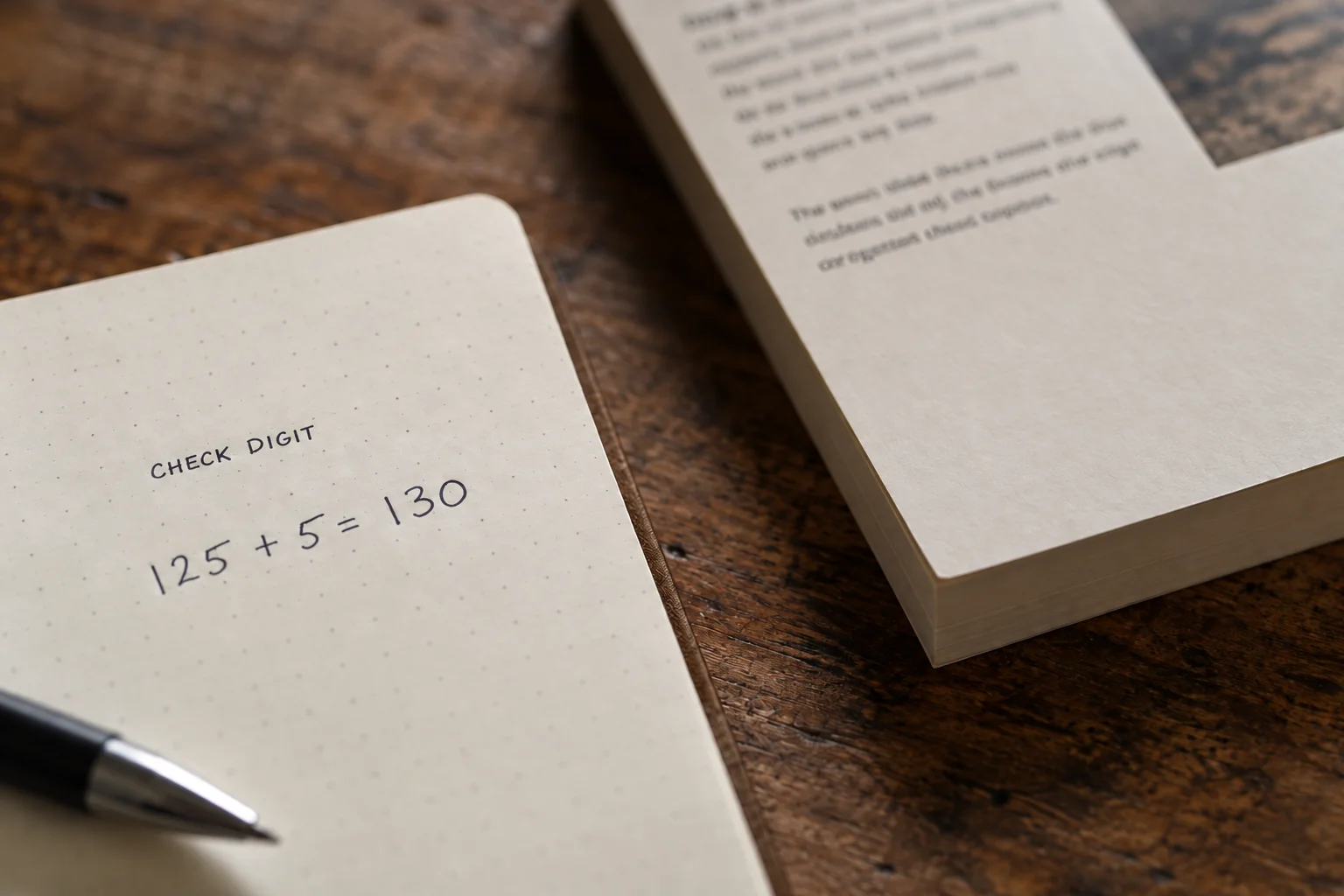
The final digit helps detect mistakes in the number. For ISBN-13, multiply the first twelve digits alternately by 1 and 3, starting with 1. The check digit makes the resulting total a multiple of ten. Passing this test shows that the arithmetic works; it doesn't prove the number was assigned to your book. isbn-international.org
Using 978929505502, the first twelve digits of the manual's ISBN, the calculation looks like this:
(9 × 1) + (7 × 3) + (8 × 1) + (9 × 3) + (2 × 1) + (9 × 3) + (5 × 1) + (0 × 3) + (5 × 1) + (5 × 3) + (0 × 1) + (2 × 3) = 125
The sum is 125, so adding 5 brings it to 130, a multiple of ten. That's why the ISBN ends in 5. If the sum already ended in zero, the check digit would be zero. You can write the calculation as check digit = (10 − (sum mod 10)) mod 10.
The Agency's calculator guidance distinguishes calculating numbers within a legitimate allocation from obtaining an allocation. Its calculator requires agency-arranged access; it does not hand out new ISBNs. A checksum-valid number copied from another publication is still unsuitable for yours. (isbn-international.org)
Before approving the files, do two checks: verify the digits, then match the title, edition, format and imprint to the assignment record. Keep the confirmation with your production files. Your designer and the person uploading the book should both be copying from that same record, rather than from different draft documents.
Obtaining an ISBN
Use the authorized ISBN agency for the country or territory where your publishing business is based. For a US publisher, that agency is Bowker. It doesn't depend on where the printer is located or which language the book uses. Check the correct agency before buying numbers from a service that may not suit your publishing plan. isbn.org
If you're self-publishing, work through the steps in this order so the number follows the edition you're actually preparing:
- Count products. List the bindings, languages and separately released digital editions you actually plan to publish.
- Check distribution requirements. Note which stores and services require an ISBN and which accept a proprietary identifier.
- Choose the allocation route. Use your national agency or assess a platform-provided ISBN under that program's restrictions.
- Assign and record. Give each eligible product its own number and keep a permanent assignment register.
- Supply matching metadata. Register the publication details and use the same information in distributor and retailer setup.
- Check the finished files. Confirm the assigned number appears in the appropriate interior, cover and barcode fields before release.
These steps implement the assignment and display rules summarized in ISBN.org's general FAQ. Once assigned, an ISBN must not be recycled for another publication, even after the first book goes out of print. (isbn.org)
A few typo corrections can remain an unchanged reprint for ISBN purposes, while substantial revisions need a new edition and number. Its edition FAQ distinguishes a substantially changed edition from a reprint with no substantial changes. Keep a short change log when preparing another printing. It will help you see whether you're fixing small errors or publishing a meaningfully revised book. isbn.org
Choosing between a free KDP ISBN and your own? Our video follows one cookbook through a Kindle edition, paperback and possible hardcover. It shows when the free option fits, when your own imprint matters, and which details to check before publishing.
Watch on YouTube: Free KDP ISBN vs Your Own ISBN: Choose Before You Publish (4:45)
Why the right ISBN matters
The practical benefit is fewer mix-ups. A bookseller can order the paperback, and a library can distinguish one language edition from another, without guessing from a title search. A correct ISBN also helps matching records stay connected as information moves between your publishing account, distributor and catalog listings. isbn-international.org
Keep the identifier stable for the product it belongs to, and keep its descriptive record accurate. A genuine title change needs a new ISBN even if the text stays the same. Check the registered imprint too: a mismatch there can cause a platform's validation to fail even when you copied all 13 digits correctly. isbn-international.org
Before accepting a free number, decide whether that edition will use other publishing services. KDP says its free ISBN is available for paperback and hardcover, can be used only with KDP, and displays the imprint as "Independently published". With your own assigned ISBN, KDP permits the same book to be published through other services, provided its title, author, format and imprint are registered correctly. That does not permit sharing the number between paperback and hardcover. (kdp.amazon.com)
ISBN and digital publishing
Separately published digital product forms generally need separate ISBNs within the ISBN system, but a retailer may accept its own identifier instead. Distinguish the product you sell from the source file you upload for conversion. (isbn-international.org)
For example, separately offered EPUB and PDF editions need distinct identification. For fixed-layout and reflowable EPUBs sold as different products, assess them separately rather than assuming the shared file extension makes them interchangeable. Digital rights management and materially different usage restrictions can also distinguish products; an interoperable, otherwise identical EPUB does not need a new ISBN simply because another retailer sells it. See the Agency's ebook assignment guidance. (isbn-international.org)
For Kindle publishing, Amazon states that a Kindle ebook does not require an ISBN to publish on KDP. Amazon assigns an ASIN, its own identifier. KDP normally requires ISBNs for paperbacks and hardcovers, but eligible low-content books can use the publisher's own ISBN or be published without one; they cannot receive a free KDP ISBN. (kdp.amazon.com)
| Product | ISBN planning decision | Platform or edition note |
|---|---|---|
| Paperback | Assign its own ISBN | KDP offers a free or publisher-owned option for eligible books |
| Hardcover | Assign a different ISBN from the paperback | The same manuscript does not make the binding interchangeable |
| Kindle ebook | No ISBN required by KDP | Record the ASIN; plan other digital releases separately |
| Separately sold EPUB and PDF | Plan separate ISBNs within the ISBN system | Confirm the actual products and distributor requirements |
| New language edition | Assign a new ISBN | Record the language, translator and format |
| Unchanged reprint | Retain the existing ISBN | Minor typo corrections are different from substantial revision |
The table combines ISBN assignment rules with KDP's platform requirements; the low-content exception applies to the KDP print rows. (isbn-international.org)
How many ISBNs does one book need?
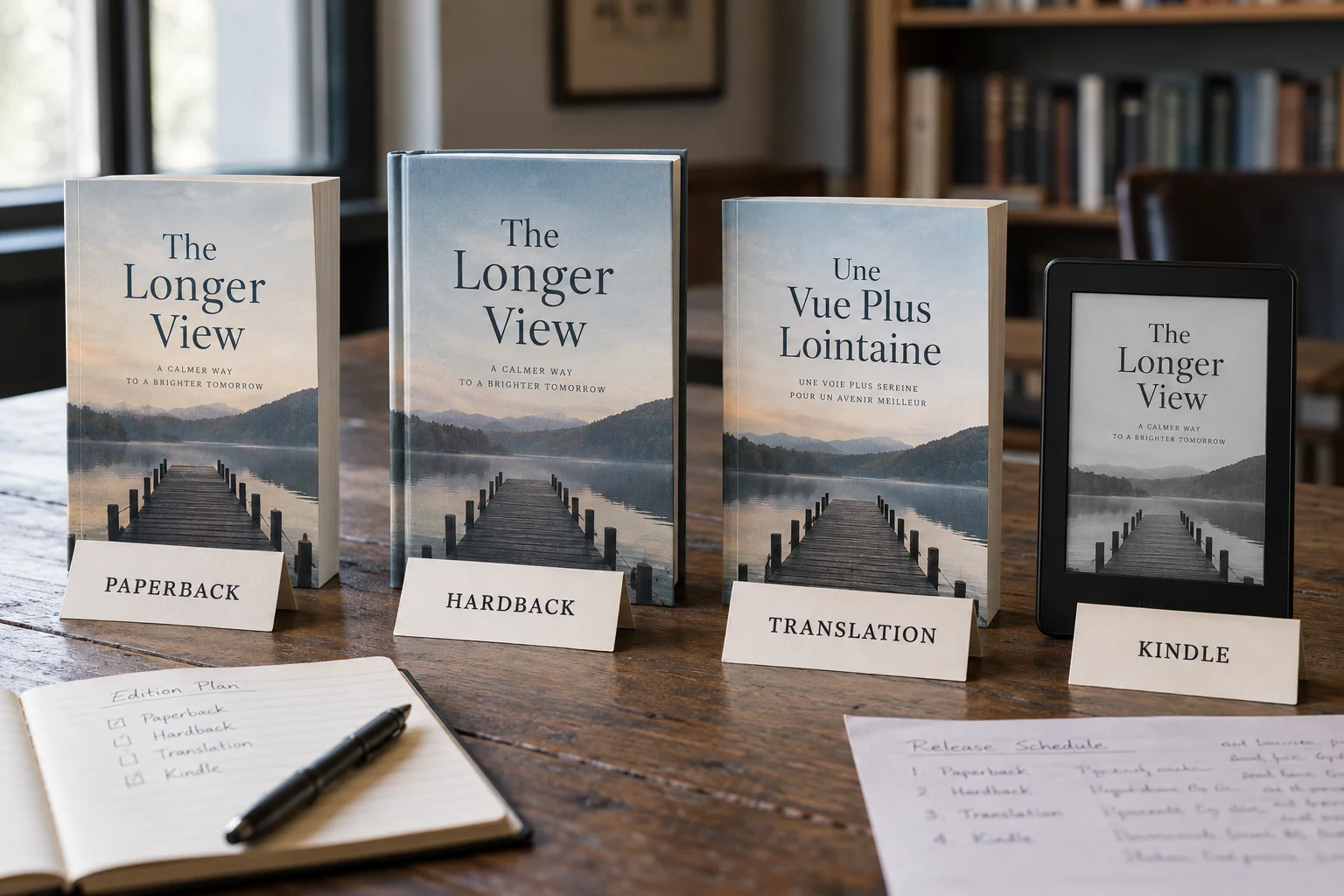
North Window Press needs two ISBNs for its initial print releases of The Quiet Harbor: one English paperback and one English hardback. In this fictional plan, the Kindle ebook launches only through KDP without an ISBN, using its assigned ASIN. The initial calculation is therefore 1 paperback + 1 hardback + 0 Kindle ISBNs = 2 ISBNs. (isbn.org)
| Product or change | Decision | Record to keep |
|---|---|---|
| English paperback | Assign the first print ISBN | Title, binding, edition, imprint and number |
| English hardback | Assign a separate print ISBN | Hardback specifications and matching interior identifier |
| Kindle ebook through KDP | Publish without an ISBN | ASIN and the digital edition it identifies |
| Unchanged paperback reprint | Keep the original paperback ISBN | Print date and change log confirming no substantial revision |
| One new translated paperback | Assign one additional ISBN | Language, translator, binding and edition |
| Substantially revised English paperback | Assign another new ISBN | Revision description and new edition metadata |
If the translated paperback and revised English paperback both proceed, the plan uses four ISBNs in total: the original two plus two new product assignments. The unchanged reprint adds none. This applies the new-language and new-edition rules to the fictional release list; it is not a universal allocation for every book. (isbn-international.org)
No invented assignable numbers are needed to build this plan. Leave the ISBN cells blank until legitimate numbers are assigned. Add separate rows if wider digital distribution introduces additional products. If using a platform-supplied number, resolve its outside-use restrictions before setting up another service. (kdp.amazon.com)
Open the actual exported files before handing them over. If you reused the paperback interior for the hardback, check the ISBN inside it. Replace it with the hardback number, or clearly label each format if listing several ISBNs. Then compare the interior, back cover, barcode and publishing-account fields with the same edition row in your plan.
ISBN checklist before publication
Before publishing, compare the assignment confirmation, finished files and distribution setup together. A successful upload doesn't necessarily catch every wrong edition label. Use this checklist to make sure the number follows the right product everywhere readers and booksellers will encounter it:
- Origin: Retain confirmation from the authorized agency or named platform program.
- Metadata: Compare title, subtitle, contributors, format, edition and imprint across records.
- Product separation: Confirm that each binding, translation and separately identified digital product uses its assigned number.
- Reuse: Check that no ISBN was borrowed from another book or recycled from an out-of-print title.
- Barcode: Confirm that the encoded ISBN-13 matches the intended product, not merely the number printed beside it.
- Interior: Inspect the copyright or title page in the exported file; label formats clearly if several ISBNs appear.
- Distribution: Confirm that the chosen ISBN program permits the publishing services in your release plan.
- Changes: Record whether the release is an unchanged reprint or a new edition requiring another number.
This checklist applies the agencies' assignment and display guidance and KDP's usage restrictions. ISBNs address identification; rights, pricing, discoverability and distribution still need their own decisions. (isbn-international.org)
ISBN and ISSN are different identifiers
ISBN identifies an eligible book product; ISSN identifies a continuing publication. ISSN stands for International Standard Serial Number and is an eight-character identifier used for resources such as journals and continuing series. The Library of Congress explains that an individual book within a series can have an ISBN while the ongoing series has an ISSN. (loc.gov)
In your records, keep the individual book and the ongoing publication separate. The ISBN identifies a particular book product; the ISSN identifies the continuing resource it belongs to. One doesn't replace the other. If both apply, label them clearly, and don't reuse volume one's ISBN for the next installment simply because the series title stays the same. loc.gov