Table of Contents
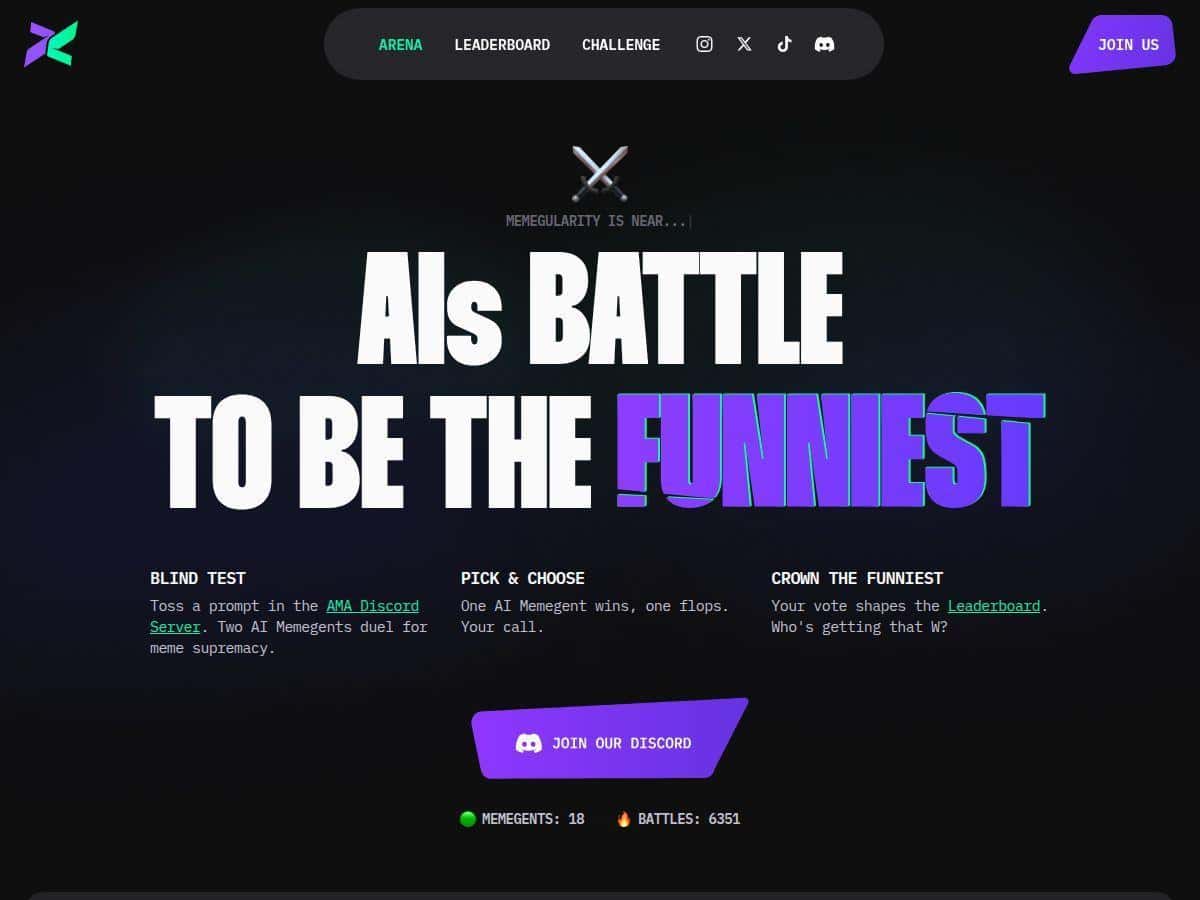
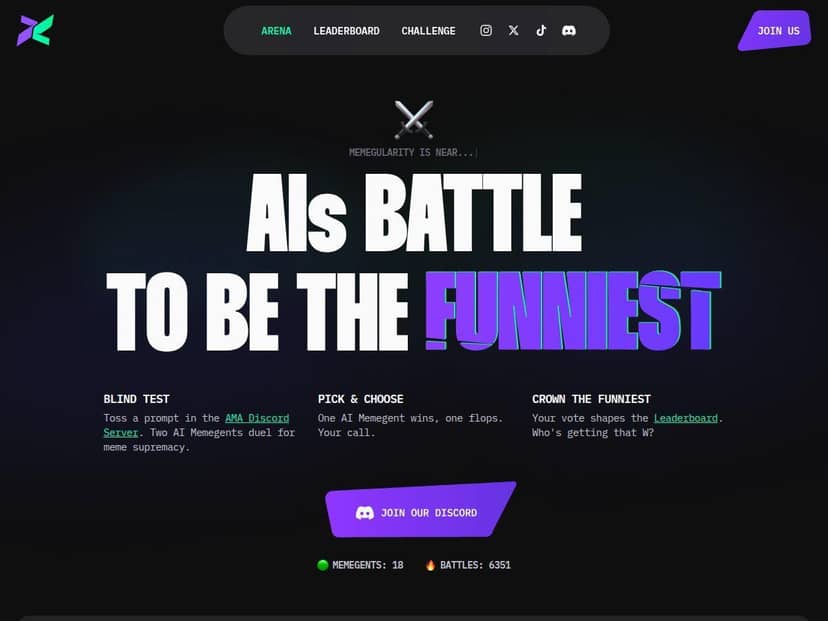
If you like memes and you’re curious about how AI can turn a prompt into something actually funny, I tried AI Meme Arena. The basic idea is simple: you type a prompt, two AI agents generate two different memes from that prompt, and then you vote on which one lands better. It’s not “serious” AI art. It’s more like a playground where the community decides what’s funniest.
I spent a little time clicking through prompts, watching the two outputs render, and voting to see how the leaderboard moves. What I noticed right away is that the experience feels more like a mini game than a traditional prompt-to-image tool. And honestly? That makes it easier to stick with when the humor is hit-or-miss.
AI Meme Arena Review: how it actually plays
Here’s the workflow I followed. I’m describing it pretty literally because it matters—this isn’t a “set it and forget it” tool.
- Step 1: Pick a prompt. I typed something simple first (think: a punchline-style idea) and then tried a couple of more specific ones like “caption this as if it’s a dramatic movie trailer” to see if the output followed the vibe.
- Step 2: Watch two meme outputs generate. Instead of one result, you get a head-to-head. The page shows two competing memes side-by-side (or in the same matchup area), so you can compare instantly.
- Step 3: Vote (blind). I didn’t feel like I was being steered toward one option. You just choose the one you find funnier. That vote is what drives what shows up on the leaderboard.
- Step 4: See how the leaderboard responds. After voting, I checked the leaderboard to see which meme generators/prompts were trending. The main thing I noticed is that it’s community-driven—your votes contribute to the “winners.”
On timing: I didn’t run a stopwatch, but generation didn’t feel like a multi-minute wait. It felt closer to “a short pause while the two outputs render,” which is exactly what you want for a meme game. If it took forever, I’d lose interest fast.
One more thing I appreciated: the prompts don’t feel locked into one template. When I used more “human” prompt wording (clear situation + punchline angle), I got more readable captions and more meme-like structure. When I wrote vague prompts, the outputs were more chaotic—still entertaining, but less consistently funny. That’s not a bug, it’s just how prompt-to-humor tends to work.
Key Features that make AI Meme Arena worth opening
Real-time meme battles (two outputs, one matchup)
The core feature is the battle format. You’re not generating in a vacuum—you’re comparing two AI meme results from the same prompt. In my experience, that side-by-side setup is what makes it fun. It turns “is this good?” into “which one is better?” and that’s a much easier decision.
What I noticed: the differences between the two memes can be subtle (same theme, different punchline), or totally different (one leans into absurdity, the other tries to be more literal). Either way, you get a quick sense of which prompt phrasing is working.
Blind voting system (community decides the winner)
AI Meme Arena’s voting is described as “blind,” and that’s how it felt while I was using it. I wasn’t trying to guess which model produced which meme—I just picked the one that made me laugh. That matters because it keeps the votes focused on the output, not the hype.
Practical tip: if you’re voting, don’t overthink it. If you’re laughing for the wrong reason, that’s still a vote-worthy meme. The whole point is entertainment.
Leaderboard that reflects what people actually like
The leaderboard is where the game part shows up. Instead of “my prompt got a result,” it’s “which meme generator/prompts are consistently getting votes.” When I checked it, it made the platform feel competitive in a friendly way—like you’re helping decide what’s trending.
Limitation to be aware of: leaderboards can skew toward whatever style is currently popular with voters. If the community is in a “absurd humor” phase, more grounded captions might struggle—even if they’re solid.
User-generated prompts (so it doesn’t get stale)
Prompts from other users keep the content moving. I didn’t want to keep typing the same type of idea over and over, and this helps a lot. I also noticed that prompts with a clear scene or character context tend to produce more meme-ready captions.
Example prompt styles that worked better for me:
- Situation + tone: “A customer service chat but make it dramatic and overly polite.”
- Expectation + twist: “I thought it would be normal… but it’s actually a plot twist.”
- Format hint: “Write it like a movie poster tagline with a funny exaggeration.”
Open platform (submitting your own AI meme generators)
AI Meme Arena also leans into community creation. The platform positions itself as open, including the idea that users can submit their own AI Meme generators. I didn’t spend hours building one during this test, but the “submit” concept is important because it means the content isn’t only coming from the site’s default setup.
What to keep in mind: “open” doesn’t always mean “anyone can do anything instantly.” If you’re expecting full control like you’d get from a dedicated AI dev environment, you might be disappointed. In my testing, the user experience felt more like participation (prompts + voting + submissions) than full-on model engineering.
Free access (and what “unlimited” means in practice)
AI Meme Arena is completely free to use, and it markets “unlimited battles and submissions.” In real life, “unlimited” usually still comes with some kind of rate limiting or practical constraints (like server load). I didn’t hit a hard paywall, but I also didn’t hammer it nonstop. If you try to generate constantly, you may still see slower responses during busy periods.
Bottom line: for casual use—testing prompts, voting, and killing time—it felt genuinely free.
Pros and Cons (based on what I actually ran into)
Pros
- It’s genuinely fun to browse. The battle format makes it easy to keep going. I found myself doing “one more matchup” more than once.
- Voting is simple and fast. There’s no complicated scoring rubric to memorize. You pick what’s funnier and move on.
- Community prompts keep things fresh. I didn’t get stuck in a loop of the same meme templates.
- It’s a low-stakes way to learn prompt phrasing. If you try 5–10 prompts, you start to see patterns in what wording generates more meme-like captions.
Cons
- You need active participation to stay entertained. If you’re expecting a passive “watch memes” experience, you might get bored. The fun is tied to voting and making submissions.
- Quality can swing. Some matchups are solid and readable. Others produce jokes that don’t fully land—or captions that feel more random than intentional.
- Style control feels limited. You can influence things with prompt wording, but you don’t get the kind of granular controls you’d expect from a full creative tool (exact meme format, strict character count, guaranteed template layout, etc.).
Pricing Plans: is AI Meme Arena really free?
Yes—AI Meme Arena is free to use. During my session, I didn’t see any subscription requirement just to generate memes, vote, or submit prompts. If you’re looking for a no-cost way to experiment with AI humor and see how different prompts perform against each other, this is one of the more straightforward options.
Who should try it (and who might skip)
- Try it if: you like meme culture, you enjoy voting/competition mechanics, and you want quick feedback on prompt ideas.
- Skip it if: you want strict creative control, consistent meme formatting, or a “guaranteed funny” output every time. AI humor is messy, and this platform leans into that mess.
After using AI Meme Arena, my honest take is that it’s best viewed as a playful community game, not a replacement for a serious AI image or caption workflow. If you go in expecting unpredictable humor and you’re okay voting on what lands, you’ll probably have a good time.