Table of Contents
Let’s face it—writing an author bio can feel awkward. How much do you share without making it feel like oversharing? And then there’s the challenge of keeping it interesting without turning it into a novel itself.
No worries, you’re in the right place. I’ll walk you through the easy steps to make your bio appealing, short, and full of personality—and yes, there’s even a simple template to help get you started.
Ready to craft an author bio readers will actually want to read? Let’s get started!
Key Takeaways
- Check out bios of successful authors in your genre for inspiration.
- Include your name, books you’ve written, key achievements, and relevant background details.
- Write in clear, casual language that’s quick and easy to read.
- Match your writing style to what your readers expect in your genre.
- Let readers see your personality with small, personal details that make you more relatable.
- Add a call to action like your website or social media so readers can connect with you.
- Use a simple template to create your bio and adjust it until it feels natural.
- Regularly update your bio with new works, achievements, or life changes.
- Avoid mistakes like typos, irrelevant information, overly formal tone, and broken links.

Step 1: Read Examples of Great Author Biographies
If you’re trying to write a great author bio, the easiest way to start is by checking out some stellar author biography examples already out there.
Look at bestselling authors in your genre or niche, because they usually have figured out the tone and style their readers connect with.
For example, Stephen King’s bio often mentions his mass-market appeal and numerous horror classics, while Jodi Picoult’s emphasizes her emotionally-charged contemporary novels.
See how your favorite writers blend their accomplishments, style, and personal flair into just a couple of short paragraphs.
You can even browse various platforms online specifically focused on giving clear, practical short author bio examples to learn from.
Reading real-world examples from authors you admire helps you tune in to the elements that matter most for your own writing—which can be a true shortcut to writing success.
Step 2: Include the Right Information in Your Author Bio
When building your author bio, always think reader-first: give people the information they really want, without wandering too far into details nobody cares about.
Start with your full name (or pen name), the titles of your published works, and any awards or recognitions you’ve earned.
For instance: “Jessica Brown is the author of ‘Whisper in the Willow’ and ‘A Summer’s Goodbye,’ both winners of the Florida Novel Award.” That’s clear, powerful, and informative in just a single sentence.
You might also include relevant experience or credentials, especially if they relate to your genre—like a degree in criminal psychology if you’re writing crime thrillers.
Mention your hometown or current city if it matters culturally or thematically for your writing style.
Finally, don’t forget your website or social media profiles, especially if readers can visit to learn more or connect directly with your work.
Step 3: Write Clearly and Keep it Short
Your author bio isn’t an autobiography—people aren’t looking for your entire life history here.
Keep it concise, typically under 150 words, or even shorter for back-of-book covers and social media profiles.
Break your sentences into short, easy-to-read snippets, perfect for mobile screens, where most readers browse these days.
Avoid jargon, fancy terms, or overly complicated expressions—write as if you’re chatting with a friend.
Verify your bio flows naturally by reading aloud; if it sounds off or pretentious, trim it down or simplify your wording.
Remember, a neat, relatable bio shows readers just enough to grab their interest and make them curious about you as an author—keeping things clear, friendly, and approachable.
If you’re still feeling a bit stuck, it might help to skim through these short author bio examples that offer practical inspiration to craft your own effective story.
Biographies and memoirs are booming, representing a major slice of the more than 2.2 billion books sold worldwide each year, adding incentives to get yours right the first time around.
Step 4: Match Your Bio to Your Genre and Readers
Want your author bio to actually resonate with your readers? You need to speak their language and match their style.
If you’re writing humorous children’s books, your bio shouldn’t read like you write dense historical examinations (even if that’s secretly your hobby!).
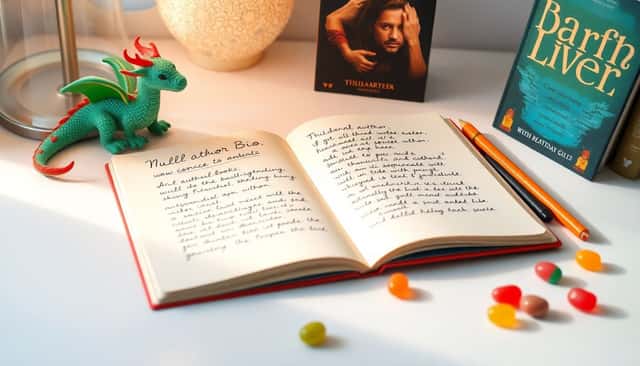
Think: short, playful sentences that reflect a child-friendly tone if you’re building a playful image—like, ‘Tim is a dragon tamer, snack enthusiast, and proud author of The Jellybean Adventures.’
On the other hand, if your genre is suspense or horror fiction, lean into that vibe by dropping subtle hints about your love of dark mysteries—just enough to intrigue without giving too much away.
Your audience expects consistency, so match your tone, vocabulary, and overall feel in the bio with what you’re actually publishing.
A reader who’s into gothic or eerie thrillers might appreciate checking out helpful resources like this horror story plot guide for ideas to spark their own creativity.
Step 5: Show Personality and Voice in Your Bio
Your writing has personality, right? Well your author bio should too!
Think beyond listing out just your achievements, and let readers glimpse little quirks that make you relatable.
Mention your guilty pleasure TV show or your unusual love for pineapple pizza (controversial, I know), or perhaps your daily battle against procrastination.
For example, rather than a dry list, you might write something like, ‘Ben lives in Orlando with two overly demanding cats and spends his time avoiding actual writing by baking bread.’
Personal touches like this make readers smile, making your bio memorable and you seem more human and approachable.
One simple trick is to ask yourself, ‘What funny or quirky detail would I tell a friend about myself?’—then weave that into your bio.
Step 6: Add a Call to Action
Your author bio shouldn’t just explain who you are—it should guide readers toward what to do next.
Add a clear call to action (CTA) like “Visit my website to learn more,” “Grab your free short story here,” or “Follow me on Instagram for daily writing tips.”
This encourages immediate engagement, turning casual readers into subscribers, social media followers, or prospective customers for your next release.
CTAs aren’t pushy; they’re helpful nudges guiding people who want more of you and your content.
And here’s a smart tip: update your CTA based on recent activity (new books, blog articles, events), making it timely and relevant alongside your projects.
Step 7: Use a Simple Template to Start Writing
Feeling overwhelmed about writing your author bio? Good news—you don’t need to reinvent the wheel.
Start with a simple template that covers your essentials: who you are, what you’ve done, why readers should care, and what actions to take next.
Here’s a quick structure to try: [Your Name] is the author of [Book Title(s)], known best for [genre or notable achievements]. When [your name] isn’t writing, you can usually find him/her [fun fact or hobby]. To learn more, visit [website/social media link].
No need to overthink it—just fill in these blanks, then tweak it until it sounds natural and authentic to you.
If you’re struggling with more formatting elements like choosing the perfect font or formatting for covers, check this guide on best fonts for book covers to save yourself some headaches later on.
Step 8: Check and Update Your Author Bio Often
Here’s something most writers forget: your author bio isn’t set in stone.
In fact, an outdated biography can make you look careless or out-of-touch to readers.
Regularly review your bio for things that have changed—new books, awards, life events, or even shifts in your writing interests—and update it accordingly.
Schedule check-ins—like once every quarter—so you stay consistent without getting overwhelmed.
And don’t just copy-paste the same bio everywhere; tweak it slightly for Goodreads, your own website, or social media profiles to match each audience better.
This practice makes your readers feel connected, builds credibility, and prevents awkward mismatched details from popping up.
Step 9: Avoid Common Mistakes in Author Bios
Last but not least, steer clear of simple mistakes authors commonly make in their bios.
Firstly (obviously), proofread—typos or grammar blunders can quickly diminish your credibility with readers.
Avoid cramming too much unnecessary information, like every single job you’ve had since high school.
Only share details directly applicable to your writing career or that will meaningfully connect with readers.
Don’t write in overly formal or third-person language if your readers expect casual, friendly communication (keep it simple and conversational instead!).
Lastly, double-check that your contact information, website links, and social media handles are accurate and functional—nothing frustrates readers faster than broken or incorrect links.
To avoid these pitfalls early, explore these short author bio examples showing effective, concise ways to represent yourself professionally.
FAQs
Your author biography must include your name, defined writing genre, key accomplishments, and current publications. You can mention relevant background information and consider adding a link inviting readers to connect through your website or social media.
Keep your author biography brief and clear—aim for 50 to 100 words. Readers typically prefer succinct bios that quickly convey who you are, what you write, and highlight your personality or expertise without unnecessary details.
If you write in multiple genres, consider creating tailored author bios for each audience. Matching style and tone to reader preferences within each genre helps you better relate to potential readers and enhances reader engagement.
Review and refresh your author biography periodically, aiming for every three to six months. Regular updates ensure your information stays current, reflecting your latest accomplishments, publications, or changes in your author platform or personal branding.