Table of Contents
I’ve hit that wall too. You know the one: you’ve got the neon city in your head, but when you sit down to write, everything starts sounding like the same five scenes on repeat. Cyberpunk is full of recognizable tropes—good ones—but the trick is using them for something specific, not just sprinkling them in for vibe.
So instead of a generic list, I’m going to give you trope-by-trope building blocks you can actually drop into a draft. For each one, I’ll tell you what it signals thematically, how I’d implement it in a scene, the usual “this feels flat” failure mode, and a twist you can try so your story doesn’t feel like everyone else’s.
And if you want a quick exercise: pick two tropes from this page and write a 600–900 word scene where one causes the other. That’s where cyberpunk gets interesting fast.
Key Takeaways
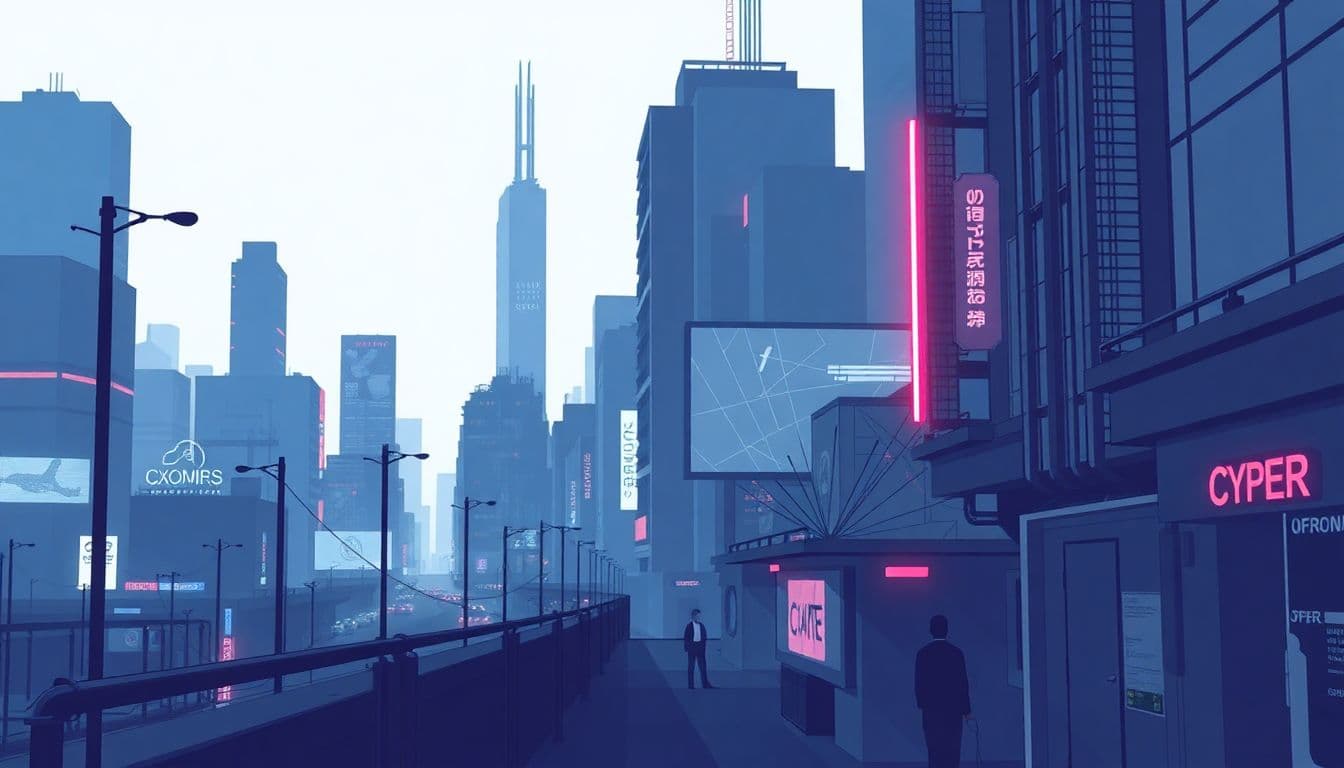
- Neon lights and rain-soaked streets: Use it to set mood and reveal power. Don’t just describe the weather—show who can afford dryness, who gets soaked, and what that changes in the plot.
- High tech, low life: Make the contrast do narrative work. If your “shiny tech” doesn’t create a problem for your character, the trope is just decoration.
- Mega-corporations controlling everything: Treat corporations like governments with budgets, PR teams, and legal departments. Your protagonist should feel them in paperwork, contracts, and “accidents.”
- Hackers and cybercriminals: Give them a motive beyond “freedom” or “chaos.” In my experience, the best ones want something painfully human—retribution, custody of data, or a way to prove they weren’t lying.
- Cybernetic enhancements and body mods: Use mods to complicate identity. If a character’s body is a product, then consent, ownership, and stigma become plot engines.
- Urban decay and overcrowded cityscapes: Make the city a system, not a postcard. Overcrowding should affect sound, sanitation, crime patterns, and even how people move through a scene.
- Government surveillance and loss of privacy: Don’t stop at “there’s surveillance.” Show the workflow: what gets scanned, who gets flagged, how fast consequences hit, and how people try to game the system.
- Social inequality and marginalized groups: Contrast isn’t enough—show the mechanism of oppression. What policy, algorithm, or gatekeeping ritual keeps the rich rich?
- Biometric tech and social scoring trends: Use real-world directions as texture, not copy-paste headlines. The goal is plausibility: how surveillance changes daily logistics.
- Neon-inspired corporate branding: Comment on co-opted rebellion with specifics—slogans, ad copy, and how an aesthetic becomes a product everyone is forced to buy.
- Antiheroes: Keep them morally complicated, but grounded. Give them a line they won’t cross—and make the story test whether they can stay on the right side of it.
- Shiny tech vs. societal decay: Let the contrast drive character motivation. “Because it’s cool” isn’t enough. “Because it stole my life” hits harder.

Biometric Scans and Facial Recognition in Daily Life
Biometrics aren’t just a “cool future thing” anymore. They’re the quiet gatekeepers of modern life—unlocking phones, verifying payments, and yes, speeding up airport procedures.
In my own drafts, I noticed the trope gets boring when it stays abstract. “Cameras scan faces” is vague. The moment you show the workflow, it clicks.
How to implement it (scene-level): pick one daily task and run it like a mini gauntlet. For example:
- A character tries to board a flight. Their face matches a profile… but the system asks for a second verification because their expression changed too fast.
- They get flagged because their “faceprint” is stored from an old photo—before they got their body mods updated.
- The kiosk prints a receipt: REVIEW REQUIRED. No explanation. No appeal. Just a line that grows longer.
What it signals thematically: privacy erosion, identity commodification, and the feeling that the world “knows” you without your consent.
Common failure mode: describing technology instead of consequences. If your character doesn’t lose time, money, access, or relationships because of scans, readers won’t feel the threat.
Twist to try: make the biometric system almost right. It doesn’t catch the hero—it catches the hero’s friend. Now the hero has to decide: keep running, or risk being the reason someone else gets detained.
China’s Social Credit System as a Model for Control
Social scoring is a powerful cyberpunk engine because it turns morality into math. And once it’s math, it becomes negotiable—by whoever controls the algorithm.
I like using this trope as a mechanism, not a setting detail. Don’t just say “people get scored.” Show how the score changes what happens next.
How to implement it (scene-level): choose three “life gates” and make the score affect each one:
- Mobility: a character can’t enter certain districts without a minimum score.
- Work: employers auto-reject applicants below a threshold—even when they’re qualified.
- Relationships: a friend’s loan request fails, so the protagonist gets blamed.
What it signals thematically: authoritarian oversight, social conditioning, and punishment disguised as “safety.”
Common failure mode: going full villain monologue. Readers don’t need speeches. They need friction—forms that won’t submit, doors that won’t open, services that “temporarily” disappear.
Twist to try: the score boosts the “compliant” people so much that the protagonist has to commit a small act of disobedience just to stay human. That’s the gut-punch: rebellion becomes self-care.
Crypto Platforms Promoting Digital Freedom
“No KYC” is one of those phrases that instantly screams cyberpunk. But if you only treat it like a slogan, the story feels thin. I’d rather you show how it changes plot logistics.
In my experience writing underground-economy scenes, the most believable tension comes from the fact that “freedom” often comes with messy tradeoffs: scams, custody problems, and the constant question of who’s actually holding the keys.
How to implement it (scene-level): pick one transaction and make the character do the steps.
- A character wants to buy contraband. The platform doesn’t require KYC, so they can sign up fast—but the seller demands an on-chain proof of funds that can be traced.
- They try to use a new wallet. It’s “anonymous,” but the withdrawal address was previously linked to a busted crew. Now their transfer is delayed for “risk review.”
- They pay anyway. Later, their “safe” coins get frozen by a different service that they didn’t think about (exchange, bridge, custody provider).
What it signals thematically: digital freedom vs. practical vulnerability. The world rewards cleverness, but it punishes ignorance.
Common failure mode: portraying no-KYC as magic invisibility. In most stories, the real drama comes from the character realizing they weren’t invisible at all.
Twist to try: the protagonist discovers the “no KYC” platform is actually run by a megacorp front. The lack of identity checks isn’t to protect users—it’s to harvest behavior. They don’t need names. They need patterns.
The Decline of Physical Media and Corporate Media Domination
When physical media fades, control doesn’t disappear—it changes hands. Suddenly, your entertainment and information depend on licensing, platforms, and moderation policies.
That’s where the cyberpunk angle gets sharp: media becomes an infrastructure you can’t opt out of easily.
How to implement it (scene-level): show a “normal” day where media choices are quietly removed.
- Your character tries to watch a documentary. The app loads… then replaces it with an “approved” version.
- A friend shares a file. The protagonist receives a notification: Content removed due to rights verification. Then their account gets throttled.
- They track down a rare physical copy in a flea market. The owner won’t sell it outright—only trades for a favor tied to a corporate audit.
What it signals thematically: censorship without censorship. Control through convenience.
Common failure mode: making the conflict too obvious. If every scene reads like “they censored it,” readers will tune out. Make it subtle: broken links, ghost buffering, “regional licensing” that changes overnight.
Twist to try: the protagonist steals a forbidden physical copy… and discovers it’s already been altered. The “resistance media” is a controlled leak designed to identify who seeks it out.
For more on plot frameworks that fit this kind of pressure, you can use this [dystopian plots](https://automateed.com/dystopian-plot-generator/) resource as a starting point.
Neon-Inspired Corporate Branding and Its Mainstream Takeover
Here’s a thing I’ve always found funny (and depressing): the aesthetic of rebellion gets absorbed by the market so fast it feels like a law of physics.
Neon that once meant “punk” starts meaning “premium membership.” Rain that once meant “grit” gets turned into a lifestyle filter.
How to implement it (scene-level): make branding do something in the plot.
- Corporate ad copy: “Be Seen. Be Safe. Be Zenith.” It plays on every street display, but the protagonist notices it changes based on their location.
- A character buys a “privacy hoodie” with a rebellious slogan—except the tag pings their identity to a nearby kiosk.
- A rival gang uses the same neon style as a corporation. People assume they’re corporate-backed, and the protagonist has to fight that misconception.
What it signals thematically: co-opted counterculture, commodified aesthetics, and the way power launders itself through style.
Common failure mode: describing neon colors without showing what the company is selling and what it costs.
Twist to try: the protagonist finds a “counterculture” brand that’s actually the corporation’s public-relations camouflage. The rebellion aesthetic becomes a recruitment funnel—and your hero is the perfect target because they look like the kind of person who would buy it.
The Antihero Archetype: Hackers, Rogue Journalists, and Rebels
Antiheroes are still the beating heart of cyberpunk. But the trope only works if the character feels like a person, not a symbol.
In my drafts, the difference between “cool” and “compelling” came down to one thing: the antihero’s moral math. What do they consider acceptable collateral? What do they refuse?
How to implement it (scene-level): build a decision scene where the antihero can win either way, but not cleanly.
- Hacker: can erase a surveillance record of their friend, but doing so also deletes evidence that would clear an innocent stranger.
- Rogue journalist: can publish a leak that will start riots, or hold it and become complicit in the next arrest.
- Rebel: can sabotage a convoy and save one block—at the cost of dooming a different neighborhood to retaliation.
What it signals thematically: desperation, imperfect justice, and the cost of fighting systems that don’t play fair.
Common failure mode: making them “bad” for style. Readers will ask: why should I trust this person with your plot?
Twist to try: the antihero’s “enemy” is also trying to do something moral. The conflict becomes about methods, not ideology—and your hero has to choose whether they can live with being wrong.
High Tech, Low Life—Beyond the Surface
This trope is iconic for a reason. It’s visual. It’s emotional. But I’ll be honest: it’s also easy to overuse.
“Shiny gadget here, poverty there” is the starting line. The real payoff is when the contrast creates a specific problem for your protagonist.
How to implement it (scene-level): tie the tech to a human need.
- A character gets a neural implant to “improve focus,” but the calibration requires a subscription. When they can’t pay, their memories stutter—right when they need them most.
- High-end medical drones can’t reach the slums because of “signal interference.” The protagonist has to choose between dying slowly or bribing the tech techs.
- Luxury towers have air filtration. The slums don’t. Your character carries a cheap filter that leaks, and suddenly a small inhale becomes a life-or-death moment.
What it signals thematically: inequality as technology design. The future isn’t neutral—it’s built to favor someone.
Common failure mode: keeping the contrast aesthetic only. If the tech never changes decisions, it won’t feel real.
Twist to try: flip it. Your protagonist is poor, but they’re the one with the “high tech” advantage—because they hacked it, stole it, or inherited it. Now everyone wants what they have, and the city’s class divide becomes a hunt.
FAQs
Most writers lean on the same core set, because they work: neon-and-rain cityscapes, mega-corporations, surveillance (biometrics, data tracking), hackers and underground networks, cybernetic body mods, and the ever-present “high tech, low life” contrast. The key difference is how you deploy them—each trope should cause friction in scenes, not just decorate the background.
Try these combinations where one trope forces the other to matter:
- Facial recognition + body mods: the character can’t pass scans because their “faceprint” changed after upgrades.
- Corporate media control + rogue journalist: the journalist isn’t just publishing—they’re fighting platform-level rewriting and “approved” edits.
- No-KYC crypto + antihero: the character can move money quickly, but that speed creates traceable behavioral patterns that get them hunted.
- Social scoring + hacker: the hacker targets the score algorithm, not to free everyone—just to save one person who’s about to be locked out forever.
It can, but not because the tropes are “bad.” It happens when the tropes stay generic. Originality comes from your specifics: the character’s motive, the city’s rule set, and the twist in how the system responds. If your world has unique consequences, it won’t feel like a remix even if the ingredients are familiar.
Use a simple checklist I wish more writers followed:
- Show the system’s workflow (what gets scanned, how decisions are made, how fast consequences land).
- Link the trope to a character need (safety, money, love, revenge, proof of identity).
- Write one “cost” moment per trope (time, access, reputation, physical harm, or moral compromise).
- Add one twist that changes what readers expect (the system is almost right, the rebel media is bait, the “freedom” tool has hidden hooks).
If you do that, you’ll get the cyberpunk vibe and the story logic that makes readers keep turning pages.