Table of Contents
Trying to get your book in front of the right readers can feel weirdly hard—like you’re shouting into the internet and hoping the right people hear you. And if your outreach messages look like every other pitch in their DMs, they’ll disappear fast.
In my experience, influencer outreach works when you treat it like relationship-building, not a transaction. You need to (1) target the right audience, (2) find creators who already “talk” to that audience, and (3) send a message that sounds like a real person wrote it.
So let’s get practical. I’ll walk you through a workflow I actually use: how I pick creators, what I say in outreach (with copy/paste templates), how I follow up when someone doesn’t reply, and how I track results so you’re not guessing.
Key Takeaways
- Define your ideal reader with specifics (age range, genre sub-niche, reading habits, and where they discover books). Then match that to an influencer’s audience.
- Don’t just “pick a platform.” Choose the places where your readers actually show up (TikTok, Instagram, Goodreads, newsletters, podcasts) and then narrow to niche communities.
- Prioritize creator fit over raw follower count. A smaller account with strong engagement and matching content usually beats a huge account that doesn’t match your genre.
- Engage before you pitch: comment thoughtfully on 2–3 recent posts so your message doesn’t come out of nowhere.
- Use outreach that’s clear and friendly: compliment a specific post, explain why your book fits their audience, and propose one collaboration with a simple deliverable.
- Be upfront about what you want (review, post, interview, giveaway) and what you’re offering (free copy, payment, ARC schedule, usage rights, timeline).
- Keep the relationship alive after the first collab—follow, share their posts, and offer future hooks like early access to your next release.
- Track a small set of metrics consistently: reply rate, click-through rate, conversion lift, and which influencers produce sales (not just likes).
- Avoid generic copy/paste pitches. If you can’t name a specific reason you picked them, rewrite your message.
- Follow up with a short, polite bump (Day 3 and Day 7). Most people don’t ignore you—they just miss the message.
- Make collaborations easy for creators. Clear logistics + a tight content brief = fewer drop-offs and better results.
- Thank them publicly and privately. It’s not fluff—it’s how you earn goodwill for future promotions.
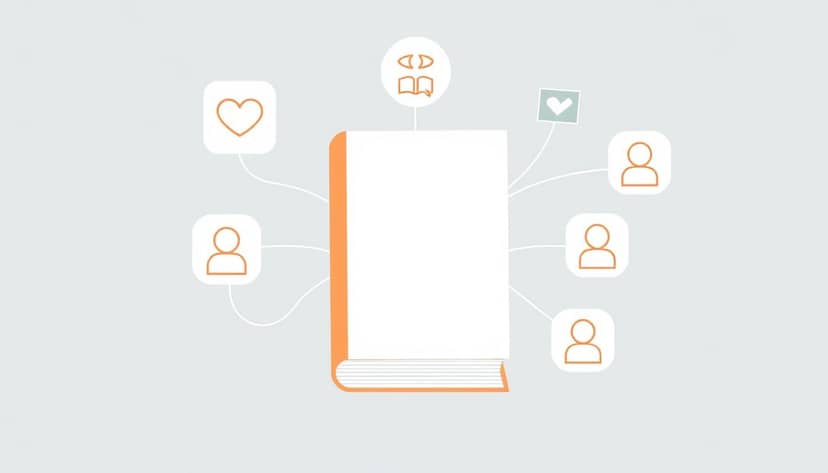
1. Define Your Book’s Target Audience and Ideal Readers
I like to start with a “reader snapshot” that’s more specific than “people who like fantasy.” For example:
- Age range: 18–30
- Sub-genre: YA fantasy with found family + romance
- What they binge: TikTok BookTok series reviews, “first chapter” reactions, cozy-to-angsty arcs
- Where they discover: TikTok + Instagram Reels + Goodreads shelves
- What they care about: character chemistry, pacing, and whether the romance feels earned
Then I match that snapshot to creators. If your reader is YA fantasy on BookTok, you don’t need a science-fiction podcast host with 200k followers. You need people who repeatedly post your kind of content and whose audience comments like your reader would.
One more thing: define your “reader promise.” What’s the one reason someone would choose your book over the next one? That promise becomes the hook you use in outreach later.
2. Find Where Book Influencers and Your Audience Connect
Here’s what I noticed after doing this a few times: the platform doesn’t matter as much as the context. A “book influencer” on TikTok is not the same as a “book influencer” in a niche BookTok sub-community.
Start with the big discovery hubs—TikTok, Instagram, Goodreads, YouTube, and podcasts—but then narrow fast:
- TikTok: search hashtags related to your sub-genre (ex: #romantasy, #scififantasy, #cozyfantasy, #thrillerbooks)
- Instagram: look for Reels that match your vibe (mood, pacing, cover aesthetic)
- Goodreads: check shelves and review patterns (who reads what, and how they describe it)
- Podcasts: focus on episode topics that overlap with your book’s themes
About that TikTok stat you’ll see online: one widely cited figure is that TikTok influenced about 59 million U.S. print book sales in 2024. I’m linking it here so you can verify the source and context: The Drum (Dec 2024). (That number is attribution/modeling of influence, not a direct “TikTok sold X books” counter.)
Use stats like that as motivation, sure—but your real job is to find the creators whose viewers already behave like your target reader.
3. Choose the Right Influencers for Your Book
I used to think “bigger is better.” Then I started paying attention to engagement behavior.
Here are decision rules I actually use when shortlisting creators:
- Content match rule: If they haven’t posted your genre/sub-genre at least 2 times in the last 30–60 days, I usually pass.
- Engagement floor (rough but useful): For Instagram/TikTok, I look for comments that look real (not just “love this”). If engagement is consistently tiny compared to views/followers, it’s often low-intent traffic.
- Audience sanity check: Scan 10–15 recent comments. Are readers asking for books like yours? Do they mention similar tropes?
- Delivery reliability: If they accept ARCs but rarely post on schedule, your book launch timing can get messy.
One practical way to compare influencers: pick 5–10 creators, then track (even manually) their last 3 posts’ performance. You don’t need perfection—just enough signal to avoid obvious mismatches.
Macro vs micro? Macro creators can spike awareness. Micro creators often win on trust because their audience feels closer. For most indie launches, I’ve seen micro-to-midrange creators produce better “conversion-to-sales” results.
4. Personalize Your Outreach to Build Genuine Connections
Before I even send a pitch, I do a quick “proof of attention.” I’ll comment on one recent post with something specific (not “great review!”). Then I’ll send a message that references what they actually posted.
Here’s what personalization looks like in real life:
- “I loved how you described the pacing in your first chapter video—this is exactly what I hoped readers would feel.”
- “Your review mentioned the slow-burn tension and the found-family dynamic. That’s a big part of my story too.”
- “I noticed you’ve been posting thrillers with ‘morally gray protagonist’ vibes—mine fits that lane.”
And please don’t overdo it. You don’t need their entire biography. What you need is a specific reason you chose them.
What happens if you don’t have time to research deeply? Then at least pick creators whose content is clearly aligned and keep your message focused. Generic is what gets ignored—not effort.
5. Write Clear and Friendly Outreach Messages
Let me be blunt: most outreach fails because it’s either too vague (“I think you’d love my book”) or too demanding (“please review ASAP”). You want clear, friendly, and easy to say “yes” to.
Below are copy/paste templates I’d actually send. Swap in your details.
Email template (first message)
Subject line ideas (pick one):
- Book recommendation for your audience: [Book Title] (YA romantasy)
- Quick collab idea for your [genre/trope] readers
- ARC request? [Book Title] for your next post/review
Email body:
Hi [Creator Name],
I’m [Your Name] and I loved your [post type + date or title]—especially your take on [specific detail/trope]. It matches what I’ve been hearing from readers of my book, [Book Title].
Would you be open to reviewing [Book Title] for your audience? I’m hoping to support a [deliverable: review/reel/post/interview] around [date or release window].
What I can offer: [free ARC/copy + payment if applicable] and I’ll handle delivery + a simple content brief (no pressure on your creative style).
If this sounds like a fit, here’s the link to the book: [Amazon/Goodreads link].
If you prefer a different deliverable (or a different date), I’m flexible.
Thanks so much!
[Your Name]
[Website/Author page]
[Contact info]
Instagram/TikTok DM template (short + specific)
DM message:
Hey [Name]! I just watched your [specific post]—you nailed the vibe with [specific detail]. I’m an author and I think my book, [Book Title], would fit your audience.
Would you be interested in an ARC for a [review/post] around [date]? I can send the copy + a straightforward schedule, and you can make it your own.
Book link: [link]
Thanks!
Follow-up template (if they don’t reply)
Day 3 follow-up:
Hi [Name]—just bumping this in case it got buried. Totally understand if you’re booked up. If you’re open to it, I can send the ARC details today and we can align on timing.
Thanks again!
[Your Name]
Day 7 follow-up:
Last quick note, I promise :) If you’re not taking new collaborations right now, no worries at all. If you’d like, I can also reach out again for [next release date / future post window] when it’s a better fit.
Either way, thank you!
[Your Name]
Personalization checklist (quick):
- Did I reference one specific post or detail?
- Did I name the deliverable I’m asking for?
- Did I include a timeline (release window or posting date)?
- Did I say what I’m offering (free copy, payment, and/or perks)?
- Can they reply “yes” without extra questions?
6. Communicate Expectations and Offer Fair Compensation
This is where deals either get smooth or fall apart.
I recommend you spell out expectations in plain language:
- Deliverable: review, reel, TikTok video, blog post, interview, giveaway entry
- Timing: when they’ll receive the ARC, and when the post is due
- Format preferences: length, number of photos, whether they can use their own script
- Usage rights (important): can they use your cover image, excerpts, and blurb? (And do you need them to tag you?)
- Disclosure: paid partnership vs gifted ARC (FTC-style disclosure matters)
Compensation can be tricky, especially for indie authors. Here’s a simple, fair approach:
- Gifted ARCs: best for reviewers who already post consistently and don’t require payment.
- Paid partnerships: best when you need a specific deliverable, date, or usage rights.
- Hybrid: ARC + smaller flat fee or commission if you can attribute sales.
If you’re paying, be upfront. A vague “we’ll figure it out” message is a fast way to lose trust. If you’re not paying, say so clearly and explain what you’re offering instead.
7. Build Long-Term Relationships with Influencers
Don’t treat outreach like a one-time harvest. The creators who help you once are often the same people who can help you again—if you make it easy to remember you.
Here’s what I do after a collaboration:
- Reply to their post comments (when appropriate) and thank their audience.
- Share their post in your stories/newsletter if you have permission.
- Send a quick private thank-you with one sentence about what you appreciated (their angle, the way they framed the tropes, etc.).
- Ask for feedback once: “Was there anything you wish I’d clarified about the ARC or timing?”
And yes, you can ask for ongoing opportunities. Just don’t make it awkward. A simple “If you liked this, I’d love to include you in my next release street team” tends to land better than “Promote me again, please.”
8. Track Your Outreach Results and Improve Over Time
Tracking shouldn’t be complicated. You just need consistent measurements so you can stop repeating what doesn’t work.
What to track (simple version)
- Response rate: replies ÷ total messages sent
- Collaboration rate: collaborations ÷ total messages sent
- Engagement rate (per post): (likes + comments + shares) ÷ views/followers (use the platform’s available numbers)
- Click-through rate (CTR): clicks ÷ link views (or link clicks ÷ total impressions if you have them)
- Sales lift: sales during the campaign window compared to a baseline period
UTM setup (so you know what drove traffic)
If you’re sending readers to your Amazon/Goodreads page, UTM tracking won’t always work perfectly on every platform. But you can still track traffic using a landing page.
In practice:
- Create a simple landing page like /books/[book-slug]
- Use a different UTM link for each influencer: ?utm_source=tiktok&utm_medium=creator&utm_campaign=booklaunch&utm_content=[creatorname]
- Check Google Analytics for sessions, clicks, and time on page
Sample reporting table (what I’d put in a spreadsheet)
- Influencer | Platform | Cost | Post date | CTR | Engagement rate | Referral traffic | Sales lift | Notes
- [Creator A] | TikTok | $0 gifted | 2026-04-10 | 2.4% | 6.1% | 1,230 sessions | +18 sales | “Loved the trope match”
- [Creator B] | Instagram Reels | $150 | 2026-04-12 | 1.1% | 3.8% | 640 sessions | +9 sales | “Strong comments, lower clicks”
- [Creator C] | Goodreads | $0 | 2026-04-15 | — | — | 210 sessions | +4 sales | “Great review, slower conversion”
Once you have that, you’ll start seeing patterns fast. Which creators produce clicks? Which produce sales? Which just create noise? Then you can adjust your targeting and offers for the next wave.
9. Avoid Common Mistakes in Influencer Outreach
Here are the failure modes I’ve seen (and made myself, honestly):
- Wrong offer: You ask for a review but only offer a “maybe” on payment. If you want a specific deliverable, say what you’re offering clearly.
- Mismatch audience: The creator’s content looks similar, but their comments show a different reader type. Check the comment section like it’s part of your research.
- Unclear timeline: “Whenever you can” is not a timeline. If it matters for your launch, give a window.
- Hidden logistics: Don’t make them guess how you’ll send the ARC, what format you’re providing, or whether you need their shipping address.
- No rights/usage clarity: If it’s a paid partnership or you need cover/excerpt usage, clarify it up front.
- Too many requests: “Please post a review, a reel, and a giveaway and also tag 10 people” is too much. Start with one deliverable.
Quick rights/compensation mini-guide:
- Gifted ARC: usually you’re asking for honest review/disclosure if applicable; you typically shouldn’t assume broad marketing rights.
- Paid post: specify whether they can use your cover, whether they can embed your links, and whether you can reuse their content (often you’ll need explicit permission).
If you keep these clear, you’ll avoid a lot of “ghosting” that’s really just confusion.
10. Use Data and Metrics to Fine-Tune Your Campaigns
Once you start tracking, you’ll notice something: it’s rarely “everything.” It’s usually one bottleneck.
Here’s how I troubleshoot campaigns using metrics:
- High replies, low conversions: your message is interesting, but the offer/deliverable doesn’t feel compelling. Try offering a clearer deliverable or a better ARC timeline.
- Lots of clicks, low sales: your landing page or product page isn’t converting. Update the landing page copy, add a “what to expect” section, and double-check pricing.
- High engagement, low clicks: the post is entertaining but not driving traffic. Add a stronger call-to-action in the content brief (without scripting their voice).
- Low engagement across the board: targeting is off. Switch sub-niche creators or focus on a different platform.
If you’re using tools like AutomateED or you rely on KDP reports, use them to confirm where sales are coming from. The goal isn’t to collect data—it’s to decide what to do next.
11. Keep Your Influencers Engaged Beyond the Initial Collaboration
Once someone promotes your book, don’t vanish. That’s how you turn a partnership into a one-off.
Here are ways to stay on their radar without spamming:
- Engage with their content weekly (real comments, not just likes).
- Send occasional updates that are actually useful: “Cover reveal went live,” “New excerpt drop,” “Live event this weekend.”
- Offer early access to future content if you have it (even 24–48 hours early can feel special).
- Invite them to participate in future themed posts (like “characters we’d trust” or “book vs movie” comparisons).
And if you want to get a little creative, host a simple Q&A or virtual chat with a small group of creators. You don’t need a massive event—just enough structure that it’s easy for them to say yes.
12. Consider Making Your Collaboration Mutually Beneficial and Creative
Creativity helps, but only when it fits both sides. The creator should get something that makes their content easier or more fun—not extra work.
Here are ideas with clearer “when to use” rules:
- If your book has a strong trope hook (ex: enemies-to-lovers, heist, found family): suggest a trope-focused video (ex: “3 scenes that sold me on the romance”).
- If your book is visually distinctive (covers, settings, art): offer a “aesthetic” post idea that matches their style.
- If you’re doing a launch week: propose a coordinated schedule (ex: Day 1 review, Day 3 excerpt, Day 5 giveaway entry).
- If you have budget: do a giveaway with a signed copy or bonus content.
Could you run a hashtag challenge? Sure—but I wouldn’t start there unless you already have momentum. A better starting point is a creator-led series: each influencer posts their own take, and you repost and amplify.
13. Don’t Forget to Follow Up and Express Gratitude
Follow up like a human. Not like a robot with a spreadsheet.
After someone agrees, send a confirmation with the details:
- When they’ll receive the book
- Posting date (or window)
- What you’re asking for (one deliverable)
- Disclosure/payment terms (if relevant)
After they post, thank them fast. A quick message like “I loved how you called out the pacing in chapter 3—exactly what I hoped readers would feel” goes a long way.
You can also show appreciation publicly:
- Share their post
- Tag them in your own story/newsletter (if appropriate)
- Leave a thoughtful comment on their page
That goodwill tends to pay off later when they’re open to promoting your next release.
FAQs
Start with specifics: age range, genre sub-niche, favorite tropes/themes, and where readers discover books. Then write a simple “reader snapshot” so you can spot creators who consistently post for that same audience.
Check the platforms your readers actually use: TikTok and Instagram for discovery, Goodreads for shelf-based reading habits, and podcasts/newsletters for deeper genre communities. Then narrow to niche tags and creators who post your sub-genre regularly.
Look for creators whose recent content matches your genre/sub-genre and whose audience comments show the same reader interests. Don’t rely only on follower count—pick creators with consistent engagement and delivery.
Personalize your message with a reference to one specific post, then clearly ask for one deliverable with a timeline. Include what you’re offering (gifted copy and/or payment) and make it easy for them to reply “yes.”