Table of Contents
If you’ve ever stared at a blank document and thought, “Okay… but what do editors actually want?”, you’re not alone. I’ve helped review a bunch of proposals over the years (and I’ve also been rejected myself), and the truth is: a strong book proposal isn’t mysterious. It’s just specific. When you hit the right sections with the right kind of detail, you stop guessing and you start sounding like a real, reliable author.
In this post, I’m going to walk you through a book proposal example style structure—plus sample wording you can steal for your own synopsis, chapter blurbs, and pitch letter. I’ll also point out the common places proposals get rejected, and what I changed when I revised them.
One more thing: proposals aren’t just “tell me about your book.” They’re “prove you understand the market, you can deliver the manuscript, and you can reach readers.” That’s the game.
Key Takeaways
- A solid proposal usually follows the same core sections—title page, overview/synopsis, target audience, author background, comparable titles (comps), chapter outline, and sample chapters—but the difference is in the specificity. Don’t write “a heartfelt story.” Write what the reader gets, what changes, and what makes it distinct.
- Editors want to quickly answer: Who is this for? Why now? Why you? and Why will it sell? If your answers are vague, your proposal will feel risky.
- Follow submission guidelines exactly. In my experience, “almost right” formatting can be an instant no—especially when a publisher/agent has strict requirements for page count, font, file type, or what to include.
- Platform matters more than people think, but it doesn’t have to be huge. A focused email list, speaking engagements, a niche following, or credible industry access can be enough.
- Expect revisions. Most proposals don’t land perfectly the first time. Track submissions, note patterns in feedback, and revise the sections editors repeatedly question (usually synopsis clarity, comps, or chapter structure).
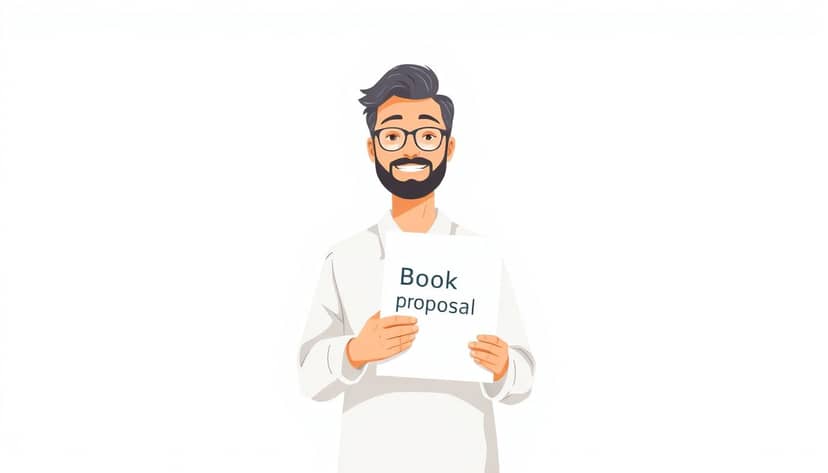
A book proposal example is a structured document you send to publishers or agents to explain what you’re writing, who it’s for, and why it’s a good bet. A strong proposal doesn’t just describe your book—it positions it. It shows the market fit, your credibility, and a realistic path from manuscript to readers.
1. Start with a Clear and Focused Title Page
Don’t overthink the title page, but don’t be sloppy either. I’ve seen proposals get ignored simply because the contact info was missing or the title didn’t match the rest of the document.
Include:
- Working title (and subtitle if you have one)
- Your name (exactly as you want it published)
- Email + phone
- Website / social (optional but helpful)
- Date
- Word count (estimated is fine)
- Format (fiction/nonfiction; hardcover/trade/paperback if you know)
Quick example (title page wording): “Working Title: The Quiet Metrics (Subtitle: How to Build a Sustainable Writing Practice). By [Your Name]. Estimated length: 85,000 words. [Month Year].”
2. Write a Compelling Book Overview or Summary
This is the part where editors decide if they want to keep reading. Most proposals fail here because the overview sounds like a pitch deck—generic, enthusiastic, and light on specifics.
What I look for (and what editors usually scan for) is a tight answer to these questions:
- What is the book? (1–2 sentences)
- What’s at stake? (what happens if the reader doesn’t get it?)
- Why will it work? (your method, your story engine, your framework)
- Who exactly is it for?
- What’s unique? (not “it’s unique.” Tell me how.)
Sample overview #1 (Nonfiction, practical how-to)
Working title: “The Quiet Metrics”
Overview (approx. 300–450 words):
In “The Quiet Metrics,” I show busy writers how to stop chasing motivation and start using small, measurable habits to build a sustainable writing practice. This book is for people who love writing but keep getting stuck in the same loop: a burst of productivity, a crash, and then weeks of restarting. The goal isn’t to write more—it’s to write consistently without burning out.
The book combines a simple tracking system (I call it Quiet Metrics) with weekly “decision rules” that help you choose what to write next based on your energy, deadlines, and real-life constraints. Each chapter includes a practical workflow, examples from my own revisions, and a short exercise you can complete in 15 minutes.
What makes this different from other productivity books is the focus on the writing-specific friction points: creative resistance, research spirals, and the “I’ll start when I’m inspired” trap. Instead of generic time management, you’ll learn how to build a practice that survives bad weeks.
Readers will finish with a repeatable system, a one-page weekly plan, and a set of metrics they can customize—so their writing habit doesn’t depend on mood or perfect conditions.
Sample overview #2 (Fiction, page-turner)
Working title: “Borrowed Fire”
Overview (approx. 350–500 words):
When Mara inherits an antique compass from a stranger, she thinks it’s just a family heirloom—until it points to people who are about to disappear. In a city where everyone believes the vanishings are accidents, Mara’s discovery turns her into the one person who can’t look away. But the compass doesn’t just show locations—it reveals secrets tied to her own past, including a promise she never knew she made.
Borrowed Fire is a fast, character-driven thriller about choosing truth over safety. Mara’s problem isn’t bravery. It’s that every step forward costs her something: trust, time, and the relationships she needs to survive the next clue. As the disappearances accelerate, she must decide whether to stop the pattern—even if it means exposing the people she loves—or let the city keep its convenient lies.
The story blends high-stakes mystery with emotional stakes: each case forces Mara to confront who she is, what she’s been avoiding, and why her choices matter beyond the immediate danger. Readers who enjoy tightly plotted suspense with strong character arcs will find a satisfying engine: clues, reversals, and a final reveal that recontextualizes everything.
Mini checklist (use this before you send)
- Is your first paragraph specific? If it could describe any book, it’s too vague.
- Did you name your reader? “People who like productivity” isn’t a reader.
- Do you mention comps (later), but not dump them here? Overview should sell the story/argument first.
- Does it sound like a real voice? No corporate fluff.
3. Define Your Target Audience and Market
Here’s the thing: “Everyone” isn’t a market. Editors need tight audience language so they can picture who buys the book and why they’d choose yours over the next option.
In my experience, the strongest audience sections include:
- Demographics (age range, profession, education level—only if relevant)
- Psychographics (what they believe, what frustrates them, what they’re trying to achieve)
- Reading behavior (what they already read, how they discover books)
- Purchase context (gift, course tie-in, self-help routine, binge reading weekends, etc.)
Example audience paragraph (nonfiction)
“The Quiet Metrics” is aimed at writers and creators who work full-time, freelance, or run small businesses and struggle with consistent output. They’re not looking for motivation quotes—they want a system that works during low-energy weeks. Many already follow productivity and writing communities on social media, and they buy books they can apply quickly (workflows, templates, checklists). The primary audience includes freelance writers, bloggers, and aspiring authors who want to finish drafts without turning writing into a daily guilt cycle.
Example audience paragraph (fiction)
Borrowed Fire is for readers of character-driven thrillers who enjoy mystery plots with emotional depth. The ideal reader likes books where the protagonist’s choices create pressure, not just gunfire. They typically discover new titles through bestseller lists, BookTok/Bookstagram, and “if you liked…” recommendation pages. If your comps include similar page-turning suspense and strong character arcs, this audience section should line up with them.
4. Highlight Your Qualifications in About the Author Section
This section is where you prove you can deliver. Not in a braggy way—more like “here’s why you’re credible for this exact book.”
Include:
- Relevant experience (industry, research, lived experience, professional role)
- Writing credentials (publications, awards, anthology credits)
- Speaking/teaching (workshops, webinars, guest lectures)
- Platform proof (newsletter size, engagement metrics, audience demographics)
- Personal connection (why this topic/story matters to you)
What “proof” looks like (example)
- “My newsletter has ~12,400 subscribers, and my average open rate is 42%.”
- “I’ve taught this topic in 6-week workshops for 3 years; each cohort has 25–35 participants.”
- “My writing has appeared in [Publication], and I’ve completed 3 full-length editing projects for clients in [niche].”
If you don’t have big numbers, don’t panic. I’ve seen proposals get traction with smaller platforms when the author’s niche credibility is obvious.
5. List and Discuss Comparable Books (Comparative Titles)
Comps are tricky because you can’t just list titles. You have to explain why they’re comparable—plot/genre, target reader, tone, format, and (when possible) sales performance.
My rule of thumb: include 3–5 comps. For nonfiction, I like to include a mix of “close topic” and “close reader.” For fiction, I focus on subgenre + emotional tone + reader expectation.
Comps list example (with the “why”)
- Quiet Habits by J. Smith (2022) — Similar audience (writers/producers), strong emphasis on weekly planning and habit tracking.
- The Draft Sprint by A. Chen (2021) — Comparable method style (templates + exercises) and reader promise (finish drafts without burnout).
- Write the Week by M. Rivera (2023) — Overlaps in practical workflow and includes measurable progress tools; tone is encouraging, not cheesy.
If you can’t find sales numbers, that’s okay. Just be honest about what you’re comparing and avoid comps that are only “vibes.”
6. Outline Your Book’s Chapters or Content Structure
This is where editors confirm the book has a real shape. For nonfiction, you’re basically proving you have a full argument + progression. For fiction, you’re showing the narrative arc and momentum.
What works best is a chapter-by-chapter outline with 2–4 sentences per chapter. Each blurb should include:
- Purpose (what this chapter accomplishes)
- Key topics (the main ideas or plot events)
- Progression (how it moves the reader forward)
- Payoff (what the reader learns/gets by the end)
Chapter outline template (copy/paste)
- Chapter 1: [Title] — [1–2 sentence purpose]. [1 sentence about key points]. [1 sentence about payoff].
- Chapter 2: [Title] — [repeat pattern].
Example chapter blurbs (nonfiction)
- Chapter 1: Why “Inspiration” Fails — We break down the cycle of burst productivity followed by burnout, and why willpower isn’t a plan. You’ll learn the difference between “creative energy” and “scheduled progress,” with examples from common writing routines. By the end, you’ll have a simple diagnostic to spot your pattern.
- Chapter 2: Set Your Quiet Metrics — I introduce the Quiet Metrics system: 3–5 indicators you can track without turning your life into spreadsheets. We’ll map metrics to outcomes (draft completion, revision speed, consistency). You’ll leave with a one-page setup you can customize in under 30 minutes.
- Chapter 3: The Weekly Decision Rules — Instead of “write every day,” you’ll learn decision rules for low-energy weeks, busy weeks, and deadline weeks. I’ll show how to choose the next best writing task using your metrics and constraints. The chapter ends with a weekly template you can reuse.
Example chapter blurbs (fiction)
- Chapter 1: The Compass That Points Wrong — Mara inherits the compass and dismisses the strange markings as decoration. During a routine errand, the needle locks onto an address connected to a missing person. She gets the first hint that the compass is tied to her past.
- Chapter 2: The First Disappearance — Mara follows the compass to a location that’s already been “cleaned up.” She meets someone who warns her to stop asking questions. The chapter ends with a clue that links the missing case to a family secret.
7. Include a Marketing and Promotion Plan (Optional but Helpful)
Even if it’s labeled “optional,” I’d still include a short marketing plan. Not a fantasy plan. A realistic one.
Editors like to see:
- How you’ll reach readers (email list, social channels, communities)
- How you’ll pitch (podcasts, blogs, local media, newsletters)
- What you’ve already done (previous interviews, guest posts, speaking gigs)
- Timeline (what happens in the first 60–90 days after publication)
Example marketing plan paragraph
After publication, I’ll promote “The Quiet Metrics” through a 10-week launch sequence: weekly email lessons (with excerpts and templates), two guest podcast appearances, and targeted posts in writing communities where my readers already hang out. I’ll also pitch book review newsletters and offer a free “Quiet Metrics” worksheet to encourage sign-ups. My goal is to convert attention into an email list of [X] readers by week 8, then continue with monthly updates tied to writing seasons and deadlines.
8. Add Sample Chapters or Writing Samples
Pick samples that do the heavy lifting. Don’t just include “random chapters.” Include the ones that prove you can deliver what the overview promises.
For nonfiction, I typically recommend:
- Chapter 1 + one mid-book chapter that shows your method in action
- Or Chapter 1 + the most “transformative” chapter (the one readers will remember)
For fiction:
- Chapter 1 (voice + hook)
- A chapter that shows character depth and plot momentum
Also: check the submission requirements. Some agents ask for specific formatting, word count, or whether to include the full manuscript later.
9. Prepare Supporting Materials or Extra Pages
This is where you can add polish, but don’t bloat the proposal. I’ve seen submissions get rejected because they were 10 pages longer than requested.
Common supporting materials include:
- Detailed author bio (short bio for the proposal, longer bio for media/website)
- Platform stats (newsletter size, engagement rates, media mentions)
- Cover mockup (only if it helps the agent/publisher visualize the product)
- Format plan (especially for nonfiction: workbook elements, charts, exercises)
- Rights strategy if you have a strong angle (audio, translation, licensing)
Format note (ebook/audiobook) you can actually include
If you’re pitching nonfiction, you can mention how the content translates to formats. For example: “This book includes worksheets and decision rules that work well in ebook and audiobook companion downloads.” That’s more useful than saying “available in all formats.”
10. Follow Tips to Make Your Proposal Persuasive and Clear
Here are the “real world” rules I follow when I revise proposals (and when I’ve seen editors respond well):
- Be specific, not loud. “A practical system” beats “a game-changing approach.”
- Use numbers when you can. Word count, audience size, workshop dates, newsletter stats, even approximate ranges.
- Cut jargon. If you wouldn’t say it to a smart friend, don’t write it in your proposal.
- Match your tone to the genre. Don’t write romance like it’s a business plan.
- Make the synopsis read like a promise. Your chapter outline should deliver on what you promised in the overview.
- Proofread like an editor. Spelling and inconsistent title/subtitle are an instant credibility hit.
One small “gotcha” I’ve noticed: authors often describe the book’s themes, but forget to describe the reader’s transformation. What changes by the end? Better sleep? Finished drafts? A new worldview? A solved mystery? Spell it out.
11. Use a Basic Proposal Template to Draft Your Structure
Templates help, but you still need to write your specifics. Here’s a clean structure you can draft from:
- Title Page
- Pitch Letter / Cover Letter (usually 1 page)
- One-Page Overview (300–500 words, genre-dependent)
- Target Audience + Market (short but specific)
- Author Bio + Credentials
- Comparable Titles (Comps) (3–5 with “why”)
- Chapter Outline (2–4 sentences per chapter)
- Sample Chapters (as requested)
- Marketing/Platform Notes (short section)
- Optional extras (worksheets, mockups, rights notes)
Cover letter example (pitch letter) you can adapt:
Dear [Agent/Editor Name],
I’m seeking representation/publishing for [Working Title], a [fiction/nonfiction] project of approximately [X] words. It’s best suited for readers of [Comps] because [one sentence on what’s similar], but it stands out by [your unique angle].
In brief, [Working Title] follows [protagonist/reader transformation] as [inciting problem/central argument]. The book delivers [the core promise] through [method/plot engine].
I’m qualified to write this because [credible experience/research]. I’ve built a platform through [newsletter/social/speaking], and my audience is interested in [topic niche].
Thank you for your time and consideration. I’ve included [overview/chapter outline/sample chapters] per your guidelines. I’d be thrilled to send the full manuscript if it’s a fit.
Sincerely,
[Name]
[Contact Info]
12. Present the Final Proposal and Next Steps for Submission
Once your proposal is polished, it’s submission time. This part sounds boring, but it’s where a lot of writers accidentally lose momentum.
- Format everything exactly (file type, margins, font, page order, word count). If guidelines say “PDF only,” don’t send DOCX.
- Keep the title consistent across cover page, overview, and chapter outline.
- Write a real cover letter for each submission target. Yes, it’s faster to copy/paste. No, it’s not worth the risk.
- Track submissions in a spreadsheet: date sent, contact, response date, and notes.
- Decide your route: agent vs. direct-to-publisher depends on your genre and the publisher’s submission policy.
- Respond to requests quickly if they ask for revisions, more pages, or specific materials.
For some nonfiction books, it also helps to mention format plans briefly (ebook, audiobook, worksheets). Editors don’t need a full marketing plan here—just enough to see you’ve thought about how the book will live in the real world.
13. Handling Rejections and Staying Persistent
Let’s be honest: rejection stings. It also teaches you what to fix.
Here’s what I recommend doing after a “not for me” email:
- Save the feedback pattern. If multiple people say “unclear synopsis,” you don’t need a new book—you need a clearer overview.
- Rework only the sections that are questioned. Don’t rewrite your entire proposal because one agent passed.
- Sharpen the hook. If your first paragraph is vague, rewrite it so it includes stakes and specificity.
- Re-check comps. Wrong comps can make editors feel like your book is a mismatch for their list.
- Submit to aligned targets. A great proposal sent to the wrong publisher is still a no.
Also, if you’re hearing “we love it, but…”—that usually means timing, list fit, or capacity. Don’t treat it like a personal failure. Treat it like data.
14. Why Networking and Building Your Platform Matter
Networking won’t magically replace a weak proposal. But it can absolutely help you get in front of people who understand your genre.
In my experience, platform is less about “going viral” and more about showing up consistently in your niche. What counts:
- Author website with clear topic positioning
- Newsletter (even a small one—if it’s engaged)
- Guest interviews and podcast appearances
- Workshops/webinars related to your topic
- Community involvement (writing groups, niche forums, local events)
And yes, organizations can help. Joining groups like the Authors Guild or Society of Children’s Book Writers and Illustrators can connect you with people who know the ropes.
15. Keeping Up with Industry Trends and Market Changes
Market trends matter because editors are constantly balancing “what readers want” with “what their list can realistically sell.” You don’t need to obsess daily, but you should know the basics.
Here are practical ways to reflect market changes in your proposal:
- Format awareness: If your book includes exercises, mention how that works in ebook (downloadable worksheets) and audiobook (companion PDF).
- Genre demand: If your subgenre is trending, your comps and audience section should reflect that.
- Discovery channels: If readers for your comps are being discovered via BookTok, newsletter promos, or podcasts, mention how you can reach them.
Print is still resilient, and digital sales keep growing. The point for your proposal is simple: don’t ignore how readers find and consume books now.
16. Resources and Support for Aspiring Authors
You don’t have to do this alone. I’ve learned the hard way that “winging it” costs time.
Useful resources include:
- AutomateEd for writing prompts, publishing tips, and guides: https://automateed.com/
- Professional editors/consultants if your manuscript or proposal needs a sharper structure
- Courses/webinars on craft + publishing basics (especially proposal writing and market research)
- Critique groups for feedback on voice, clarity, and pacing
- Self-publishing platforms like KDP and IngramSpark if you want to understand the production side and compare what works in the marketplace
If you’re exploring routes outside traditional agenting, you may find this helpful: how to get a book published without an agent.
FAQs
A clear proposal helps editors understand what the book is, how it’s structured, and who it’s for. It also signals that you’re organized and realistic about delivery—those things matter when they’re deciding whether to invest time in your project.
Your overview should clearly state the premise, the main promise to the reader, and what makes it distinct. It should also hint at stakes (what’s at risk) and give a sense of the book’s approach—framework, method, or narrative engine.
Start with who the book helps (or who the story centers on), then narrow by their interests, age range, and reading habits. A good audience description sounds like: “They already read X, they want Y, and they’re tired of Z.”
Comparable books (comps) are titles that are similar in theme, genre, audience, or reader promise. Discussing them helps publishers understand where your book fits on a shelf and whether their list can sell it.

And if you want a quick reality check: write your overview first, outline next, then go back and make sure every chapter blurb pays off what you promised. When that alignment clicks, the proposal suddenly feels “real”—and that’s exactly what editors are looking for.