Table of Contents
If you’ve been trying to pick an AI model lately, you already know the problem: there are just too many options. Every week it feels like a new model drops, and suddenly you’re stuck asking stuff like, “Which one is actually good for my use case?” and “What will it cost me to run it?”
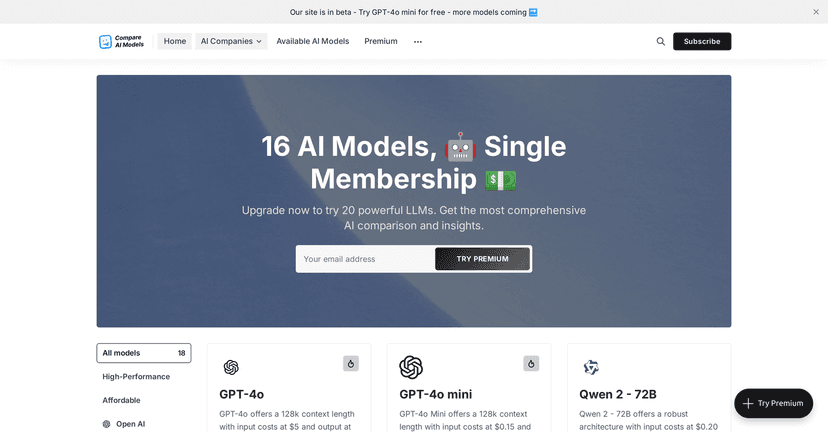
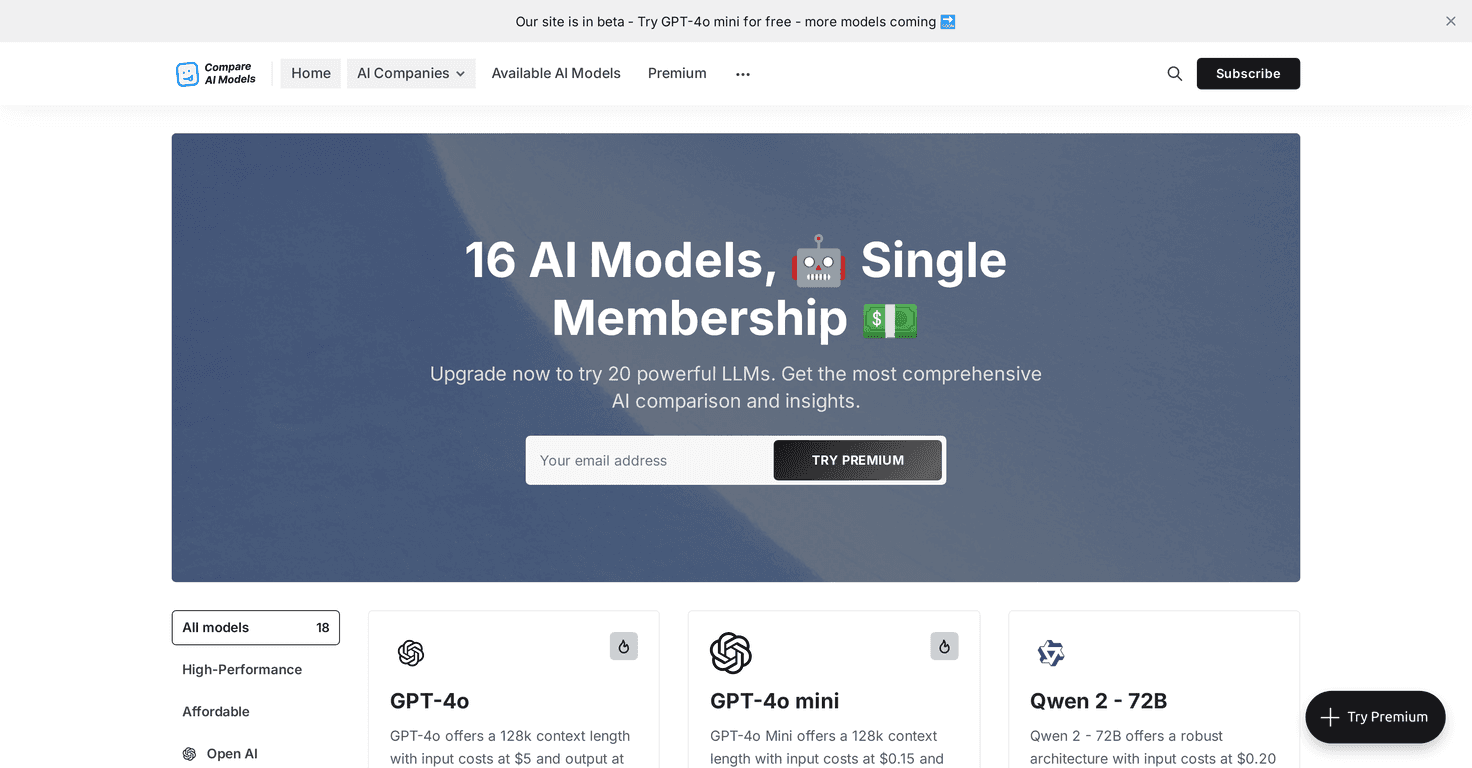
That’s why I checked out Compare AI Models. The site is built around straightforward model comparisons—think GPT-4, Llama, Gemini, and other popular options—so you can stop guessing and start choosing with a bit more confidence.

Compare AI Models Review: what I liked (and what I’d watch out for)
When I say the site is “user-friendly,” I mean it doesn’t make you work to find the basics. The whole focus is on comparing well-known AI models—especially GPT-4, Llama, and Gemini—so you can quickly narrow down what might fit your needs.
In my experience, the hardest part about choosing an AI model isn’t even the quality. It’s figuring out trade-offs: speed vs. accuracy, cost vs. context length, and how well a model handles the kind of tasks you actually do (coding, summarization, customer support, content drafting, etc.). This site tries to address that by presenting comparisons in a way that’s easy to scan.
One thing I appreciated: it’s not just “Model A is better than Model B.” It’s more like, “Here are the differences,” which is honestly what you want when you’re building something real.
Key Features I’d actually use
- Model comparisons that don’t feel buried. You can move between models without getting lost in marketing fluff.
- Performance + cost context. I specifically looked for how the site frames model performance alongside usage costs, because that’s what tends to hit you after you start running real workloads.
- Easy navigation. The layout makes it simple to jump to what you care about—no endless scrolling just to find the relevant section.
- Premium membership for deeper dives. If you want more detailed analysis, there’s an option to go beyond the basics.
- Regular updates. New models show up over time, which matters because the “best model” changes fast.
- Blog content and announcements. I like having educational posts in the mix, especially when they explain what’s changed and why it matters.
Pros and Cons (real talk from a reviewer who tested it)
Pros
- Broad coverage. You’re not stuck looking at just one vendor ecosystem—you can compare multiple popular AI models.
- Clear, accessible info. The comparisons are easier to understand than what you usually find in random blog posts or scattered docs.
- Premium option if you want more depth. In my opinion, that’s a good setup: basics for everyone, extra analysis for people who want to go further.
- Community + blog activity. Having comments and ongoing posts can help you spot practical issues other users notice.
- Comparison tools that support decision-making. Instead of vague advice, it’s designed to help you actually pick a model based on differences.
Cons
- Full access may require a subscription. If you’re only looking for a quick answer, you might hit paywalls sooner than you’d like.
- It can be a lot to process. When there are lots of models side-by-side, it’s easy to feel overwhelmed—especially if you don’t know what criteria matter most to you yet.
- Comparisons still require your judgment. Even with good info, the “best” choice depends on your prompts, quality expectations, and workflow. Two people can read the same comparison and make different picks.
Pricing Plans: what’s clear, what’s not
Here’s the honest part: specific premium pricing details aren’t laid out in the content I reviewed. What is clear is that you can sign up to access premium insights and model trials.
If you’re deciding whether to upgrade, I’d recommend treating it like a test period. Before paying for anything, think about what you’ll actually measure—things like response quality on your typical prompts, how consistent outputs are, and whether the cost makes sense for your usage (especially if you’re planning to run it frequently).
Wrap up
Overall, Compare AI Models feels like a practical starting point when you’re trying to choose between popular AI models and you don’t want to spend hours piecing together info from everywhere. It’s especially helpful if you want comparisons that are easier to scan and more grounded than pure hype.
If you go into it with a clear goal—like “I need strong summarization,” “I’m doing coding help,” or “I care most about cost per request”—you’ll get more value out of the comparisons. And if you do hit the premium wall, at least you’ll know what you’re paying for: deeper analysis and more hands-on trial access.