Table of Contents
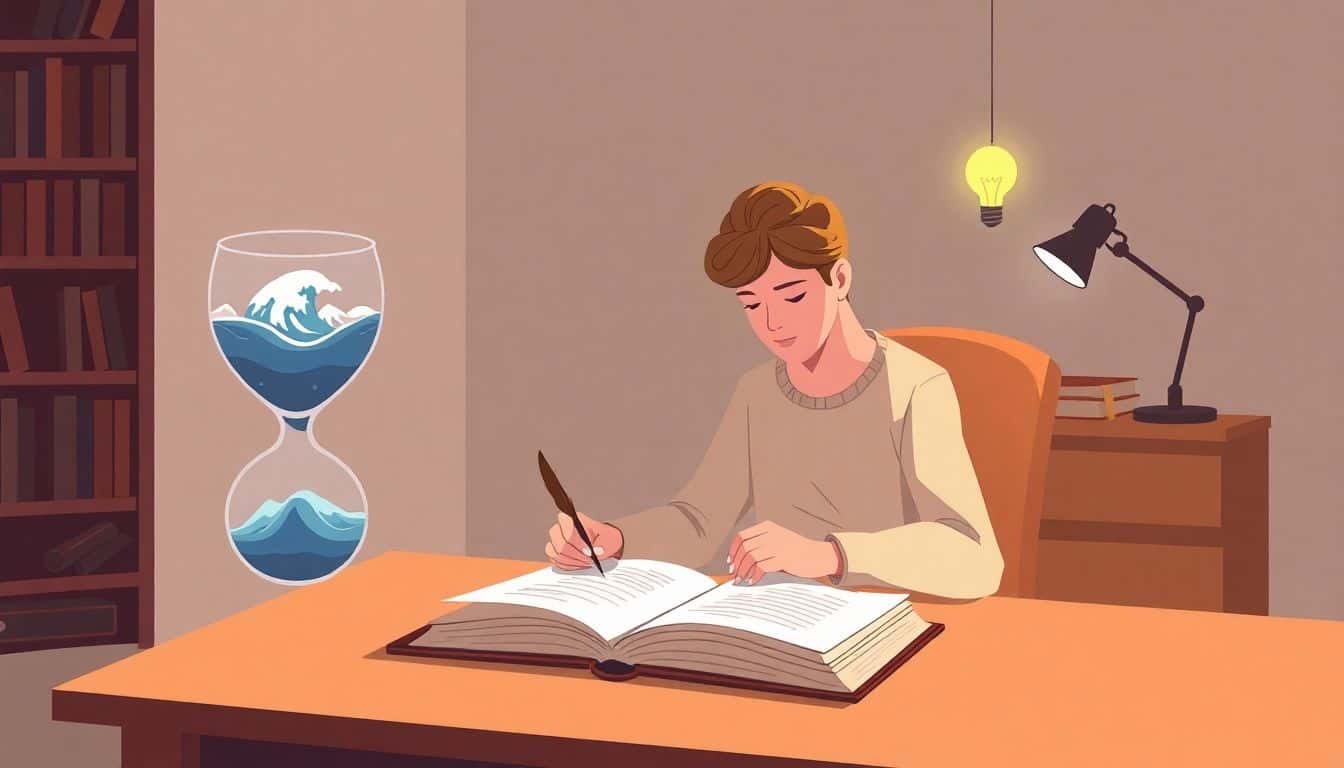
You’re right, writing a book blurb can feel like trying to squeeze an entire ocean into a wineglass—overwhelming. You might wonder how on earth you can make readers excited about your story in just a few short paragraphs.
If writing from scratch feels overwhelming, an AI ebook generator can get you from idea to draft the same day.
Don’t stress, we’ve got you covered. Stick around and you’ll discover straightforward ways to craft a blurb that hooks readers, shows off your awesome plot, highlights your main character, and teases just enough to make readers click “Buy Now.”
Ready for examples and quick tips? Let’s get going.
Key Takeaways
- Start your blurb with an intriguing first line that grabs immediate attention and sets reader expectations (e.g., suspenseful or playful).
- Clearly express your book’s genre upfront, matching the mood of your story—cozy fantasies sound whimsical, thrillers gritty or intense.
- Introduce your main character briefly yet vividly to connect emotionally with readers; highlight quirks or struggles they face.
- Sum up your book’s core conflict quickly to communicate stakes and drama.
- Keep your blurb concise—under 200 words—to avoid boring readers and show that your storytelling is clear and focused.
- Close with an intriguing teaser or question that motivates readers to act (e.g., “Can she save herself before it’s too late?”).
Start your book blurb with a hook sentence
Your book blurb’s first line is your one shot to snag a reader’s attention fast enough to stop them from clicking away or putting your book back on the shelf.
A good hook should stir curiosity, anxiety, surprise, or even laughter—whatever fits your genre and your audience best.
For example, if you’re writing a thriller, your hook could say: “Three women disappear in one night; one will return with a terrifying truth.”
If romance is more your vibe, try something playful or emotional: “He swore never to love again—until he spilled coffee on her wedding dress.”
Remember, a powerful hook isn’t complicated; it simply needs to intrigue or hit a nerve quickly enough to get readers wanting more.
Clearly show your book’s genre and overall feeling
Your potential readers shouldn’t have to guess what kind of story they’re getting into, so clarify your genre right away in your blurb.
If your book’s cover and title say “fantasy adventure,” don’t confuse readers by making your blurb sound like literary fiction.
Be transparent: if your genre is cozy fantasy (super trendy in 2025, by the way), make sure your blurb has hints of whimsy, comfort, and a bit of magic.
For genres like horror, your blurb can feature keywords like “chilling,” “dark,” or “haunted,” giving readers a sense they’ll get a scary ride.
Clearly communicating your genre aligns expectations and attracts exactly the readers you want—those who’ll appreciate your storytelling style.
Introduce your main character in a few compelling words
Let’s face it, readers usually decide to stick around because they care about your main character—so introduce them in a way readers can instantly connect with.
You don’t have a full page here, so be brief but vivid: tell readers something intriguing about who your character is, what they struggle with, or their quirks.
Instead of saying, “Laura works as a lawyer,” lean into specifics: “Laura Bowen, a jaded criminal lawyer who hides vodka in her coffee mug.”
Or even: “Ethan, a shy baker who obsessively alphabetizes his spice rack, faces his worst fear—romance.”
Little details like these draw readers in, make characters feel real, and set your story apart from generic ones on the shelf (here are more tips on making your book stand out through its cover and blurb).
Explain the core problem or conflict briefly
At its most basic, your book is someone facing something tough—if not, you’ve got yourself a pretty dull story.
So right after you’ve introduced your character, give us an idea about what challenge they’re up against and what stakes they’re fighting for.
If you’re writing a murder mystery, let readers know quickly: “Detective Miles must track down a killer before his own daughter becomes the next victim.”
Or maybe it’s a coming-of-age story where, “High school senior Jesse must choose between a prestigious university scholarship or staying home to help his struggling family.”
The conflict has to be clear, relatable, and a little dramatic—this is what keeps readers glued to your blurb and ultimately convinces them your book’s worth their time.
Write briefly and clearly: keep it under 200 words
Let’s be honest, we’ve all put back a book with a blurb that rambles on and on—it feels like homework instead of entertainment.
That’s precisely why getting straight to the point in under 200 words is absolutely non-negotiable.
Here’s how to keep it tight and engaging:
- Cut unnecessary words—ditch phrases that don’t add any meaning or excitement.
- Stick to sharp, direct sentences that keep your reader alert.
- Write your first (and second, and third…) drafts longer if you want, and then ruthlessly trim down.
Quick tip: Reading your blurb aloud can help catch anything clumsy or dull sounding.
Less than 200 words keeps your potential reader’s attention and shows your storytelling is lively and focused—not bloated and boring.
Mention author experience or awards if they add credibility
If you’re an author with relevant awards or experience, now’s your chance to drop this casually into your blurb and show you’ve got writing chops.
No need to write a full résumé though—one impressive, relevant mention is plenty!
Use something straightforward like: “Award-winning author of five bestselling climate fiction (cli-fi) novels on Amazon.”
If you don’t have awards yet but you’ve got some solid experience that your readers would appreciate (like a detective writing a mystery), feel free to mention it succinctly: “Written by real-life former detective turned mystery novelist.”
If you’re new with no significant awards or experiences, don’t sweat it—simply skip this step to keep your blurb lean and effective.
End with a teaser to prompt readers to take action
Your blurb isn’t complete without that intriguing last bit—a teaser that nudges your reader into hitting that “buy” button or checking out your first chapter.
Include a captivating question or a doorway half-opened, like: “Will Sophie unlock the secrets of her past, or will it cost her everything she holds dear?”
You can also evoke curiosity or urgency with something like, “Discover the heartbreaking truth behind the family’s hidden past—before it’s too late.”
This sort of final line makes readers itch to grab your book immediately instead of forgetting about it.
And remember, there’s nothing wrong with openly inviting them to action: “Start the adventure today,” or “Grab your copy to find out.”
Show successful book blurb examples and explain why they work
Checking out book blurbs from popular books can make crafting your own so much easier.
Let’s quickly check out this effective blurb from the cozy fantasy bestseller “Legends & Lattes” by Travis Baldree:
“After decades of adventuring, Viv the barbarian cashes out of the warrior life with one final score: a forgotten legend, a fabled artifact, and an espresso machine. The heartwarming tale unfolds as she discovers friendships, flings, and fantastic coffee.”
This blurb nails it because it clearly shows the cozy fantasy genre, introduces a relatable and quirky main character, presents a clear and unique situation, and wraps everything up tightly.
Dig deeper into book blurb tips by learning how being a beta reader can help you see what works in a reader’s eyes.
You can also practice analyzing your favorite genre blurbs—what grabs your attention and why?
Share easy tips to improve your book blurb quickly
You don’t have to rewrite your whole blurb to enhance it—a handful of tweaks can boost reader engagement right away.
First, use stronger verbs: instead of “Ethan faces his fears,” say “Ethan battles his anxiety,” to dial up the intensity.
Second, swap vague descriptions for specific ones—readers love clarity and precision.
Third, incorporate popular, trending niche genres in your blurb if appropriate: readers in subgenres like dystopian fiction or romantasy can connect instantly if they spot familiar genre markers.
Fourth, adjust your blurb for platforms where most readers find new books these days—Instagram and TikTok are currently among the top channels for book discovery, so craft a blurb that’s short, snappy, and visually friendly.
Finally, get some honest feedback from neutral friends or writers.
Fresh eyes can spot awkward lines or confusing parts you’re too close to notice.
This quick collaborative approach goes a long way toward making your blurb irresistible.
FAQs
An effective hook grabs readers immediately by sparking curiosity or emotional reaction. It should hint at a conflict or surprising aspect without revealing everything, making readers eager to know more and encouraging them to continue reading your blurb.
Introduce your main character by highlighting their most compelling trait and goal or obstacle concisely. Use vivid descriptors to hint at personality or struggles they face, helping readers quickly relate to or become invested in the character.
The ideal length for a book blurb is below 200 words. Keeping it short ensures clarity and directness, maintains readers’ attention, and provides enough detail to summarize the plot and characters without giving away too much.
Only mention author awards or experience if they enhance credibility or reader appeal. For instance, recognized awards or industry-specific expertise reassure potential readers they’re choosing a quality, well-written story worth their time.