Table of Contents
I love portal fantasy because it scratches that very specific itch: one minute you’re in a normal day, and the next you’re stepping into a whole other reality. The portal part is the hook, sure—but what keeps me reading is how the story treats the crossing. Is it dangerous? Is it emotional? Does it change the character forever?
So instead of tossing out a generic list, I picked books and series that actually deliver on portal mechanics (wardrobes, rabbit holes, secret doors, magic maps, you name it) and the consequences of going through. In the sections below, you’ll see what kind of portal each story uses, what triggers the jump, and what you can expect from the tone (kid-friendly wonder vs. darker adult stakes), plus where these titles fit if you’re trying to build a 2026 reading list.
Key Takeaways
- Portal fantasy works best when the “crossing” has rules. In The Chronicles of Narnia, it’s a wardrobe that only matters once you’re ready to believe. In Wayward Children, portals are tied to identity and the fallout of leaving—there’s always a cost.
- Classics lean into wonder and weirdness. Alice’s Adventures in Wonderland uses a rabbit hole for surreal, puzzle-like scenes, while Narnia mixes magic with moral lessons.
- Modern portal fantasy often goes darker and more psychological. A Darker Shade of Magic is a great example: multiple worlds, social/political tension, and magic that feels dangerous—not cozy.
- Romantasy versions of portal fantasy add emotional urgency. With A Court of Thorns and Roses, the “other world” isn’t just scenery—it’s where attraction, power dynamics, and survival collide.
- Good portal stories don’t just show you a new place. They force character change—new loyalties, new beliefs, and new risks—so the portal becomes part of the character arc.
- If you’re comparing books, look at tone + portal consequence. Are we talking whimsical adventure, tragic identity themes, or high-stakes political magic?
- For writers (or picky readers), the fastest way to stand out is a fresh portal trigger. A mirror, a door, a map, a dream—whatever you choose, make it feel specific to your world.
List of Famous Portal Fantasy Books
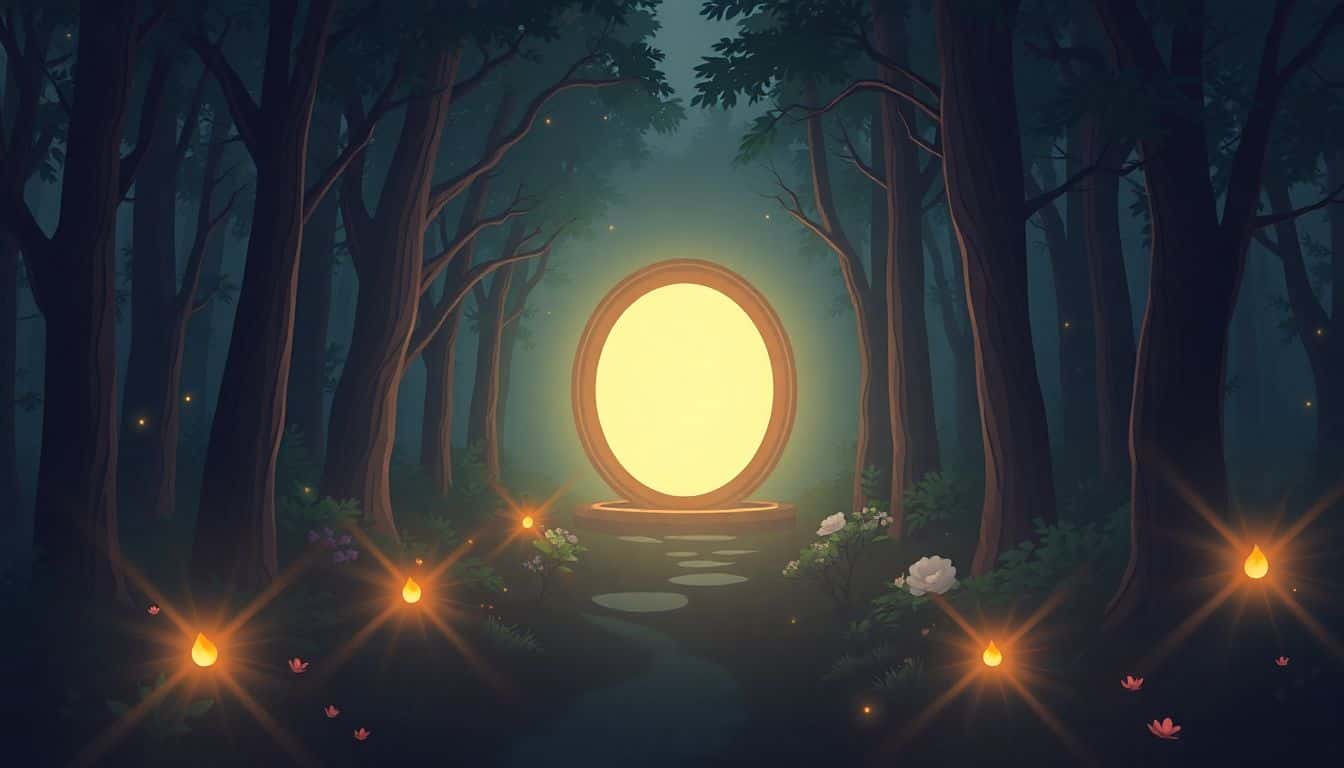
Portal fantasy, at its core, is about crossing from the “real” world into a magical or unknown one through a portal—wardrobes, rabbit holes, secret doors, paintings, magic maps, and all the rest. But here’s the part I care about most: the portal should do something to the character. It shouldn’t just be a cool transportation trick.
The Chronicles of Narnia (C.S. Lewis) is one of those rare series where the portal is instantly iconic. In The Lion, the Witch and the Wardrobe, the crossing happens through a wardrobe: kids explore it, step inside, and suddenly they’re in Narnia. What I noticed the first time I read it (and what still holds up) is how quickly the story establishes rules. It’s not “anything can happen.” Narnia has a political reality (the White Witch), a moral reality (Aslan’s presence), and a physical reality (winter that won’t end).
Portal type: wardrobe (doorway into another world)
What triggers the crossing: discovery + stepping through the wardrobe
Two to three plot beats to expect: (1) the first arrival and the shock of talking animals, (2) the conflict with the Witch’s power, (3) the stakes of prophecy and rescue
Best for: readers who like wonder with a clear moral center (often middle-grade to YA, but adults still enjoy it)
Seanan McGuire’s Wayward Children is portal fantasy with a pulse. These aren’t kids who “visit” a magical place and come back unchanged. They’re people who leave a portal world behind—and then have to deal with what it means to be out of place in their own life. Each book focuses on a different character, but the portal concept stays consistent: secret gateways exist, and crossing them reshapes identity.
Portal type: secret doors/gateways that open to specific portal worlds
What triggers the crossing: characters find the portal and choose to go through (often after a personal longing or need)
Two to three plot beats to expect: (1) arrival in a world tailored to the character’s inner conflict, (2) consequences of returning, (3) the emotional “why am I like this?” payoff
Best for: readers who want identity, belonging, and consequences—not just adventure
Alice’s Adventures in Wonderland (Lewis Carroll) is technically a portal story, even if it leans more surreal than “questy.” Alice falls down a rabbit hole and ends up in a world where logic is optional and rules are more like suggestions. The portal mechanism is simple, but the experience is anything but. If you like scenes that feel dreamlike and a little off-kilter, this one delivers.
Portal type: rabbit hole (falling into the “other” world)
What triggers the crossing: Alice’s tumble into the hole
Two to three plot beats to expect: (1) meeting odd characters with their own “logic,” (2) puzzle-like challenges and shifting rules, (3) the unsettling feeling that nothing is stable
Best for: readers who want whimsical weirdness and clever nonsense
A Darker Shade of Magic (V.E. Schwab) is where portal fantasy starts feeling grown-up. The series uses portals as connections between multiple Londons—each with its own magic level. In my experience, what makes it work isn’t just the cool “multiple worlds” premise. It’s the way magic behaves like a resource and a political weapon. Characters aren’t just traveling for fun; they’re caught in power struggles that affect entire societies.
Portal type: connections between parallel worlds (magic-linked travel)
What triggers the crossing: access via magic and the ability to move between worlds
Two to three plot beats to expect: (1) the contrast between worlds and how magic changes everyday life, (2) heists/operations that have real moral fallout, (3) political tension that escalates beyond personal stakes
Best for: readers who want atmosphere, moral complexity, and worldbuilding with teeth
If you want romantasy-style portal fantasy, A Court of Thorns and Roses (Sarah J. Maas) is the obvious magnet. The story uses portal travel to drop the protagonist into a fae world where romance, power, and survival are tangled together. What I noticed (and what many fans seem to agree on) is that the portal doesn’t feel like a detour—it’s the launchpad for the relationship dynamics and the political stakes.
Portal type: crossing into the fae realm through magical travel (the “other world” becomes the setting for the romance plot)
What triggers the crossing: a choice tied to danger and consequence
Two to three plot beats to expect: (1) forced entry into fae society and its rules, (2) attraction under pressure, (3) escalating court/power conflicts that keep the romance from feeling “background”
Best for: readers who want high emotion and romance-forward stakes
Quick note on sales/market claims: the earlier mention of a “41.3% increase” and unit totals needs clearer sourcing and timeframe context to be fully reliable. I’m keeping the focus here on what you’ll actually experience in the books—portal mechanics, tone, and story payoff—because that’s what helps you pick the right read.
That’s why these stories keep sticking with readers. They take something familiar (home, childhood curiosity, identity questions) and collide it with extraordinary rules. And once you’ve read a great one, you start noticing something else: portal fantasy isn’t just escapism—it’s a way of testing who someone is when the world stops behaving.

Most Popular Portal Fantasy Series in 2026 and 2026
Portal fantasy has been riding a wave, but it’s not all the same flavor. What’s been dominating conversations tends to be fast pacing, multiple-world setups, and an emotional engine (romance, found family, or high-stakes identity themes).
A Court of Thorns and Roses (Sarah J. Maas) keeps showing up because it hits multiple reader buttons at once: portal-to-fae stakes, strong character chemistry, and a series format that encourages bingeing. If you’re choosing based on vibe, this is the one I’d pick for readers who want romance + danger with a lot of momentum.
Wayward Children (Seanan McGuire) is also a standout in recent years, but for a different reason. It’s portal fantasy that cares deeply about what happens after the portal. It’s not just “where am I?”—it’s “who am I now?” That makes it feel fresh even when the concept is familiar.
Fourth Wing (Rebecca Yarros) is often discussed in fantasy circles alongside romantasy and high-drama series, but it’s not a classic portal-fantasy entry in the same way as Narnia or Wayward Children. If your definition of portal fantasy is strict—wardrobe/rabbit-hole/doorway-style crossing—then you might find it doesn’t match your expectations. I’m mentioning it because it’s frequently lumped into the same popularity bucket, but I’d treat it as “adjacent” rather than “true portal mechanics.”
Same goes for other massively popular Maas titles: some readers enjoy them for the fantasy realm-hopping energy, but not every book in that orbit uses a portal mechanism the same way. If you’re building a portal-specific TBR, prioritize series where the crossing is clearly part of the plot engine.
Trends in Portal Fantasy Books and Market Insights
Here’s what I’ve noticed in the last couple of years of portal fantasy chatter: the genre keeps pulling in readers who usually don’t read “traditional fantasy,” mainly because the portal setup gives you instant stakes and instant novelty.
Romantasy is still a major driver. When romance is central, the portal story has a built-in emotional timer—characters can’t just wander, they have to survive, choose, and commit. That’s a big reason portal fantasy keeps getting attention in mainstream book spaces.
Short-form discovery matters. TikTok, Goodreads reviews, and booktok-style rec lists can turn a new release into a breakout fast. The portal premise is easy to summarize in a hook—“secret door,” “other world,” “identity after crossing”—so it performs well in social feeds.
Ebooks are a practical advantage. If you’re the type who reads across multiple series, ebook platforms make it easier to keep momentum. That’s especially true for portal fantasy, where readers often jump between series because they’re chasing a specific portal vibe (cozy wonder vs. dark identity vs. romance-forward stakes).
One limitation: without clean, book-industry sourcing in the original numbers section, I don’t want to pretend I can verify exact unit totals or precise percent increases. If you want, I can help you rework that section with properly cited industry sources and clearer definitions (what counts as portal fantasy vs. “otherworld fantasy”).
Essential Elements of Successful Portal Fantasy Stories
After reading a bunch of portal fantasy (and rereading the ones that really stuck), I’ve found the strongest stories usually share the same ingredients:
1) A portal with character-specific rules. If the portal is just “magic teleport,” it feels thin. In Narnia, the wardrobe is a tangible threshold. In Wayward Children, the portal is tied to identity and consequence. In A Darker Shade of Magic, the “how” of travel matters because magic levels and politics differ across worlds.
2) Clear stakes right after the crossing. The best portal books don’t wait 150 pages to get serious. You feel the danger (or the moral weight) early.
3) Personal motivation that doesn’t feel random. When the character crosses, it should connect to who they are. Otherwise, the portal feels like set dressing.
4) Worldbuilding that includes culture + conflict. It’s not enough to have cool scenery. You need social rules, power structures, and reasons people behave the way they do in the new world.
5) A balance of mystery and clarity. Readers want wonder, but they also want to understand what’s at risk. If the rules are too vague, the story can feel like it’s drifting. If they’re too explained, it can lose magic. The sweet spot is usually “enough clarity to fear the consequences.”
Tips for Writers Wanting to Break into the Genre
If you’re writing portal fantasy, here are a few things I’d do (and a few things I’d avoid) based on what tends to work for readers:
Give the portal a memorable trigger. Don’t just pick “door” or “magic.” What’s the emotional or practical reason the character crosses? A mirror that reflects what you refuse to admit. A dream that becomes a place you can’t wake from. A hallway that only exists when you’re lost. Specificity sells.
Show the crossing changing the character. I’m not talking about “they learn a lesson” in a vague way. I mean: their priorities shift. Their relationships shift. Their sense of self shifts. In Wayward Children, that’s the entire point—coming back isn’t the end, it’s the start of a different problem.
Use pacing like a pressure cooker. Portal fantasy thrives on forward motion. Cliffhangers work because readers want to know what the new world does to them next.
Read broadly, then decide your lane. If you love Narnia, you’ll probably write for wonder and moral clarity. If you’re inspired by Schwab, you’ll lean into politics and darker consequences. Pick your vibe early so the portal doesn’t become confused mid-book.
Future of the Portal Fantasy Genre
I do think portal fantasy will keep expanding, mainly because it’s a built-in promise of novelty. Readers get a fresh setting quickly, and writers get an easy way to escalate stakes (“now we’re in the place that can hurt you”).
What I expect to keep growing is the blend of portal stories with themes like identity, moral ambiguity, and power struggles. Also, romantasy will likely stay prominent—because the portal gives relationships a high-pressure environment.
My honest take? The next “big” portal fantasy won’t just be about discovering a new world. It’ll be about what the discovery costs. That’s the part that makes readers emotionally invested instead of just entertained.
FAQs
Portal fantasy is when characters cross from their world into another one—often magical—through a gateway or portal (like a wardrobe, rabbit hole, door, or other magic-linked threshold). The crossing should matter to the plot and change how the character experiences the new reality.
If you want classic portal mechanics, start with The Lion, the Witch and the Wardrobe (wardrobe to Narnia) and Alice’s Adventures in Wonderland (rabbit hole). For modern takes, Wayward Children is all about portal consequences and identity, and A Darker Shade of Magic uses parallel worlds connected by magic travel.
Because the portal gives instant novelty and a built-in sense of adventure. But they last because readers care about what changes after the crossing—belonging, identity, politics, romance, or survival.
Look at the portal rules and the consequences. Narnia blends wonder with moral stakes. Wayward Children focuses on identity and what it feels like to return. Schwab makes magic travel feel political and dangerous. SJ Maas pushes portal travel into a romance-and-power conflict, so the emotional stakes are front and center.