LIFETIME DEAL — LIMITED TIME
Get Lifetime AccessLimited-time — price increases soon ⏳
AI Tools

HiddenGPT Review – The Future of Secure AI Solutions

Updated: April 20, 2026
5 min read
#Ai tool#Privacy

Table of Contents

Privacy is one of those things I can’t ignore anymore. Every time I test a new AI app, I end up wondering the same question: where does my data go, and who can see it?

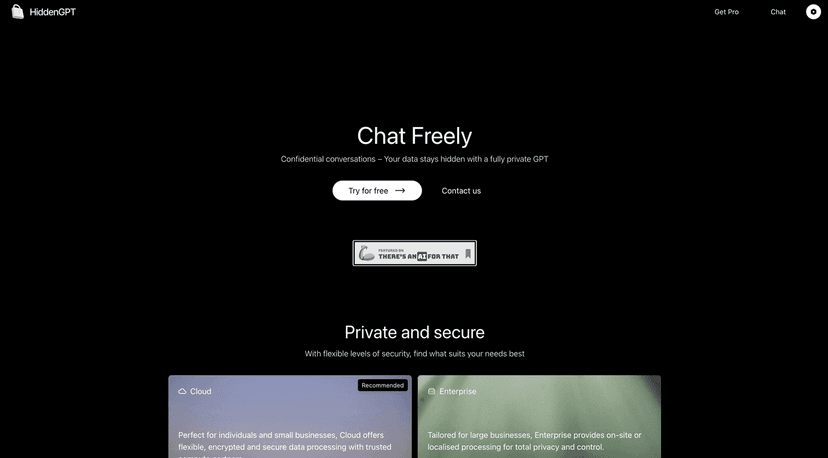
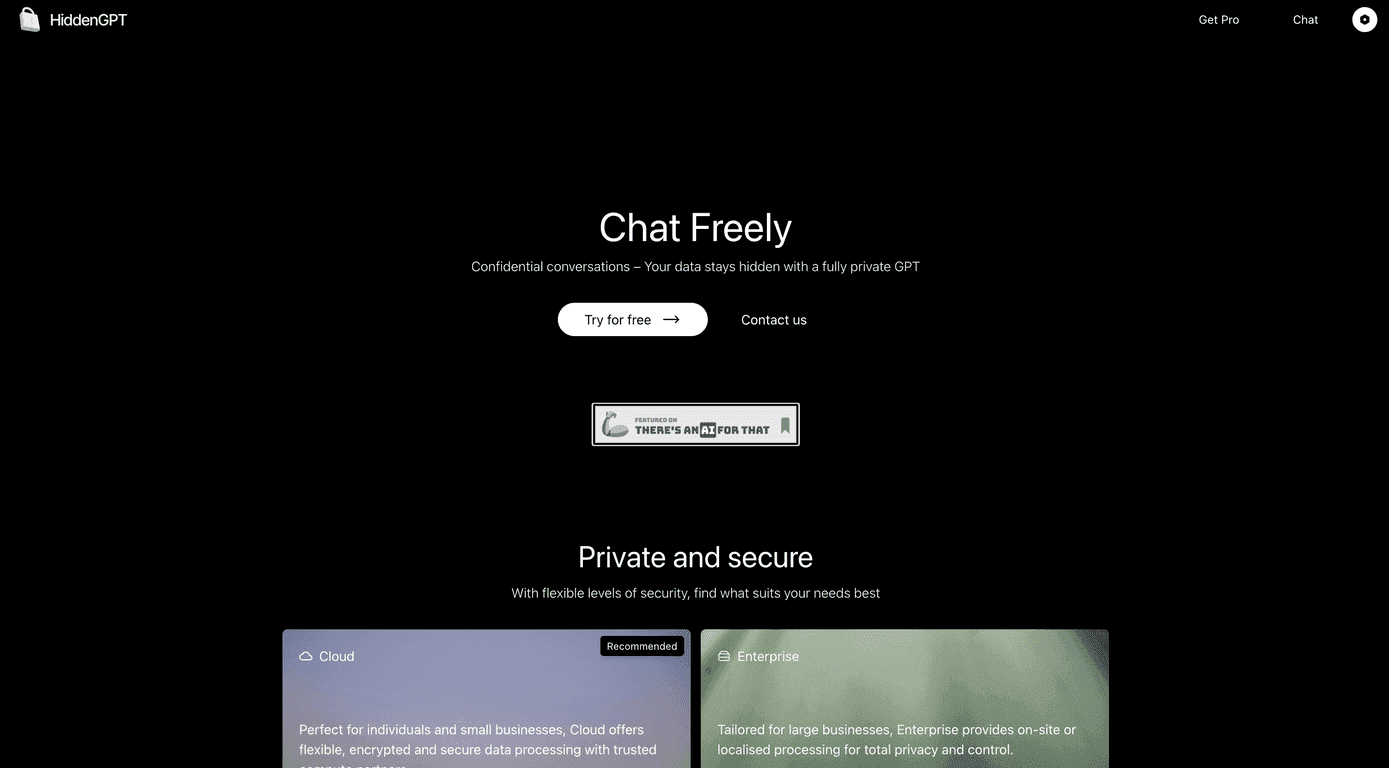
That’s why I took a closer look at HiddenGPT. The pitch is pretty clear—HiddenGPT is built to keep AI interactions confidential, with security in mind from the start. It’s positioned as a “secure private AI” option, not just another chatbot you toss your prompts into and hope for the best.

Hiddengpt

HiddenGPT Review: Secure AI without the “what if?” feeling

HiddenGPT Review is basically about one thing for me: whether this platform actually takes privacy seriously. From what’s described, HiddenGPT is designed to keep your interactions confidential while still giving you access to useful AI assistance. That matters, especially if you’re asking it to help with sensitive work—things like client info, internal docs, HR notes, or even just personal data you’d rather not leave lying around.

In my experience, “secure AI” claims can be pretty vague. So I focused on what the platform emphasizes: confidentiality, encryption, and a privacy-first approach. If you’re using AI for anything beyond casual brainstorming, those details are the difference between “convenient” and “comfortable.”

It also seems aimed at both individuals and businesses. For individuals, it’s the kind of tool you’d use when you don’t want your prompts treated like public content. For teams, it’s the kind of pitch that helps justify AI use when security questions come up in meetings.

One more thing I liked: it doesn’t try to be everything at once. The messaging stays pretty centered on security and data protection, which is exactly what I want from a privacy-focused AI tool.

Key Features I’d actually look for in a private AI tool

  1. Secure Private AI — The core idea is confidential services that protect user privacy. If you’re using HiddenGPT for sensitive topics, this is the feature you care about first.
  2. Encrypted Communication — Encrypted interactions are a big deal when you’re sharing anything you wouldn’t want exposed. I’m especially picky here because encryption is often the difference between “maybe safe” and “designed to be safe.”
  3. Scalability — HiddenGPT is described as scalable for different business sizes. That’s important if you’re thinking about rolling it out to a team instead of just one person testing it.
  4. AI for Everyone — This is about accessibility. In practical terms, it suggests the platform isn’t only for developers or big enterprises.
  5. Focus on Data Security — The platform’s messaging keeps returning to security. I prefer tools that don’t treat privacy like an afterthought.

Pros and Cons (what looks good vs. what’s still unclear)

Pros

  • Privacy and security are clearly the center of the product story, not a side note.
  • Encrypted interactions are specifically mentioned, which is what you want to see for sensitive prompts.
  • Scalable setup could work better for teams than tools that only feel “personal-use” friendly.
  • Accessible to a wide audience—the positioning suggests it’s usable whether you’re an individual or managing business needs.

Cons

  • Pricing and availability details aren’t clear in the information provided. If you’re deciding for a team, that missing piece matters.
  • AI capability details are limited here. I couldn’t see specifics like supported use cases, model strengths, or performance expectations—so you may need to test it yourself to judge quality.
  • No concrete “how it protects data” breakdown in the provided text. I’d personally want more specifics (for example, retention policy, audit options, or what’s logged).

Pricing Plans: what I found (and what I’d confirm before committing)

Here’s the honest part: the information I have doesn’t include any pricing plans for HiddenGPT. That means I can’t tell you whether it’s subscription-based, usage-based, or priced per seat.

If you’re considering HiddenGPT for anything beyond casual use, I’d recommend checking the official site directly (and, if needed, contacting support) before you plan a rollout. Pricing isn’t just about cost—it’s also where you often see limits that affect privacy and usability (like message caps, retention windows, or enterprise-only security features).

Also, if you’re comparing it to other secure AI tools, make sure you’re comparing the same things: encryption claims, data retention, and whether prompts/outputs are used for training (or not). Those details can vary a lot even when marketing sounds similar.

Wrap up

HiddenGPT comes across as a privacy-first AI solution, and the emphasis on secure, encrypted communication is exactly what I want when I’m using AI for sensitive work. If data security is your top priority—whether you’re a solo user or supporting a team—it’s worth a look.

That said, I’d still verify the practical details that aren’t shown here, especially pricing and deeper specifics about how data is handled. If those check out, HiddenGPT could be a solid option for safer AI interactions. If they don’t, you’ll at least know early instead of guessing later.

Promote HiddenGPT

Stefan

Stefan

Stefan is the founder of Automateed. A content creator at heart, swimming through SAAS waters, and trying to make new AI apps available to fellow entrepreneurs.

Related Posts

Figure 1

Strategic PPC Management in the Age of Automation: Integrating AI-Driven Optimisation with Human Expertise to Maximise Return on Ad Spend

Title: Human Intelligence and AI Working in Tandem for Smarter PPCDescription: A digital illustration of a human head in side profile,

Stefan

ACX is killing the old royalty math—plan now

Audible’s ACX is moving from a legacy royalty model to a pooling, consumption-based approach. Indie audiobook earnings may swing with listener behavior.

Jordan Reese
AWS adds OpenAI agents—indies should care now

AWS adds OpenAI agents—indies should care now

AWS is rolling out OpenAI model and agent services on AWS. Indie authors using AI workflows for writing, marketing, and production need to reassess tooling.

Jordan Reese

Create Your AI Book in 10 Minutes