Table of Contents
Urban planning can be brutally hard to follow. I’ve sat through “public engagement” sessions where people are reacting to slides that don’t quite match what’s being built. And if you’re a resident, the whole thing can feel distant—like you’re being asked to comment on something you can’t actually picture.
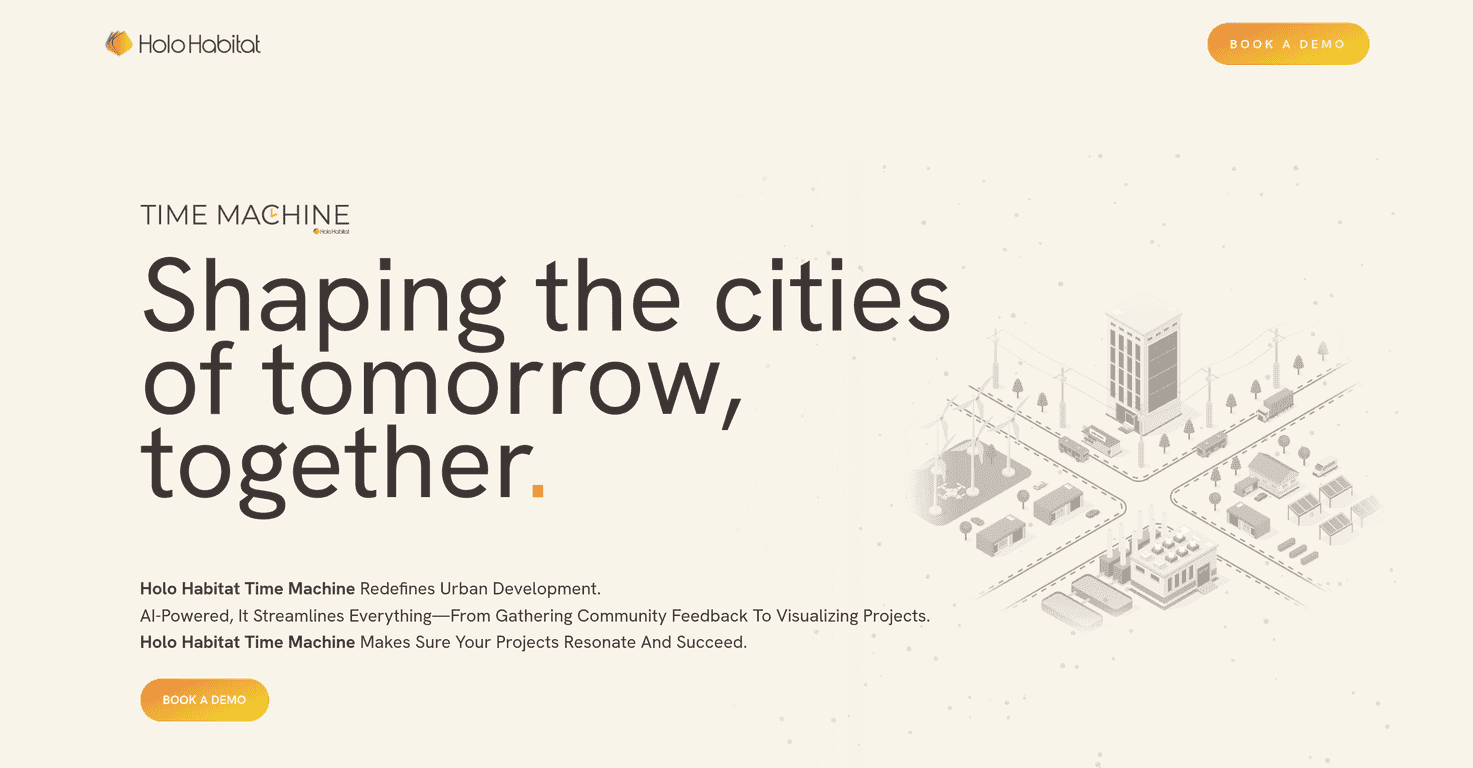
That’s why I was curious about Holo Habitat Time Machine. The basic promise is simple: make planning more transparent and interactive, so community feedback isn’t just a checkbox. Instead of only reading about a project, you can explore it visually, then leave feedback in a way that (in theory) developers can actually use.
In practice, what stands out is the “walkthrough” style visualization—more like a guided experience than a static presentation. It’s designed to help people understand changes to their neighborhood without needing a planning background. And if the platform is set up well, feedback can be surfaced quickly so it doesn’t disappear into a long email chain.
Still, I don’t think it’s magic. The whole system depends on real participation. If only a handful of people respond, the insights won’t represent the broader community. Also, for bigger projects, I’d expect implementation costs (and admin time) to add up—so it’s worth confirming what you’re actually paying for.
Holo Habitat Time Machine Review
Holo Habitat Time Machine is positioned as a bridge between developers, urban planners, and the people who live with the results. The pitch is that AI helps manage community input so it’s easier to sort, prioritize, and act on. Instead of hearing everything in one big pile, the goal is to categorize feedback based on what residents are actually reacting to.
One feature I really like the sound of (and would expect residents to enjoy) is the dynamic visualization. It’s meant to let users experience a project almost like they’re “walking” through it—similar in spirit to Google Street View, but focused on a proposed development. When people can see a change clearly—where a building sits, how it affects sightlines, what the space looks like—it’s usually easier to give useful feedback. Otherwise, you get vague comments like “this doesn’t feel right,” which doesn’t help anyone.
The platform also emphasizes real-time insights. In other words: feedback shouldn’t wait weeks to be reviewed. If developers can see themes as they come in, they can respond sooner and adjust earlier in the process. That transparency matters. When communities don’t see what happened with their input, trust drops fast.
It also mentions AI-driven insights about community sentiment. That’s useful when it’s paired with clear categories (like noise concerns, traffic impacts, accessibility, green space, etc.). But I’ll be honest—sentiment analysis can be messy. People might be frustrated about the process itself, or they might use emotional language without giving actionable details. So you still need humans reading and validating what the AI is surfacing.
So where does it fall short? The biggest limitation is adoption. If only a small slice of the community uses the platform, you’re not getting a representative view. It can also be more expensive to roll out for large projects—especially if there’s a lot of modeling, customization, or ongoing management required. If you’re a planner or developer, you’ll want to ask what’s included and what costs extra.
Key Features
- AI-Powered Feedback Management to categorize community input so it’s easier to skim and prioritize.
- Dynamic Visualizations that make projects easier to understand—so people aren’t guessing based on descriptions alone.
- Real-Time Feedback Integration designed to improve transparency between residents and the teams reviewing input.
- Community Impact Insights to help gauge public sentiment around specific project elements.
- Feedback Reporting that summarizes community input within 30 days (handy for keeping timelines moving).
- Seamless Navigation for an interactive user experience, aiming to reduce drop-off from “this is too complicated.”
Pros and Cons
Pros
- Better community engagement than traditional meetings and static documents—especially for residents who struggle with planning jargon.
- Visual + feedback loop helps people communicate more clearly. When you can point to what you’re reacting to, you get more actionable comments.
- Faster insight visibility can mean earlier adjustments, which is usually when changes are still possible.
- Broad applicability across different kinds of urban developments, from neighborhood upgrades to larger mixed-use proposals.
Cons
- Results depend on participation. If the community response is low, the insights will be limited and might not reflect the majority view.
- Implementation costs can be significant for larger projects—so it’s important to confirm scope, setup effort, and ongoing fees.
Pricing Plans
Pricing isn’t listed here, and honestly that’s pretty common for tools like this. For specific pricing information related to Holo Habitat Time Machine, I’d recommend contacting them directly and asking for a quote based on your project size and timeline.
If you reach out, I’d also ask a few practical questions: What’s included in the setup? Is there a cost for new visualization updates? How many users/projects are supported under each tier? And what does “reporting within 30 days” look like in real timelines for your use case?
Wrap up
Holo Habitat Time Machine has a solid concept: make urban development easier to understand and easier to respond to. The combination of interactive visualizations, AI-assisted feedback management, and emphasis on transparency is exactly the kind of shift communities need—especially when trust and clarity are on the line.
Just don’t ignore the reality check: it only works as well as the engagement you get, and larger rollouts can come with real costs. If you’re serious about community buy-in and you can drive participation, though, this is the kind of platform that could genuinely improve how planning conversations happen.
Promote Holo Habitat Time Machine