Table of Contents
Self-publishing can be a thrilling journey filled with opportunities, one of which is the chance to earn from your passion for writing. In this terrain, Amazon Kindle Direct Publishing (Amazon KDP) emerges as a popular choice, offering a platform to turn our creative endeavors into profitable ventures.
This leads us to ask an important question that’s cutting right to the chase and addresses what’s likely on the minds of many prospective self-publishers – how much can I make from Amazon KDP.
So, let’s take a look at Amazon KDP and explore its monetizing facet. Along the way, we’ll uncover the various factors influencing your potential income and provide insights to help you optimize your earnings. Strap in as we embark on this exciting adventure.
How Much Can I Make from Amazon KDP?
And while there is no question to whether Amazon KDP is legit or not, the main question of how much can I make from Amazon KDP depends on a lot of factors.
While it’s difficult to provide an exact number considering the variables involved, earnings can range from a few dollars to several thousands per month. Some authors have even made a fortune out of their KDP publications.
The amount you can make from Amazon KDP depends on several factors.
Crucially, these include the royalty rate you choose, your book pricing strategy, book quality, and your marketing efforts.
Now, let’s dive deeper into what influences your potential earnings, including the Amazon KDP royalty structure and the other above-mentioned factors.
Understanding Amazon KDP Royalty Structure
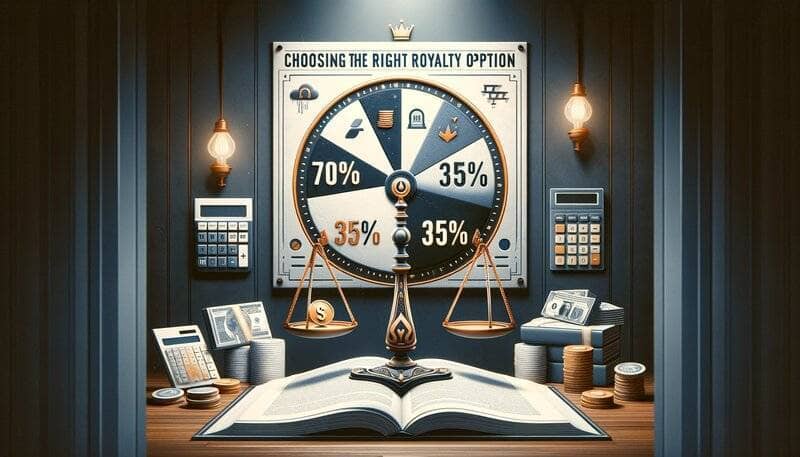
The royalty structure of Amazon KDP is a vital aspect that contributes to your potential earnings. The platform offers you two primary royalty options:
- 70% and
- 35%.
If you opt for the 70% royalty, you can sell your eBooks at a price ranging between $2.99 and $9.99. However, this option is available only in select countries.
If the book’s price is set either below or above this set range or if the book is sold in a region not enlisted for the 70% royalty, then the royalty earned is 35%.
It’s important to note that while the 70% option sounds more lucrative, Amazon deducts a minor delivery cost based on the file size of the book from the royalties.
This deduction isn’t applicable for books under the 35% royalty option. Thus, knowing how these different royalty rates work and what factors influence them can indeed help in making informed pricing decisions for your eBook on the Amazon KDP platform.
Factors Affecting Earnings on Amazon KDP

Understanding the factors affecting earnings on Amazon KDP is essential to maximize your income.
Firstly, pricing strategies play a vital role. A well-priced book can be enticing to readers and can significantly increase sales volume.
Moreover, the royalty rate you receive from Amazon KDP depends on the price you set for your book, so a clear strategy is crucial.
The second important factor is the quality of your content.
A well-written, engaging book is more likely to receive positive reviews, which aid visibility and boost sales. Plus, high-quality books are more likely to achieve word-of-mouth recommendations, providing further boosts to your earnings.
Lastly, marketing efficiencies can greatly affect your earnings.
Amazon KDP does provide a platform, but the responsibility of bringing your book to the attention of potential readers largely falls on you.
Having a robust marketing strategy, including utilizing both Amazon and non-Amazon promotion avenues, can lead to increased visibility and thus, an increase in sales. Being proactive and strategic about marketing your book is essential to increase your earning potential.
Potential Additional Earnings: Kindle Unlimited and Kindle Owners’ Lending Library
Now, let’s discuss two unique features offered by Amazon that can contribute to your earnings – Kindle Unlimited and Kindle Owners’ Lending Library.
Kindle Unlimited
Kindle Unlimited is a subscription service offered by Amazon where readers can pay a flat monthly fee and gain unlimited access to a broad library of books.
If your eBook is enrolled in KDP Select, it instantly becomes available to Kindle Unlimited subscribers.
While being part of Kindle Unlimited won’t directly increase sales of your book, you will receive payment each time a subscriber reads your book.
Your payment is based on the number of pages read and drawn from a fund set by Amazon for this purpose. The actual amount can vary month to month, yet it serves as an additional income stream and can expand your book’s audience.
Kindle Owners’ Lending Library
Similarly, Amazon has a feature called the Kindle Owners’ Lending Library that allows Amazon Prime members to borrow one eBook free per month.
Books enrolled in KDP Select are automatically available for this service as well.
Just like Kindle Unlimited, you earn a share of a fund set by Amazon each time a reader borrows your book. This can be a helpful way to garner additional income and further expand your readership.
Both Kindle Unlimited and Kindle Owners’ Lending Library not only offer increased visibility for your book but also provide avenues for additional income.
Deductions and Costs to Consider

While discussing potential earnings from Amazon KDP, it’s crucial to address the various costs involved, which will be deducted from your total revenue.
One major expense comes from creating the book itself. This involves costs associated with editing, formatting, and designing the cover of your book.
These tasks require a professional touch, and while they can be done by yourself to cut costs, hiring professionals can enhance the quality of your book.
Next, marketing costs can also make a significant dent in your earnings.
Although Amazon KDP provides a platform to sell your book, marketing it to reach your target audience is mostly on you. This might include costs for advertising, hiring a publicist, or investing in promotional activities.
Lastly, Amazon charges a small delivery fee for books enrolled in the 70% royalty option. This is based on the file size of your book. Larger files have higher delivery costs, which are deducted from your royalties.
Taking all these costs into consideration is key to understanding the net earnings you can make from Amazon KDP. There are costs involved at every step, and being aware of them can help you plan better and maximize your net profit.
Conclusion
Your potential to earn from Amazon KDP can be quite impressive, with authors earning from a few dollars to six-figure incomes annually. However, earnings from Amazon KDP are not a given and depend on several factors – from pricing to marketing efforts, not forgetting the quality of your book.
Understanding the platform’s royalty structure and potential additional earnings through Kindle Unlimited and Kindle Owners’ Lending Library can optimize your revenue. Always remember, while deductions are inevitable, careful planning can help maximize your net profit.
FAQ
Is Amazon KDP still profitable?
Yes, Amazon KDP is still profitable, though the level of profitability varies greatly among authors and is dependent on elements like book pricing, quality, and marketing.
How much do authors make per book on Amazon?
Author earnings per book on Amazon vary based on the list price, with royalties typically between 35% and 70% of the list price.
Highest paid authors on Amazon KDP?
While Amazon doesn’t disclose highest paid authors, several KDP authors have reported six-figure annual incomes, with some such as Mark Dawson earning over $450,000 in one year.
How long does it take to make money on Amazon KDP?
The timeframe to start making money on Amazon KDP can range from a few months to a year or more, heavily dependent on factors like marketing efforts and book popularity.