
Table of Contents
I remember staring at a blank document and thinking, “How do I even start a romance novel without it turning into mush?” The truth is, romance isn’t just about feelings—it’s about choices. Characters decide, mess up, want the wrong thing for a while, and then finally choose each other in a way that costs them something. That’s what makes readers flip pages.
So here’s what I’ve learned after drafting and revising a few romance stories: if you build your subgenre, characters, and emotional beats first, the “writing romance” part gets a lot less scary. And yes, you’ll still get to have fun with chemistry, tension, and all the swoony moments. You just won’t be guessing as much.
Below is a beginner-friendly plan you can actually follow—plus templates you can steal. If you’re ready to write a romance novel, start here.
Key Takeaways
- Pick a romance subgenre first (contemporary, historical, paranormal, romantic suspense, etc.) so your story’s tone and reader expectations are clear from page one.
- Build leads with flaws, goals, and contradictions—then let those differences create the friction that fuels the romance.
- Write a premise that combines romance tension and a plot problem (a secret, a deadline, a threat, a deal gone wrong).
- Make chemistry happen through repeated, specific interactions (banter, caretaking, shared competence), then escalate it with conflicts that force change.
- Use tropes as structure, not decoration—then twist them so the setup points somewhere surprising.
- Choose a point of view that matches the emotional intensity you want (first-person for intimacy, third-person limited for balance).
- Outline romance beats instead of only plot beats: meet-cute, first vulnerability, midpoint reveal, breakup/angst, final confession.
- Draft emotional scenes with sensory detail + dialogue that reveals character—don’t just “tell” readers they feel something.

1. Pick the Right Romance Subgenre
Start with the subgenre, not the plot. That’s the part beginners skip, and then they wonder why their romance feels “off.” Each subgenre comes with its own emotional temperature and pacing.
Here’s a quick way to choose: ask yourself what kind of tension you want to read.
- Contemporary: everyday obstacles—careers, families, timing, money, reputation.
- Historical: social rules, status, letters and secrets, legal limitations.
- Paranormal / Romantasy: magical stakes, fate, danger, power dynamics.
- Romantic suspense: romance + a real external threat (missing person, killer, investigation).
If you want a numbers-based reason to pay attention to trends, romantasy has been especially strong: The Rise of Romantasy references a 40% sales increase in 2024, reaching $610 million. Even if you don’t write romantasy, the takeaway is simple: readers are showing up for specific promises. Give them that promise, then surprise them with your angle.
2. Create Real, Relatable Characters
In my experience, “good chemistry” doesn’t come from writing flirt lines. It comes from two people who want things that clash.
Give each lead:
- A goal they’re actively pursuing (not just a personality trait).
- A flaw that makes love harder (avoidance, control, people-pleasing, impulsivity).
- A fear they hide behind their behavior.
- A contradiction (they’re tough, but they melt when someone is kind; they’re confident, but they panic when they’re alone).
Example setup (the kind I actually use):
- Guarded scientist: goal = publish a study before funding ends; flaw = assumes people will leave; fear = being exposed as “not enough.”
- Free-spirited artist: goal = finish a mural that pays for their sibling’s therapy; flaw = dodges commitments; fear = losing someone to their own chaos.
Now watch what happens. Their differences create natural friction: the scientist hates mess; the artist hates control. That conflict becomes tension. And tension becomes romance.
3. Develop a Strong Story Idea or Premise
Your premise should do two jobs: (1) pull readers in, and (2) keep the couple from just “getting together” immediately.
Try this premise formula:
When [romantic meet/catalyst] happens, [external problem] forces [lead A] and [lead B] to [share time/space/goal], but [internal wound] makes it dangerous.
Examples you can adapt:
- Snowstorm meet-cute → a stranded shelter situation + a secret identity that can’t stay secret.
- Arranged marriage → political deal + emotional denial that turns into a real vulnerability only after the midpoint.
- One-night mistake → a pregnancy scare (or career consequence) + a lie that threatens trust long after the heat fades.
Romance fantasy has also shown strong interest recently (again, see Story Plot Ideas for the cited growth and context). What I’d take from that isn’t “write what’s trending.” It’s: imaginative premises work best when they’re tied to character emotions, not just worldbuilding.
4. Build Chemistry and Conflicts
Want chemistry that feels earned? Build it like a rhythm: interaction → reaction → escalation. Not every scene has to be romantic, but every scene should move the emotional temperature up or sideways.
What I noticed works:
- Small competence moments: they help each other with something specific (fix a car, translate a document, teach a skill).
- Repeated micro-conflicts: the same issue shows up again, but each time it’s worse (or funnier) because feelings are changing.
- Emotional callbacks: a line someone says early becomes the anchor for a later confession.
Then add conflicts that actually threaten the relationship, not just the plot.
- Misunderstanding that’s believable (someone overhears the wrong thing, a message gets delayed, assumptions are made).
- External pressure (family demands, job deadlines, legal consequences, a dangerous mission).
- Internal dilemma (one lead thinks love will ruin their goal; the other thinks they’re unworthy of love).
Here’s a quick test: if the couple “talks it out” in Scene 3, do you still have a reason they can’t be together by Scene 7? If yes, your conflict is doing its job.
5. Use Popular Romance Tropes Wisely
Tropes are like familiar music. Readers recognize the vibe. But if you play the exact same song every time, it gets boring fast. The trick is to keep the promise while changing the path.
Let’s take a few common tropes and talk about how to twist them.
Hate-to-love (but make it hurtful, not shallow)
Instead of “they’re rude and then suddenly nice,” aim for a reason that’s emotional. For example:
- Early: Lead A thinks Lead B sabotaged their career.
- Midpoint: The truth reveals Lead B was protecting Lead A from a bigger threat.
- Twist: Lead A still needs to grieve what they lost—because love doesn’t undo betrayal instantly.
Second chance (don’t erase the past)
- Keep the original breakup wound alive.
- Let the second chance require a new behavior, not just new feelings.
- Give them a “proof scene” where the changed lead shows up differently.
Opposites attract (make them opposites in values, not just hobbies)
- One lead values stability; the other values freedom.
- They don’t clash because of taste—they clash because of what they believe love should do for them.
Also, don’t ignore market signals. Romance contributing nearly two-thirds of recent adult fiction sales growth is discussed in Romance Book Trends. For me, that supports a practical writing decision: if you’re using tropes, be intentional about the emotional payoff readers expect. Then twist it so it feels like your voice.
6. Decide On Point of View and Setting
POV isn’t just a technical choice—it changes how close readers feel to the romance.
- First-person: best for raw intimacy. If you want readers inside the lead’s panic, joy, or shame, this is your friend.
- Third-person limited: a solid default. You get closeness without being trapped in one voice.
- Third-person omniscient: works when your story needs broader context, but it can make emotional moments feel less personal.
In my drafts, I’ve found that if the emotional stakes are high, first-person (or third-person limited) usually reads stronger. If the story is more plot-driven (hello, romantic suspense), third-person limited helps keep the pace.
Setting does the same job. Choose locations that naturally create intimacy or pressure.
- Sweet romance: small-town cafe, crowded farmers market, community events.
- Adventurous love story: docks at night, road trips, training camps, stormy coastlines.
- High tension: courtrooms, hospitals, secure facilities, places where every conversation could be overheard.
And please don’t write “the room was nice.” Instead, drop 1–2 vivid specifics: the smell of espresso, the scratch of wool on a chair, the flicker of fluorescent lights. Readers feel those details instantly.
7. Plan the Structure of Your Romance Novel
Generic arcs (beginning, middle, end) don’t help much. Romance needs romance beats. When I outline, I’m not just mapping events—I’m mapping emotional turning points.
Here’s a simple beat plan you can target across roughly 25–35 “main scenes” (or about 20–30 chapters, depending on your style):
- 1–2 scenes: Hook + meet-cute (the moment their worlds collide)
- 3–6 scenes: Chemistry build (banter, shared goals, small vulnerabilities)
- 7–10 scenes: First emotional risk (one lead reveals something real, and it changes how the other sees them)
- 11–14 scenes: Midpoint reveal (a secret, a truth, a twist that forces a new choice)
- 15–18 scenes: Upshift + pressure (they want each other more, but the problem gets worse)
- 19–22 scenes: Breakup/angst beat (miscommunication, fear-driven decision, or betrayal of trust)
- 23–26 scenes: Repair attempt (apology, confrontation, proof of change)
- 27–30 scenes: Climax (the final obstacle + the final declaration)
- 31–35 scenes: Resolution (the “new normal” that proves love stuck)
One pacing tip I learned the hard way: don’t stack your biggest drama in the first third. Readers need room to bond first. Give them at least a few “relationship-building” scenes before you hit the emotional gut punch.
8. Write Romantic and Emotional Scenes
Romantic scenes are where beginners often go wrong. They either write too much “telling” or they forget that dialogue should reveal character, not just move the plot.
Before/after: what “showing” looks like
Before (too generic):
They felt nervous around each other. The moment was romantic, and they knew everything would change.
After (more grounded):
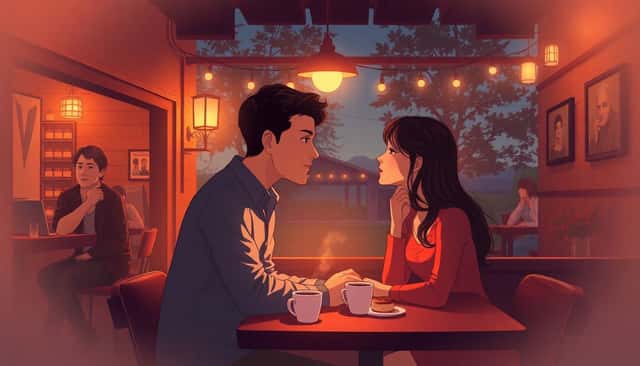
When he leaned in to say her name, the café noise didn’t soften—it sharpened. She could hear the spoon clink against his mug, the way his hand hesitated before it found the back of the chair. “I didn’t think you’d come,” he said, like it was an accusation and a question at the same time. Her throat tightened. She hated that her body answered him faster than her brain did.
Dialogue snippet you can steal
Notice how the dialogue carries subtext:
Lead A: “You always show up right when it’s inconvenient.”
Lead B: “That’s not—”
Lead A: “It is. I can see you trying not to care.”
That exchange works because it’s not just flirting. It’s a conflict wrapped in attraction.
Sensory + emotion checklist (use while drafting)
- What does the lead notice first? (sound, smell, texture, temperature)
- What does the lead hide with their words?
- What does the lead do instead of admitting the truth? (joke, deflect, overwork, touch too quickly)
- What changes by the end of the scene? (trust, desire, fear, commitment)
And one honest limitation: not every scene will feel “swoony” on the first draft. That’s normal. I usually write the messy version first, then strengthen the emotional beats in revision—tightening dialogue, adding specific sensory details, and making sure each scene ends with a shift.
FAQs
Pick based on the type of tension you want most. If you want cozy emotional problems, choose contemporary. If you want danger and fate, look at paranormal or romantasy. If you want romance that survives a high-stakes plot, romantic suspense is your lane. Then read 3–5 recent books in that subgenre and note what readers expect by the midpoint (a confession? a reveal? a public decision?).
Because readers don’t fall for “perfect people.” They fall for someone who feels real—someone who’s trying, failing, and growing. Give your leads realistic flaws and let those flaws create the romantic obstacles. When they finally choose each other, it feels earned instead of instant.
Start with a catalyst (meet-cute, forced proximity, shared mission) and then attach an external problem and an internal wound. A strong idea sounds like: “They have a reason to be together, but they have a reason to be afraid.” If you can’t name both, your premise will probably stall in the middle.
Specificity. Sensory details, subtext in dialogue, and a clear emotional shift by the end of the scene. Ask yourself: what does the lead want in this moment, and what are they afraid will happen if they get it? When you answer that, the scene usually lands.