Table of Contents
I’ve noticed the hardest part about writing sword and sorcery heroes isn’t the fights. It’s making the character feel tough and specific—so they don’t turn into a generic “badass with a sword” who’s impressive for about five minutes and then… flat. You want grit, sure. But you also need choices, contradictions, and a presence that shows up on the page even when they’re not swinging steel.
So what I do is build the hero like a weapon: a clear edge up front, a few reliable skills they can use immediately, and personal stakes that make every encounter feel like it matters. If they’re an outsider, even better. The genre loves competence, momentum, and moral messiness—so I lean into that from the first scene.
Here’s the good news: you don’t need to write a whole origin saga to get that effect. You just need to set the rules early and keep them consistent while the story keeps throwing problems at them.
Key Takeaways
- Start with a tough, readable persona. Give the hero a clear attitude, a physical way of moving, and an outsider status that creates friction instantly.
- Show competence on page one (or close). Skip “learning” scenes. Let the hero handle danger like it’s a normal Tuesday.
- Build versatility without losing the core. Add stealth, negotiation, magic, scouting—whatever fits—but keep the same grit and resourcefulness.
- Make morality complicated, not random. They can be ruthless and still have a personal code (or a line they won’t cross).
- Let them evolve in surface details, not identity. Avoid big “I’m a new person” transformations that break the tone.
- Use stakes that hit their real life. Loved ones, survival, reputation, debts—turn every fight into a personal test.
- Write adventures that stand alone. Each story should feel complete: a goal, a threat, a win/lose outcome, then move on.
- Keep explanations lean. Use action to reveal character and only explain what the scene actually demands.
1. Start with a Clear, Tough Persona
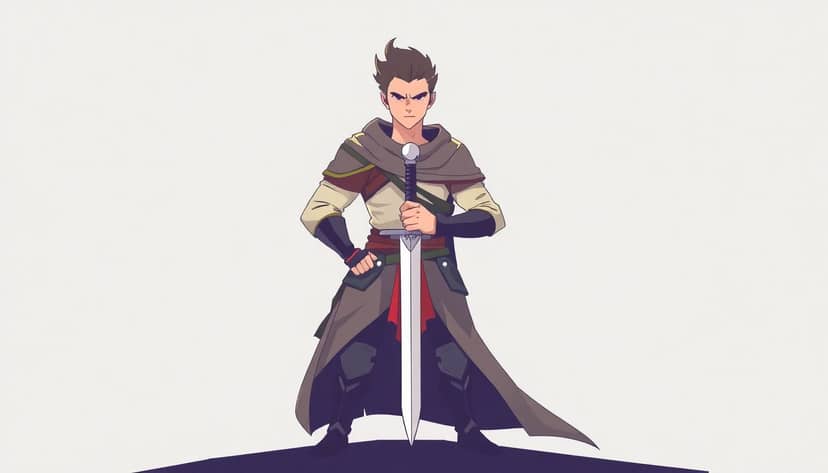
I like to think of a sword and sorcery hero as a walking contradiction: they’re rough, but they’re not random. They’ve got a “default setting” that shows up in how they talk, how they stand, and what they refuse to tolerate.
Before I write a single fight, I decide three things:
- What do they look like when they’re calm? (Shoulders tight? Smiling like they don’t care? Always scanning exits?)
- What do they do when threatened? (Strike first, bargain fast, hide, bluff, burn bridges?)
- Who are they in a room? (Outsider, hired muscle, disgraced noble, escaped convict—someone the “normal” people ignore or fear.)
Define Core Traits Immediately
Don’t bury this in chapter two. Put it on the page in the first paragraph through action. If your hero is stubborn, show it when someone offers an easy solution. If they’re cunning, show it when they notice a detail everyone else misses.
Focus on Action and Presence
Presence is more than “they’re strong.” It’s how they occupy space. In my drafts, I’ve found that a simple line like “he never relaxed his grip” tells readers more than a paragraph of description.
Make Your Hero an Outsider
Outsiders don’t just “add depth.” They create friction. The guard doesn’t recognize them. The tavern owner won’t serve them without a reason. The local noble expects obedience. That tension gives you instant scenes.
Motivate by Personal Goals, Not Nobility
Genre readers can handle big mythology, but they want to watch the hero choose. Give them personal stakes: debt, a grudge, a promise, a survival plan, a missing sibling, a stolen relic they need back before it gets used on someone else.
Mini example (scene template)
Set-up: introduce the hero in motion—arriving, leaving, stealing, taking measurements, or arguing. Pressure: someone challenges their right to be there. Choice: they respond in a way that proves their persona.
Sample paragraph (about 180–220 words): Mara didn’t wait for the guard to finish his sentence. She stepped into the archway like she owned the stone, boots whispering over the dust that never got swept—meaning no one important came through here unless they were hiding. “You’re blocking the alley,” she said, like it was an obvious problem, not a threat. The guard laughed. His hand hovered near the hilt. Mara watched the hesitation more than the weapon. He’d seen her before—maybe in a cage, maybe in a rumor—and he still didn’t know what she’d do. That was his mistake. She pulled a coin from her pouch and flicked it across the guard’s knuckles. Not to pay him. To test him. “If you want bribes,” she added, “pick someone who’s scared.” He flinched, just enough to show he’d rather be wrong than brave. Mara smiled—small, mean—and slid past, already counting exits. The alley smelled like wet iron and old spells. Perfect. She’d come for the relic under the bakery, but she’d leave with answers, and maybe the guard’s keys if he couldn’t keep his hands to himself.
- Checklist: clear attitude in dialogue; physical presence (how they stand/move); outsider friction; personal goal hinted (relic, answers, survival); action beats replace exposition.
- Common mistake: describing traits (“she was tough and independent”) instead of demonstrating them through choices and consequences.
2. Show Off Their Skills Early
In sword and sorcery, the hero shouldn’t feel like they’re auditioning for competence. The reader wants to trust the blade. So I skip the “learning how to fight” phase and jump straight into “they already know what to do.”
That doesn’t mean the hero can’t be challenged. It means the challenge tests how they fight, not whether they can fight at all.
Skip the Learning Stage
If your hero’s power is new to them, fine—but make it new to the situation, not to their hands. They’ve lived through hard stuff. They’ve made mistakes before. The world is what’s dangerous, not the hero’s skill set.
Present Them as Already Skilled and Ready
Choose one skill to show immediately, then layer a second. For example: first scene shows sword control; second beat shows stealth or negotiation. Readers love variety, but they also love clarity.
Emphasize Their Experience in Deadly Situations
Experience looks like economy. Fewer wasted movements. Faster decisions. A hero who doesn’t panic when the room goes wrong.
Mini example (scene beats you can reuse)
Beat 1: danger appears suddenly. Beat 2: hero responds with a practiced move. Beat 3: they adapt when the enemy behaves differently than expected.
Sample scene (about 200–240 words): The chandelier didn’t fall. It collapsed, like someone had cut the ceiling’s patience. Plaster rained, and the room erupted—servants screaming, nobles pretending they hadn’t noticed until it was too late. Jarek didn’t look up. That’s what sold his competence. He hooked a table leg with his boot, using it like a brace, and shoved the nearest patron behind a pillar. “Move,” he barked, not because he cared about manners, but because people died when they argued. A pair of cultists in lacquered masks slid into the gap where the chandelier had been, blades already out. Jarek drew his short sword at an angle, not a flourish—his wrist cocked like the blade was an extension of his forearm. The first cultist lunged high. Jarek stepped in, letting the strike pass just wide of his ribs, then hooked the attacker’s wrist with the flat of his blade. No heroic slash. A control move. The cultist stumbled, surprised by physics. That half-second cost him. Jarek pivoted, caught the second cultist’s blade with his forearm guard, and shoved him into the falling debris. “You picked the wrong night,” Jarek said, like he’d said it before. Maybe he had.
- Checklist: immediate threat; practiced response (economy of motion); at least one control move (disarm, redirect, shove); adaptation beat; dialogue that reinforces persona.
- Common mistake: showing skills through vague statements (“he was trained”) instead of concrete actions and timing.
3. Create a Multi-Faceted and Adaptable Character
If your hero is only a fighter, they’ll feel predictable fast. I’ve found the sweet spot is one primary combat lane plus one or two “problem-solving” lanes that show up in different scenes.
Think of it like a three-tool kit:
- Tool A (core): swordplay / spellcasting / brute strength—whatever defines their style.
- Tool B (situational): stealth, lockpicking, reading people, negotiation, wilderness survival.
- Tool C (escape route): bribery, misdirection, curses, traps, allies—something that gets them out when things go wrong.
Give Your Hero Versatile Skills
Versatility isn’t “they can do everything.” It’s “they can solve more than one kind of problem.” A thief-swordsman who can’t talk is still limited. Give them one social angle, even if it’s ugly (threats, bargaining, charm used like a knife).
Develop Secondary Roles as Needed
Secondary traits should earn screen time. If they’re a healer, don’t only mention it—let them patch someone up in a way that costs them something. If they’re a tactician, show them setting a trap or choosing a battlefield.
Keep Their Core Identity Consistent
Here’s what I mean by “consistent”: the hero’s grit and independence should drive every choice, even when they’re using a different skill. If they’re ruthless, they’ll still be ruthless—just with a different method.
Mini example (competence variety in one short arc)
Goal: retrieve an artifact from a guarded tower. Constraint: the hero can’t fight the whole building. Solution: they use combat, then stealth, then a quick moral choice.
Sample scene (about 190–230 words): Elowen didn’t pick the front door. Doors were for people who believed in rules. She climbed the tower’s outer scaffolding while the guards argued about a missing ledger inside—exactly the kind of distraction she’d planned for. Halfway up, a crossbow bolt snapped into the plank below her foot. Someone was watching. She froze, breathing through her teeth, then shifted her weight to the beam’s shadow. The shooter wasn’t aiming at her body. He was aiming at her hands. Elowen smiled. Fine. She pulled a small mirror from her pack and angled it up, catching the guard’s torchlight for a heartbeat. The bolt came again—late. She dropped, rolled under the landing, and when the guard rounded the corner she was already between him and the stairs, blade out but not swinging yet. “I’m not here to kill you,” she lied, because the truth would have gotten her stabbed. He lunged anyway. Elowen met him with a tight parry, stepped inside his reach, and used her momentum to turn his blade away from her ribs. Then, without finishing the fight, she grabbed the keys off his belt and left him breathing—because her real enemy wasn’t him. It was the buyer who’d paid for the artifact with someone else’s blood.
- Checklist: show at least two different skills in the same mini-plot; keep core motivation consistent (she’s after the artifact, not revenge for revenge’s sake); use secondary skills to solve constraints.
- Common mistake: stacking abilities without tying them to scenes—readers can smell “power list” writing.
4. Portray a Gritty, Morally Complex Nature
Morally complex doesn’t mean “they’re confusing.” It means they have reasons. A sword and sorcery hero can be ruthless, but they should be consistent about what they’ll do and what they won’t.
In my experience, the strongest moral tension comes from a personal code. Not a noble oath. A rule built from experience—something they learned the hard way.
Balance Ruthlessness with Personal Code
Examples of personal codes that work in this genre:
- They won’t hurt innocents (but they’ll hurt the guilty quickly).
- They won’t steal from the starving (but they’ll steal from the rich without blinking).
- They won’t break a promise—even if it costs them.
- They’ll kill monsters, but they refuse to become one.
Show Loyalty or Acts of Kindness
Kindness doesn’t have to be warm. Sometimes it’s practical: handing someone a weapon, dragging them out of a fire, paying a debt so a friend doesn’t get sold to slavers.
Reflect a Harsh but Fair World
This is important: the world should feel like it has consequences. If the hero does something terrible and nothing bad happens, the moral complexity turns into cosplay.
Mini example (moral choice in the middle of action)
Set-up: the hero has a chance to win fast by harming someone defenseless. Twist: their code makes them hesitate. Cost: the hesitation costs them something tangible.
Sample scene (about 170–220 words): The demon wore a butcher’s face, all smiles and wet teeth. It pinned the innkeeper to the floor with a claw that left steaming cuts in the boards. “Pay,” it purred, like money was a prayer. Rook could’ve ended it in one clean stroke—he’d seen the weak point between the jaw and the neck. His sword was already drawn. The innkeeper was bleeding out fast, and the demon was laughing at the hero’s timing. Then Rook heard the innkeeper’s daughter coughing behind a counter. Not screaming. Just trying not to be noticed. Rook’s code wasn’t poetic. It was simple: don’t let children pay for monsters. He swung, but not at the demon’s throat. He cut the demon’s wrist. The claw jerked, and the innkeeper’s body slid free. The demon shrieked—furious now, not amused—and the innkeeper clapped a hand over his daughter’s mouth. “Run,” Rook told them, voice flat. The demon lunged again. Rook took the hit on his shoulder and tasted copper. He’d chosen mercy. Now he’d pay for it.
- Checklist: explicit moral code; action choice that proves it; cost/complication; aftermath showing the hero’s loyalty/kindness.
- Common mistake: making the moral choice feel random (“oops, he’s nice now”). Tie it to a rule the hero already has.
5. Keep Them From Changing Fundamental Traits
Yes, heroes can change. But in sword and sorcery, I don’t like the “I used to be this, now I’m that” makeover. It breaks the genre’s trust. Readers want to see the same core self survive new horrors.
What I aim for is evolution in tactics and worldview, not in identity. The hero’s grit stays. Their independence stays. Their appetite for danger stays—even if they get smarter about surviving it.
Avoid Major Internal Transformations
If you want a redemption arc, fine—just don’t do it by flipping their personality overnight. Instead, show the hero making harder choices while keeping their original temperament.
Maintain Their Rugged and Independent Spirit
Ask yourself: would this character still act this way if you removed the plot armor? If the answer is no, you might be changing who they are.
Highlight Their Love for Adventure and Survival
That love can be cynical. It can be selfish. It can even be fear disguised as swagger. Just don’t remove it. It’s the engine that keeps the stories moving.
Before/after rewrite (what I mean by “core traits stay”)
Before (too transformation-y): “Kessa started as a violent mercenary, but after meeting a kind priest she became a compassionate protector.”
After (core stays, tactics change): “Kessa was still a mercenary—she still measured everyone by leverage and risk. But when the priest begged her to save the village, she didn’t suddenly become holy. She negotiated with the raiders, bought time with stolen coin, and killed the one man who threatened children. Compassion didn’t replace her grit. It redirected it.”
- Checklist: their core temperament appears in every scene; changes are about methods, not personality; their independence remains intact even when they cooperate.
- Common mistake: swapping their voice (“I used to speak harshly, now I’m gentle”) without earned reasons.
6. Build Conflicts with High Stakes and Personal Focus
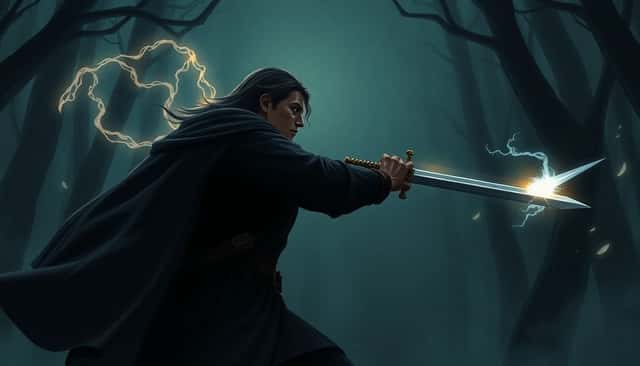
If the fight feels meaningless, the reader feels it too. Sword and sorcery works best when the hero’s goal is personal enough that you can taste the urgency.
Instead of “save the world,” I like “save the person who can’t be replaced.” Instead of “stop the evil,” I like “stop the evil from taking my name, my money, my body, my future.”
Make the Threat Hit Something Real
Pick one target:
- People: a lover, a kid, a friend who’s already in chains.
- Reputation: a lie spread in the taverns that will get them killed later.
- Survival: food, shelter, the last safe route out of the plague district.
- Property: a relic, a ship, a family heirloom that someone intends to sell.
Turn Encounters into Skill Tests
Here’s the pacing trick I use: each encounter should force a different kind of problem. One fight rewards brawn. One rewards stealth. One rewards quick thinking. If every scene is “big sword swing,” you’ll feel the sameness.
Personal victories, not just global wins
Let the hero win in a way that matters to them. Maybe they don’t defeat the villain—maybe they steal the key, escape with proof, or survive long enough to bargain.
Mini example (stakes + tactic shift)
Scenario: the hero must retrieve a stolen ledger from a warlord. Stakes: the ledger names people who’ll be sold tomorrow. Conflict: the hero can brute-force the door, but that would trigger an alarm that burns the names.
Sample scene (about 190–230 words): The warlord’s guard didn’t notice the smell at first—until it hit their throats. Rook had smeared grease laced with sleeping herbs along the latch, not to poison them (that would take time), but to slow the quick reflexes that made them dangerous. It worked. Two guards stumbled mid-step, blinking like someone had turned off the world’s dimmer switch. Rook slipped through the opening and kept his sword low. He didn’t want a fight; he wanted a clock. Inside, the ledger sat on a pedestal under a glass bell. The bell wasn’t decoration. It was a timer—Rook could see the thin crack spreading like a vein. One wrong move and the bell shattered, the ink turning to ash with the heat. He could hear outside commotion growing louder: someone would come soon, and the warlord would assume the worst. Rook reached for the bell, then paused. A child’s bracelet hung from the pedestal—proof this wasn’t just paperwork. It was leverage. “Not today,” he muttered, and used a wire hook to pry the bell’s base without breaking the glass. The crack stopped widening. He didn’t save the warlord’s victims by being noble. He saved them by being fast and careful.
- Checklist: stakes tied to a personal consequence; encounter forces a specific tactic choice; victory is concrete (ledger retrieved, alarm avoided, time bought).
- Common mistake: raising stakes with vague threats (“they’ll suffer”) instead of clear consequences and timing.
7. Use Short, Self-Contained Stories
One reason sword and sorcery works so well in episodic form is that each adventure can be a complete punch. The hero has a target, an obstacle, and an outcome. Then the story moves on, carrying the hero’s reputation and scars forward.
If you’re writing longer, you can still structure each “episode” like it stands alone: a beginning that hooks, a middle that escalates, an end that resolves the main goal (even if the bigger world problem remains).
Keep the plot threads simple
Readers don’t need a dozen factions and a prophecy calendar. They need momentum and clarity. I usually limit each episode to:
- One primary goal
- One main threat
- One twist or complication
- One emotional beat tied to the hero’s personal stake
Show moral quirks through quick decisions
Short stories are perfect for “trait reveals.” A hero’s morality shows up when they have to choose quickly—when there’s no time to think about consequences beyond the next minute.
- Checklist: each story has a clear objective; scenes build toward a single climax; aftermath shows what changed for the hero (even slightly).
- Common mistake: turning every episode into a setup for the next one. Give readers closure.
8. Focus on Action and Keep Explanations Light
Worldbuilding has its place. But in sword and sorcery, you earn it. You don’t dump it.
What I noticed after revising a few drafts is that readers forgive confusing magic if the hero knows what to do in the moment. They forgive partial explanations when the action is crisp and the stakes are obvious.
Let deeds reveal character
Every time the hero moves, it should say something: they’re careful, reckless, suspicious, ruthless, protective. Even a pause can be character.
Keep magical elements simple
You don’t need a full spell taxonomy. You need:
- What the magic does (in plain terms)
- What it costs (time, blood, attention, risk)
- Why it matters right now
Lean explanations, fast follow-through
If you’re tempted to explain for two paragraphs, ask: what does the hero do while thinking? Put the explanation in their hands, not in the narrator’s mouth.
Mini example (show explanation through action)
Instead of: “The rune circle was formed by ancient blood rites…”
Do this: “She pressed her thumb to the rune. It burned. The circle flared anyway. The wards were hungry tonight.”
Same info. Way faster. And it keeps the adrenaline where it belongs.
- Checklist: action-first scene writing; magic explained via cost and consequence; no long pauses for exposition unless it changes the plan.
- Common mistake: stopping the fight to lecture the reader about lore.
FAQs
A strong hero persona is instantly readable: you know their attitude, their physical presence, and what they want. They’re tougher than the average person, but they’re also specific—outsider energy, personal goals, and a consistent way of responding to danger.
As early as possible—usually in the first scene or second. Show competence through concrete actions (redirecting a strike, disarming, escaping, negotiating under pressure). The key is that the hero shouldn’t look like they’re figuring out how to be dangerous.
A multi-faceted hero has versatility that shows up in scenes: one core strength plus secondary tools for stealth, social play, planning, or survival. They can switch approaches, but their grit and independence stay consistent so they don’t feel like a different character every chapter.
Because sword and sorcery is gritty. Moral complexity makes the hero unpredictable in a satisfying way—ruthless when it’s necessary, loyal when it counts, and willing to pay a cost for a personal line they won’t cross. It’s realism, not confusion.