Table of Contents
If you’ve ever looked at a blank coloring book and thought, “I wish I could make this match my kid’s interests,” iColoring AI is the kind of tool that scratches that itch. It’s an online app that turns a photo (or even text) into a printable coloring page. I tested it with a couple different inputs to see if the results are actually usable—or if it’s just another “cool demo” that falls apart in real life.
iColoring AI Review (2026): What I Actually Got
I tested iColoring AI in three ways: a photo-to-coloring conversion, a text-to-coloring prompt, and colorizing an existing black-and-white sketch. The whole point was to see if the output is “printable enough” for real kids (and not just technically an image file).
1) Photo to coloring page (what worked, what didn’t)
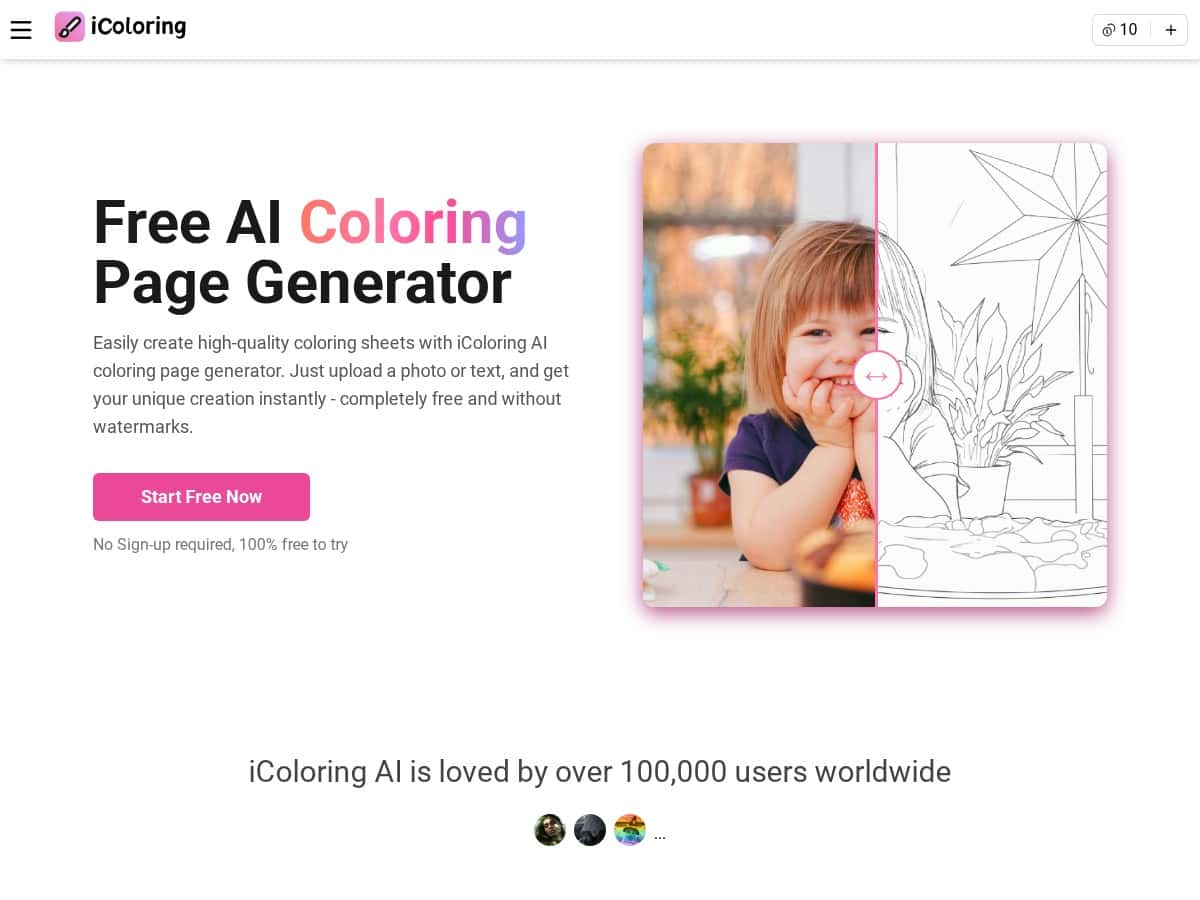
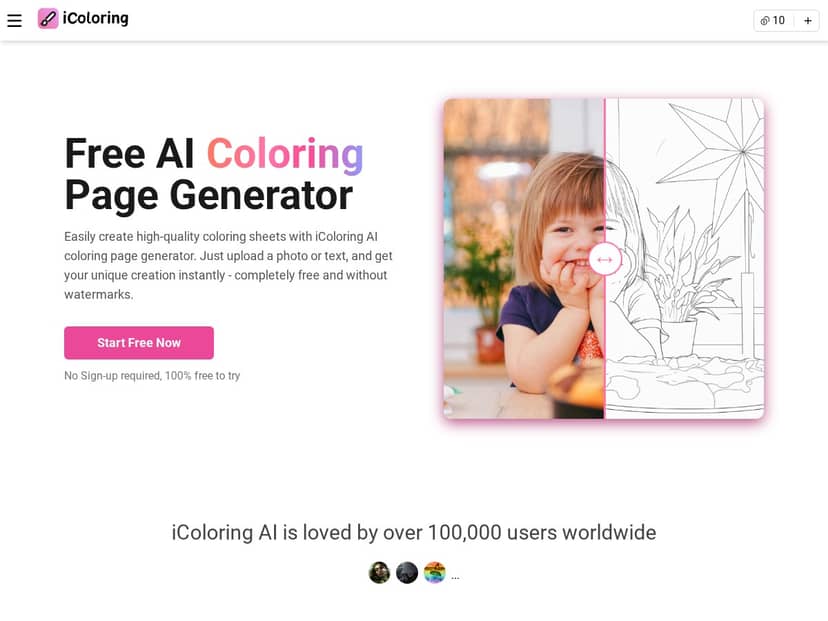
I uploaded a simple, high-contrast photo (a subject with clear edges—think “main object in the foreground,” not a busy background). After uploading, I selected one of the available styles (Classic first, then I tried Pencil Sketch). The time from upload to result felt fast—on my end it was roughly in the tens of seconds, not minutes. The outlines came out fairly clean, and the filled regions were separated in a way that’s easy to color.
What I noticed immediately: the tool does a better job when the subject is clear and the background isn’t chaotic. If the image is too detailed or has lots of small textures, you can end up with thicker lines in some areas and a slightly “busy” page. Still usable, but not as relaxing for younger kids.
2) Text-to-coloring (how specific do you need to be?)
For the text-to-coloring page, I typed a description like “a friendly cat wearing a small scarf” and added a quick detail about the vibe (cartoony and simple). The result was creative, and it generated multiple recognizable elements—head, ears, scarf, and a clear silhouette. In other words, it didn’t just spit out random shapes.
Here’s the trade-off though: text prompts can be a little unpredictable. If you ask for too much detail (“intricate fur pattern, tiny accessories, detailed background”), the page can get crowded. My best results were with short, direct prompts and a “simple outlines” mindset.
3) Colorizing an existing black-and-white sketch
I also tried the “upload a black-and-white page and get it colorized” style. That’s where iColoring AI surprised me the most. The boundaries stayed mostly intact, and the colors looked vibrant rather than washed out. The outlines didn’t collapse into a muddy mess, which is usually what I worry about with automatic coloring tools.
That said, if your original sketch has very faint pencil lines, the AI may not “see” them clearly. In those cases, some details can get simplified or missed entirely. So if you want every tiny feature colored, start with a bolder source image.
Print readiness (the part I actually care about)
The big question for me was: will this work for actual printing? iColoring AI lets you download in PNG or PDF format, and the files I generated were sized in a way that looked good on a standard paper layout. Lines were clear enough that they didn’t disappear when zoomed out, and the page didn’t come with obvious weird scaling artifacts.
One practical tip: if you’re printing for kids, aim for simpler styles (Classic or Cartoon) and avoid super detailed photo backgrounds. You’ll get fewer “where do I color?” moments.
Key Features (with real-world notes)
- Convert Photos to Coloring Pages with different artistic styles like Classic, Cartoon, and Pencil Sketch
- Create Coloring Pages from Text Descriptions without needing any design skills
- Upload existing black-and-white pages and get fully colorized versions in seconds
- Download high-resolution files in PNG or PDF formats for printing
- No sign-up, watermarks, or hidden fees required
In my experience, the “style” choice matters more than you’d think. Classic tends to keep outlines readable. Pencil Sketch can look great, but it may introduce more line texture if the source image is already detailed. Cartoon usually hits a nice balance for classroom use.
Pros and Cons (based on my tests)
Pros
- Free to use without registration — no account setup and no watermark drama.
- Fast generation — I wasn’t waiting around for long; results came back quickly enough for “grab one more page” moments.
- Multiple styles — Classic, Cartoon, and Pencil Sketch are genuinely different, not just cosmetic.
- Printable output — PDF/PNG downloads looked clean and readable for printing.
- Great for quick classroom/home projects — it’s especially handy when you need something themed but don’t have time to design.
Cons
- Internet required — obviously it’s web-based, but it matters if you’re trying to work offline or on spotty connections.
- Image complexity affects quality — busy backgrounds and super detailed textures can make outlines thicker or the page feel crowded.
- Text prompts need restraint — if you go too detailed, the output can lose that “easy coloring” feel.
Pricing Plans: Is It Really Free?
iColoring AI is advertised as free, and in my testing I didn’t hit any paywalls or forced upgrades. The tool also showed a daily credit limit in the UI. On my run, it displayed a 50 credits per day style limit, and it reset automatically.
One thing to keep in mind: I didn’t find a way to “stretch” those credits by tweaking tiny settings—so if you’re planning to generate a lot of variations, do it intentionally. Also, more complex images can sometimes take longer, even if the credit cost feels consistent.
If you only need a handful of pages for the week, it’s exactly the kind of free tool that saves time. If you’re trying to mass-produce dozens of pages daily, that credit cap will eventually slow you down.
Wrap up
I’ll be honest: iColoring AI isn’t magic, but it’s genuinely useful. When you start with a clear subject (or a simple prompt), you get clean, readable coloring pages that are easy to print and color. Where it struggles is also predictable—busy images, ultra-faint sketches, and overly detailed prompts can lead to cluttered outlines or missed fine details.
If you’re a parent, teacher, or hobbyist who wants quick printable coloring pages without learning design tools, iColoring AI is worth trying. If you’re expecting perfect results from complicated photos or you need unlimited daily generations, you’ll probably feel the credit limit and the occasional simplification.