Table of Contents
What Is IndieStack?
Honestly, when I first heard about IndieStack, I was pretty skeptical. The idea of a platform claiming to verify and vet developer tools before I or my AI agents install them sounds useful—especially given how many times I’ve run into typosquats or obscure packages that turn out to be malware. But I wondered: does it really do what it promises, or is it just another tool overhyping a simple concept?
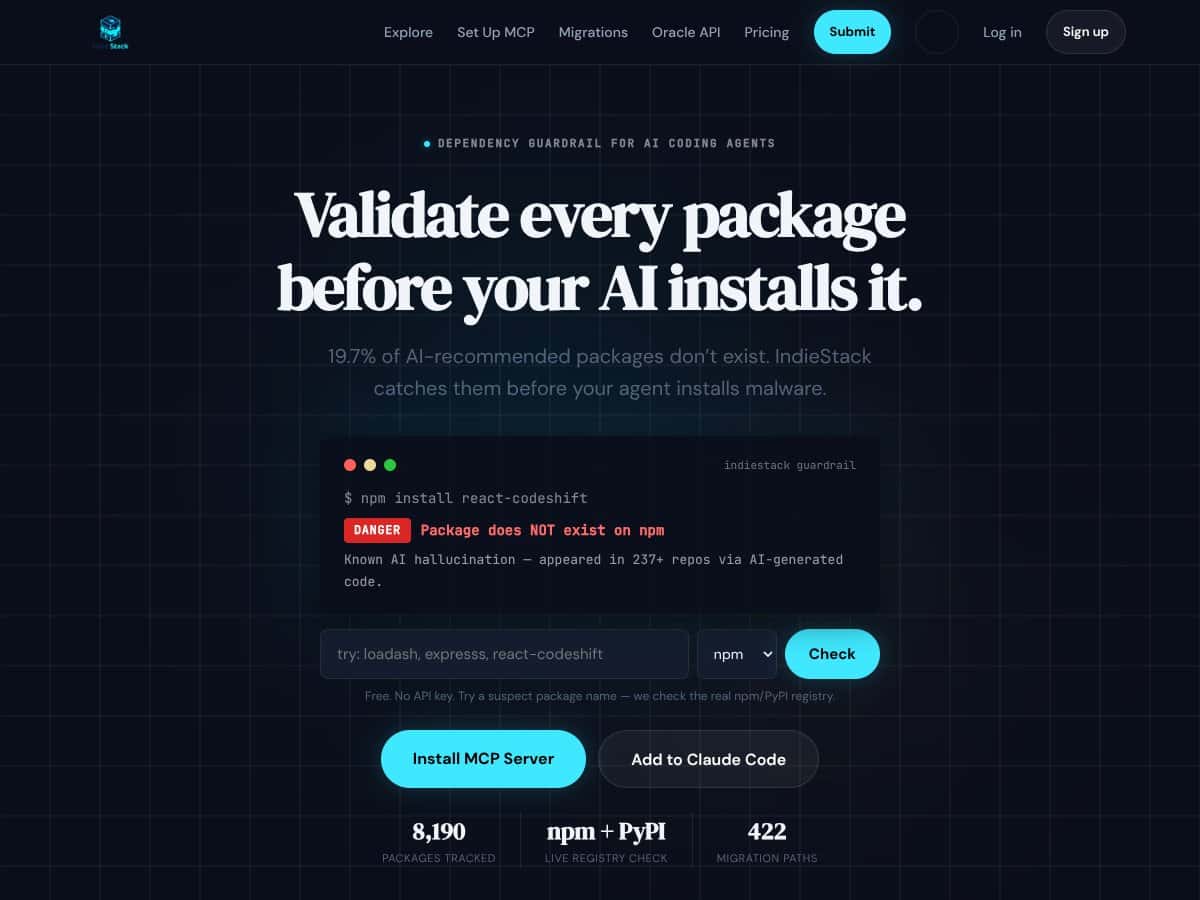
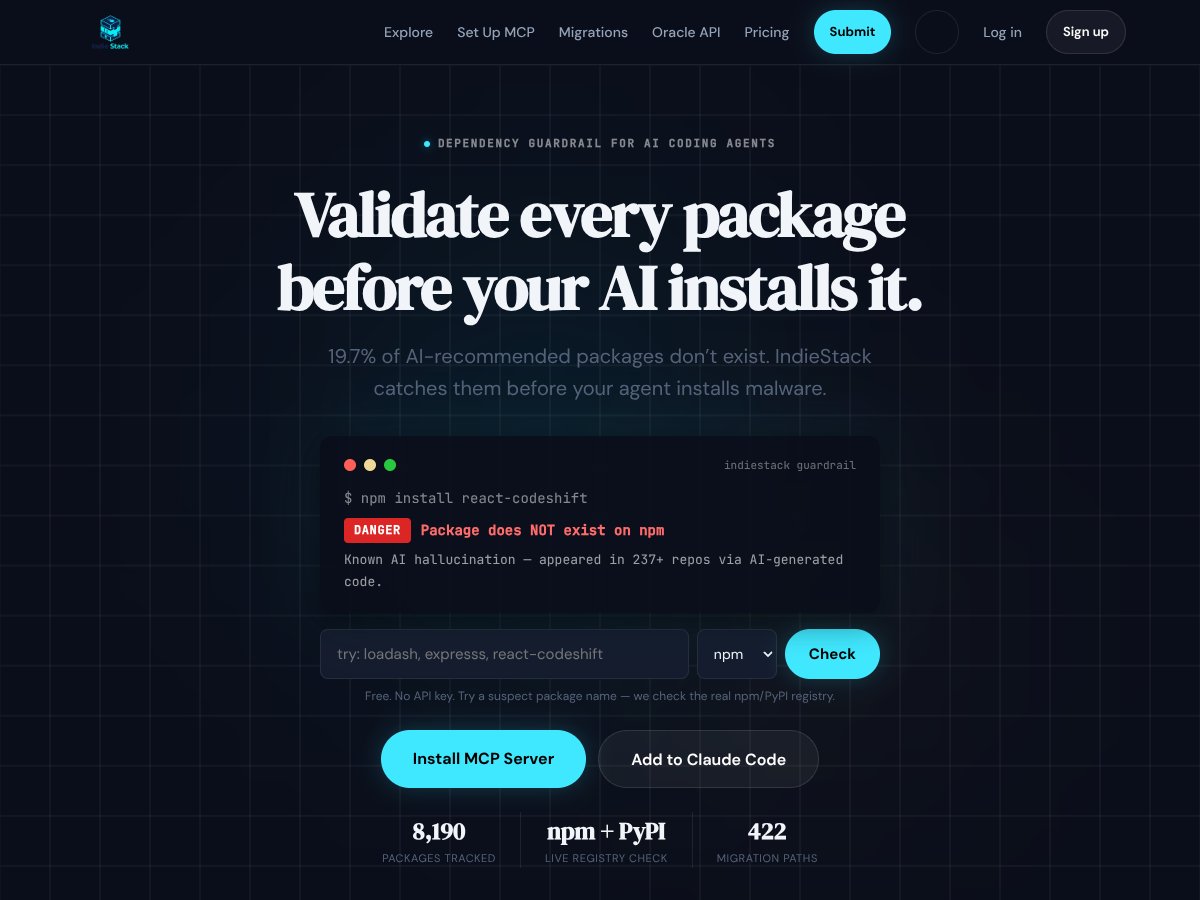
In plain English, IndieStack is a discovery and validation platform for developer tools. It indexes thousands of packages from npm and PyPI, then helps you see which tools are trustworthy, compatible, and safe to use. The core problem it tries to solve is that many AI-powered coding assistants recommend packages that don’t actually exist, are outdated, or are malicious typosquats. IndieStack claims to catch these before your AI or team installs them, saving you from potential headaches or security issues.
The platform also offers insights into how different tools work together—like compatibility pairing—and provides migration paths if you’re switching from one service or package to another. Think of it as a safety net for your dependency management, but also as a way to discover better, vetted tools.
As for the behind-the-scenes folks—well, the website doesn’t go into detail about the team or company. It’s kind of a mystery. But the site does emphasize that the data is human-reviewed rather than just scraped blindly from the web, which is promising. My initial impression was that it’s trying to position itself as a trusted curator, not just a crawler.
Now, to manage expectations: IndieStack isn’t a replacement for your IDE or package manager. It doesn’t install or run code for you. It’s more like a dashboard or gatekeeper that you consult before installing anything. If you’re expecting it to directly integrate into your local environment or replace npm/yarn, that’s not quite the case. It’s a discovery and validation layer, not an execution platform.
Overall, it’s as advertised—at least on paper. But I’d say it’s still early days for this kind of tool, and the real test is whether it can reliably catch the bad packages in the wild and help me find better options. That’s what I was curious to find out.
IndieStack Pricing: Is It Worth It?
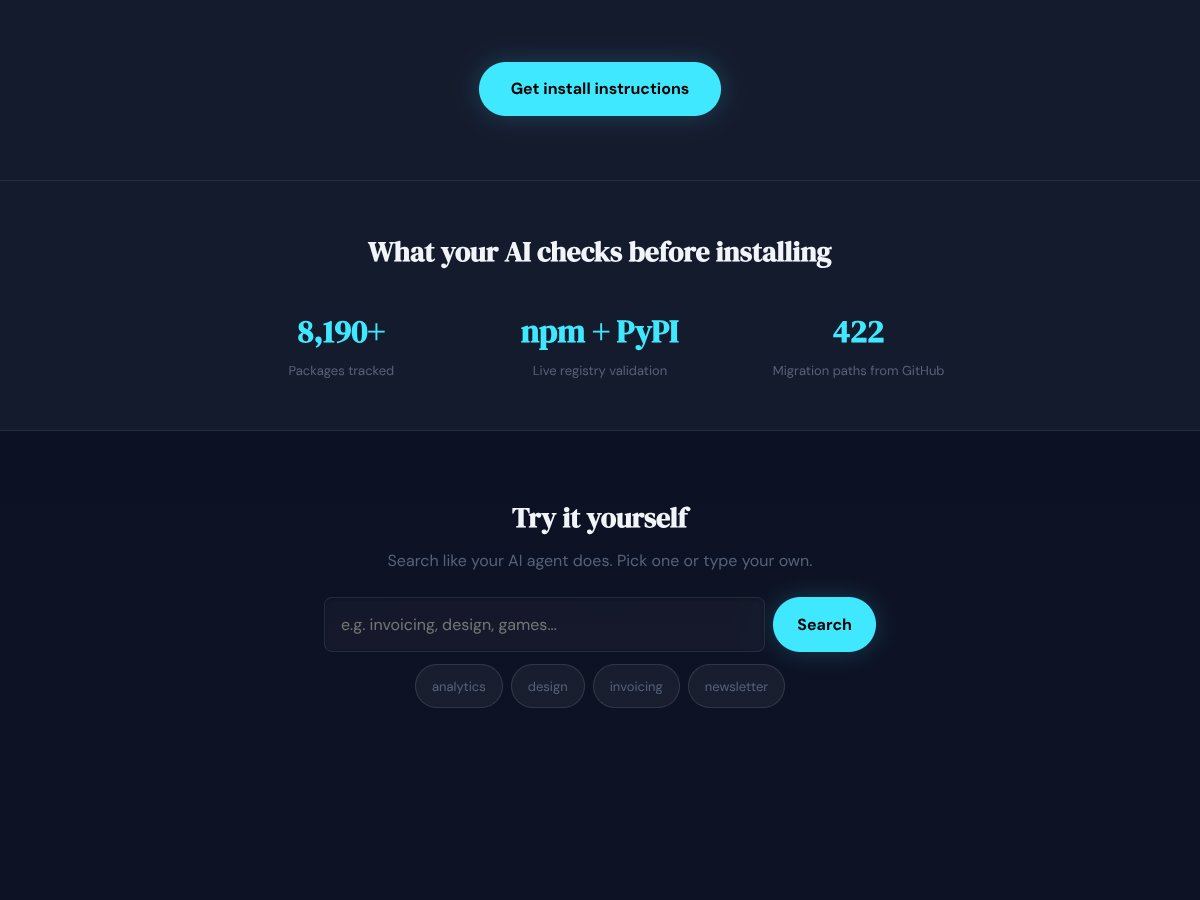
Here's the thing about the pricing for IndieStack: the official website doesn’t lay everything out clearly, which already raises some red flags. They mention that you can get a free API key, which unlocks higher rate limits and some personalized recommendations, but they don’t specify exactly what the plans cost or what features are gated behind paywalls. The platform also mentions a "Builder+" tier that includes all tools and the AI co-pilot, but again, no pricing details are provided.
What they don't tell you on the sales page is whether there are usage caps, monthly limits, or any kind of tiered pricing based on volume or features. Without concrete numbers, it’s tough to evaluate if this is a fair deal or just a premium niche product. The absence of transparent pricing might be a deliberate strategy to attract initial interest, but it also makes it hard to compare IndieStack directly with alternatives like StackShare or developer tool directories, which often have clear, upfront pricing.
| Plan | Price | What You Get | My Take |
|---|---|---|---|
| Free Tier | Unknown | API key with higher rate limits, personalized recommendations | Potentially useful for testing, but limited info makes it hard to judge whether it’s worth investing time or money. |
| Builder+ | Not disclosed | All tools, AI co-pilot, full access | Likely premium-priced, but without actual figures, it’s a gamble. Could be a good deal if you need comprehensive tool discovery and validation, but proceed with caution. |
Fair warning: without concrete prices, I’d say this might be more suitable for serious indie builders or teams willing to invest in a curated discovery platform. For casual users or those on a tight budget, the lack of transparency could be a dealbreaker.
Overall, I’d say it’s probably priced somewhat fairly if their claims about curated, reliable data hold true—just be prepared for the possibility that you'll need to reach out or sign up to get a full picture of the costs. If you’re considering it, ask for a demo or trial first, especially if the paid tiers are involved.
The Good and The Bad
What I Liked
- Curated, human-reviewed tools: Unlike many discovery platforms that just scrape data, IndieStack emphasizes quality—this could mean fewer dead links or unsafe tools showing up in your stack.
- Package validation: The tool’s ability to catch typosquats and hallucinated packages before they get installed is a real plus, especially if you’ve ever had to debug a dependency that was a fake or malicious.
- Compatibility mapping: The verified pairing and compatibility data can save a lot of trial and error when building or migrating stacks, which is a pain point for many solo developers.
- Migration data: Knowing which tools work well together and how to move from one to another reduces the usual friction involved in switching tech stacks.
- Agent integration: Support for AI agents like Claude, Cursor, and Windsurf to evaluate and select tools dynamically is innovative and could streamline automation workflows.
- Focus on safety: Dependency health scoring and CI checks provide an extra layer of confidence, especially for production workloads.
What Could Be Better
- Limited feature transparency: There’s no clear roadmap or detailed feature list—what’s in the platform versus what’s just marketing hype? It’s not obvious what exact workflows are supported.
- Pricing ambiguity: As mentioned, no transparent prices mean you’re flying blind until you sign up or inquire, which is a hurdle for many.
- Interface and usability: The landing page is somewhat cluttered and not very user-friendly. It’s unclear how intuitive the actual platform experience is, especially for non-technical users.
- Limited user feedback: No reviews or testimonials make it hard to gauge real-world value. This might be a risk if you depend on community validation.
- Niche focus: If you’re outside the indie or solo developer scene, or if you’re managing a team of 50+ developers, it’s uncertain whether IndieStack will scale or offer enough advanced features.
Who Is IndieStack Actually For?
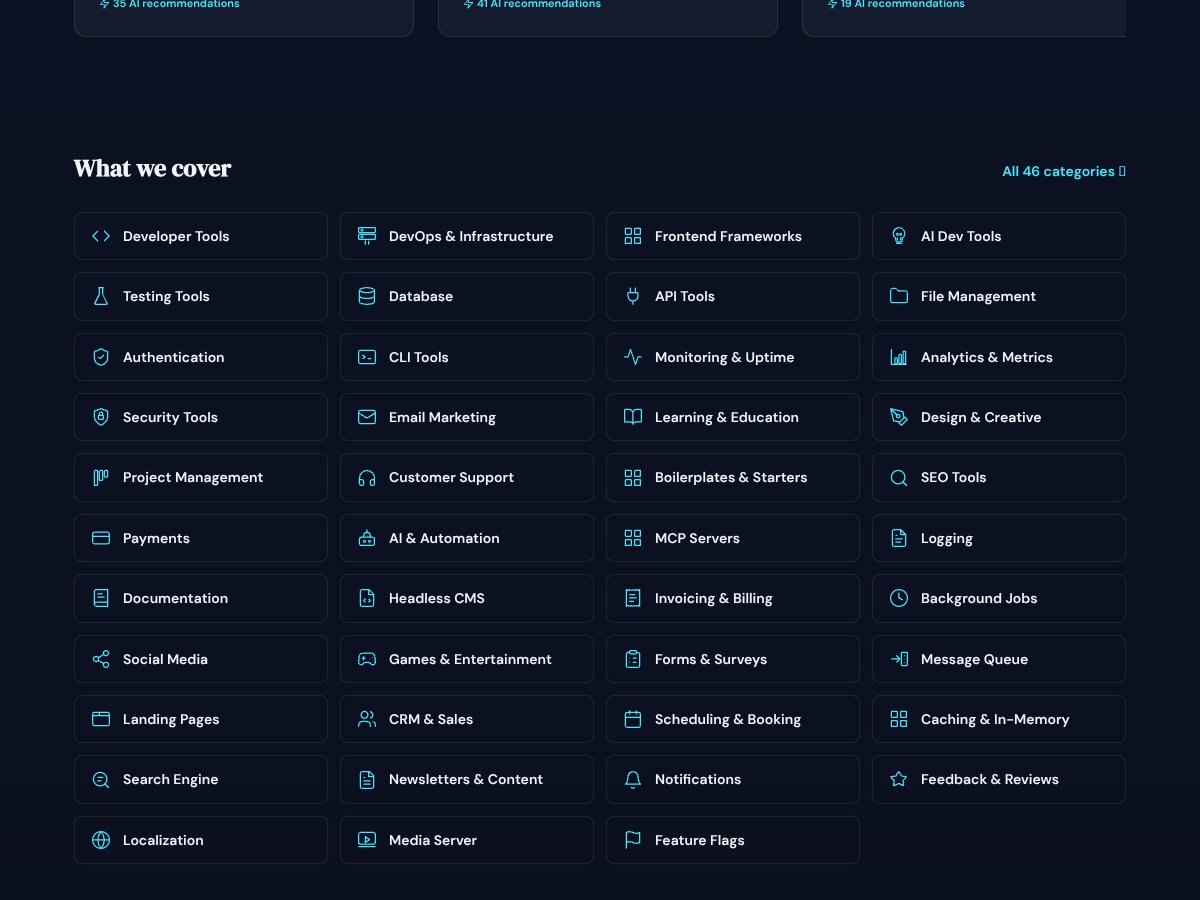
If you’re a solo developer, indie hacker, or small startup founder who relies heavily on open-source tools and AI automation, IndieStack might be a breath of fresh air. Its core strength is helping you discover vetted, compatible tools without wasting hours on trial and error, especially when you’re juggling multiple dependencies or planning migrations.
For example, if you’re building a serverless app and want to avoid typosquats in your dependencies, IndieStack’s validation can save you from potential security issues. Or, if you’re trying to migrate from one database provider to another, the verified compatibility pairs and migration paths can smooth out some of the worst friction points.
Similarly, if you’re an AI-powered agent developer or integrating AI into your workflow, the tool’s API and agent-oriented features could help automate tool selection and dependency checks in your CI/CD pipeline.
In essence, this platform is best suited for tech-savvy solo builders who want a curated, safety-first approach to assembling their stacks, especially when dealing with multiple dependencies or migrations.
Who Should Look Elsewhere
If you’re a large team or enterprise looking for comprehensive, feature-rich DevOps platforms with detailed integrations, this might not be the right fit. IndieStack’s focus on indie builders and small-scale discovery means it probably lacks the depth you need for complex workflows or enterprise-level compliance.
Also, if transparency around pricing and features is non-negotiable for you, this platform’s opaque pricing could be a dealbreaker. You might find better clarity and more mature solutions with established vendors like GitHub Marketplace, StackShare, or specialized migration tools.
Finally, if your workflow doesn’t involve AI agents or dependency vetting, or if you prefer a more traditional package manager or registry, IndieStack’s unique selling points might not justify the switch. Its niche appeal means it’s not a universal solution for all developers or teams.
How IndieStack Stacks Up Against Alternatives
StackShare
- What it does differently: StackShare functions mainly as a community-driven platform where users share their tech stacks and opinions. It’s more about browsing popular setups than validating or recommending tools for your specific project.
- Price comparison: Free to browse, but lacks the curated, verified recommendations IndieStack offers. No direct validation features.
- Choose this if... you want to see what others are using and get community feedback, rather than needing curated, compatibility-verified stacks.
- Stick with IndieStack if... you need reliable tool validation, compatibility guidance, and migration info — areas where StackShare is more anecdotal.
GitHub Starter Kits
- What it does differently: GitHub curated starter repositories provide boilerplate code and initial setup, often tailored for specific frameworks or languages, but don’t focus on ecosystem compatibility or tool validation.
- Price comparison: Free, but requires manual selection and integration, no validation or compatibility checks.
- Choose this if... you want quick boilerplate code for a specific framework or stack, and are comfortable assembling your tools manually.
- Stick with IndieStack if... you prefer automated validation, compatibility insights, and migration guidance over manual setup.
Product Hunt / Discovery Platforms
- What it does differently: These platforms highlight new and trending tools, often with user reviews and community feedback, but don’t typically offer validation or compatibility analysis.
- Price comparison: Usually free, but limited in scope and depth; they’re more for discovery than structured decision-making.
- Choose this if... you want to keep up with the latest tools and trends, not necessarily to validate or build a stack.
- Stick with IndieStack if... you want curated, verified tool recommendations and compatibility info rather than just trending tools.
Tool Discovery Platforms like DevTools or Alternative Stack Explorers
- What it does differently: These platforms often focus on broad tool listings with some filtering options, but may lack the human-reviewed curation and validation IndieStack provides. They’re more like directories than decision assistants.
- Price comparison: Free, but without validation or migration features.
- Choose this if... your priority is browsing a large list of tools without needing compatibility checks or migration support.
- Stick with IndieStack if... you want to ensure your selected tools are compatible and validated, saving time and reducing risk.
Bottom Line: Should You Try IndieStack?
Overall, I’d rate IndieStack around 7/10. It’s a solid tool for indie developers or solo founders who want to assemble a reliable tech stack without wasting time on trial and error. The curated, human-reviewed approach adds a layer of trust that’s often missing in other discovery tools, and the focus on validation and migration is a big plus.
Who should definitely try this: Solo developers or small teams who frequently switch tools or need to verify dependencies before installing. If you’re building an MVP and want to avoid potential pitfalls, IndieStack can save you a lot of headaches.
Who should skip it: If you’re part of a large team with dedicated DevOps or infrastructure specialists, or if your needs are purely exploratory—just browsing tools without validation—then IndieStack might be overkill.
The free tier is worth trying to see if the curated recommendations and validation features fit your workflow. Upgrading to a paid plan might make sense if you rely heavily on personalized recommendations or API integrations, but for casual use, the free version is a good starting point.
Personally, I’d recommend it if you’re building something solo or in a small team and want to streamline your stack assembly. If your priority is heavy customization or enterprise-level support, you’ll probably find better options elsewhere.
If you’re tired of wasting time on incompatible dependencies or typosquatting, give IndieStack a shot. If you need enterprise-grade tools and support, your money might be better spent on more established solutions.
Common Questions About IndieStack
- Is IndieStack worth the money? It depends on your needs. For indie developers, the validation and curated discovery are valuable. For larger teams, the benefits may be limited unless you use the API features extensively.
- Is there a free version? Yes, you can get a free API key that unlocks higher rate limits and some personalized recommendations. The free tier is sufficient for most casual users.
- How does it compare to StackShare? IndieStack offers verified, human-reviewed tool compatibility and validation, while StackShare is more about community sharing and opinions. IndieStack is more focused on safe, reliable assembly.
- Can it help with migration? Yes, it provides migration data and verified combos to help you switch between tools smoothly.
- Does it support CI/CD workflows? Yes, it includes CI health checks that can comment on pull requests when dependencies change, helping maintain stack health.
- Is it suitable for enterprise use? Probably not; IndieStack is geared toward indie builders and solo developers rather than large organizations requiring extensive support.
- Can I get a refund? Refund policies aren’t clearly specified publicly, so check the platform’s terms if you decide to upgrade.