Table of Contents
Hey! If you’re an author trying to grow your book audience on Instagram, you’re not alone. I’ve seen this up close: you post a few times, get a handful of likes, then you wonder why nobody’s clicking through to buy. And yeah—sometimes your profile feels like a ghost town even though you’re working hard.
The good news? Instagram can absolutely work for authors. It just needs a setup that makes sense for readers, not just “random content.” In my experience, the difference is usually small things done consistently: a profile that tells people what to expect, posts that actually connect, and a simple way to track what’s moving the needle.
Stick with me—I'll walk you through practical steps you can use immediately (and I’ll include the kinds of posts and metrics I look for so you’re not guessing). No fluff. Just a realistic author-friendly plan.
Key Takeaways
- Fix your profile first: a clear headshot/logo, a username people can remember, and a bio that includes genre keywords + a link to your latest book (Linktree works well if you have multiple titles).
- Post content readers actually want: writing process, cover reveals, reading spot photos, and short story snippets. Mix Reels, Stories, and carousels so you’re not relying on only one format.
- Engagement is strategy: comment like a human, reply fast to DMs, and show up in niche conversations. This is how you get seen by the right people.
- Use visuals like a brand: consistent fonts/colors for cover mockups and quote cards. People recognize you faster, and that matters when they’re scrolling fast.
- Promote with timing + rules: run discount codes or pre-order perks close to launch. Set clear eligibility (who qualifies, how long it lasts) and track clicks—not just likes.
- Track what converts: in your Insights, watch saves, shares, profile visits, and link clicks. Then double down on the post types that consistently lead to purchases.
1. Set Up a Clear and Professional Instagram Profile for Your Books
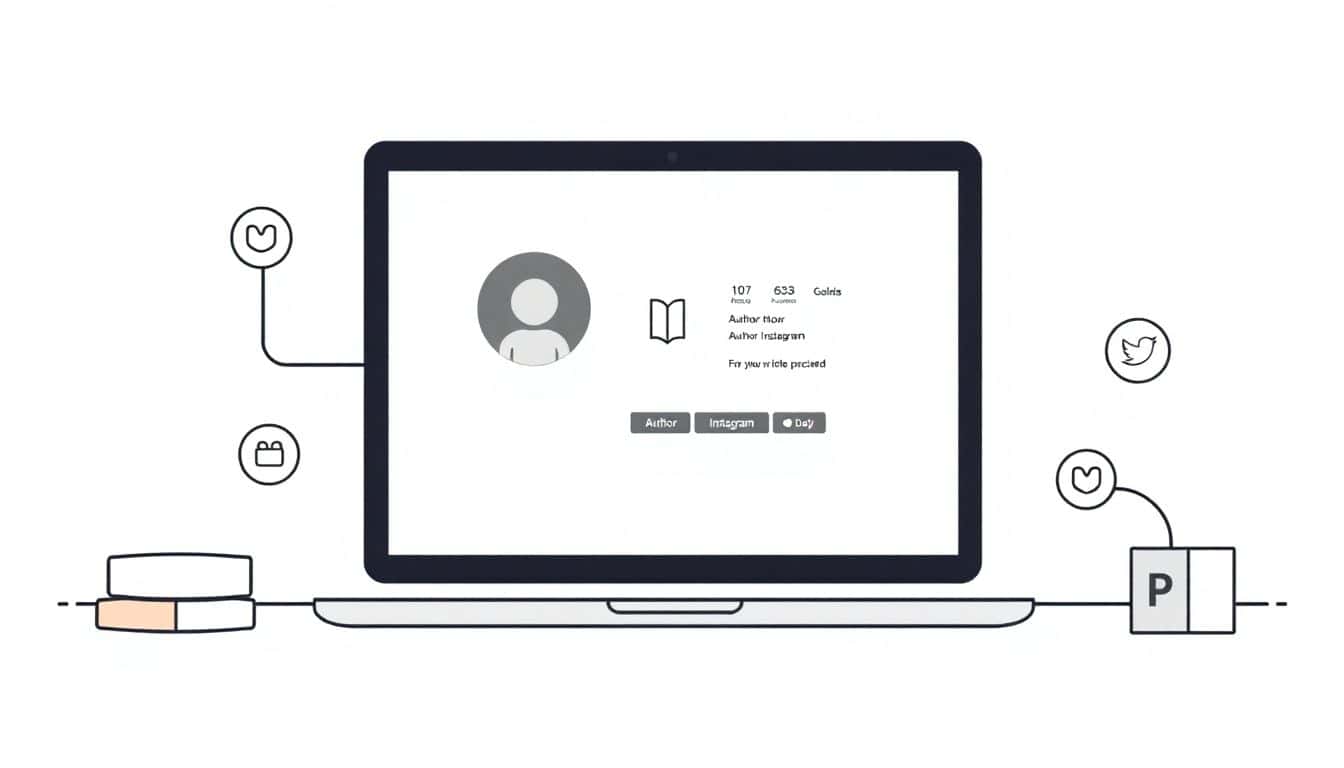
First impressions matter. On Instagram, people decide whether to follow you in seconds. In my experience, authors lose followers not because their content is bad, but because their profile doesn’t answer three questions fast:
- Who are you? (clear photo)
- What do you write? (genre keywords)
- Where do I click to buy? (a link that actually leads somewhere)
Here’s what I recommend:
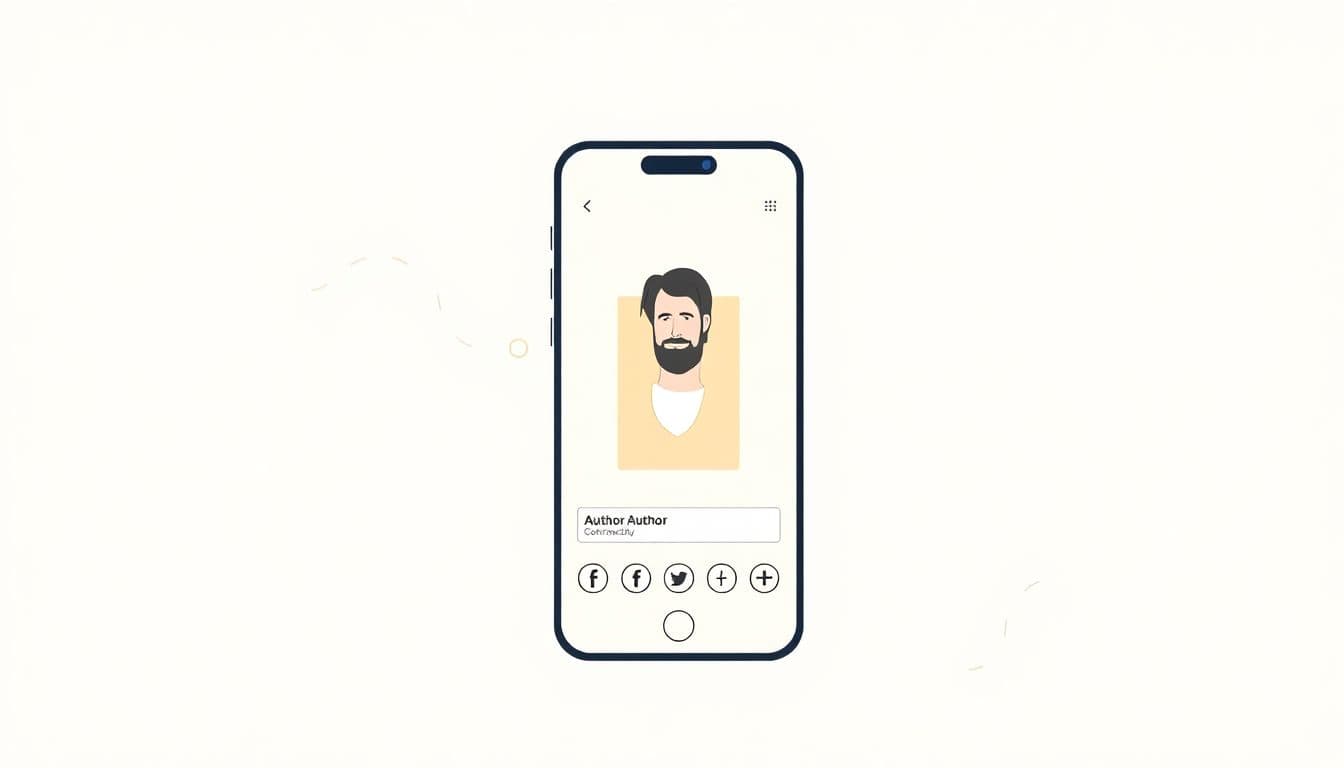
Profile photo: use a headshot or a simple logo. If you’re doing a headshot, make sure it’s readable as a circle (no tiny text, no busy backgrounds).
Username: keep it close to your author name. If your name is taken, use a consistent variation (for example, AuthorNameWrites or AuthorNameBooks). Don’t make people guess.
Bio (SEO + clarity): include genre keywords and a one-line promise. Example bios I’ve used/seen work well:
- Cozy mystery author: “Cozy mysteries with found-family vibes. New books every season. 🕯️”
- Romance novelist: “Steamy, feel-good romance. Small towns + second chances. 💌 New release ↓”
- Fantasy author: “Epic fantasy & character-driven adventures. Maps, magic, and mayhem. ⚔️ ↓”
Where to put keywords: your bio is the biggest spot, but also use them naturally in your post captions and (when you can) alt text for images. Don’t keyword-stuff—just make it obvious what you write.
Link: don’t bury the lead. If you have multiple books, I like Linktree (or a similar landing page) because it lets you swap the “featured” book without changing everything. Your goal is simple: get profile visitors to your current release or your most popular title.
Settings: switch your account to a professional creator/business profile, set contact options, and turn on notifications so you can reply quickly. When someone comments, reply within a few hours if you can. That responsiveness is underrated.
2. Share Content That Connects with Book Lovers and Turns Followers into Readers
Let’s be honest: “post consistently” is not a content strategy. What matters is what you post and whether it matches what your target readers enjoy seeing.
For authors, I’ve found the sweet spot is content that feels like it belongs in a reader’s feed: story snippets, cover moments, writing-life realism, and reader-friendly posts that don’t require them to “get” marketing.
Start with 3 content types you can repeat:
- Process posts: drafting, research, character sketches, “I wrote this at 2 a.m.” moments.
- Story reveals: cover reveal, back-cover copy, a quote card, a short excerpt.
- Reader-life posts: your reading setup, bookish snacks, the playlist you wrote to, your favorite bookstore shelf.
Reels & Stories (with actual ideas): Reels are great for quick hooks. Stories are great for replies, polls, and keeping you top-of-mind.
Reel hooks that don’t feel cringey
Here are 5 hook formulas you can steal:
- “If you like [genre trope], you’ll love this…” (then show the cover + one-line pitch)
- “I didn’t expect to write this…” (share a surprising scene moment)
- “POV: you’re the [character] in chapter 3” (quick acting + caption)
- “3 details you missed in the cover” (zoom + explain)
- “The writing tip I wish I knew earlier” (connect it to your book theme)
A simple Reel script (fully written example)
Topic: Cozy mystery “what’s inside” teaser
Hook (0–2 seconds): “If you love cozy mysteries with small-town gossip…”
Clip 1 (2–5 seconds): show the book cover + a quick pan of the page (no spoilers).
Clip 2 (5–10 seconds): point to a “clue” prop (tea cup, notebook, map) and say: “Here’s the first clue Detective Lila finds.”
Clip 3 (10–15 seconds): show your desk/research notebook. “I wrote this scene while researching local markets—this book is packed with everyday details.”
CTA (15–20 seconds): “Want the next teaser? Comment ‘CLUE’ and I’ll share chapter two’s vibe.”
What I’d watch for: saves + profile visits after posting. If comments spike but link clicks don’t, your CTA or link placement needs work.
Captions: where to use keywords (and where not to)
Instead of stuffing keywords everywhere, I aim for a clean structure:
- First line: include the genre keyword naturally (this is what people skim).
- Middle: tell a mini-story (what inspired the scene, what readers will feel, etc.).
- End: a single call-to-action.
- Hashtags: use a small set (think 8–15) made of niche + genre + community tags.
Example caption template (cozy mystery):
“Cozy mystery readers—this one’s for you. 🕯️ In my new release, Detective Lila follows a ‘harmless’ rumor that turns into a real mess. I wrote this scene with the exact vibe of a Sunday market: warm, nosy, and full of secrets. Want a spoiler-free teaser for Chapter 2? Comment ‘MARKET.’”
Hashtag set idea (swap based on your niche):
- #cozymystery
- #cozyreaders
- #bookstagram
- #mysterybooks
- #indieauthor
- #readlocal
- #amreading
- #mysterylover
Don’t copy/paste the exact same set forever. I rotate 2–3 hashtag sets so I’m not relying on one audience bucket.
Consistent visuals (without making everything look identical)
Yes, your visuals matter. But “consistent aesthetic” shouldn’t mean “same boring template forever.” What I look for is recognizable formatting.
Here are concrete ways to do that:
- Quote cards: use one font pair and the same margin layout. Example: quote centered, author name bottom-right, genre tag top-left.
- Cover mockups: pick 2–3 mockup styles (hardcover on a desk, book on a shelf, paperback in hands). Stick with those so people recognize you instantly.
- Color palette: choose 3 main colors and use them in your graphics (e.g., cream background, deep navy text, one accent color).
- Template set: create a 1080x1080 quote template + a 1080x1350 carousel template so you can post faster.
And if you’re wondering whether it’s worth the effort—here’s what I noticed: when my cover posts started using the same mockup style and the same “title card” layout, my profile visits from non-followers increased. People didn’t just like the post—they understood it was my book brand.

3. Grow Your Audience Through Targeted Engagement and Networking
Growing on Instagram isn’t a passive sport. You can’t just publish and hope the algorithm magically understands your book. You need to show up where your readers already hang out.
Here’s what I do (and what tends to work across genres):
- Follow with intent: authors in your lane, bookstagram accounts that match your vibe, and readers who consistently engage with your genre.
- Comment like you mean it: skip “great post!” Instead, add a real thought: “This is exactly the kind of found-family dynamic I look for—does the heroine get her own agency by chapter 6?”
- Use hashtags strategically: pick a few niche tags you can repeat. If you write historical romance, don’t just use #romance—try tags closer to your sub-niche.
- Join small communities: book clubs, author circles, and genre-specific challenges. Bigger isn’t always better.
- Try nano-influencers: accounts with ~1,000–10,000 followers can be a sweet spot because engagement is often higher. Offer something easy (a 1–2 book ARC, a specific question to answer, or a simple review deadline).
- Network with other authors: do joint posts where you both share a “reader tip,” not just “check out my book.” Cross-promos work best when the audience overlaps.
- Reply fast: to comments and DMs. If someone takes the time to message you, they’re already interested. Don’t make them wait days.
- Go live occasionally: even a short 10–15 minute session helps. Q&A about your writing, “choose the next excerpt,” or a live read-through of your author note (not the full book).
One more thing: don’t chase everyone. Your job is to attract readers who would actually finish your book and recommend it. That’s how sales happen.
4. Use Instagram to Drive Book Sales and Promote Your Work
Instagram can drive sales, but only if you make it easy for people to buy. Posting “buy my book” doesn’t work. Posting story + proof + a clear next step does.
Here’s a promotion approach that’s realistic for authors (and not just “spray and pray”):
Book promotion posts that actually convert
- Mockups + context: show the cover, then add one line of what readers will feel. Example: “Cozy mystery with small-town secrets and a reluctant sleuth.”
- Teaser carousel: 5–7 slides: cover, premise, 1 quote, 1 “what to expect” bullet list, author photo, link CTA.
- Unboxing or “desk reveal”: show the physical copy (if you have it) and let people see you’re real.
- Review screenshot (with permission): don’t overdo it, but one or two strong quotes can help people trust the book.
- Reels with a question: end with a prompt that makes people comment (comments often help reach).
Promotion playbook: discounts, codes, and timing
Let me share how I think about promotions. The timing matters more than the discount depth.
- Before launch: 7–14 days out, focus on excitement (teasers, premise, character vibes). If you use a discount now, keep it small (like 10–20%) so you don’t train readers to wait.
- Launch week: offer the strongest incentive (for example, 20–35% off) for a limited window (48–72 hours tends to create urgency without feeling spammy).
- After launch: run a smaller “reader perk” (free bonus chapter, signed bookmark giveaway, or a limited-time bundle) instead of always discounting.
Discount code rules (make it clear): “Use code COZY15 for 15% off through Sunday 11:59pm ET. Applies to eBook only.” People need the details instantly.
Expected conversion benchmarks (what I usually watch): if your link clicks are low, your CTA or link isn’t compelling. If clicks are decent but sales are low, your book page might need work (cover, blurb clarity, reviews, or pricing). Don’t assume Instagram is the only problem.
Giveaways that don’t waste your time
Giveaways can work, but only if entry requires something that helps you reach real readers. For example:
- Entry method: “Like this post + comment your favorite trope + follow my account.”
- Optional bonus: “Extra entry if you share to Stories.”
- Prize: signed paperback, eBook + character card, or a bundle of your backlist.
Then, after the giveaway, post a follow-up Reel: “Winner chosen—here’s what I learned about what you want to read.” That keeps momentum.
Collabs and reviewer outreach
Reaching reviewers works best when you give them something specific to talk about. Instead of “please review my book,” try:
- “If you enjoy [trope], tell me whether this hits that vibe.”
- “Share which character you’d trust and why.”
- “Can you post your top takeaway in your first 24 hours of reading?”
It’s more work for you, but you’ll get better content back—and that content sells.
5. Track Your Results and Adjust Your Strategy for Better Growth
I used to obsess over likes. Big mistake. Likes are nice, but they don’t always pay the bills.
Now I track metrics that tell me whether people are moving from “interested” to “buying.” In Instagram Insights, I focus on:
- Reach: are new people seeing you?
- Engagement: saves and shares often matter more than likes.
- Profile visits: if this spikes after a post, your content is earning trust.
- Link clicks / CTA taps: this is the closest thing to sales intent.
- Follower growth: steady growth beats random spikes.
Mini case study from my own workflow: I tested two weeks of posting for a book launch. Week 1 was mostly cover posts and generic “new release” graphics. Week 2 swapped in more story-driven Reels (short scene vibe + question) and carousels with quote cards. What I noticed:
- Likes didn’t explode—but saves and profile visits increased noticeably.
- Posts that ended with a comment prompt (“comment your favorite trope”) produced more DMs and link clicks than posts that only said “available now.”
That told me the audience wanted connection, not just information. So I doubled down on those formats for the next release.
Hashtag tracking tip: don’t judge a hashtag set by one post. Give it 2–3 posts, then see which posts brought the most reach and engagement from non-followers.
6. Manage Your Time Effectively to Stay Consistent on Instagram
Consistency is hard when you’re also writing, editing, handling life, and maybe doing a day job. I get it. So I treat Instagram like a system, not a daily scramble.
My approach:
- Pick 3 days per week: for example, Tue/Thu/Sat. You don’t need to post every day.
- Batch create: set aside 2–3 hours once a week to film Reels (even 3–5 short ones) and design quote cards.
- Batch engage: reply to comments/DMs in one block (20–30 minutes). Not all day.
- Schedule when possible: tools like Later or Planoly can help you queue posts so you’re not constantly thinking about timing.
- Use a simple content calendar: tie posts to your release timeline, but also add “evergreen” posts (writing tips, reader questions, behind-the-scenes) so you’re not stuck waiting for a launch.
- Set realistic goals: “3 posts/week + reply to comments daily” is better than “post daily forever.”
Here’s the limitation I’ll be upfront about: Instagram growth isn’t instant. If you’re expecting results in a week, you’ll burn out. But if you keep a steady rhythm for 6–12 weeks, you’ll start seeing patterns—what your readers respond to, and what leads to clicks.
FAQs
Keep it simple and clear. Use a recognizable profile photo, write a bio that includes your genre keywords (naturally), and link directly to your latest book or a landing page that highlights your current release. Make sure your account is public and that you can reply to comments/messages quickly.
Share things readers can feel: behind-the-scenes writing moments, story snippets (spoiler-free), cover reveals, quote cards, and your reading-life visuals (desk setup, research, favorite spots). If you can answer “why would someone follow me?” with each post, you’re on the right track.
Engage consistently in your niche: follow and comment on relevant accounts, participate in genre hashtags, and collaborate with authors/reviewers who share your readers. Then, post content that earns saves and shares—those are the signals that bring in new people.