LIFETIME DEAL — LIMITED TIME
Get Lifetime AccessLimited-time — price increases soon ⏳
AI Tools

Remalt Review 2026: Honest Take After Testing

Updated: April 12, 2026
11 min read
#Ai tool

Table of Contents

Remalt screenshot

What Is Remalt (and what I could actually verify)?

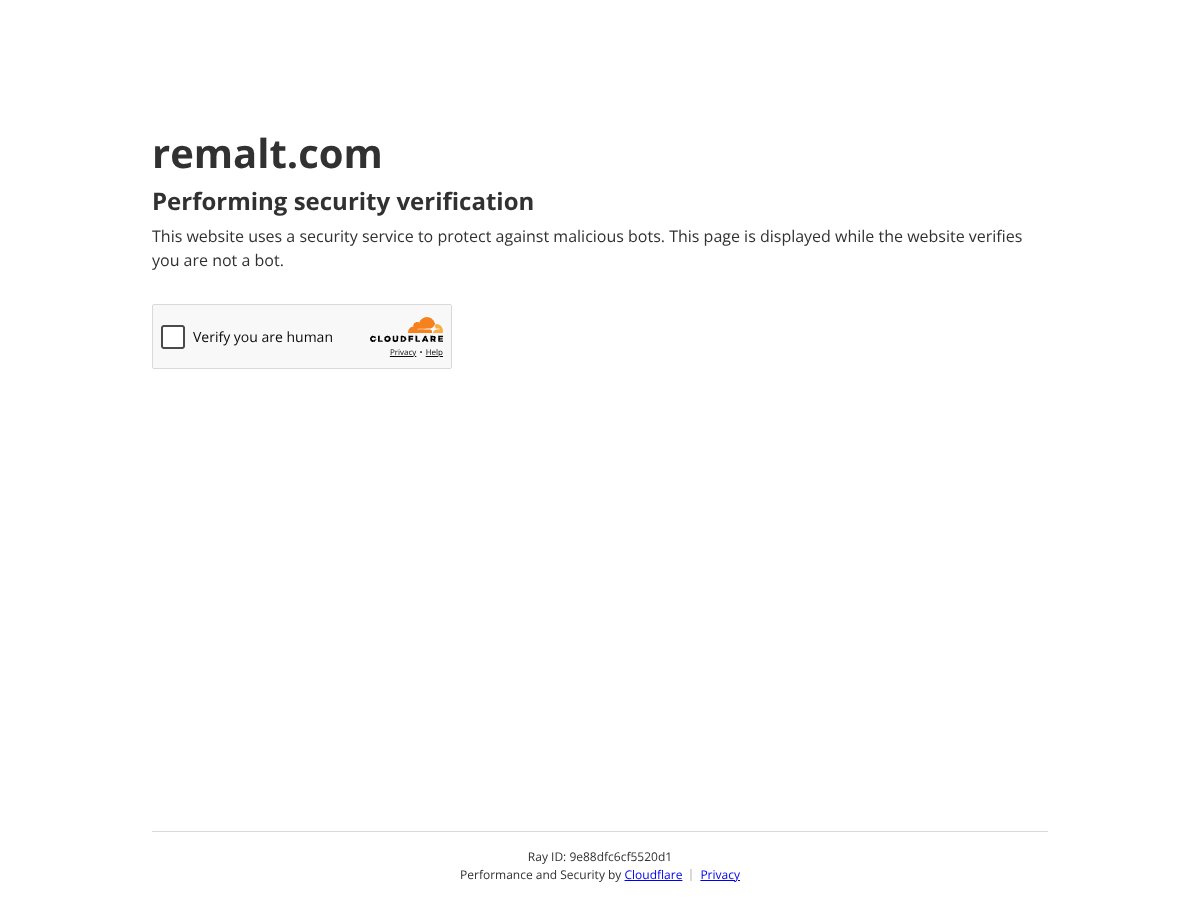
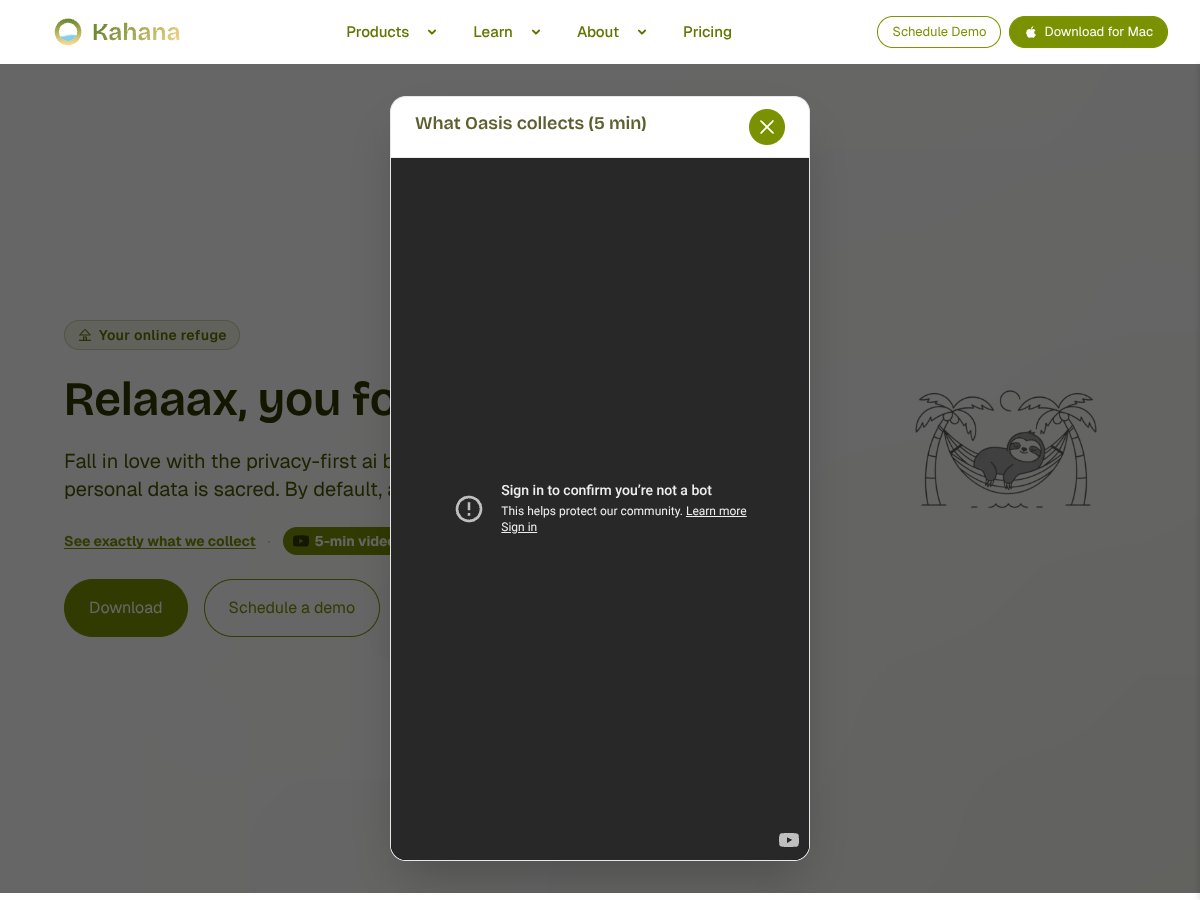
I stumbled onto Remalt expecting something I could quickly “try” like a typical app. The problem? The only thing I could reliably interact with from the outside was a Cloudflare-style security verification page. No real onboarding. No obvious dashboard. No clear sign-up flow that told me, “Yep, this is the product, and here’s how you use it.”

So instead of pretending I tested bot-blocking performance (which I couldn’t verify without access to their configuration/backend), I focused on what I could confirm as a user visiting a protected page: the verification experience, what’s shown (and not shown), and what a site owner would likely need to understand to use it.

What I observed on the page itself was a security verification message that indicates the site is using a protection step intended to filter out malicious bots. That’s the most concrete “product behavior” I found—everything else (controls, policies, reporting, and pricing) is either hidden, missing, or not clearly documented on the public site.

That leads to the big question: is Remalt a standalone SaaS you manage directly, or is it a behind-the-scenes service that other platforms embed? Based on what I could see, it looks more like the second option—at least for now.

Key Features of Remalt (based on what’s publicly observable)

Security verification step (the thing you can see)

The most obvious feature is the security verification process that shows up when you hit a protected site. From the outside, it behaves like a challenge page—something you’d normally associate with bot mitigation.

In my case, I couldn’t confirm the “smarts” behind it (how it scores risk, how it adapts, what signals it uses, etc.). There’s no public configuration screen I could inspect, and I don’t have access to whatever rules or settings sit behind the scenes.

The key takeaway: I can describe the experience you get as a visitor, but I can’t responsibly claim performance improvements, bypass rates, or long-term effectiveness without backend visibility.

Bot blocking / bot filtering (not measurable from the visitor side)

Remalt’s positioning suggests it helps prevent bots from accessing your site. That said, there aren’t any user-facing controls, reports, or logs that let me verify how well it works, how often it triggers, or whether it’s too aggressive for real users.

So what I can say is pretty simple: it appears to be a “drop-in verification step” rather than a full bot management console you can tune and monitor yourself.

Real-time checks (again, only the result is visible)

What I noticed is that the check happens as part of the browsing flow—meaning it’s not something you install and forget. But without a dashboard or status page, I couldn’t tell how the system behaves over time (for example: does it learn? does it re-challenge suspicious sessions? does it escalate?)

It’s a bit like installing a security guard you never see. You know they’re there because you get stopped at the door—but you don’t get to inspect their playbook.

Integration options (what I tried to find)

I specifically looked for the usual developer-friendly breadcrumbs: API documentation, SDKs, a webhook guide, or even a simple “How to integrate” page with endpoints and examples.

What I found (or didn’t find): no obvious API docs, no SDK list, and no clear plugin marketplace links. I also didn’t see a public “developer portal” that would help a developer wire it up directly.

That doesn’t automatically mean integrations don’t exist. It just means they’re not easy to discover from the public site, and that matters if you’re trying to evaluate Remalt for a real deployment.

Reporting and analytics (no obvious visibility)

This is where Remalt’s public transparency felt the weakest. I didn’t see any user-facing reporting, analytics, or logs that would tell a site owner what’s being blocked and why.

If you’re the kind of person who wants answers like “How many challenges were triggered last week?” or “What percentage of traffic was flagged?”—you’ll likely need internal access or something that isn’t visible publicly.

Customer support or documentation (not easy to locate)

I couldn’t find a clearly labeled support portal, detailed documentation hub, or anything that looked like a troubleshooting guide.

For a security verification tool, that’s a big deal. When something goes wrong (false positives, performance concerns, challenge loops), most teams need a way to debug quickly. If those resources aren’t public, you’re relying on whatever support channel exists after you’re already in.

Pricing and plans (what I checked)

I looked for pricing details in the usual places: pricing pages, navigation items, footers, and any page sections that mention plans or billing.

What I found: pricing wasn’t clearly published. There wasn’t a straightforward list of plan tiers, usage limits, or feature gates that I could point to and verify.

So if you’re trying to decide whether Remalt is “worth it,” you’re stuck with uncertainty—at least from what the public site shows.

How Remalt Works (the honest, verifiable version)

Here’s the part I can explain without guessing: from a visitor’s perspective, Remalt’s presence shows up as a security verification page. That’s it. No settings. No admin panel. No obvious customization.

When I tried to figure out how a site owner would set it up, I kept running into the same wall: there’s no visible onboarding, no integration guide, and no clear path that says, “Paste this snippet,” “Follow these steps,” or “Configure these parameters.”

It took me a few minutes to accept what the site is (at least publicly): it seems less like a standalone SaaS with a login and more like a service that gets used by other websites and exposes only the verification experience to visitors.

And that’s why I’m cautious about calling it “a product you can test.” I can test the challenge page experience. I can’t test the backend behavior, the rule tuning, or the reporting accuracy.

If you’re evaluating Remalt, I’d treat it like this: you’re not just buying a page—you’re buying a system. And right now, the public info doesn’t show enough about that system to make a confident decision.

Remalt Pricing: Is It Worth It?

Plan Price What You Get My Take
Free Tier Unknown Details not publicly available I couldn’t find a clearly documented free tier page or a list of what you actually get. If there is a free option, it isn’t transparent enough for me to verify. I wouldn’t assume it’s available just because a service exists.
Paid Plans Check website Details not specified The pricing details aren’t visible in a way I can evaluate. Without plan tiers, usage limits, and feature breakdowns, it’s hard to compare value. If you do consider it, you’ll want to confirm costs and limits before committing.

One thing that bothered me: there’s no public breakdown of usage limits, challenge volume, throttling, or whether pricing scales with traffic.

When a security service doesn’t spell out the billing model, you can end up with surprise costs if your site traffic is higher than expected. That’s not me being dramatic—that’s just how most teams get burned with unclear pricing.

If you’re deciding anyway, I’d suggest you ask for (or look for) specifics like: how pricing scales, what’s included in “verification,” and what reporting you get—if any.

The Good and The Bad (what stood out after looking closely)

What I liked

  • Clean, visitor-friendly experience: The public page doesn’t look like a cluttered dashboard. As a visitor, you get the verification step without a bunch of extra marketing.
  • Clear indication of security intent: The page messaging is directly about security verification and blocking malicious bots, so it’s not hiding the purpose.
  • No obvious upsell spam: I didn’t see the kind of aggressive “buy now” interruptions you sometimes get on sketchier landing pages.
  • Simple “challenge-first” approach: If your goal is just to stop suspicious traffic at the edge, a verification step can be effective in principle.

What could be better

  • Feature transparency is weak: I couldn’t find a clear page that lays out what Remalt actually provides beyond the verification experience.
  • Documentation and developer resources aren’t obvious: No clear API/SDK docs, no integration guide, and no setup instructions that I could verify from the public site.
  • Pricing isn’t published: There’s no easy-to-check plan breakdown, usage limits, or billing details, which makes budgeting difficult.
  • No visible reporting/analytics: I didn’t see logs, dashboards, or analytics that would help a site owner understand impact.
  • No proof of real-world performance: Since I can’t access backend configuration, I can’t validate how well it blocks bots or how often it triggers for legitimate users.

Who Is Remalt Actually For?

In my view, Remalt is most likely a fit for teams that already know what they’re doing and just need a security verification layer working behind the scenes.

If you’re a cybersecurity professional, an IT team, or a developer evaluating edge protections, you might be able to assess Remalt based on integration details that aren’t obvious to me from the public pages.

But if you’re expecting a modern SaaS dashboard with clear controls, reporting, and documentation you can skim in one sitting, you may feel like you’re missing half the product.

For small business owners, the biggest risk is uncertainty: you may not know what it costs, how it affects real visitors, or what visibility you get after enabling it.

Who Should Look Elsewhere?

I’d look elsewhere if you need a full security suite, deep reporting, or an interface that lets you manage rules and monitor outcomes.

Also, if transparency around pricing and capabilities is non-negotiable for you, Remalt’s public information isn’t strong enough for my taste.

Depending on what problem you’re solving, you might consider more established options like Cloudflare Bot Management, Sucuri, Imperva, or Akamai (especially if you want better documentation, dashboards, and proven operational workflows).

How Remalt Compares to Alternatives (and why this section matters)

Quick heads-up: the earlier version of this review compared Remalt to AI writing tools. That doesn’t really match what I found here. Remalt looks like a security verification layer, not an AI content generator—so I’m not going to compare it to Jasper/Copy.ai/Writesonic/Rytr again.

If you’re looking for alternatives to a verification/bot-mitigation service, you’ll generally want tools with:

  • Clear dashboards (so you can see what’s happening)
  • Transparent pricing (so you can budget)
  • Documentation (so you can integrate and troubleshoot)
  • Operational controls (so you can tune challenges)

Those are the areas where Remalt’s public presence felt light.

Bottom Line: Should You Try Remalt?

My honest take: I can’t give a performance rating because I can’t validate backend behavior or measurable bot-blocking outcomes from the visitor side.

What I can say is that Remalt’s public experience is simple and security-focused, but the surrounding details—pricing, documentation, integrations, and reporting—aren’t clear enough for me to confidently recommend it as a “try it and you’ll know” kind of product.

If you’re evaluating Remalt for a real deployment, your next step should be getting specifics. Ask about plan tiers, usage limits, reporting access, and how the challenge behaves for legitimate traffic. If those answers are solid, it may be worth a closer look.

Would I personally recommend it right now based purely on what’s publicly visible? I’d say: not blindly. It’s intriguing, but it feels like the product details are still underexposed.

Common Questions About Remalt

  • Is Remalt worth the money? I can’t confirm value without pricing and plan details I can verify. If you’re considering it, confirm costs, usage limits, and what reporting you get before paying.
  • Is there a free version? I couldn’t find a clearly documented free tier page that I can point to. If there is one, it isn’t transparent on the public site.
  • What does Remalt actually do? From what I could observe, it triggers a security verification step (Cloudflare-style challenge behavior) intended to filter malicious bots.
  • Can I get a refund? I didn’t verify refund terms in the public material I reviewed. Check the refund policy at the time of purchase or ask support for the exact terms.
  • Does it support integrations? I couldn’t find public API/SDK documentation or an integration guide. It may exist, but it isn’t easy to discover from the site as a visitor.
  • Is it difficult to learn? If you only care about the visitor-side verification experience, it’s straightforward. If you’re a site owner trying to set it up and manage it, the lack of visible documentation makes it feel harder than it should be.
  • Does it support multiple languages? I didn’t verify language support from public documentation or UI options. If you need specific languages, you’d want to confirm directly.

As featured on

Automateed

Add this badge to your site

Stefan

Stefan

Stefan is the founder of Automateed. A content creator at heart, swimming through SAAS waters, and trying to make new AI apps available to fellow entrepreneurs.

Related Posts

Figure 1

Strategic PPC Management in the Age of Automation: Integrating AI-Driven Optimisation with Human Expertise to Maximise Return on Ad Spend

Title: Human Intelligence and AI Working in Tandem for Smarter PPCDescription: A digital illustration of a human head in side profile,

Stefan
AWS adds OpenAI agents—indies should care now

AWS adds OpenAI agents—indies should care now

AWS is rolling out OpenAI model and agent services on AWS. Indie authors using AI workflows for writing, marketing, and production need to reassess tooling.

Jordan Reese
experts publishers featured image

Experts Publishers: Best SEO Strategies & Industry Trends 2026

Discover the top experts publishers in 2026, their best practices, industry trends, and how to leverage expert services for successful book publishing and SEO.

Stefan

Create Your AI Book in 10 Minutes