Table of Contents

What Is TradeLingo Ai Academy ?
Honestly, when I first heard about TradeLingo Ai Academy, I was skeptical too. I’ve tried a bunch of “learn to trade” platforms, and a lot of them either drown you in theory or they hide the useful stuff behind vague promises. The pitch here—short lessons plus practice and gamified progress—sounded like it could actually help people stay consistent. And that matters, right?
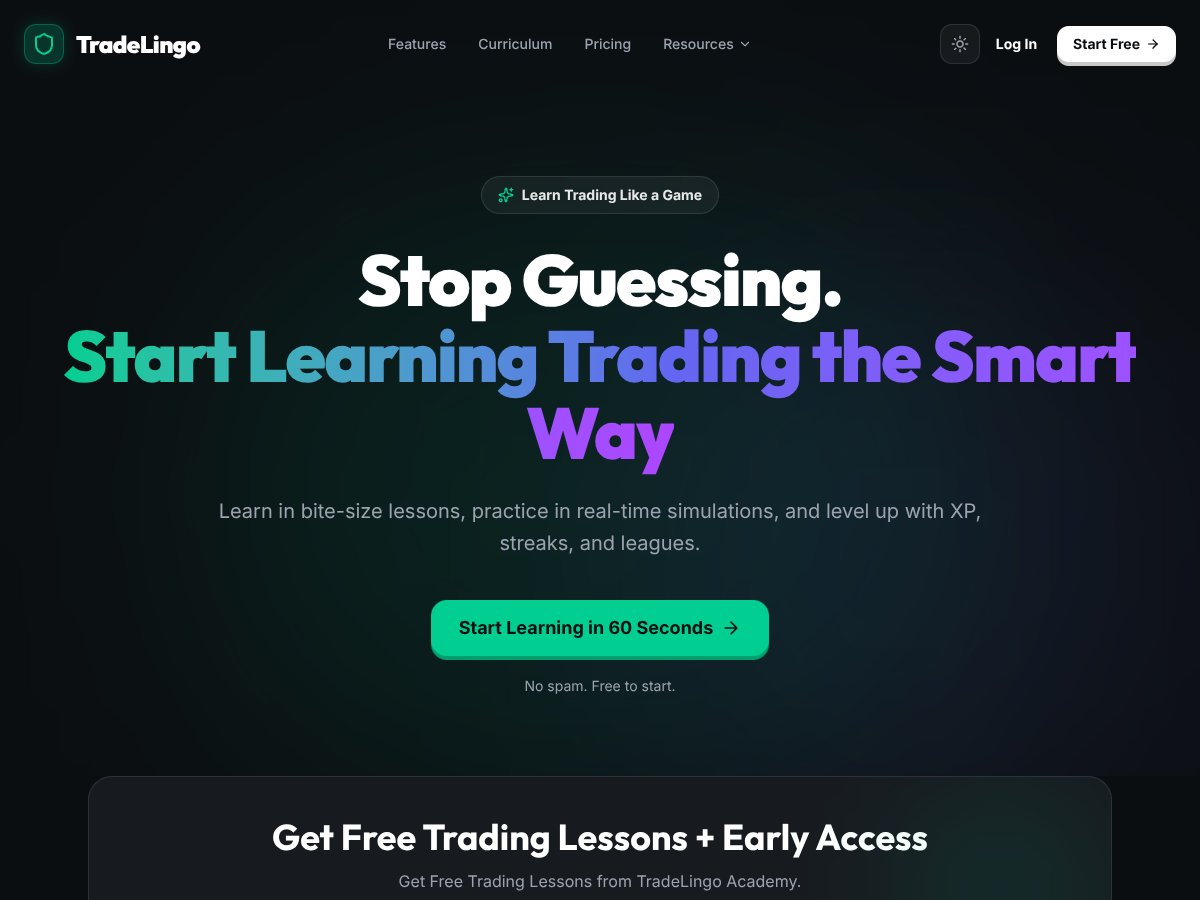
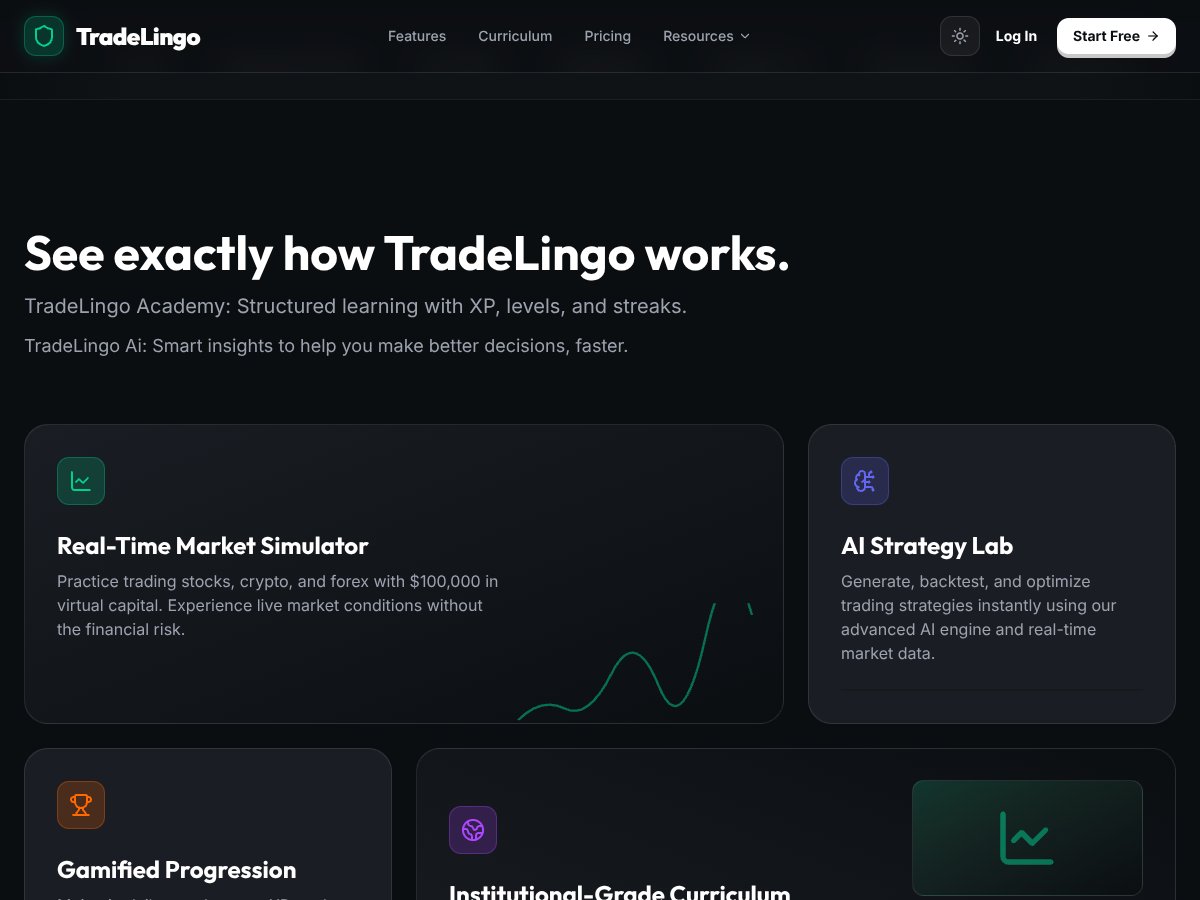
Here’s what the platform is supposed to do in plain English: TradeLingo Ai Academy teaches trading concepts for stocks, forex, and crypto using bite-sized lessons, then gives you a simulated trading environment to practice what you learned. Instead of only reading, you’re nudged to keep moving through XP, streaks, and “leagues” so you don’t fall off after a couple days.
Where it’s trying to help most is the usual retail-trader problem: confusing terminology, endless tutorials, and advice that doesn’t translate into actual execution. Trading is one of those skills where you can’t just “understand” it—you have to drill it. TradeLingo is aiming to bridge that gap with structured lessons, simulation practice, and AI-powered trade coaching/analysis.
One thing I need to call out early: the site doesn’t make it easy to verify who’s behind the product. I didn’t find clear founder bios or a detailed company/legal page in the places I checked, and that’s a real downside when you’re paying for anything trading-related. It’s not an automatic deal-breaker, but it does mean you should be a bit more cautious—especially if they’re claiming advanced “prop firm access” later on.
Also, I want to be really clear about expectations. It’s important to know what TradeLingo Ai Academy isn’t. In my experience using the platform, it’s not a live coaching service. I didn’t see any scheduled instructor sessions, and there’s no “jump on a call with a mentor” type of setup. It’s more self-paced learning plus simulations and AI feedback.
And while they talk up AI tools and strategy support, the site doesn’t do a great job explaining how “sophisticated” the AI is in a measurable way. Is it pattern recognition? Does it grade your entries? Does it critique your reasoning? It’s closer to “trade coaching analyses” than a full trading system you can blindly follow. If you’re expecting an all-in-one, expert-led trading platform, you’ll likely feel the gap.
TradeLingo Ai Academy Pricing: Is It Worth It?

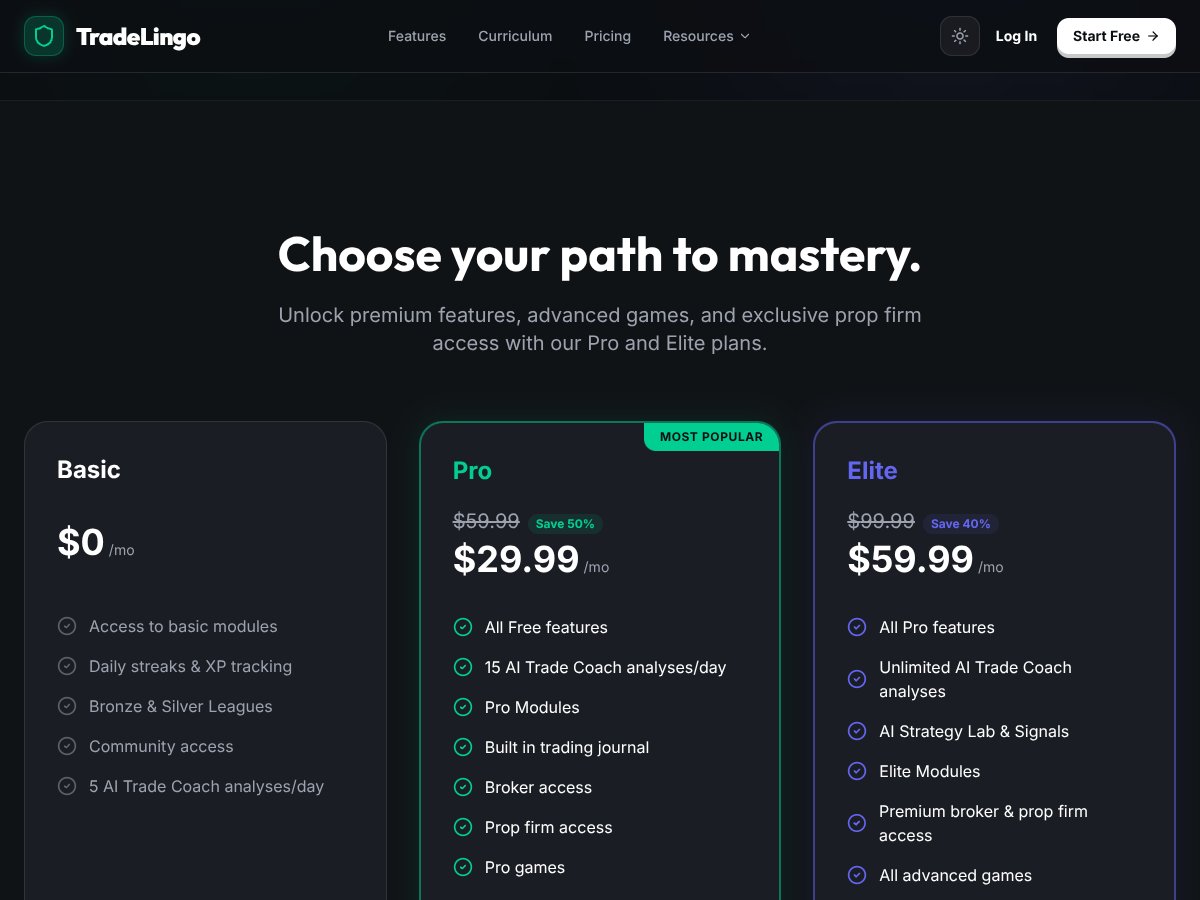
| Plan | Price | What You Get | My Take |
|---|---|---|---|
| Free | $0/month |
|
My take: This is a solid “try it and see” tier. You get the gamified structure and a taste of the AI feedback, but you’re obviously not getting the full curriculum or deeper tools. If you’re the type who needs to feel progress quickly, the streak/XP loop helps. |
| Pro | $29.99/month (discounted from $59.99) |
|
My take: For me, Pro is where the platform starts to feel “worth paying attention to.” The jump from 5 to 15 AI analyses/day is meaningful if you’re actively practicing and submitting setups. The added journal and “advanced games” are also the difference between casual clicking and actually building a routine. |
| Elite | $59.99/month (discounted from $99.99) |
|
My take: Elite looks like the “go all-in” tier, but it’s also the tier where you should be most skeptical until you confirm what “potential prop firm access” actually means on your account. If you don’t need extra simulations/content, it’s easy to overpay. |
Here’s what I noticed about the pricing in practice: it’s not just the monthly cost—it’s the AI analysis allowance and the module access that really changes your experience. The free tier is fine for learning the interface and getting your feet wet, but if you actually want feedback while you practice, the AI limits matter.
One thing I couldn’t confirm from the marketing copy alone (and I didn’t see clearly spelled out in the pricing section) is whether there are hard usage caps beyond the “analyses/day” number. That’s why I recommend checking the FAQ or support before you commit long-term—if you’re planning to run lots of simulations and submit multiple analyses per day, you’ll want to know how the limits behave (especially on weekends and across time zones).
Also: the plans are billed monthly based on what’s shown in the pricing table. If you’re hoping for a yearly discount, I’d hunt for that on the checkout flow or FAQ, because it’s not something I saw clearly laid out in the pricing summary itself.
The Good and The Bad
What I Liked
- Gamified momentum (streaks, XP, leagues): I’m not usually a “points and badges” person, but the streak mechanic actually makes it harder to procrastinate. If you open the dashboard and see you’re close to a streak milestone, you’re more likely to do a quick lesson than you would otherwise.
- Practice-first structure: The platform pushes you to learn a concept, then immediately try it in a simulation. That reduces the “I read it but didn’t apply it” problem.
- AI Trade Coach analyses (daily allowance): The fact that even the Free plan includes 5 analyses/day is a nice touch. On Pro, that jumps to 15/day, which is the difference between “light feedback” and “feedback while you’re actively practicing.”
- Clear, readable lesson formatting: The lessons are broken into small sections, so you don’t feel like you have to commit an hour just to get through one page.
- Community access: Even if it’s not a full mentorship setup, having a place to ask questions (or at least see what other learners are doing) helps keep you from feeling totally alone.
- Curriculum feels broad across asset types: They position it for stocks/forex/crypto, and the module flow doesn’t feel like it’s only one market. That’s helpful if you’re still deciding where you want to focus.
What Could Be Better
- Progress tracking isn’t explained deeply: I saw XP and streaks, but the platform doesn’t clearly explain how it measures “mastery.” Is it based on lesson completion, quiz performance, or simulation results? The UI pushes you forward, but the logic behind unlocking feels a bit opaque.
- No formal certification: If you’re looking for something you can show on a resume (a test score, a certificate, or an assessment report), I didn’t see that. That matters if you’re trying to prove competence, not just learn.
- Integration expectations vs reality: I didn’t see obvious broker integrations that let you connect your existing trading account. If you’re hoping for a “connect broker → trade directly” flow, this isn’t that. It’s built around simulation.
- Team transparency is limited: I couldn’t verify founders or company credentials from the site information I checked. That’s not a deal-breaker for everyone, but it does lower my confidence compared to more established education brands.
Who Is TradeLingo Ai Academy Actually For?

In my opinion, TradeLingo Ai Academy makes the most sense for beginner to intermediate learners who want structure and motivation. If you tend to lose interest after day 3, the streak/XP loop is a real advantage. It’s the kind of learning environment that nudges you to show up daily—even if it’s just for 10–20 minutes.
It’s also a good fit if you want instant feedback while you practice. Instead of waiting for a forum reply or guessing whether your entry logic is solid, you get AI-driven “Trade Coach” analyses (within the daily limits). That’s especially helpful when you’re learning forex terms and trading vocabulary and you don’t want to spend weeks reading without applying anything.
And if you’re thinking about prop trading, the platform mentions “prop firm access” on the Pro tier and “potential prop firm access” on Elite. I can’t confirm from the marketing alone exactly what firms and requirements you get, but the general idea is: Pro/Elite is for people who want more than basic terminology—they want scenario practice and deeper modules.
Who Should Look Elsewhere
If you’re a seasoned trader, you might feel like this is too “learning-focused.” There’s no sign that it replaces a full-blown trading platform with advanced charting, broker execution, or deep discretionary strategy development. You won’t get that “let me watch someone execute live and break down every decision” experience.
Also, if you’re specifically looking for direct broker integrations, TradeLingo doesn’t clearly position itself as that kind of tool. It’s built around simulation and self-paced modules, not connecting to your real account.
Finally, if your main goal is consistent profits ASAP, I’d be cautious. Trading education can help you avoid dumb mistakes and improve your process, but it won’t magically remove risk. You still need reps, discipline, and a realistic understanding of how markets behave.
If you want alternatives with more mentorship or live coaching, names like Warrior Trading and Bear Bull Traders tend to be better aligned with people who want guidance beyond self-study. (Just make sure you compare what you’re actually getting: coaching hours, assessments, and how they measure progress.)
How TradeLingo Ai Academy Stacks Up Against Alternatives
Forex School Online
- Learning style: Forex School Online leans more toward practical execution and often includes live coaching. It’s less about “learn the language” and more about learning how to trade with guidance.
- Cost: I’ve seen it priced around $497 for a full course depending on the current offer, which can be higher than TradeLingo’s monthly subscription approach.
- Pick it if: you want live instruction and a more interactive learning setup.
- Choose TradeLingo if: you want something more affordable and structured for building forex terminology + simulation practice.
BabyPips School of Pipsology
- Learning style: BabyPips is free and beginner-friendly, but it’s more general. You don’t get the same “gamified practice + AI feedback” loop.
- Cost: It’s free, which is hard to beat if you’re just trying to get the basics.
- Pick it if: you want broad, no-pressure forex education.
- Choose TradeLingo if: you prefer a more structured path and feedback while you practice.
Forex Mentor Pro
- Learning style: This type of platform usually focuses more on mentorship and real-world strategy application.
- Cost: It can run around $97/month or more depending on plan and promotions.
- Pick it if: you want ongoing guidance and accountability.
- Choose TradeLingo if: you want a self-paced foundation without stacking another large recurring bill.
Investopedia Academy
- Learning style: Investopedia covers a wide range of finance topics and tends to be more educational/academic than “trade coach feedback.”
- Cost: Prices vary widely—often in the $199–$499 range depending on the course.
- Pick it if: you want broader finance knowledge beyond just forex terminology.
- Choose TradeLingo if: you want a more focused, gamified approach to learning trading language and practicing in simulations.
Bottom Line: Should You Try TradeLingo Ai Academy ?
After testing the platform’s structure and experience, I’d rate TradeLingo Ai Academy around 7/10. It’s not trying to be everything at once, and that’s actually a positive. If your goal is to get a handle on forex (and trading terms in general) without getting overwhelmed, it does a decent job of keeping you moving.
The free tier is worth trying if you want to see whether the lessons + simulation + AI analyses fit your learning style. For me, the real value showed up on Pro, mainly because the AI analysis allowance increases from 5/day to 15/day—and that makes practice feel more interactive.
Would I recommend it to someone expecting advanced, institutional-level trading training or live mentorship? Not really. If you want deep technical analysis breakdowns, broker-connected execution, or formal certification, you’ll likely be happier elsewhere.
So yeah—if you’re new and you want an affordable way to learn trading language and build a routine, give it a shot. Just don’t treat it like a shortcut to profits. It’s a learning + practice platform, not a guaranteed edge.
Common Questions About TradeLingo Ai Academy
- Is TradeLingo Ai Academy worth the money? - If you’re a beginner who wants structured lessons and AI feedback, yes. The Pro tier is where the feedback loop gets more useful.
- Is there a free version? - Yes. The free tier includes basic modules, streaks/XP tracking, community access, and 5 AI Trade Coach analyses/day.
- How does it compare to BabyPips? - BabyPips is broader and free, but it’s less focused on gamified practice and AI feedback. TradeLingo is more structured around practice + daily momentum.
- Can I get a refund? - Refunds depend on their terms. I’d check the refund policy in your account/checkout terms before purchasing, since it isn’t something I’d assume without confirming.
- Is it suitable for advanced traders? - Probably not. It’s designed more for learning terminology and building practice habits than for advanced discretionary strategy development.
- Does it include live coaching? - No. Based on what’s presented, it’s primarily self-paced learning with AI analyses and simulations.
- How long does it take to complete? - It depends on how often you study and practice. If you’re consistent, you can grasp core forex terminology within a few weeks, but full comfort takes longer.
- Is it mobile-friendly? - Yes, it’s accessible on most devices, which makes it easier to do short practice sessions on the go.