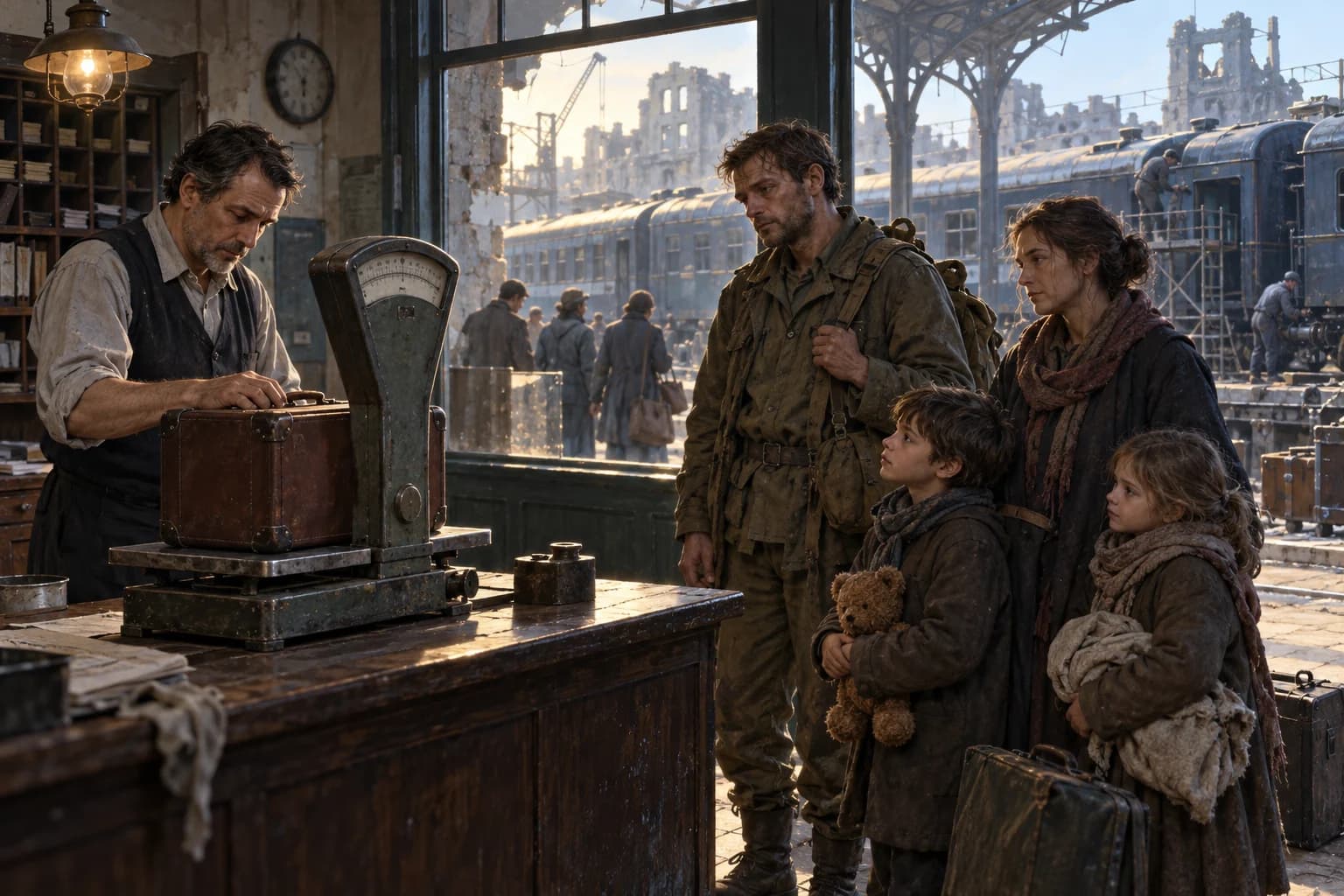
Table of Contents
Common narrator choices include first person (“I”), second person (“you”), third-person limited, omniscient and objective narration. Each gives readers a different view of the story. First and second person place someone inside the experience; limited third follows one character closely; omniscient narration can reveal several minds; objective narration stays with outward behavior. These labels combine two choices: who tells the story and how much the telling reveals. www-archiv.fdm.uni-hamburg.de
The easiest way to understand the difference is to watch the same scene change. Lina finds a blue envelope at a railway station. She recognizes the handwriting, while a porter knows the last train isn't coming. Who gets to tell us those things? Below, you'll read five versions of that encounter and see what each narrator makes possible.
Who tells the story, and whose experience do we follow?
The author creates the work, the narrator tells it, and the viewpoint character supplies the perceptions through which a passage is filtered. Separating these roles prevents a common mistake: assuming that whoever receives the most attention must also be the storyteller. Narratology distinguishes the telling voice from the selection of information, often discussed as focalization. (www-archiv.fdm.uni-hamburg.de)
Consider Nick Carraway in The Great Gatsby. Nick recounts his involvement with Gatsby and the Buchanans, so he is both narrator and participant. Yet Gatsby's pursuit of Daisy occupies the center of the story Nick assembles. Read Nick as an observer with a stake in events, not as a recording device that simply delivers Gatsby's life. (gutenberg.org)
Try assigning those roles in your own scene. You're the author creating the railway station. Lina might tell us what happened using “I,” or a third-person narrator might follow her as “she.” The porter can appear in either version. We only begin following his viewpoint when the writing lets us experience the scene through him.
Add a fourth entry to your notes: when the telling happens. Lina recounting the encounter years afterward may know who delivered the envelope. Lina experiencing the moment does not. Narrative tense and the time of telling are related choices, but past tense alone does not explain how much hindsight a narrator will use. (www-archiv.fdm.uni-hamburg.de)
You might give yourself a rule like this: “Older Lina is telling the story, but she usually describes what she believed that night.” Then signal the moments when her later knowledge enters. This also helps with suspense. If older Lina already knows who left the envelope, give her a believable reason for waiting to tell us.
Types of narrators at a glance
Use the table to separate grammatical person from information access. The observer row is a variation of first person, not a sixth grammatical category; the five demonstrations below combine person and access into practical drafting choices. These distinctions follow the separation of narrator, perspective, and knowledge used in narrative scholarship. (www-archiv.fdm.uni-hamburg.de)
| Narrator type | Common grammar | Information access | Useful constraint to test |
|---|---|---|---|
| First-person participant | I, me, my; sometimes we | The character's experience, knowledge, memories, and claims | How did the teller learn each reported fact? |
| First-person observer | I, me, my | A witness's account of someone else's central story | Why is this witness present, involved, and worth listening to? |
| Second person | You, your | The experience assigned to the addressed character or figure | Who is “you,” and who is telling that person's story? |
| Third-person limited | He, she, they, names | A selected character's experience, usually one at a time | Could Lina know this, or have you borrowed the porter's mind? |
| Third-person omniscient | He, she, they, names | Information extending beyond any single character | What purpose organizes the narrator's disclosures? |
| Objective or camera-like narrator | Usually third person | External action and speech rather than private thought | What behavior lets readers infer the missing interior explanation? |
The information-access distinctions are summarized in The Living Handbook of Narratology's discussion of focalization. Treat the questions in the last column as revision prompts, not a ranking of literary quality. (www-archiv.fdm.uni-hamburg.de)

One original scene told five ways
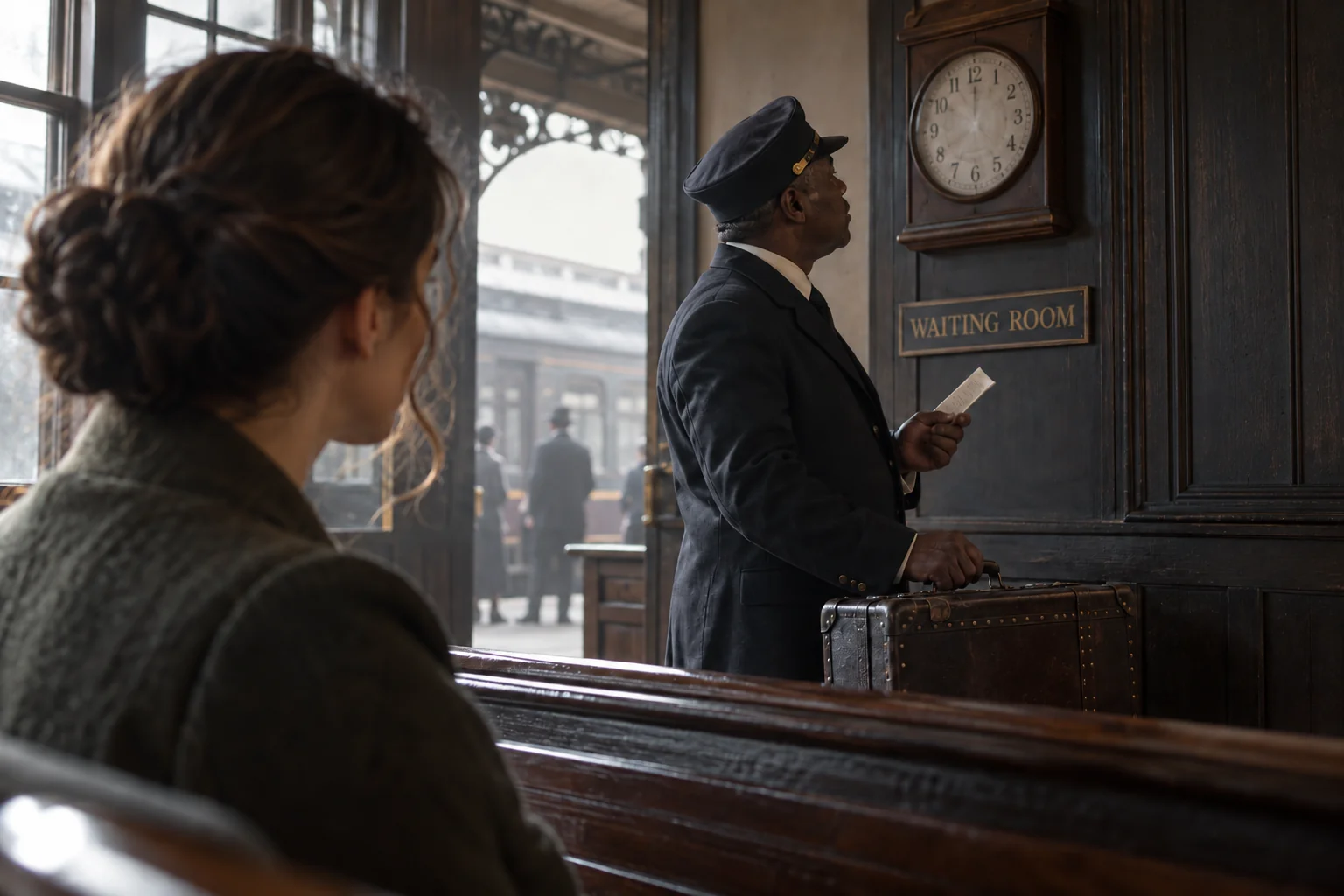
Here's what actually happened in our scene. Lina arrives at platform four. A blue envelope lies under a bench, and the porter closes the ticket office. The last train has been canceled. Lina recognizes handwriting associated with Tomas; the porter knows about the cancellation. Neither knows who put the envelope there. We'll keep those facts the same in all five versions.
Watch what each version lets you discover. Lina can notice the quiet tracks and the departure board without knowing the train has been canceled. The porter knows more about the railway, but less about the letter. Choosing a narrator decides which questions the reader starts asking and which answers have to wait.
1. First-person participant
I reached platform four as the porter turned the key in the ticket-office door. A blue envelope waited under the bench, dry despite the rain blowing across the tracks. My name was written on it in Tomas's narrow capitals. I left it where it was. The departure board still promised 11:10, but the rails had gone dark.
Lina tells us what she experiences. She recognizes the handwriting, hesitates over the envelope and notices that the empty tracks don't match the departure board. We're close to her thoughts, but we can't hear the porter's. That restriction is useful: we share her uncertainty instead of receiving an explanation from someone who knows more.
Notice the word “waited.” It makes the envelope feel as though it has a purpose, which tells us something about Lina's reaction. It doesn't prove that anyone set a trap. The same goes for her recognition of Tomas's handwriting. She's confident, but a later discovery could show that someone imitated it without contradicting what she believed here.
Revision test: underline every assertion about another person's intentions. If you add “The porter wanted me gone,” decide whether Lina is inferring, remembering, or reporting something he later admitted. For an immediate inference, try: “He pocketed the key without looking at me. Apparently, I was supposed to leave.” The attitude remains hers, while the evidence stays visible.
You could also give the porter the first-person voice. He would see Lina's hand hovering over the envelope, but wouldn't know whose handwriting she recognized unless someone told him. Give him a reason to care about her arrival. A witness becomes an interesting narrator when watching someone else's story creates a problem of his own.
2. Second person
You reach platform four while the porter locks the ticket office. The blue envelope under the bench has stayed dry. Your name crosses the front in Tomas's narrow capitals. Do not pick it up yet. Look at the departure board, then at the dark rails. The board is wrong.
Here, “you” occupies Lina's place in the scene. Second-person narration tells the experience of an addressed figure; an occasional “you” in dialogue or a brief address to the reader does not, by itself, change an otherwise first- or third-person story into second person. (www-archiv.fdm.uni-hamburg.de)
“Do not pick it up yet” raises an intriguing question: who is speaking to Lina? Perhaps she is talking herself through the memory. Perhaps an older Lina is addressing her younger self. Or another voice is guiding her. Choose which relationship you want before continuing, because it changes what the voice can know and why Lina might listen.
Notice that “The board is wrong” is more definite than the first-person version's final image. It could be Lina's conclusion or knowledge supplied by the addressing voice. Decide which. Otherwise, second person may accidentally become a shortcut for introducing facts whose source has never been established.
Revision test: write a quieter continuation in the same voice—“you” buying tea, waiting for a kettle, or reading a receipt. Check whether the relationship between teller and addressee remains meaningful without urgent commands. Keep Lina's fictional history attached to Lina; do not switch casually between her “you” and the actual reader's circumstances.
3. Third-person limited
Lina reached platform four as the porter locked the ticket office. A blue envelope lay under the bench, untouched by the rain. Tomas had written her name in the cramped capitals he used on grocery lists. She should open it. Instead, she watched the departure board hold at 11:10 and listened to the silence beyond the signal box.
This version calls Lina “she” while staying close to her experience. The handwriting reminds her of Tomas's grocery lists, and we feel her urge to open the envelope. We can watch the porter through her eyes, but we don't suddenly learn what he is thinking. The result can feel intimate without using “I.”
“She should open it” brings Lina's thought into the narration without a separate thought tag. This blending of third-person narration with a character's idiom or judgments is associated with free indirect discourse. The practical advantage here is a close voice without repeatedly writing “she thought” or “she felt.” (www-archiv.fdm.uni-hamburg.de)
Lina's confidence about Tomas's handwriting matters here too. Close third person can borrow a character's judgments instead of certifying every one as a fact. If the letter later turns out to be forged, let readers understand that relationship before the reveal. You can trust Lina's voice without making the narrator responsible for proving her every assumption.
Revision test: try adding “The porter hoped she would leave.” That sentence breaks this version's chosen access rule. Replace it with an action Lina can register, such as his lowering the blind before she can ask a question. Alternatively, mark her interpretation as uncertain or give the porter a properly established viewpoint section.
4. Third-person omniscient
Lina reached platform four three minutes after the control room canceled the last train. She did not know about the cancellation. The porter did, and that was why he locked the ticket office without calling to her. Neither of them had placed the blue envelope beneath the bench. By morning, each would be certain the other had.
The omniscient version knows why the train isn't coming, why the porter stays quiet and how both characters will misunderstand the envelope. It can also look ahead. That wider knowledge gives the scene a different shape: we watch two people fail to understand each other while knowing something neither of them can see in full.
For a literary comparison, read Chapter 29 of George Eliot's Middlemarch at Project Gutenberg. The narrator explicitly redirects attention from Dorothea toward Casaubon and explores his expectations about marriage. That passage offers a useful example of a narrator controlling a change of perspective rather than merely inserting another character's thought without preparation. (gutenberg.org)
Revealing the cancellation removes one question and opens others. Now we wonder why the porter won't tell Lina, who left the envelope and how the misunderstanding will grow. The ending becomes ironic because we know their future accusations will be wrong. Omniscience can create suspense through consequences even when it gives away facts a limited narrator would hide.
Revision test: give each disclosure a job. The cancellation establishes the shared predicament; the porter's knowledge explains his conduct; the glance ahead sets up conflict. Remove an added memory or historical aside if it distracts from that sequence. An omniscient narrator's broad access is permission to select, not an obligation to explain everything at once.
5. Objective or camera-like narration
Lina stepped onto platform four. The porter pulled down the ticket-office blind and turned a key. Under the bench, a blue envelope showed her name. Lina crouched, held her hand above it, then stood. The departure board read 11:10. No headlamp appeared beyond the signal box.
This version withholds direct access to both minds. External focalization restricts the telling to less than the characters themselves know; “camera-like” is a practical comparison for the resulting emphasis on observable behavior. It does not mean that the prose is unselected or free of interpretation. (www-archiv.fdm.uni-hamburg.de)
Here, Lina's hovering hand has to carry the hesitation that the other versions explain from inside her mind. Is she frightened, guilty or simply surprised? We have something to interpret, but no direct answer. Earlier scenes can help us read that gesture. On its own, it leaves several possibilities open, which may be exactly the uncertainty you want.
The missing headlamp also leaves us uncertain. It doesn't prove the train was canceled. If readers need that fact now, let them hear an announcement, see a notice or listen to the porter say it aloud. Writing from the outside asks you to find visible or audible ways for important information to reach the scene.
Revision test: inspect verbs such as “realized,” “remembered,” and “wanted.” Remove them when they supply private states that this external method excludes. Then replace the missing explanation with consequential action, not miscellaneous fidgeting. Lina leaving the envelope behind just before the porter sweeps the platform creates a risk; three extra descriptions of her fingers may not.
What makes a narrator unreliable?
A narrator becomes unreliable when the text gives readers grounds to question the account's reporting, interpretation, or judgments. Unreliability is not another grammatical person, and it need not mean deliberate lying. A teller may describe an event accurately while misunderstanding its significance or excusing conduct the story invites readers to condemn. (www-archiv.fdm.uni-hamburg.de)
In Edgar Allan Poe's The Tell-Tale Heart in Project Gutenberg's second Poe volume, the narrator presents careful planning as evidence of sound judgment while describing the killing of an old man. The opening also makes extravagant claims about hearing. These features invite scrutiny of the narrator's self-assessment; the account supplies reasons to question its own assurances. (gutenberg.org)
Being wrong doesn't automatically make Lina an unreliable narrator. She might honestly think the canceled train is merely late. But if her explanation for visiting the station keeps changing, readers begin to question her account itself. That is a different kind of suspense: they're deciding whether to trust the person telling them the story.
Give readers clues they can put together, rather than saving every sign of unreliability for the final reveal:
- Claim: what does the narrator ask readers to accept?
- Counterevidence: which action, object, statement, or inconsistency complicates it?
- Timing: when can an attentive reader first notice the gap?
- Recognition: does the narrator eventually acknowledge the problem?
- Remaining uncertainty: what cannot be resolved even after the explanation?
Suppose Lina insists that she never opened the envelope, then later repeats a sentence from inside it. Preserve that contradiction. Before treating it as proof of a lie, consider alternative routes: did Tomas read the letter to her earlier, or did someone else show her a copy? Establish or eliminate those possibilities through the story rather than announcing the answer without evidence.
Keep the underlying details consistent. If you describe a sealed envelope early on, don't quietly turn it into an open one just to make the twist work. Readers need something solid to reason from. A satisfying reveal makes them reconsider what an earlier detail meant, and often sends them back to read the scene again.

Multiple narrators and alternating viewpoints
Use multiple narrators when different tellers present the story; use alternating viewpoints when the narration shifts its focal character. Those arrangements can overlap, but they are not identical. A third-person narrative can move between Lina-centered and porter-centered chapters without giving each character a separate storytelling voice. Distinguishing narrator from focalization keeps this difference clear. (www-archiv.fdm.uni-hamburg.de)
A small planning table will help you keep track. Use it whether Lina and the porter tell their own first-person chapters or the book follows them in separate third-person sections.
| Narrator or viewpoint character | Can know | Cannot know yet | Reason to own a section |
|---|---|---|---|
| Lina | The handwriting and her history with Tomas | The cancellation and its cause | She must decide whether to open the envelope |
| The porter | The cancellation notice and station routine | The letter's contents and the handwriting's significance | He saw someone leave the platform earlier, without seeing who placed the envelope |
As you draft, note when each character learns something. Once Lina discovers the cancellation in chapter two, she should act on that knowledge in later scenes. If the porter watches her take the letter, he can't next behave as though it is still under the bench. These small continuity checks keep alternating viewpoints believable.
Make each new viewpoint move things forward. After Lina leaves, the porter might have to decide whether to report the envelope or keep quiet. You can repeat an event if his version reveals an important omission, but give the return a purpose. A second description of the same blue paper won't necessarily earn a second scene.
How to choose a narrator for a story
Choose the narrator who makes readers want to know what happens next. Then test that choice beyond your opening paragraph. Can the voice carry the ordinary scenes as well as the dramatic ones? Can it reveal the information the story needs without awkward explanations? The following four checks will help you decide before committing to a whole manuscript.
Decide what readers should know
List what the reader must know, what should remain uncertain, and how each fact can reach the page. For a conventionally limited narrator, a private meeting requires a credible reporting channel: attendance, overheard speech, a message, another person's account, or an explicitly marked reconstruction.
Apply that choice to the platform. Staying with Lina preserves uncertainty about the train but requires a later discovery through speech, a notice, or other evidence. Moving to the porter can disclose the cancellation immediately while leaving the envelope's personal meaning unexplained. Omniscience can reveal both and direct attention toward the unknown delivery.
Write the main question beside the scene. “Will Lina open it?” needs a different emphasis from “Why is the porter keeping quiet?” Choose the viewpoint that makes your question interesting. If you keep arranging unlikely eavesdropping so the narrator can learn things, another character may be better placed to carry that part of the story.
Choose the distance
Choose how closely the prose should follow the character's moment-to-moment experience. Compare these two versions:
Close: Lina counted the letters in her name because touching the envelope felt worse.
Distant: Lina remained beside the bench until the station lights shut off.
Both refer to Lina in third person, but only the first explains the private reason for her delay. The second compresses time and leaves that reason unstated. In this comparison, changing distance does more than replacing a pronoun could.
Try a deliberate movement within the scene: begin with Lina's hand above the envelope, move inward to her association with Tomas, then return to the platform when the porter speaks. Let attention motivate the transition. If you enter her mind only to reveal a plot fact and immediately withdraw, examine whether the disclosure belongs there.
Test the voice under pressure
Try writing the same important moment with two possible narrators. Keep the arrival, envelope, closing office and canceled train unchanged. Then compare how the reading experience changes: what becomes intimate, what becomes uncertain and what suddenly needs explaining? This teaches you more than swapping “I” for “she” in an otherwise identical paragraph.
Then compare the vocabulary. Lina might notice cramped capitals familiar from grocery lists. The porter might classify the envelope as an item that must be logged or rubbish delaying his departure. Give each a pattern of attention rooted in their responsibilities and history rather than a distinguishing catchphrase.
Then try a quieter scene in each voice: a routine conversation, a walk home or an uneventful wait. A strong opening voice isn't always the one you want for 80,000 words. Choose the narrator whose attention, language and limits keep giving you useful material after the immediate crisis has passed.
Make viewpoint changes easy to follow
Specify where a viewpoint change may occur and how the new perspective will be established. For alternating limited viewpoints, a workable rule is “chapter or section breaks only, with the focal character identified immediately.” Treat this as your manuscript's chosen convention, not a prohibition on other literary methods.
Open the porter's section with his action, location, and changed problem. Lina has gone; he holds the cancellation notice; the envelope remains beneath the bench. These details both identify the new viewpoint and move the event forward.
For an omniscient version, record a different principle: shifts should follow the narrator's comparison, explanation, or unfolding irony. During revision, ask why the telling moves at that exact sentence. “The next fact was convenient” is a reason to reconsider the transition; “the reader now needs to see the cost of Lina's mistaken assumption” gives it a dramatic purpose.
Narrator revision checklist
Check one complete scene at sentence level, then follow the same questions across chapter boundaries:
- Identity: can you distinguish the real author, telling voice, and focal character?
- Time: is later knowledge marked when the narrator uses hindsight?
- Access: can you identify how the narration obtains each important fact?
- Inference: are a character's conclusions distinguishable from independently established events?
- Interior thought: does another character's private knowledge appear only where your chosen method permits it?
- Distance: do close passages and compressed summaries serve the scene?
- Reliability: does the text provide evidence for doubting the account rather than relying on a late announcement?
- Multiple perspectives: does each section add access, consequence, or a necessary correction?
- Transitions: can readers tell whose experience now governs the passage?
- Consistency: are changes in pronouns, tense, and address deliberate?
Record the resulting decisions in your book brief: narrator, tense, time of telling, knowledge limits, and transition rules. For an Automateed project, Write a strong book brief explains where to supply voice and point-of-view instructions; keep a fuller narrator ledger alongside the manuscript for revision. (automateed.com)
When the terminology starts to feel abstract, return to the envelope. Who recognizes the writing? Who knows about the train? Who can tell us, and when? Those small decisions change the mystery, the emotion and what happens next. That's what choosing a narrator does for your story; the pronouns are only part of it.