Table of Contents
If you’ve ever tried to research an investment question at 11 p.m. and ended up bouncing between half a dozen tabs, you already know the problem. It’s not that information doesn’t exist—it’s that it’s scattered, and figuring out what actually matters can take way too long.
That’s where WarrenAI comes in. I tested it like I would any other tool: I asked a mix of beginner-friendly questions and “okay, but what does this mean for me?” questions, then watched how the answers were structured and how easy it was to keep the conversation going.
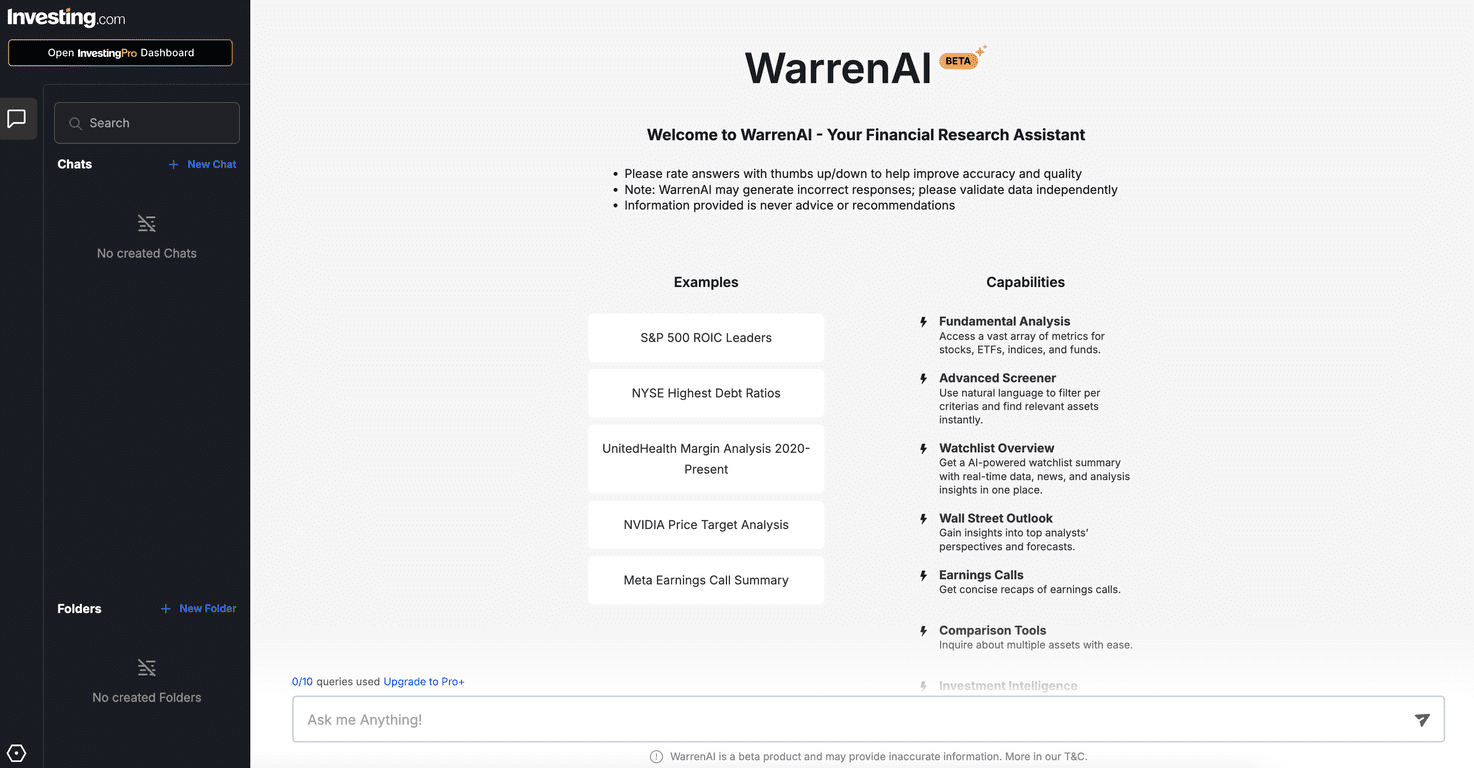
WarrenAI is basically an AI chat interface built for investment questions. It’s designed to help you get explanations, context, and next-step ideas without having to dig through articles first. And if you’re new, that matters—because the investing world has a language of its own (terms like yield, drawdown, beta, duration… the list goes on). The interface is clean and pretty approachable, so you don’t feel like you need a finance degree just to ask something.
One thing I genuinely liked: new users get a trial offer with 10 free questions. I used those right away to test whether the tool was actually useful or just “generic finance talk.” More on that below.
WarrenAI Review: How It Handles Real Investment Questions
When I first opened WarrenAI, I didn’t try to “game” it with super technical prompts. I started with everyday questions like: “What does X mean in plain English?” and “If interest rates go up, what usually happens to bonds?” That’s where tools like this either earn your trust—or they don’t.
What I noticed is that the chat flow feels natural. You can ask follow-ups without having to re-explain everything from scratch. The responses are written in a way that’s easy to skim, and the overall vibe is more “helpful explainer” than “blank template.”
Also, the trial is a big deal. Ten free questions might not sound like much, but for testing usefulness it’s enough time to see whether the answers match your level and whether you feel like you can actually use the tool in a real research session.
That said, I wouldn’t treat it like a replacement for doing your own homework. It’s best for clarifying concepts, comparing ideas at a high level, and helping you form better questions—then you go verify the details elsewhere (company filings, reputable market sources, etc.).
Key Features I Actually Look For in an Investment AI
- AI Chat Interface for investment queries
You can ask questions directly and keep the conversation going. In my experience, that’s more useful than static “FAQ” pages because you can tailor the follow-up to what you didn’t understand. - Free trial with 10 free questions for new users
This is the part that makes it low-pressure. I used my trial to test a few different topics (terms, general market mechanics, and risk basics) to see if it was consistently helpful. - User-friendly design for easy navigation
The interface doesn’t feel cluttered. If you’re not super comfortable with tech, you won’t be fighting the UI just to ask a question.
Pros and Cons (From My Hands-On Testing)
Pros
- Trial lets you test without committing
Ten free questions is enough to figure out whether the answers are actually readable and relevant to you. - Responsive AI support
The tool feels quick to respond, and it’s generally easy to nudge it toward what you’re trying to understand. - Simple login flow
It’s not complicated. Just be aware you’ll need an account to use it.
Cons
- Limited transparency on what you’ll get
I wanted clearer details about the full capability set—like what kinds of questions work best and what formats or depth to expect—before jumping in. - Login required
If you’re the kind of person who just wants to test something quickly, the signup step can be a minor annoyance.
Pricing Plans: What’s Known (and What Isn’t)
Here’s what I can say confidently: new users get 10 free questions right after signing up. Beyond that, the post doesn’t spell out a full breakdown of subscription tiers or exact pricing. In practice, that means you may need to check during registration or after you create an account to see what plans are available.
If you’re deciding whether to pay, I’d recommend using the trial to evaluate three things:
- Answer quality — Do you get clear explanations, or do you feel like you’re reading fluff?
- Follow-up usefulness — Can you ask “why” and “what if” and still get helpful responses?
- Depth for your level — Does it match your knowledge, or does it jump too fast into jargon?
Wrap-up: Should You Try WarrenAI?
For me, WarrenAI feels like a solid “first stop” tool when you want to understand investment topics faster and ask better questions. The chat format makes it easy to keep digging, and the trial is genuinely helpful for testing whether it fits your style.
Just don’t expect it to replace research. If you use it to clarify concepts and plan what to look up next, it can save you time. If you expect guaranteed accuracy or personalized financial advice, you’ll be disappointed.
If you’re curious, start with the trial—ask a few questions you already know a bit about, then see if the explanations match what you’d expect from reputable sources.
Promote WarrenAI