Table of Contents
Ever wondered about what does third person limited mean when you’re writing or picking up a new book? This term pops up a lot in discussions about books and writing, and for a good reason. It’s all about how the story is told and who’s telling it.
This way of storytelling lets us get close to a character, really close, but without getting inside everyone’s head. It’s like being given a private tour of the story through one person’s eyes. You get to know their thoughts and feelings, but you’re not bouncing around inside every character’s mind.
Understanding third person limited is key for writers and readers alike. It shapes how we connect with the story and its characters. So, let’s break it down and make it super clear what this is all about.
What Does Third Person Limited Mean?
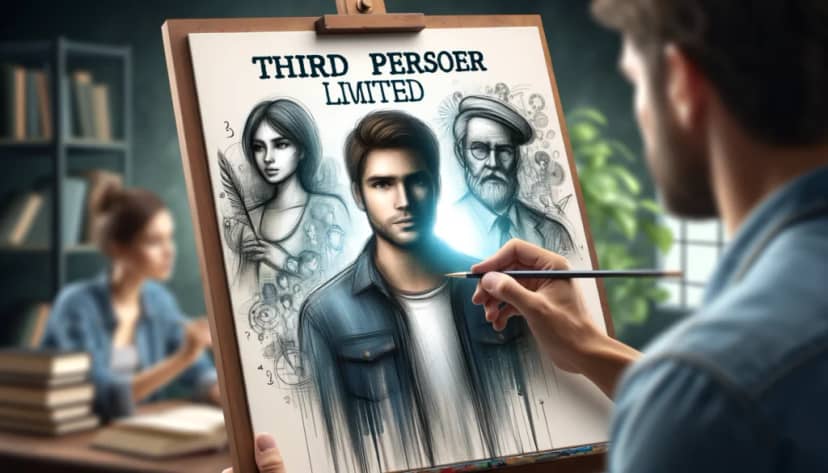
Third person limited is a way of telling a story. Imagine you’re watching a movie over a character’s shoulder. You see what they see and know what they think, but you don’t get inside anyone else’s head.
It’s different from first person, where the story is told with “I” and “me,” making you feel like you’re directly hearing from the character themselves.
It’s also not the same as third person omniscient. That’s when the narrator knows everything about everyone. They can tell you what every character is thinking and feeling, kind of like having a bird’s-eye view of the whole story.
So, third person limited sticks with one character at a time, giving readers a deep dive into their experiences without sharing the thoughts of every character in the story.
It’s like having a spotlight on one person in a crowded room, showing us the story from their angle.
Characteristics of Third Person Limited Narration
Third person limited narration has some special features that set it apart.
First up, it’s all about staying with one character. While the story is told by someone on the outside, we really get to zoom in on what one particular character is thinking, feeling, and experiencing.
It’s like having a secret window into their world, but we’re still standing outside looking in.
This style lets readers get super close to the character, almost as if we’re walking in their shoes. But, unlike first person where the character is the one telling the story, here, we have an invisible storyteller doing the job.
This narrator knows a lot about our main character but doesn’t spill the beans on what’s happening in the minds of everyone else in the story.
Another cool thing about third person limited is how it plays with what we know and what we don’t. Since we’re only privy to one character’s thoughts and feelings, there’s a lot of mystery about what other characters are up to or how they’re reacting deep down.
It creates this intriguing mix of intimacy and distance, making the story’s unfolding a bit of a puzzle we piece together alongside our main character.
Comparison with Other Types of Narratives
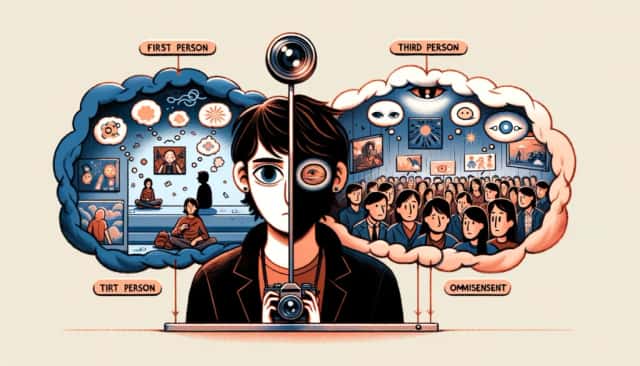
When we’re talking about the ways stories can be told, third person limited, omniscient, and first person perspectives each bring something unique to the table.
Let’s break it down to see how they stack up against each other.
- First Person Perspective dives deep into the “I” and “me” of storytelling. You’re right inside the narrator’s head, seeing the world through their eyes. This can make everything feel super personal and immediate. You get a direct line to the narrator’s thoughts and feelings, which is great for building a close connection with them. The downside of 1st person perspective? You’re limited to what the narrator knows and sees, which can sometimes leave you in the dark about other parts of the story.
- Third Person Omniscient is like having a bird’s-eye view of everything. The narrator knows it all: every character’s thoughts, the past, the future, and all the secrets. This can make for a rich and layered story since you’re not tied down to one perspective. However, it can also feel a bit distant. With so much information in 3rd person omniscient narration, it’s harder to get as attached to one character, and sometimes the sheer amount of detail can be overwhelming.
- Third Person Limited strikes a balance between the two. You’re still outside the character looking in, but you’re following one character closely. It combines the broader view of third person with the intimate feel of first person. You get to know one character deeply without being trapped inside their head. It’s great for focusing on character development and keeping some mystery in the plot since you don’t know everything about everyone. The limitation? Exactly that: you only get one viewpoint, which means parts of the story or motivations of other characters might not be as fleshed out.
Third person limited can be a powerful tool when you want to dive deep into one character’s journey while keeping the flexibility to step back and see how they fit into a larger story. It offers a mix of intimacy and perspective that can make your storytelling rich and engaging.
The Reader’s Experience
Third person limited has a unique way of shaping the reader’s journey through a story. By focusing closely on one character at a time, it creates a special kind of intimacy.
You’re not inside the character’s head like in first person, but you’re close enough to hear their thoughts and feel their feelings.
This setup invites readers into a private corner of the character’s world, making the emotional ups and downs of their journey more impactful.
However, this perspective also means readers are limited to what the character knows, which can be a powerful tool for building suspense. Imagine following a character who’s unraveling a mystery but only has pieces of the puzzle.
The readers are right there with them, trying to piece it all together, but they’re also in the dark about the full picture. This limited knowledge keeps readers on their toes, making every revelation or twist much more surprising.
Moreover, this narrative style can deepen engagement with the story. Since readers spend so much time with one character, they’re likely to develop a strong attachment to them.
They’ll cheer for their successes and feel their heartaches, which makes the story more memorable and engaging. It’s this blend of closeness and mystery that can make third person limited narratives so compelling and satisfying.
Crafting a Third Person Limited Narrative
Crafting a story in third person limited requires a bit of finesse. Here are some tips to help you navigate this narrative style effectively:
- Choose Your Focal Character: The heart of third person limited is the character through whose eyes the story is told. Choose someone who’s central to the action and has a compelling arc. This doesn’t always mean your protagonist. Sometimes, a close secondary character can offer an intriguing perspective. Think about whose experience will give your story the most depth and interest.
- Be Consistent: Once you’ve chosen your focal character, stick with their perspective. Jumping around can confuse readers. If you need to explore other viewpoints, consider using separate chapters or sections, clearly marked, to maintain clarity. Consistency in perspective helps build trust and intimacy between your character and the reader.
- Balance Internal and External Narration: Third person limited excels in balancing internal thoughts and feelings with external action. Use this to your advantage. Let readers inside your character’s head, but don’t forget to pull back and describe the broader scene. This dance between internal and external keeps your narrative vibrant and engaging.
- Develop Character Depth: Use your narrative focus to develop a rich, multi-dimensional character. Since you’re limited to one perspective, dive deep. Explore their motivations, fears, and dreams. This doesn’t mean you should spill every secret right away; unfold your character’s depth gradually to keep readers intrigued.
- Handle Limited Knowledge: Play with the limitations of your character’s knowledge to create tension and intrigue. Use what they don’t know to fuel the story’s conflicts and mysteries. This can be a powerful way to propel your narrative forward, drawing readers along with the promise of answers.
- Craft a Distinct Voice: Even though it’s in third person, your narrative should still carry the unique voice of your focal character. Their personality, background, and personal growth should color the narration, giving your story a distinctive flavor that sets it apart.
By keeping these tips in mind, you can effectively craft a third person limited narrative that’s compelling, consistent, and richly detailed, offering readers a deeply immersive experience.
Use AI Automateed
If you happen to have a lot of ideas and not enough time on your hands, or if you feel like you are not up for the task, there is AI Automateed – a tool that writes whole books for you.
With AI Automateed, all you need to to is enter the title of your book, define your target audience, and enter tone of voice or writing style. In this case, that would be third person limited.
Then, the tool will create the outline for you, and after you give it a green light, the tool will proceed writing the whole book according to your instructions.
With AI Automateed, you can have a whole book, 100% original and completely yours, with table of contents, images, cover, and all that you need to publish it, within literally minutes.
Here is a demonstration video for you to see for yourself how it works:
And what’s even better, you can try the tool completely free of charge!
Besides all this, the tool has additional tasks to come up with your niche, subniche, title ideas, create scripts for YouTube, create social media post descriptions to promote your work, etc.
Examples in Literature

Here are a few standout examples of third person limited perspective narration from well-known literature:
- “Harry Potter” series by J.K. Rowling: Rowling uses third person limited to keep us close to Harry. We experience the wizarding world as he discovers it, feeling his astonishment, fear, and joy. This perspective lets readers grow alongside Harry, experiencing the magical and often dangerous world through his eyes, while still allowing Rowling to keep certain plot elements a surprise.
- “The Hunger Games” by Suzanne Collins: Collins places us right alongside Katniss Everdeen, providing insight into her thoughts and feelings while she navigates the treacherous games. This limited viewpoint intensifies the suspense and emotional impact of the story, as readers only know as much as Katniss does, making every twist and turn more visceral.
- “Pride and Prejudice” by Jane Austen: Austen uses third person limited to offer intimate insights into Elizabeth Bennet’s mind, particularly her prejudices and misjudgments. This perspective is crucial for the novel’s themes of misunderstanding and social critique, allowing readers to see Elizabeth’s growth and self-awareness develop over the course of the story.
- “The Great Gatsby” by F. Scott Fitzgerald: While narrated by Nick Carraway, the novel closely follows Jay Gatsby, offering a unique twist on third person limited. Through Nick’s observations, we get a limited view into Gatsby’s world, desires, and ultimately, his downfall, illustrating the power and limitations of perception.
- “Game of Thrones” by George R.R. Martin: Martin rotates through a cast of characters, dedicating chapters to individual points of view in a third person limited style. This approach allows for a richly textured narrative, giving readers insight into the complex motives and inner workings of a vast array of characters while keeping the story’s full scope partially obscured.
Conclusion
So, we’ve been chatting about what does third person limited mean, and it’s pretty clear it’s a cool way to tell a story. It lets us peek into one character’s life really closely without stepping into their shoes completely. This gives stories a neat blend of being in the action while still having that storyteller vibe.
This way of writing can make books super engaging because it feels like you’re getting the inside scoop on a character’s life, but there’s still plenty left to the imagination. It’s like being a detective in a mystery, picking up clues as you go along.
FAQ
What is an example of 3rd person limited?
An example of 3rd person limited is in “The Catcher in the Rye,” where we closely follow Holden’s experiences and thoughts, but it’s all told through an outside narrator. We get a deep look into Holden’s world without hearing the story directly from him.
What is third-person limited vs omniscient?
Third-person limited sticks with one character’s perspective, letting readers get close to their thoughts and experiences. Third-person omniscient, on the other hand, is like an all-knowing narrator who can tell you everything about everyone in the story.
What does third-person limited sound like?
Third-person limited sounds like someone telling you a story about someone else, but they only let you in on one character’s thoughts and feelings. You’re getting the story from the outside but with special access to one character’s mind.
Can you use I in 3rd person limited?
No, “I” isn’t used in 3rd person limited since the story isn’t being told by the character themselves. Instead, it uses “he” or “she” to talk about the character’s actions and experiences from an outsider’s viewpoint.
Is Harry Potter third-person limited?
Yes, the “Harry Potter” series is mostly told in third-person limited, focusing on Harry’s perspective. We see the wizarding world and its adventures through Harry’s eyes, getting to know his thoughts and feelings along the way.
Why use third-person limited?
Writers use third-person limited to create a close connection with one character while keeping the freedom to describe the world around them. It lets readers get deeply invested in one character’s journey without limiting the narrative to only what that character knows.
How do you identify third-person limited?
You can identify third-person limited by noticing if the story sticks closely to one character’s perspective, sharing their thoughts and feelings, but it’s all told by an outside narrator using “he” or “she,” not “I.”