Table of Contents
If you’re hiring right now, you already know the “early stage” grind: posting roles, scanning resumes, chasing candidates for scheduling, and then doing the same first-round questions over and over. I tested Zara to see if it actually makes that part easier—or if it’s just another AI pitch.
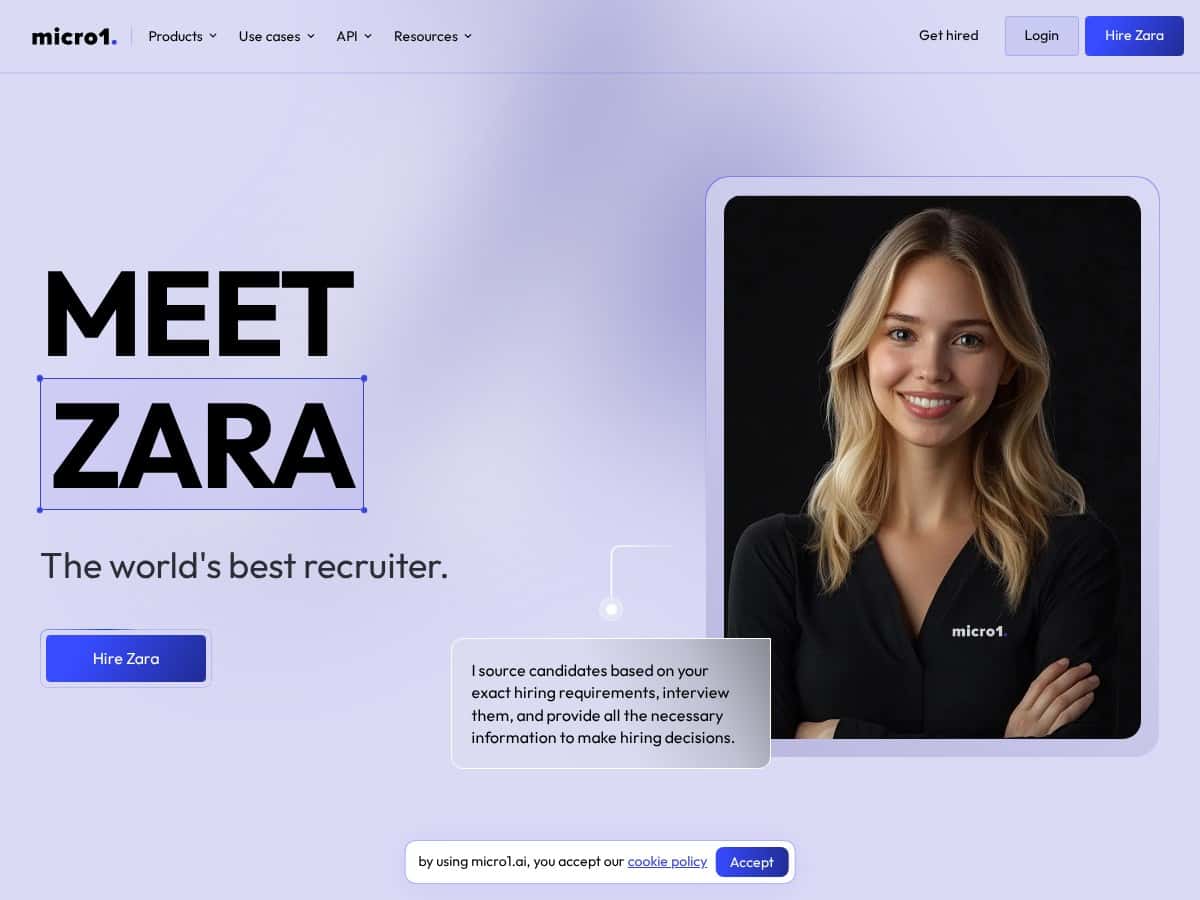
What I found is pretty simple: Zara tries to act like an always-on recruiting assistant. It pulls candidates in (via ATS integrations), runs an AI-led first interview, and then spits out a structured report with transcripts and scores so you can decide who to move forward. The big question is whether the output is useful enough to replace part of your manual screening. Spoiler: it can be—if you set it up well and you’re realistic about what “AI screening” can’t do.
Zara Review
Before I talk about features, here’s the practical workflow I tested. I set up Zara for an initial screening flow (the kind of “first touch” you’d usually do with a recruiter or hiring manager). The goal wasn’t to replace final interviews—it was to reduce the time spent on repetitive questioning and to make it easier to compare candidates side-by-side.
Setup was the least painful part. Zara claims integration with major ATS systems like Greenhouse and Lever, and in my experience the connection step was straightforward enough that I didn’t get stuck for days on permissions. Once connected, the recruiting flow centered around three things:
- Candidate sourcing rules (so it doesn’t just interview everyone)
- AI interview prompts (role-specific and conversational)
- Structured reporting (transcripts + assessments so you don’t have to rewatch everything)
The part I actually liked: Zara’s interviews felt less like a rigid chatbot and more like a real back-and-forth. The AI asks follow-ups and doesn’t just fire the same script every time. And yes, it records responses so you can review details later without hunting through notes.
That said, the biggest limitation is also the most obvious one: the quality of the results depends heavily on how you configure the role criteria and the question set. If you’re vague (“good communication” or “strong problem solving”), you’ll get vague scoring. If you’re specific (what you consider a strong answer, what skills matter, what you want evidence of), the report becomes much more useful.
Key Features (What I’d Actually Use)
Instead of listing features like a brochure, here’s what each one looks like in practice and where it helps.
1) ATS-powered automated candidate sourcing
Zara is built to pull candidates from your existing recruiting pipeline rather than forcing you to start from scratch. In my test, that meant the “who gets interviewed” decision was tied to the ATS workflow, not a separate spreadsheet somewhere.
What I noticed: when sourcing criteria were tight (specific keywords, location/role filters, and experience level), the AI interview time felt “earned.” When the criteria were too broad, the AI still interviewed people, but the report required more manual cleanup—exactly what you’re trying to avoid.
2) AI-led interviews with tailored questions
The interview experience is where Zara stands out. The AI doesn’t just read a prompt and wait. It asks questions that match the role, and it can go deeper when answers are surface-level.
Example (how the prompts felt): for a technical role, the question set wasn’t only “tell me about your projects.” It included follow-ups that tested how the candidate approached a problem, for example:
- Q: “Walk me through how you’d design a solution for X. What trade-offs would you consider?”
- Follow-up: “What would you measure to know the approach is working?”
What I noticed: Zara’s interviews were consistently structured, but the scoring still depended on what you defined as “good.” If your rubric doesn’t clearly describe what “working” means, the AI can sound confident while still being generic.
3) Multi-language support and 24/7 scheduling
If you’ve ever tried to coordinate interviews across time zones, you know the pain. Zara’s always-on approach helps candidates complete screening without waiting for a recruiter’s calendar.
Practical tip: if you’re using this for multi-language hiring, make sure your job requirements and evaluation criteria are translated clearly (otherwise you’ll get answers in one language and scoring expectations in another).
4) Detailed reports: transcripts, assessments, and scores
This is the part that makes or breaks AI recruiting tools. Zara generates a report that (in my testing) included:
- Interview transcript so you can verify the context
- Assessments that summarize strengths/weaknesses
- Scores tied to the interview criteria
Example (report section I paid attention to): instead of a single “overall score,” the report broke out evaluation areas like communication, technical reasoning, and role-relevant experience (at least in the configuration I used). That made it easier to compare candidates without rereading everything.
What I noticed: the transcript is crucial. I wouldn’t trust the summary alone. When I skimmed the transcript for two candidates who had similar scores, I could see differences in how they justified their choices—differences the summary hinted at, but the transcript proved.
5) Candidate question handling
Zara also handles candidate questions, which can reduce the “Where’s my interview link?” emails. I didn’t run an exhaustive test of support volume, but the behavior was consistent with an assistant that keeps the process moving.
Limitation: if your team uses highly specific scheduling rules or custom disqualification reasons, you’ll still want a human review path. AI support should reduce friction, not decide policy.
6) Bias reduction and fairness considerations
Zara positions itself around bias reduction. I can’t claim what exact fairness metrics they run internally (unless you have their documentation), but in the setup I reviewed, the key “fairness lever” was how the evaluation rubric was defined.
What I’d recommend you ask Zara about (seriously):
- How the scoring rubric is calibrated (and whether it’s role-specific)
- Whether they run audits for disparate impact across demographic groups
- How they handle transparency (do candidates get told they’re speaking with AI?)
- Whether interview prompts and scoring criteria are logged for review
In other words: bias mitigation isn’t only an algorithm problem. It’s also a “what questions are being asked and how answers are evaluated” problem.
7) Onboarding and HR tool integration
Zara also references integration beyond the interview step—useful if you want the handoff to recruiting operations (or onboarding) to be smoother.
What I noticed: integrations are easiest when your ATS fields are clean. If your ATS has messy job titles, inconsistent location values, or missing experience levels, the AI workflow will inherit that mess.
Pros and Cons (Realistic Take)
Pros
- Faster initial screening: for roles where you need consistent first-round questions, Zara reduces the manual repetition.
- Structured output: transcripts + scores make it easier to compare candidates without reading every note from scratch.
- Candidate experience feels modern: the conversation style is less awkward than many automated tools I’ve seen.
- More consistent decisions: when the rubric is well-defined, scoring is more uniform across candidates than ad-hoc recruiter notes.
- Better use of HR time: it shifts humans to the final decision stage instead of first-touch triage.
Cons
- Garbage in, garbage out: if your role criteria and rubric are vague, the AI report won’t magically fix it.
- AI can misread nuance: candidates who are brief or differently expressive may score lower even if they’re qualified.
- Candidate trust varies: some candidates will be skeptical about AI interviews—especially if they don’t understand the purpose.
- Bias and transparency still need scrutiny: “bias reduction” should come with documentation, audit methods, and transparency practices you can review.
- Not a full replacement: Zara works best as a first-screen tool. You still need human judgment for final stages.
Pricing Plans (What I Could Confirm)
Here’s the honest part: I didn’t see a clean, public pricing table in the information provided for this review. Zara appears to use tiered plans based on company size and hiring volume, which is pretty common for AI recruiting tools.
What I recommend you do before committing: ask for a quote that includes:
- How pricing scales with number of interviews or candidates
- Whether there’s a minimum monthly commitment
- What’s included (ATS integrations, report access, support/implementation)
- Any limits on languages, roles, or interview length
- Onboarding requirements (who configures the rubric and question sets)
If you want the fastest path to a real answer, reach out directly for a quote instead of guessing. That’s usually where the fine print lives.
Wrap it up
Zara can genuinely help with the “early hiring” bottleneck—especially if you want consistent first-round screening and you care about having transcripts and structured scores ready for review. But it’s not magic. The results depend on how you configure the role criteria, the interview questions, and the scoring rubric. If you do that work upfront (or you partner with their team), Zara becomes a solid recruiting assistant. If you don’t, you’ll still end up doing manual cleanup—just with extra steps.