Table of Contents
An AI business book writer turns your expertise—the framework you use with clients, the lessons from building your company, the method behind your consulting—into a finished, professional book without the year of evenings it usually costs. You supply the thinking; Automateed structures it into an outline, writes the chapters in sequence, and produces a publish-ready book with a cover, formatted for Amazon KDP, your website, or the back of every sales conversation you'll have this year.
The reason founders and consultants keep coming back to the idea of a book has nothing to do with royalties. A business book is the densest credibility asset that exists: it's a business card that takes three hours to read, pre-sells your methodology, and warms up prospects before the first call. The problem was always the production cost—hundreds of hours or a $20,000+ ghostwriter. An AI business book writer collapses that cost, which changes the math entirely. Here's how the tool works, how to structure a book that builds authority instead of shelf filler, and how to wire it into a lead-generation loop that pays for itself in clients.
Key Takeaways
- A business book is an authority asset, not a royalty play: it pre-sells your expertise to prospects, podcast bookers, and event organizers.
- The structure that works is framework + proof: name your method, give it one chapter per step, and anchor each step with a real example or case study.
- AI removes the production bottleneck—outline, chapter drafts, cover, and formatting—while your frameworks, stories, and client results make it a book only you could publish.
- The business model is the loop: book → reader → lead magnet → email list → funnel → client. The book is the top of the funnel, not the product.
- Voice-to-book means you can literally talk the book out—the way most consultants already explain their method—and let AI do the writing.
Why a Book Beats Almost Any Other Credibility Asset
Consider what a founder or consultant actually needs from marketing: trust, transferred at scale, before the sales conversation starts. A LinkedIn post earns seconds of attention. A webinar earns an hour, once. A book earns hours of a prospect's focused attention, positions you as the person who wrote the book on your topic, and keeps working for years—handed out at conferences, mailed to dream clients, cited in podcast intros.
The economics follow from that. If your average client engagement is worth four or five figures, a book that produces even a handful of clients per year outperforms almost any ad spend—and unlike ads, it compounds. That's why the goal isn't bestseller lists; it's the right 500 readers: your prospects, referral partners, and the people who book speakers.
What an AI Business Book Writer Actually Does
The tool handles the production layer of book writing—the layer that kills most founder book projects around chapter three:
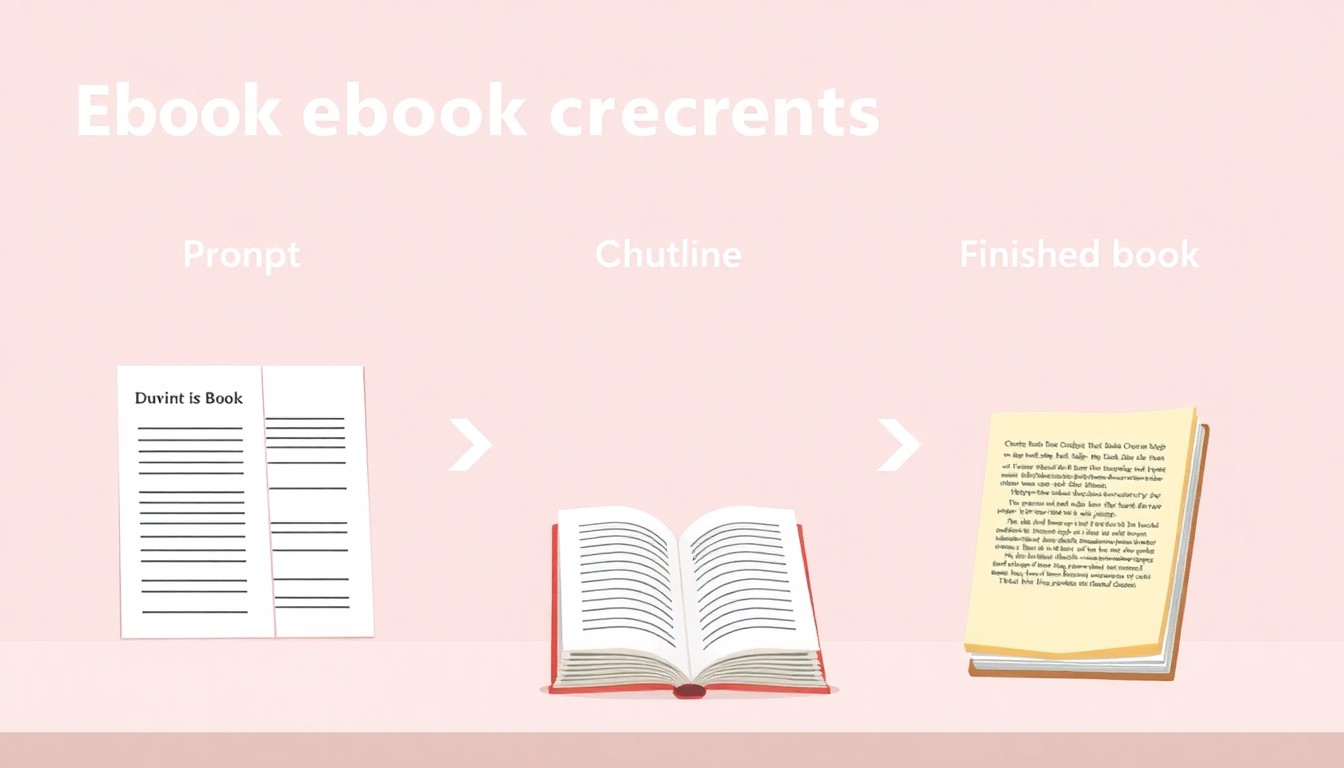
1. Describe the book. Your topic, audience, and core method: "a book for e-commerce founders on my 5-stage retention framework, practical tone, heavy on real examples." The more of your actual thinking you put in the brief, the more the draft sounds like you.
2. Shape the outline. The AI proposes a chapter structure; you rearrange it to match how you really teach your method. This is the highest-leverage 30 minutes of the whole project—structure is your argument.
3. Generate chapters in sequence. Automateed writes chapter-aware drafts in order, so chapter six can build on what chapter two established—essential for a book that develops a framework rather than collecting disconnected essays.
4. Make it yours in the editor. Replace generic examples with your client stories (anonymized where needed), sharpen the claims you can defend, cut the ones you can't. This pass is what separates an authority book from generic business content—more on it below.
5. Cover, format, publish. Generate a professional cover, export PDF and EPUB publish-ready for KDP. If you'd rather talk than type—and most consultants explain their method better out loud—voice-to-book lets you dictate the raw material and have AI structure it into chapters. For a wider look at the drafting tools, see our AI book writer page and the comparison of the best AI to write a book.
The Framework + Case Study Structure
Nearly every business book that generates clients follows the same skeleton, and it's worth copying deliberately:
- Part one — the problem (2-3 chapters): name the expensive problem your reader has, show why the common solutions fail, and establish why you're qualified to say so. This is where your origin story belongs—briefly.
- Part two — the framework (4-6 chapters): your named method, one step per chapter. Each chapter runs the same loop: the principle, why it works, a real case study or example, and what the reader can do this week. The named framework is the whole game—readers remember "the 5-stage retention ladder" long after they've forgotten the prose.
- Part three — implementation (1-2 chapters): what doing this actually looks like, common failure modes, and—honestly stated—where doing it alone gets hard. That's where working with you enters, without a hard pitch.
Case studies carry the persuasion load. A framework tells; a before-and-after with real numbers proves. Use client results you're allowed to share, anonymize the rest ("a B2B SaaS company doing about $2M ARR"), and never invent them—a fabricated case study can undo the exact trust the book exists to build.
Outline, chapters, cover, and publish-ready files—drafted by AI, made credible by your expertise. Free to start, no card required.
Start Your Business Book FreeThe Lead-Gen Loop: Book → Funnel → Clients
A business book without a next step is a compliment generator. The loop that turns readers into clients has four links, and you should build all four before launch day:
Link 1 — the in-book offer. Inside the book, offer a genuinely useful companion resource: the framework as a worksheet, a scorecard, a template pack. Build it with the AI lead magnet generator and put the link in the introduction and every framework chapter, not just the back matter.
Link 2 — the landing page. The resource trades for an email address on a simple page—the author website builder covers this without a web project.
Link 3 — the funnel. Readers who grabbed the resource get a short email sequence that deepens the framework and ends in your real offer: the audit, the workshop, the engagement. This is standard funnel mechanics, laid out in our guide to sales funnels for authors.
Link 4 — distribution everywhere. KDP for search and credibility ("available on Amazon" still does positioning work), direct sales or free chapters from your own site, the Automateed marketplace at 85% royalty for digital copies, and an audio edition via the AI audiobook generator for the founders who only consume books at the gym.
Run the math conservatively: a book that moves 300 copies to the right audience, converts 20% of readers to the email list, and turns 5% of those into conversations doesn't need to sell well to be the best marketing you did all year.
Making It a Book Only You Could Have Written
Feed it your raw material. Client emails you've written five times, your onboarding docs, talk transcripts, that Loom you recorded explaining the method—this is book fuel. AI is at its best structuring material you already believe.
Defend every claim. Read the draft asking one question: "would I say this to a skeptical client across the table?" Cut or soften anything that fails. Authority books are built on claims you can stand behind, delivered plainly.
Keep your voice quirks. The phrases you actually use with clients belong in the book—they're what makes a reader feel they've already met you when they book the call.
Get the title right. Business book titles work when they promise the outcome and name the mechanism. Run twenty options through the book title generator and test the shortlist on five people in your target audience before deciding.
Frequently Asked Questions
Can AI write a credible business book?
AI writes the production layer credibly—structure, prose, consistency across chapters. Credibility itself comes from your inputs: a real framework, real client examples, and claims you can defend. Feed the generator your actual methodology and edit with your standards, and the result reads like your book, produced faster.
Should I tell people my business book was written with AI?
On KDP, you disclose AI-generated content during publishing—that's their policy. Beyond that, it's your call; the honest framing is that the thinking is yours and AI handled drafting, the same division of labor as a ghostwriter. What you can't outsource either way is the expertise, because readers who become clients will test it in the first meeting.
How long should a business book be?
Shorter than you think: 25,000-45,000 words (roughly 120-200 pages) is the modern authority-book sweet spot. Busy readers finish it, which matters because an unfinished book converts nobody. If your material runs long, that's usually two books—and a series builds more authority than a doorstop.
Does a business book actually generate clients?
Not by itself—as part of a loop, yes. The book earns trust; the in-book resource captures the reader onto your list; the email funnel turns interest into conversations. Consultants who report client results from books almost always built that path before launch. A book with no next step generates compliments.
Can I use real client stories as case studies?
With permission, yes—named case studies are the strongest proof there is. Without permission, anonymize thoroughly: industry, rough size, and the outcome, with identifying details changed. Never fabricate results; an invented case study risks precisely the credibility the book exists to build.
How fast can I go from idea to published book?
The AI production steps—outline, chapter drafts, cover, export—take hours, not months. The realistic timeline is set by your editing pass: most founders working evenings get from brief to publish-ready in two to four weeks, which is the difference between "someday" and having the book at your next conference.
Turn your framework into a client-generating book—drafted, designed, and publish-ready. Join 80,000+ creators.
Write Your Authority Book FreeConclusion
The founders and consultants who benefit most from a book were never blocked by lack of material—they explain their framework every week on sales calls. They were blocked by production: the outline that never solidified, the chapters that stalled, the formatting project at the end. An AI business book writer removes exactly that blocker and none of the parts that make the book valuable. Your method, your case studies, your voice, and the funnel behind the book remain the work—and the moat. Structure the book as framework plus proof, wire the lead-gen loop before launch, and aim it at the right 500 readers rather than the bestseller list. The book you've been meaning to write since founding the business is now a two-to-four-week project. The authority it buys lasts considerably longer.