Table of Contents
More and more companies are rolling out AI everywhere—from chatbots to call-center tools to “smart” HR platforms. And lately, I keep seeing a buzzword pop up in demos and vendor decks: emotion AI.
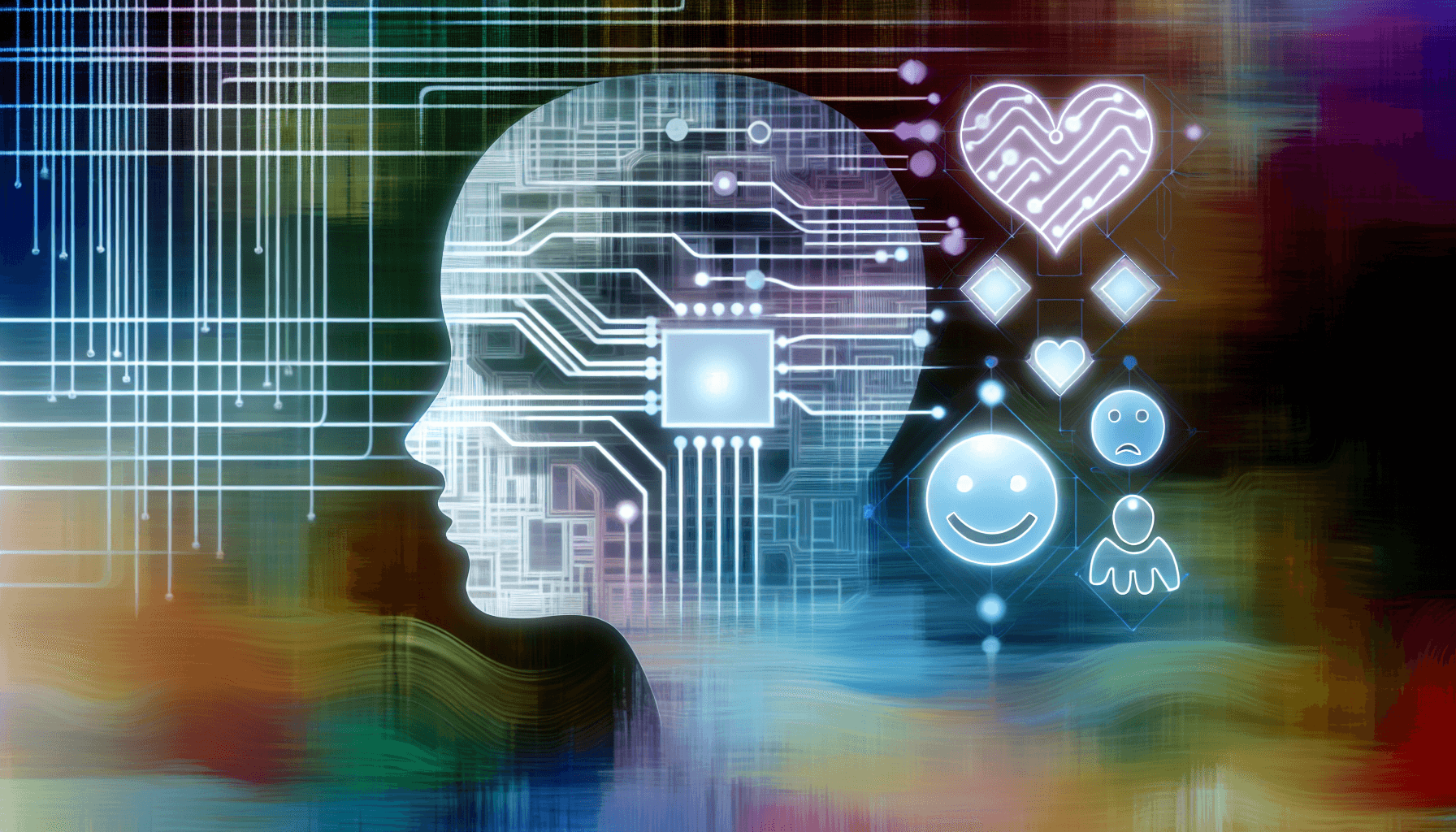
The idea sounds almost sci‑fi: build systems that don’t just read what we say, but try to understand how we feel. Not by guessing wildly, but by pulling signals from things like facial expressions, voice tone, and even timing patterns in how someone speaks.
What does that mean for our future interactions? Honestly? It could make some experiences smoother. It could also make things feel creepy fast. And there are real technical and legal hurdles that businesses can’t ignore.
Emotion AI vs. Sentiment Analysis (and why the difference matters)
At a high level, emotion AI is often described as a step up from sentiment analysis. Sentiment analysis mainly focuses on the emotional “direction” of text—things like positive, negative, frustrated, satisfied. You’ll usually see it in reviews, support tickets, and social posts.
Emotion AI goes further. Instead of relying only on words, it tries to infer emotion using a mix of signals:
- Visual cues (facial landmarks, micro-expressions, gaze patterns)
- Audio cues (pitch, intensity, speaking rate, pauses)
- Context signals (what the person is doing, where they are in a conversation)
In my experience, the jump from text-only emotion detection to multi-signal emotion detection is where things get interesting—and where mistakes become more noticeable. A chatbot can be wrong without it feeling personal. But if a system is “reading” your face or your voice in real time, you’ll feel the error.
What companies are building (and what tools they use)
Big tech players have been working on this for a while now, and they’re not doing it quietly. Microsoft and Amazon, in particular, offer developer-facing services that make it easier to add emotion-related capabilities to apps.
For example, Microsoft Azure’s Emotion API and AWS’s Rekognition are commonly referenced as building blocks. If you’re a developer, these services can help you detect certain facial and behavioral signals—then route that information into a customer support flow, a coaching app, or a workplace tool.
One thing I’ve noticed in real implementations: even when the model is “accurate enough” on paper, businesses still struggle with the practical part—how do you respond to the emotion signal without overreacting?
Where emotion AI gets used in business
Emotion AI is often pitched for customer service, sales, and HR. Here’s what that can look like in practice:
- Customer service: Detect frustration from voice and conversation patterns so an agent gets alerted to switch tactics (or offer a faster resolution path).
- Sales: Spot hesitation or confusion earlier, then adjust the pitch, clarify pricing, or route the call to a specialist.
- Human resources: Support training and coaching by flagging stress indicators during interviews or assessments.
Sounds helpful, right? But it’s also the kind of application where a small misread can turn into a bad decision. And that’s where the ethical questions start stacking up.
The accuracy problem: can machines really “read” emotions?
Let’s talk about the elephant in the room: emotion is complicated. Even humans struggle to interpret each other consistently, especially across cultures, disabilities, and different communication styles.
Some critics argue that emotion AI can misinterpret what’s happening. A person might look tense for a totally neutral reason. They might be tired, cold, distracted, or simply not expressing emotion in the same way the model expects.
A review published in 2019 highlighted a key concern: human emotions can’t be reliably judged from facial expressions alone. That matters because many emotion detection systems lean heavily on facial cues as a primary signal.
And in customer service, where the goal is to help—not to “diagnose”—you don’t want a system making high-stakes assumptions based on a shaky signal.
What can go wrong in real life
- False positives: Detecting “anger” when the user is actually concentrating or hard of hearing.
- Context blindness: Treating a pause as “sadness” without knowing the user is just thinking.
- Bias risks: Models may perform unevenly across skin tones, ages, and facial features.
- Overconfidence: Teams may automate decisions too quickly because the dashboard makes it look certain.
In my view, the biggest danger isn’t just wrong predictions—it’s when companies treat those predictions like truth instead of weak signals that need careful handling.
Regulation is moving fast (and it affects adoption)
Emotion AI isn’t just a technical challenge. It’s also a legal one. New rules are starting to appear that limit how emotion detection can be used, especially when it involves sensitive data like biometric information.
For instance, the European Union’s AI Act includes restrictions on emotion detection technologies in certain settings, such as education. That’s a big deal because schools and training environments are exactly where emotion-related monitoring could easily get abused.
In the United States, states like Illinois have requirements that push companies toward clear consent when collecting biometric data—including information that could be considered emotional or behavioral in nature.
So yes, regulations can slow adoption. But they also force companies to answer uncomfortable questions: What exactly are you collecting? Why do you need it? How do users opt out? What happens if the system is wrong?
Startups and momentum: Uniphore, MorphCast, and the push toward “empathetic” systems
Even with the risks, the momentum is real. New startups like Uniphore and MorphCast keep showing up with emotion-adjacent products that aim to improve automated support and coaching.
And as automated systems and AI assistants become more common, I think people will keep asking the same question: are these systems actually understanding emotion, or are they just mimicking empathy?
That’s not a purely philosophical debate. It affects how we design the interaction. If the system is mostly pattern-matching, then the “empathy” is surface-level. If it’s genuinely robust across contexts, then it can deliver real value. The difference shows up in edge cases—when someone’s emotion doesn’t match the expected cues.
What I’d love to see more of (and what I think will matter) is transparency. Tell users what’s being detected, how it’s used, and how it influences outcomes. Otherwise, the experience turns into a black box.
So what does this mean for the future of interactions?
Here’s my honest take: emotion AI will probably become a supporting layer in many products, not a replacement for human judgment. It’s too error-prone to be the only basis for decisions, especially in high-stakes areas like HR or education.
But as a tool—used carefully—it could help teams respond faster and more appropriately. For example, if a call center gets real-time signals that a customer is overwhelmed, it might route them to a specialist or offer a simpler next step. That’s the kind of practical improvement that doesn’t require the machine to “feel.” It just needs to notice patterns that humans would otherwise miss under pressure.
At the same time, there’s a clear downside: if emotion AI becomes too pervasive, people may stop trusting digital interactions. Who wants to feel like their face is being analyzed during a support call?
The future will depend on how companies handle the tradeoffs: accuracy, consent, bias, and user control. Get those right, and emotion AI could genuinely improve communication. Get them wrong, and it will feel invasive—and potentially harmful.
My practical checklist before a business adopts emotion AI
If you’re considering emotion AI for your product or workflow, this is what I’d look for before I’d sign off:
- Define the use case tightly: Start with low-stakes, reversible actions (like routing or suggested prompts), not automatic disciplinary or medical-style decisions.
- Measure performance by subgroup: Don’t just report overall accuracy. Check results across different demographics and real user conditions.
- Human-in-the-loop: Treat emotion signals as assistive, not authoritative.
- Get consent clearly: Users should know when emotion-related data is being collected and why.
- Offer opt-outs: If someone doesn’t want emotion detection, they shouldn’t be forced into a degraded experience.
- Audit outcomes: Track whether emotion-driven workflows actually improve resolutions, reduce escalations, or just add noise.
Emotion AI can be useful. I just don’t think it should be treated like magic.
Despite the hurdles, the continued interest in emotion AI suggests we’ll see more human-like interaction attempts—especially in customer support and sales. The key is making sure it’s developed responsibly, with clear boundaries and real accountability, so it helps people instead of exploiting their signals.