Table of Contents
Are your brand images quietly holding you back? I’ve seen it happen: a business posts consistently, the captions are good, the products are great… but the photos look a little “off.” And customers feel that. DIY photography is definitely accessible, though. The real question is whether it’s costing you more than you think—usually in time, consistency, and conversions.
⚡ TL;DR – Key Takeaways
- •DIY can be cheap at first, but the “hidden” costs are real: setup time, retakes, editing time, and inconsistent results across your catalogue.
- •Professional brand photography is built for consistency—same lighting, same colour, same vibe—so shoppers trust what they’re seeing.
- •A hybrid approach usually wins: pro shots for your core product range, DIY for frequent social updates and behind-the-scenes content.
- •DIY pitfalls are predictable: uneven shadows, weird reflections, colour drift, and slow scaling when you hit 20+ SKUs.
- •Pro sessions cost more upfront (often hundreds to a couple thousand pounds), but they tend to pay back through better conversion rate and fewer “returns” caused by mismatched expectations.
DIY Brand Photos vs. Hiring a Photographer: A Practical Comparison for 2026
When I’m helping a brand decide between DIY brand photos and hiring a photographer, I usually start with one thing: what are you trying to sell, and how fast do you need content?
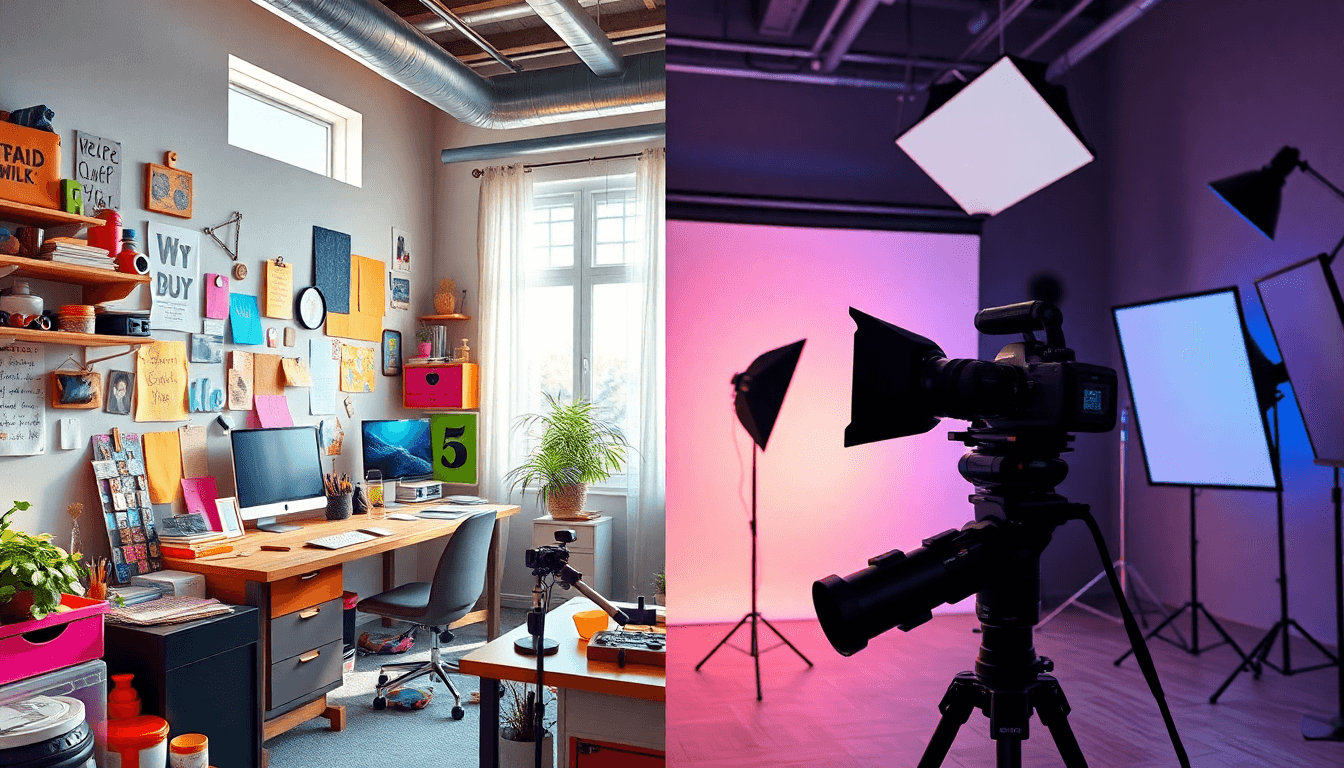
DIY means you’re using a smartphone (or a basic camera) plus lighting you can set up in an hour. It’s flexible. You can shoot today and post tomorrow. That’s a big deal for social content and testing new angles.
Hiring a photographer means you’re buying consistency, speed, and expertise—especially for tricky products (jewellery, glassware, reflective materials) and for large catalogues where “close enough” doesn’t cut it.
In 2026, the smart move for most brands is a hybrid model: pro for your money products, DIY for everything else that needs to feel frequent and human.
1.1. What’s Actually Different Between DIY and Pro?
DIY usually looks like: smartphone camera, a ring light or softbox, a backdrop, and some editing in Lightroom/Snapseed/Photoshop. You can absolutely make it work—especially for simple products and lifestyle-style shots.
But here’s what I notice when DIY photos don’t perform: the lighting shifts from image to image. White balance drifts. Shadows get harsher or disappear completely. Colours don’t match what customers see in person. Over time, that inconsistency makes your brand feel less “real,” even if your product is.
Pro photography is built differently. The photographer sets up a controlled lighting environment (and often repeats it shot after shot). They’ll also know how to tame reflections, manage depth, and keep colours consistent across the whole collection.
That’s why hybrid strategies are so common now: you use pro images for your core product shots (where conversion matters most) and DIY for behind-the-scenes, UGC-style posts, and quick updates when something changes.
1.2. Cost and Time: A Realistic Breakdown (Not Just “Sticker Price”)
Let’s talk money and time in a way that’s actually useful.
DIY upfront costs (typical range): £2,320–£3,070+
That range usually includes a mix of: a camera or better smartphone kit, lighting (softboxes/ring lights), stands/tripods, reflectors, a backdrop system, and editing software or subscriptions. It also assumes you’ll learn as you go—which is where time quietly becomes a cost.
Time cost assumption: If you’re shooting and editing your own catalogue, it’s common to spend 2–3 hours per “photo set” early on (even longer if you retake for reflections, focus, or colour). If you’re also the founder, that’s 50+ hours you might otherwise spend on sales calls, product development, or outreach.
Pro per-image pricing (typical range): £4.50–£9 per image
This is where the “per image” figure matters, because many photographers price by session + expected deliverables. The per-image cost often drops as you shoot more in one go, since lighting setups and retouching workflows are already in motion.
What I’d ask to validate ROI: Don’t just accept “it increases sales.” Ask what deliverables are included (number of edited images, retouch level, usage rights, turnaround time). Then compare that to your baseline conversion rate and return rate.
About the “15% lift” and “payback in 30–40 days” claims
You’ll see these numbers online a lot. I don’t love throwing round percentages without context, so here’s how I’d sanity-check them for your store:
- Start with your baseline: What’s your current conversion rate on product pages? 1%? 2%? 3%?
- Estimate traffic: How many sessions per month go to those product pages?
- Apply a conservative lift: Even a smaller improvement (like 5–10%) can justify pro photography if your catalogue images are currently inconsistent.
- Include returns/mismatched expectations: If your photos look “different” from the real product, returns cost you money fast.
If you want, you can plug your numbers into a simple spreadsheet and compare DIY vs pro on a 60–90 day window. That’s the part most brands skip—and it’s where decisions get clearer.

Pros of DIY Brand Photography (When It’s the Right Move)
DIY isn’t automatically “worse.” It’s just a different tool. If your brand is early-stage, moving fast, or heavily reliant on social content, DIY can be a smart starting point.
2.1. DIY Is Cost-Effective When You Already Have the Basics
If you’ve got a decent smartphone and you’re willing to learn a few fundamentals (lighting, framing, basic editing), DIY can get you to “good enough” quickly.
I’ve also seen brands use DIY for:
- Instagram Stories and Reels where perfection isn’t the goal
- Behind-the-scenes posts (packaging, shipping, office shots)
- Seasonal updates when you can’t wait for a studio booking
For brands trying to build their visual identity without overspending, it can help to pair DIY content with a clearer positioning and brand system. If that’s your situation, you might like this overview on brandbeacon.
2.2. Creative Control (And the Freedom to Iterate)
DIY gives you control over your concepts. Want a different angle today? Do it. Want to test a new background colour next week? Easy.
You also learn fast. Once you understand things like white balance and shadow softness, your photos improve noticeably—like, within 5–10 shoots. That learning loop is valuable.
And yes, in my experience working with authors and small business owners, DIY authenticity can resonate. People don’t always want glossy perfection—they want you to feel approachable. The trick is knowing which parts of your funnel need “trust-level” visuals.
Cons of DIY Brand Photography (The Stuff That Sneaks Up)
DIY has a few predictable weaknesses. If you ignore them, you’ll feel it in performance and in your time.
For one, quality can be inconsistent. And inconsistency is expensive when it hits product pages.
3.1. Inconsistent Lighting and Scalability Problems
Even if you’re careful, DIY lighting changes from session to session. One day you’ll get a soft shadow. Another day it’s harsher. Your background may not match. Your product colour might shift slightly.
Now imagine doing that across 20+ SKUs. It’s not just time. It’s also the mental load of repeating the same setup, tweaking settings, and fixing issues you didn’t predict.
Real talk: scaling DIY efforts can turn into a weeks-long project when you’re shooting hundreds of images and editing them one by one.
3.2. Hidden Costs: Retakes, Editing Time, and Conversion Loss
When images don’t look right, customers hesitate. That hesitation shows up as lower conversion rates. It also shows up as “I thought it would look like this” returns.
Instead of relying on vague “20–30%” figures, here’s a more grounded way to think about it:
- If your images are inconsistent, you’ll likely see more browsing and fewer add-to-carts.
- If your images don’t show texture/reflections accurately, customers may feel misled when the product arrives.
- If you’re spending hours editing and retaking, you’re also delaying new product launches and marketing campaigns.
So even when DIY seems cheaper upfront, the cost often shows up somewhere else—your time, your sales velocity, or your return rate.
Pros of Hiring a Professional Brand Photographer (Why Brands Pay for This)
Professional photography isn’t just “better-looking photos.” It’s a system: lighting control, composition, colour consistency, and editing workflows designed to produce a cohesive set.
Pros also know how to handle complex products—jewellery, reflective surfaces, glassware—so your images don’t end up with messy reflections or weird glare.
4.1. High-Quality, Cohesive Visuals That Match Your Brand
One of the biggest advantages is consistency across your catalogue. When your product images share the same lighting style and colour grading, customers don’t have to “re-interpret” your brand every time they click a new item.
That’s what builds trust. It’s subtle, but it matters.
In practice, I’ve seen brands clean up their whole storefront look simply by replacing a small set of “hero” product images first—then expanding once they saw the impact.
4.2. You Get Speed: More Images, Less Founder Time
Professional sessions can produce a large number of usable images quickly because the photographer is set up to shoot efficiently and edit with a structured workflow.
Typical package costs vary, but you’ll often see product catalog shoots priced around £900–£1,800 per session, depending on deliverables, retouching level, and how many final images you need.
For example, if you’re aiming for 80–200 edited images for a season or launch, getting them done in days (not weeks) can be a huge advantage.
It also frees you up to focus on business activities instead of spending evenings troubleshooting why your white background doesn’t look white.
For another example of how tools and systems can support brand execution, you can check this related piece on mcdonalds hiring tool.

Cons of Hiring a Professional (What to Watch Out For)
Hiring a photographer isn’t perfect either. The main downsides are budget and scheduling.
5.1. Higher Upfront Costs
Professional sessions can feel steep when you’re starting out. If you’re paying £900–£1,800 for a session, it’s easy to wonder if it’ll “work” for your brand.
That’s why you should treat it like an investment in conversion-focused assets, not just a “nice to have.” If you’re only using a handful of images, the cost per useful photo goes up.
5.2. Scheduling and Less Flexibility
Book time, plan the shoot, get approvals, then wait for editing. That timeline can be frustrating if you need content tomorrow.
Also, if you change your product lineup mid-shoot, you might end up redoing work or losing momentum.
Still, if your main goal is consistent product imagery (especially for ecommerce), the trade-off is usually worth it.
When You Should Hire a Professional Photographer
Here’s the point where I usually recommend going pro: when the cost of inconsistency and slow production starts to outweigh the session cost.
If you’re scaling beyond 20 SKUs, professional support often makes sense because consistency becomes harder and your time becomes more valuable. You want your product images to look like they belong to the same brand universe—not a mix of different moods and lighting setups.
For more on building brand systems that support content and positioning, you might find this useful: publishing brand management.
6.1. Scaling Your Product Range
As inventory grows, DIY can become a production bottleneck. Pros can handle larger volumes because they’re already set up for repeatable shooting and efficient post-production.
6.2. Complex or Reflective Products
If your products involve reflections, texture, or tricky surfaces—jewellery, glassware, polished metal—DIY often struggles unless you’ve got serious experience and the right lighting modifiers.
Professional photographers know how to control reflections and shape highlights so the product looks premium instead of “glary” or washed out.
6.3. Trust and Conversion Goals
High-quality visuals can improve conversion, but don’t guess—measure. Even a modest improvement can be meaningful if your traffic is steady.
What I suggest: run a quick comparison. Replace your top 5–10 product images with pro versions and watch product page conversion and add-to-cart rate over 2–4 weeks. That’s usually enough to tell you if the visuals are helping.
ROI: Professional Photography vs DIY (How to Decide Without Guessing)
It’s tempting to chase big percentages like “15%” or “20–30%.” But the best ROI story is the one that matches your numbers.
Here’s a clean way to decide:
- DIY makes sense if you’re early-stage, your catalogue is small, and most of your content is social/UGC where authenticity matters more than perfect consistency.
- Pro makes sense if your catalogue is growing, your products are visually complex, or your product pages are already underperforming and you suspect images are part of the issue.
And yes, hybrid is often the sweet spot: pro for core product shots that live on your website and ads, DIY for frequent content that keeps your brand present and relatable.
If you’re refreshing images annually (or each major season), you’ll keep your storefront from looking stale without constantly paying for full pro catalog shoots.

Professional Product Photography Services: What You Should Expect
When you hire a photographer, you’re usually buying a bundle of services. Most reputable providers will cover:
- Studio setup or controlled location shooting
- Editing and retouching (often with different retouch levels)
- Colour consistency across the set
- Deliverables for your channels (website, ads, ecommerce galleries)
Some photographers also offer expanded content like video, 3D-style assets, or additional angles. That can be useful if you’re planning campaigns and need more than just stills.
Before you book, review portfolios that match your style and product category. Then ask directly about deliverables, timelines, and usage rights. You want clarity on things like: how many final images you’ll receive, what’s included in retouching, and how quickly you’ll get them back.
How to Decide: DIY or Professional Photography for Your Brand?
I’d approach this like a quick decision checklist.
Step 1: Be honest about your product complexity
- If your products are simple and non-reflective, DIY can work well.
- If you have jewellery, glass, polished metal, or anything that reflects the environment, pro is usually the faster route to “premium.”
Step 2: Estimate how many SKUs you need photos for
- Under ~20 SKUs: DIY (with a consistent setup) can be reasonable.
- 20+ SKUs: plan for either pro support or a hybrid approach so consistency doesn’t fall apart.
Step 3: Compare time, not just cost
Ask yourself: how many hours can you realistically spend shooting and editing without delaying other revenue work?
Step 4: Decide on a hybrid plan
If you want the best balance, do this: hire a photographer for your core product range and use DIY for social content, seasonal variations, and behind-the-scenes posts.
If you’re also working on strengthening your personal brand or author brand, you may find this relevant: author branding packages.
FAQ
Is DIY photography good enough for my business?
It can be—especially early on, or if you’re using images mainly for social content and you’re comfortable investing time in learning. The moment your product pages and ads become critical, though, consistency starts to matter a lot more.
What are the benefits of hiring a professional photographer?
You get cohesive lighting, colour consistency, and expertise with tricky products. Plus, you save time—your team doesn’t spend days in setup and retakes. The result is usually a more trustworthy storefront.
How much does professional brand photography cost?
Costs vary, but product sessions are commonly in the £900–£1,800 range depending on deliverables and retouching. The best way to judge value is cost per usable final image and turnaround time.
Can I create high-quality images with a smartphone?
Yes. With good lighting and a bit of editing, smartphone photos can look great. For reflective products or large catalogues, though, pro equipment and experience can save you a lot of frustration.
What equipment do I need for DIY product photography?
At minimum: a phone/camera, lighting (ring light or softboxes), a tripod, and reflectors/diffusers. A simple backdrop setup helps too. If you can, focus on consistent lighting and repeatable setups more than buying the “most expensive” gear.
How long does professional photography take?
Many sessions can produce a large number of images in a day or two, with post-processing delivered within about a week depending on scope. You’ll get a clearer timeline once you confirm deliverables.