Table of Contents
An AI manuscript editor works on the draft you already have. Instead of generating a book from a prompt, it operates inside your manuscript: highlight a flat paragraph and have it rewritten in your tone, catch the character whose eyes changed color between chapters 3 and 11, or regenerate an entire chapter that never worked—while everything around it stays intact. It's the tool for the least glamorous, most decisive phase of writing a book: the distance between "finished draft" and "publish-ready."
This guide covers what an AI manuscript editor actually does well—highlight-and-rewrite editing, character and tone consistency, chapter regeneration—what it can't do and shouldn't be trusted with, and how the workflow runs from a rough draft to exported, KDP-ready PDF and EPUB files. If you're still at the blank-page stage, an AI book writer is the tool for that phase; this page is about everything after the draft exists.
Key Takeaways
- An AI manuscript editor (or AI book editor) edits at three levels: highlight-and-rewrite for lines and paragraphs, consistency checks across the whole book, and full chapter regeneration when a section needs a do-over.
- Because the editor is chapter-aware, rewrites respect what came before—names, facts, plot points, and tone carry through instead of resetting each session.
- AI reliably handles the mechanical 80% of editing: clarity, repetition, tense slips, tone drift, and continuity flags.
- The remaining 20% stays human: developmental judgment, taste, and the final read-aloud pass before you publish.
- Editing ends in output, not advice: export publish-ready PDF and EPUB straight from the editor, formatted for Amazon KDP.
What Is an AI Manuscript Editor?
Three tools get confused under one label. A grammar checker (Grammarly and its cousins) fixes sentences one at a time with no idea what your book is about. A generator writes new text from prompts. An AI manuscript editor sits between them: it holds your whole manuscript as context and revises it—which is why it can do things sentence-level tools structurally can't, like noticing your protagonist's backstory contradicts chapter 2, or that your last four chapters drifted from wry to earnest.
In Automateed, the editor is the middle of one pipeline: describe the book, shape the outline, let the AI draft chapters in order (each aware of the ones before it), then edit—and this is where the manuscript earns its quality—before generating a cover and exporting. Our comparison of the best AI to write a book covers the drafting side; below is what the editing phase looks like in practice.
Highlight-and-Rewrite: Editing at the Line and Paragraph Level
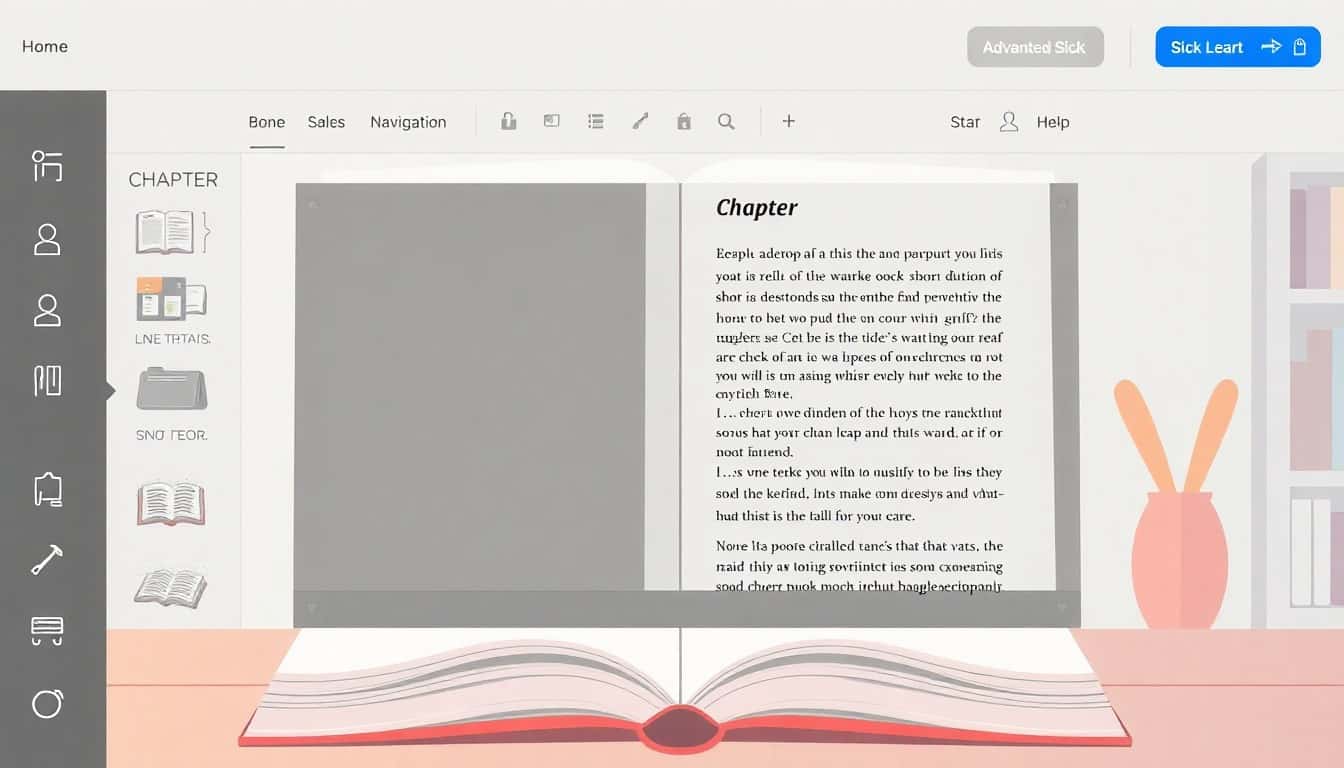
The core interaction is direct: select the text that isn't working and tell the editor what you want. "Tighten this." "Make it less formal." "Show this instead of telling it." "Expand this into a full scene." The AI rewrites just the selection, in context—matching the surrounding voice rather than pasting in generic prose—and you keep, tweak, or reroll the result.
This changes the texture of revision. Instead of staring at a weak paragraph deciding whether it's worth twenty minutes, you generate two alternatives in seconds and either take one or learn from the contrast what the paragraph actually needed. Editors who work this way report the same shift: revision stops being triage and becomes selection. You remain the taste; the AI supplies volume for your taste to choose from.
Consistency: Characters, Tone, and Continuity
Continuity errors are the classic long-manuscript failure, and they're precisely the errors humans are worst at catching in their own work—you read what you meant, not what's on the page. A chapter-aware editor tracks what the manuscript has established: character names and details, timeline, facts stated in earlier chapters, and the voice you started with. When a rewrite would contradict something established, the context keeps it honest; when your tone has drifted across months of drafting, you can have chapters normalized toward the voice you actually want.
Fiction writers feel this the most—novels are where a hundred small details have to stay true across 80,000 words, which is why our AI novel generator drafts chapter-by-chapter with memory in the first place—but nonfiction has its own version: terminology that shifts, advice in chapter 9 that quietly contradicts chapter 4, examples that repeat. Consistency isn't a nice-to-have; it's the difference between a book that reads authored and one that reads assembled.
Chapter Regeneration: When a Chapter Needs a Do-Over
Some chapters can't be line-edited into shape—wrong angle, wrong structure, wrong everything. The traditional options were grim: rewrite from scratch or ship it weak. Chapter regeneration adds a third: keep the book, regenerate the chapter. You give new instructions—"rewrite this chapter from the mentor's point of view," "restructure this as a step-by-step process instead of a narrative"—and the AI redrafts the whole chapter while respecting everything around it, because it knows what the surrounding chapters establish.
The practical effect is that structural revision stops being precious. Testing a different approach to chapter 6 costs minutes, so you actually test it instead of wondering for a week. Keep what works, regenerate what doesn't, and reserve your hand-editing hours for the chapters that are close.
Highlight and rewrite, keep every chapter consistent, and regenerate what isn't working—then export publish-ready files.
Try the Editor FreeA Pass Order That Works
Tools don't impose sequence, but sequence is half of editing. A pass order that avoids redoing work: structure first—read the whole draft and regenerate the chapters that fail at the concept level, because line-editing a chapter you'll later regenerate is wasted effort. Consistency second—normalize names, facts, terminology, and tone across the book once the chapter set is stable. Line work third—now the highlight-and-rewrite passes, chapter by chapter, tightening what stays. Human passes last—your read-aloud taste pass and a proof of the exported file.
Done in that order, a full editing cycle on a typical nonfiction manuscript compresses from a months-long slog into a focused week—and the time you spend is concentrated where your judgment matters instead of spread across mechanical fixes.
What an AI Editor Can't Do (Hire Humans for This)
Honesty about the boundary makes the tool more useful, not less. An AI manuscript editor will not tell you that your book answers a question nobody asks, that chapters 5 through 9 should be one chapter, or that your memoir's real story starts on page 80. That's developmental judgment—knowing what the book should be—and it belongs to you, a sharp human editor, or honest beta readers.
Three passes to keep human: a developmental read for structure and stakes (one experienced reader beats any tool), a taste pass where you read your book aloud and fix what makes you wince (AI smooths prose; it can't want anything for the book), and a final proof of the exported file, because formatting artifacts and last-mile typos live in output files, not manuscripts. The realistic division of labor: AI compresses the mechanical 80% of editing from months to days, so your attention concentrates on the 20% that decides whether the book is any good.
From Edit to Publish-Ready Export
Editing ends with files, not feelings. From the editor, generate a cover (template gallery plus customization), then export publish-ready PDF and EPUB—formatted for Amazon KDP without a separate formatting tool. If you're targeting Kindle specifically, EPUB is what KDP wants; our EPUB to Kindle converter guide explains the format handling. Round out the package with a book blurb generator for the description that sells the book, then pick your channels—our guide to selling ebooks online runs the royalty math across twelve platforms, including the built-in Automateed marketplace at 85% royalty, and the Amazon KDP publishing guide walks the retailer route step by step.
The whole arc—draft, edit, cover, export, publish—happens in one place, which is the quiet advantage: nothing gets lost translating between a writing app, an editing tool, a formatter, and a publisher.
Frequently Asked Questions
Can AI edit an entire book at once?
Effectively, yes—by working chapter-aware rather than in one giant pass. The editor holds the book's context (characters, facts, tone) while you revise section by section, rewrite highlighted passages, or regenerate whole chapters, so edits stay consistent with the rest of the manuscript.
Will an AI editor change my writing voice?
Only as much as you tell it to. Because rewrites are generated in context, they match the surrounding prose by default—and you approve every change. If anything, the consistency tools push in the opposite direction, normalizing drift so the whole book sounds like one author.
Is AI editing good enough to publish without a human editor?
For clarity, consistency, and polish—largely yes. For developmental judgment—whether the book's structure and premise work—no. A sensible budget: let AI do the mechanical passes, then invest in one human developmental read and do your own read-aloud pass before export.
Does Amazon allow AI-edited books?
Yes. Under KDP's current definitions, using AI to edit and refine content you created is AI-assisted work, which doesn't require disclosure; AI-generated content does require disclosure and is also accepted. Either way, Amazon's real filter is quality, not tooling.
What do I get at the end—what formats can I export?
Publish-ready PDF and EPUB, exported straight from the editor with a cover included—formatted for Amazon KDP upload and equally usable for direct sales, marketplaces, or lead magnets. No separate formatting tool required.
Conclusion
The gap between a finished draft and a publishable book used to be measured in months and invoices. An AI manuscript editor collapses the mechanical part of that gap: line-level rewrites on demand, consistency enforced across the whole manuscript, and chapter-scale do-overs that cost minutes instead of weeks. What it leaves untouched is the part that was always the point—your judgment about what the book should be. Use the tool for volume and vigilance, keep the taste and the final read for yourself, and let the pipeline carry you from edited manuscript to exported EPUB to a live listing without changing apps once.
Join 80,000+ creators—write, edit, and export KDP-ready PDF and EPUB in one place. Free to start, no card required.
Start Editing Free