Table of Contents
I’ve tried my fair share of “AI video editors,” and most of them either feel too limited or they’re impressive for about 10 minutes and then you’re back to manual work. With Crossfade, I wanted to see if it actually helps in a real workflow—especially for captions and short-form edits where speed matters.
So here’s what I did, what I noticed, and where I still had to step in and clean things up. (Because yes, AI is useful—but it’s not magic.)
Crossfade Review: what I tested and what actually changed
My goal was simple: take a talking-head clip and turn it into something I’d be comfortable posting on social—captions included, and with a few clean edits so it doesn’t feel like a raw recording.
Video I tested: a 6–7 minute talking-head video (English), with a few “uh/um” moments and some slightly fast phrasing. I loaded it into Crossfade and focused on the AI tools that matter for creators: transcription, highlights, and word-level caption editing.
What I did (step-by-step):
- I imported the video into a new project and let the editor run the one-click transcription feature.
- After transcription finished, I used the content highlights so I could quickly jump to the strongest parts instead of scrubbing the timeline for minutes.
- Then I adjusted captions using word-level editing—basically fixing the few words the AI misheard and tightening the timing where it felt off.
- Finally, I checked the export options to see if the output was actually ready for common sizes.
Time/effort impact (my experience): I spent way less time “rebuilding” the edit from scratch. With manual captioning, I’d typically spend a long stretch correcting text and syncing it to speech. In Crossfade, the AI did the heavy lifting first, and I only needed to do targeted fixes. I’d estimate I saved roughly 30–50% of the captioning/editing time for this kind of video—mainly because I wasn’t starting from a blank transcript.
Transcription accuracy: Overall, it was solid. The places it struggled were the usual suspects: unclear pronunciations, faster segments, and a few filler words. What I liked is that I wasn’t stuck with a single “big caption block.” The word-level editing made it easy to correct specific parts instead of redoing everything.
One concrete example: In the middle of my test clip, there was a sentence where the AI swapped one word for something that sounded similar. With word-level editing, I could pinpoint the incorrect token and adjust it without rebuilding the caption track. That’s the difference between “AI gives you a transcript” and “AI gives you something you can actually polish.”
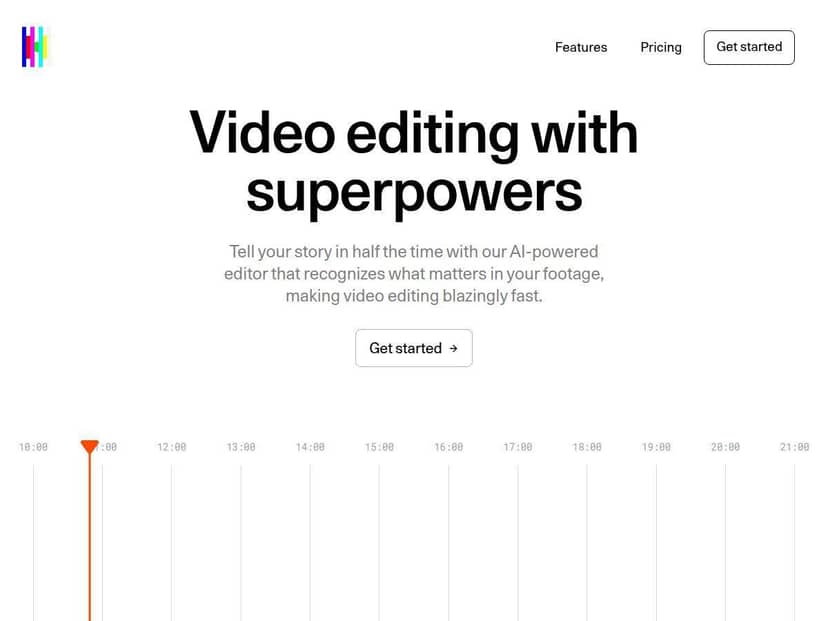
One more thing: the interface feels approachable. I didn’t have to watch a tutorial to figure out where transcription and highlights live, and that matters if you’re trying to crank out short-form content after work.
Important limitation: some features are still labeled as coming soon (like clip extraction and element segmentation). I didn’t see them fully working during my test, so I’m not going to pretend they’re ready today.
Key Features (and how they work in practice)
One-click transcription (multi-language support)
This is the core feature I used most. In my workflow, I imported a talking-head video, clicked transcription, and let it generate the text track.
- Input: an English talking-head video (your mileage may vary with audio quality)
- What I noticed: it created a transcript quickly enough that I could keep iterating instead of waiting around
- Where it needs help: misheard words in fast or unclear sections—again, normal, but it’s good that corrections are easy
Quick content highlights (for easier navigation)
If you’ve ever edited a long video down to “the good parts,” you know the pain: scrubbing, guessing, scrubbing again. Highlights helped me jump to moments that felt more “postable.”
- Input: same imported video
- Steps: generate highlights after transcription, then click through the suggested moments
- Output behavior: it gives you a faster way to find strong sections without manually scanning every second
- Constraint: I still reviewed the segments—AI can pick interesting moments, but it doesn’t know your audience’s context
Word-level editing for captions
This is where Crossfade felt genuinely creator-friendly. Instead of editing captions like a single block, I could correct specific words and fine-tune the timing.
- Input: the generated transcript/caption track
- What I did: corrected a few misheard words and adjusted timing where it didn’t match the speech perfectly
- Why it mattered: it reduced the “redo” work that usually comes with AI transcripts
Background removal (isolating the subject)
I tested background removal on a segment where the speaker was clearly separated from the backdrop. The result was good enough to make the edit look cleaner, especially for overlays and simple motion.
- Input: a speaking shot with a reasonably distinct subject/background
- What I noticed: edges looked clean in most areas, but like any auto-masking tool, it can struggle with tricky hair/fine details
- My takeaway: it’s useful when your footage is “friendly” (clear separation). If your background is busy or lighting is uneven, plan for manual cleanup
Image generation directly in the timeline
I didn’t treat this like a full design tool, but it’s handy when you need a quick visual element without leaving the editor.
- Input: a prompt (and placement in the timeline)
- What I noticed: it can generate images quickly, which is great for quick transitions, callouts, or b-roll-style visuals
- Constraint: it won’t replace your ability to pick the perfect asset—sometimes you’ll want to regenerate until it matches your vibe
Clip extraction + element segmentation (coming soon)
These are listed as coming soon, and I didn’t rely on them because they weren’t fully available in my test session. If you’re specifically looking for automated clip extraction based on structure (like “turn this into 10 separate clips”), you’ll want to check Crossfade’s latest updates before betting your whole workflow on it.
Also, the features list mentions element segmentation as coming soon—so I didn’t test it. If that’s a dealbreaker for you, it’s worth confirming current availability on their site.
Pros and Cons (based on my test)
Pros
- Transcription + word-level editing saved me real time. I wasn’t stuck rewriting everything from scratch.
- Highlights made it faster to find strong sections without constant timeline scrubbing.
- Background removal is genuinely useful for cleaner presentation when the subject/background separation is decent.
- Export-ready sizes are a plus for creators (I checked outputs intended for common short-form platforms).
- It’s easy to use—I didn’t feel like I needed a day of setup just to get a decent result.
Cons
- Some features aren’t available yet (like clip extraction and element segmentation, which are marked as coming soon).
- AI still needs review. If you want perfect captions, you’ll likely spend a few minutes fixing misheard words and timing.
- Pricing info is not clear in the way I prefer. I couldn’t find solid, specific plan details inside the content I reviewed—so I don’t want to guess and mislead you.
Pricing Plans (what I can verify)
Crossfade uses a freemium model, meaning you can start for free, but the exact limitations of the free tier weren’t spelled out clearly in the content I had access to. I also didn’t see specific plan names and prices I could confidently quote here.
My advice: before you commit, check the official Crossfade pricing page (or the signup screen) to confirm what’s included on free vs paid—especially if you care about exporting, advanced AI tools, or any “coming soon” features.
So… who is Crossfade for?
If you’re making short-form videos, podcasts-to-captions style edits, or any content where captions are non-negotiable, Crossfade is worth a look. The transcription + highlights + word-level editing combo is the part that feels most practical.
If you’re expecting a fully manual editor with deep pro controls (or you need those “coming soon” automation features right now), you might find it a bit limited today. For me, it hit the sweet spot: fast edits with AI doing the first draft, then I polish what matters.
Bottom line: I’d try it if your priority is speed and caption quality, not building a complex timeline from scratch.