Table of Contents
Are you a music lover looking to generate your own tunes? Good news! DiffRhythm AI is here to make music creation easy and fun. With its innovative technology, you can bring your musical ideas to life without any complicated processes. In this review, we’ll explore how DiffRhythm can help you create full-length songs in just a few clicks while discussing its features, pros, cons, and pricing plans.
DiffRhythm Review
DiffRhythm Review
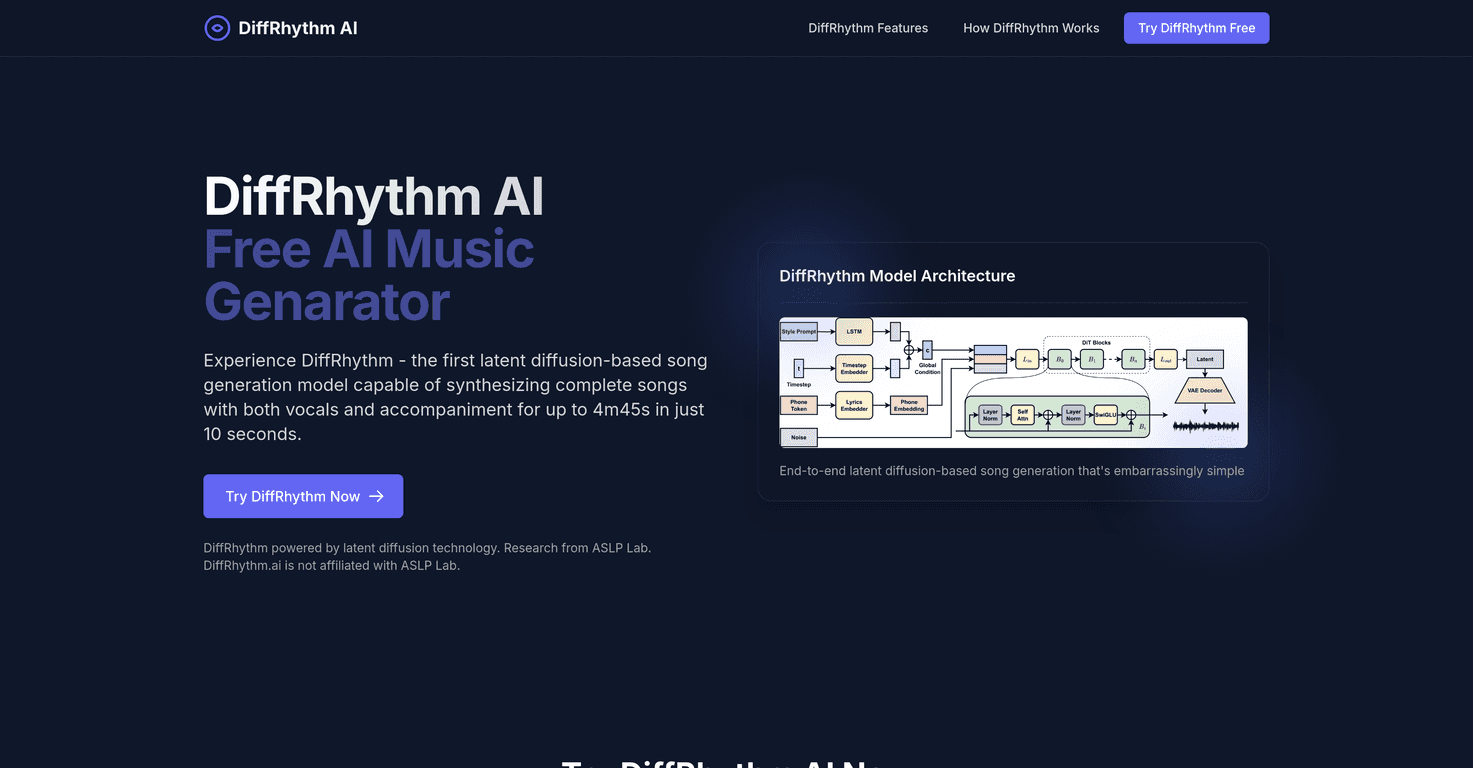
DiffRhythm AI stands at the forefront of music generation tools, making it incredibly easy for anyone to compose music. Whether you’re a seasoned musician or a beginner, this tool takes the guesswork out of music creation. Its use of latent diffusion technology allows users to generate songs quickly, making the whole process seamless and efficient. You can input simple lyrics and style prompts to see your ideas come to life as a full-length, high-quality song.
Key Features
DiffRhythm brings several unique features to the table:
– Blazingly Fast: You can generate complete songs of up to 4 minutes in no time at all, streamlining your creative process.
– Complete Songs: There’s no need to juggle multiple models; both vocals and instrumentation come together in one go.
– Embarrassingly Simple: The model only requires minimal input, making it user-friendly for everyone.
– High Musicality: Expect professional-quality music with clarity across various genres—from pop to jazz.
– Style Control: Customize your musical style using straightforward text prompts, shaping your sound as desired.
– Scalable Architecture: The system can continuously learn from larger datasets, improving over time.
Pros and Cons
Pros:
– Quick generation of music helps in rapid creation.
– Producing complete songs in one step saves time.
– Minimalistic interface means less hassle for users.
– Customizable styles make it versatile for different genres.
– High-fidelity audio output ensures quality.
Cons:
– The results depend on the quality of the user’s input.
– Commercial use may lead to the need for specific licensing plans.
Pricing Plans
While the pricing details are yet to be explicitly outlined, potential users can find the specifics directly on the DiffRhythm platform’s pricing section. It’s best to explore the various plans available to find the one that fits your needs.
Key Features
- Blazingly Fast song generation
- Complete songs with vocals and instrumentation
- User-friendly with minimal input required
- High-quality songs across various genres
- Customizable musical style via text prompts
- Scalable architecture for continuous improvement
Pros and Cons
Pros
- Quick music generation
- Complete song creation in one go
- User-friendly interface
- Ability to customize style for different genres
- Professional-grade audio output
Cons
- Results depend on the user input quality for lyrics and prompts
- Commercial use may require specific licensing plans
Pricing Plans
Specific pricing details are available on the DiffRhythm platform.
Wrap up
In conclusion, DiffRhythm AI is a game-changer for anyone interested in music creation. Its ability to generate full-length songs quickly while offering high quality and style customization makes it an excellent choice for musicians of all levels. If you’re eager to dive into the world of music production, DiffRhythm might just be the tool you need.
Promote DiffRhythm