Table of Contents
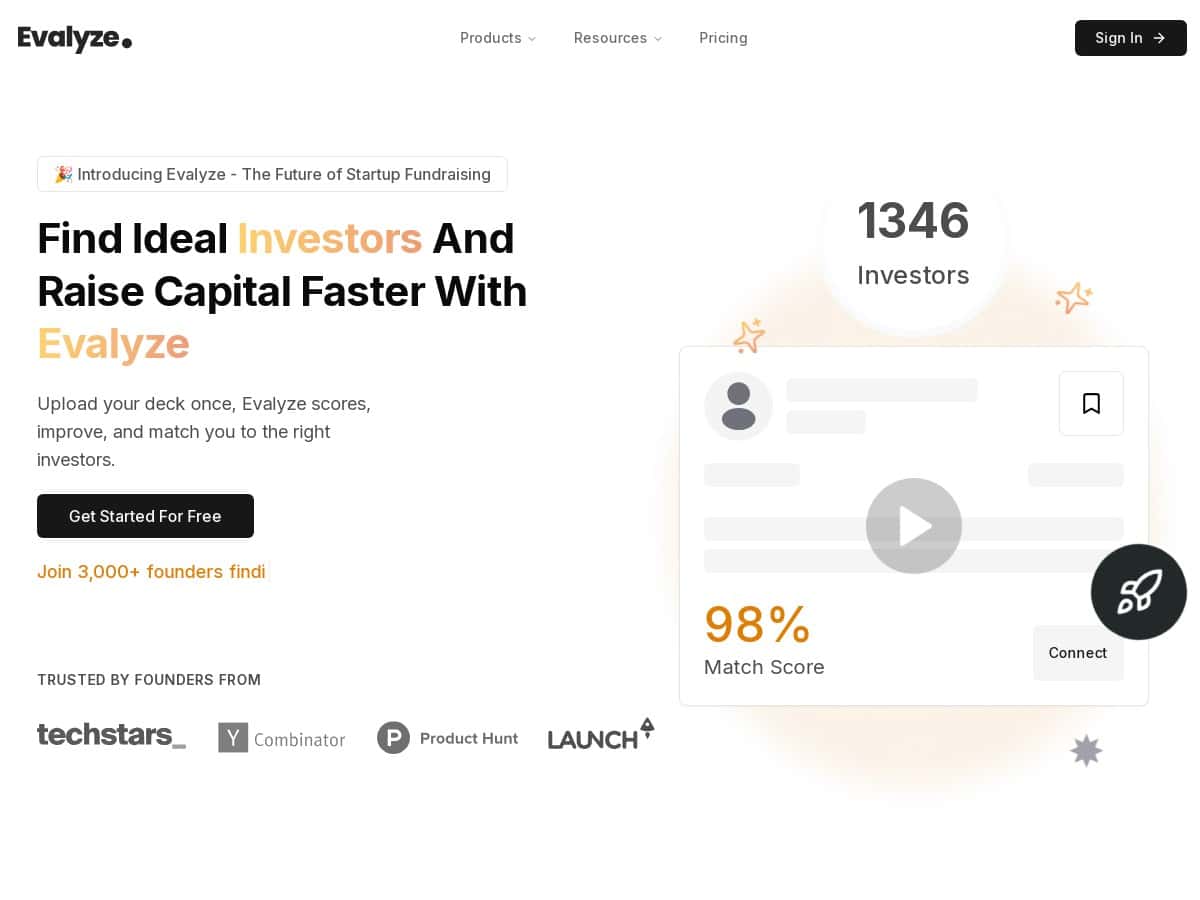
If you’re raising money right now, you already know how brutal the “find the right investors” part can be. I tested Evalyze to see if it’s actually useful—or if it’s just another AI pitch tool that sounds good but doesn’t change much. Spoiler: it’s more practical than I expected, especially for tightening up a deck and getting a more relevant investor list.
In my experience, what stood out wasn’t the “AI magic” talk. It was the workflow: upload a deck, get feedback you can act on, then use that same context to drive investor matching. I’m going to walk through exactly what I did, what outputs I saw (with a couple redactions), what improved, and what didn’t feel ready yet.
Evalyze Review
I tried Evalyze on April 12, 2026 using the free trial flow. I’m sharing this because “AI reviews” are usually vague, and I don’t want that. Here’s what I actually did, step-by-step, and what I noticed.
1) Uploaded a pitch deck
I used a 5-slide deck (PDF) with the usual sections: problem, solution, market, traction, and a basic ask. The upload step didn’t feel complicated—no weird formatting requirements that I had to fight with.
After the analysis ran (it took a couple minutes), Evalyze surfaced feedback tied to the deck sections. The tool didn’t just say “improve clarity.” It pointed to specific slide-level issues.
2) Reviewed the pitch deck feedback (what changed)
One of the most useful parts was the actionable rewrite suggestions. A few examples of what I saw in the feedback panel (I’m paraphrasing slightly to avoid posting private content):
- Clarity: The tool flagged that my “Problem” slide mixed customer pain with product features. It recommended separating “pain” bullets from “how we solve it” bullets. After I re-ordered the bullets, the slide read much cleaner.
- Market fit: It questioned whether my market sizing slide actually supported the “why now” claim. The feedback suggested adding one line that ties urgency to a real trigger (policy change, cost trend, customer behavior shift). I added a short “why now” sentence and tightened the wording.
- Ask: It noted my funding ask was present, but the “use of funds” wasn’t specific enough. It advised listing 2–3 concrete allocations (ex: product, sales, hiring) instead of a vague percentage split. That was an easy fix.
If you’ve ever gotten deck feedback like “make it more compelling,” you know how unhelpful that is. This felt closer to “here’s what’s confusing, here’s what to change.”
3) Checked the Investor Readiness Score™
Evalyze generated an Investor Readiness Score™ and paired it with a set of improvement tips. During my trial, the score wasn’t the only thing that mattered—the tips were. Two actionable items that came up repeatedly:
- Lead with outcomes, not features (especially in the Solution slide). The tool basically nudged me to show what improves for the customer in plain language.
- Make traction “investor legible” by adding a sentence that explains why the metric proves momentum (not just what the metric is).
After I made those tweaks, I ran the deck analysis again. The score moved upward (I saw a noticeable improvement in the readiness indicator), and the same feedback categories became less “urgent.” That was the first time an AI deck tool felt like it was measuring something meaningful instead of just generating generic advice.
4) Used Smart Investor Matching (and checked relevance)
Next, I fed the matching step with the basics from my startup profile and the deck context. Evalyze’s Smart Investor Matching uses a claim of “50+ data points.” I can’t verify every internal signal, but I can tell you what I observed: the results changed when I adjusted the stage and focus area.
During my trial, the matching list included investors that fit my general thesis. I can’t share exact names here, but I can share what the matches looked like in categories:
- Pre-seed/seed funds focused on B2B SaaS
- Angel groups that invest in early go-to-market
- Industry-specific investors with experience in my target vertical
- Some adjacent-stage options (a few were slightly later than I wanted)
What I liked: the list didn’t feel random. What I didn’t like: a couple matches were “close” but not perfect, which is normal for any matching engine. If you’re using this, you still need to sanity-check fit before you start outreach.
5) Investor Contact Finder (verified info)
Evalyze also showed an Investor Contact Finder section with contact details intended for outreach. In my experience, this is where you’ll either save time or waste it—depending on accuracy. I reviewed the contacts and found them usable enough to draft outreach around (again, I’m not posting any personal data, but the contacts were presented in a straightforward way).
What wasn’t fully available (Automated Outreach)
One thing I appreciated: it didn’t pretend everything was done. During my trial, automated outreach was still marked as coming soon. I could see how outreach would work conceptually, but I couldn’t actually launch email/LinkedIn campaigns from the platform in my session. So if your expectation is “upload deck → send campaigns automatically,” set that aside for now.
Overall? It genuinely felt like a fundraising assistant that helps you get unstuck. Not a replacement for judgment, but a shortcut to better deck clarity and more relevant investor targeting.
Key Features
- AI-Powered Pitch Deck Analysis that evaluates your presentation for clarity, design/readability, and market fit
- Investor Readiness Score™ with a breakdown of what’s holding the deck back and what to fix first
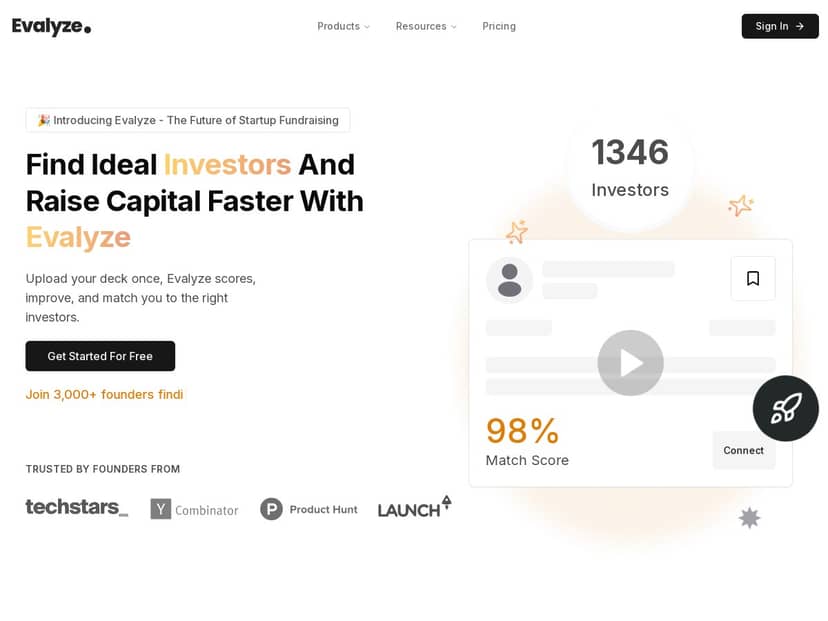
- Smart Investor Matching that recommends investors based on your profile and deck context (I saw results shift when I adjusted stage/focus)
- Pitch Deck Optimization with targeted feedback you can apply slide-by-slide
- Automated Outreach (coming soon) planned for personalized email and LinkedIn campaigns
- Dynamic Profile Updates that adjust investor matching as your startup progresses (useful if you keep iterating your story)
- Investor Contact Finder designed to surface verified contact info for easier outreach
- Fundraising Analytics focused on engagement/conversion-style signals (more on what I could actually see below)
Pros and Cons
Pros
- Deck feedback is actually usable. I didn’t just get vague advice—there were slide-level issues and specific changes I could make right away.
- Investor matching felt grounded. Results weren’t just “any investor who likes startups.” When I adjusted my stage/focus, the list shifted in a way that made sense.
- Time savings, especially for iteration. Running the deck analysis again after edits showed me what improved, which helped me prioritize.
- Contact discovery reduces busywork. The Investor Contact Finder made it easier to move from “who should I talk to?” to “who can I email?”
- Clear limitation about outreach. It didn’t overpromise automated outreach—at least not during my trial.
Cons
- Automated outreach isn’t live yet. If you need campaigns launched from the platform today, you’ll have to handle outreach manually for now.
- AI feedback depends on your inputs. If your deck is sparse or vague, the suggestions will be too. Garbage in, you know the rest.
- Pricing details weren’t transparent in my session. I couldn’t confirm exact tiers or costs during the trial flow I used, so you’ll want to verify pricing before committing.
- Analytics clarity may vary. During my trial, I didn’t get a “full dashboard with historical reporting” experience the way some fundraising platforms do. If analytics reporting is a must-have for you, check what’s available in your account.
Pricing Plans
Evalyze offers a free trial, which is honestly the best way to evaluate a tool like this. In my testing, I didn’t see fully detailed public pricing tiers in the parts of the platform I accessed, so I don’t want to guess.
Here’s what I recommend you verify during the trial (so you don’t get surprised later):
- Deck analysis output: Do you get slide-level feedback and an Investor Readiness Score™ you can act on?
- Investor matching relevance: Change stage/focus and see if the investor list meaningfully improves.
- Export options: Can you export results or copy investor/contact lists easily?
- Outreach availability: Confirm whether automated outreach is actually enabled in your account or still marked “coming soon.”
- Contact accuracy: Spot-check a few contacts before you start writing personalized emails.
Wrap up
Evalyze is one of the more practical AI fundraising tools I’ve tried. If your biggest bottleneck is turning a deck into something investors can understand fast (and then finding investors who actually fit), it can help you move quicker. Just don’t expect automated outreach to be fully operational in the trial—at least that’s what I saw.
If you want an easy way to tighten your pitch, generate investor-ready improvements, and get a more targeted list of potential investors, it’s worth testing. And if you do try it, spend your first hour on the deck analysis + matching sanity check. That’s where the real value shows up.