Table of Contents
In today’s fast-paced business world, having the right tools for company research is crucial. Extruct AI promises to enhance your research experience with its autonomous AI agents. With the ability to automate various research tasks, this platform aims to make market research and sales efforts more efficient. Let’s dive into this Extruct AI review to see how it can benefit your team!
Extruct AI Review
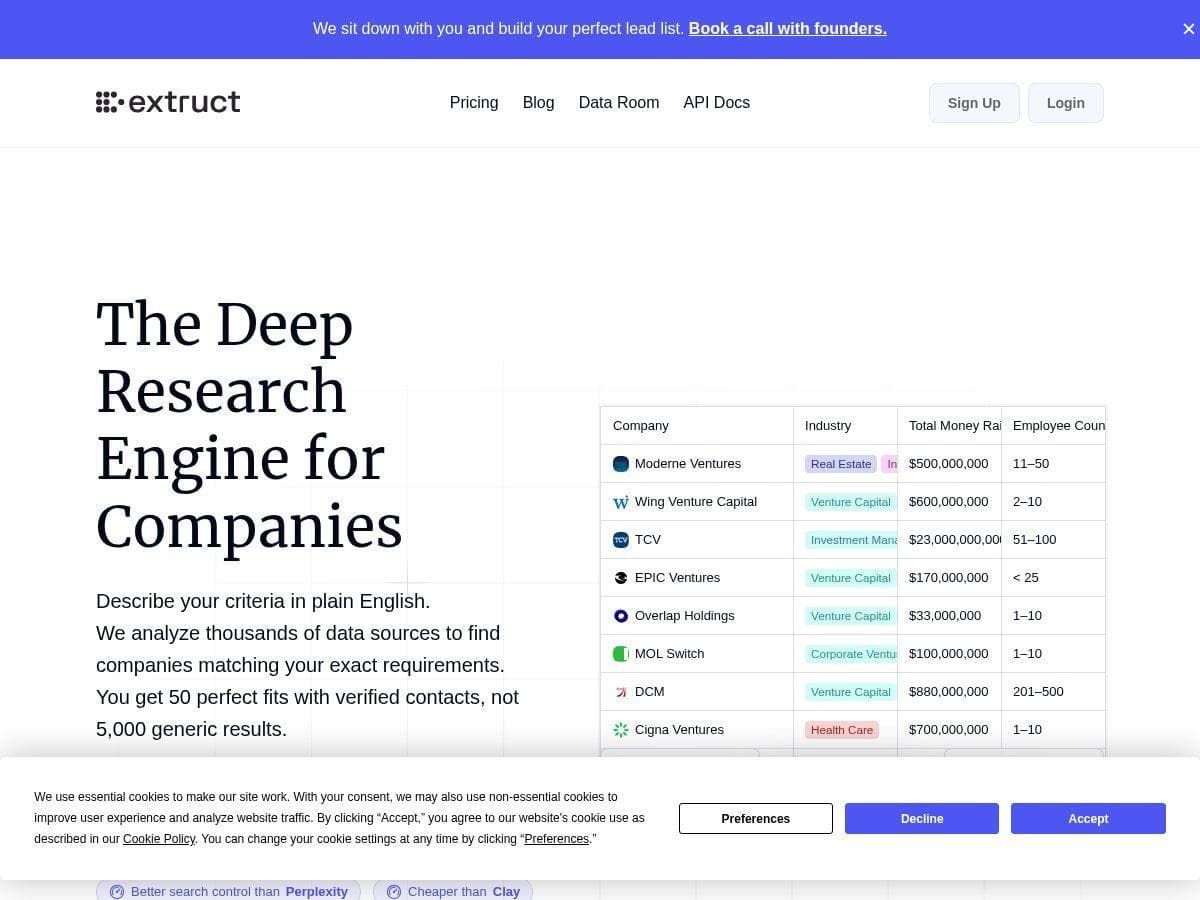
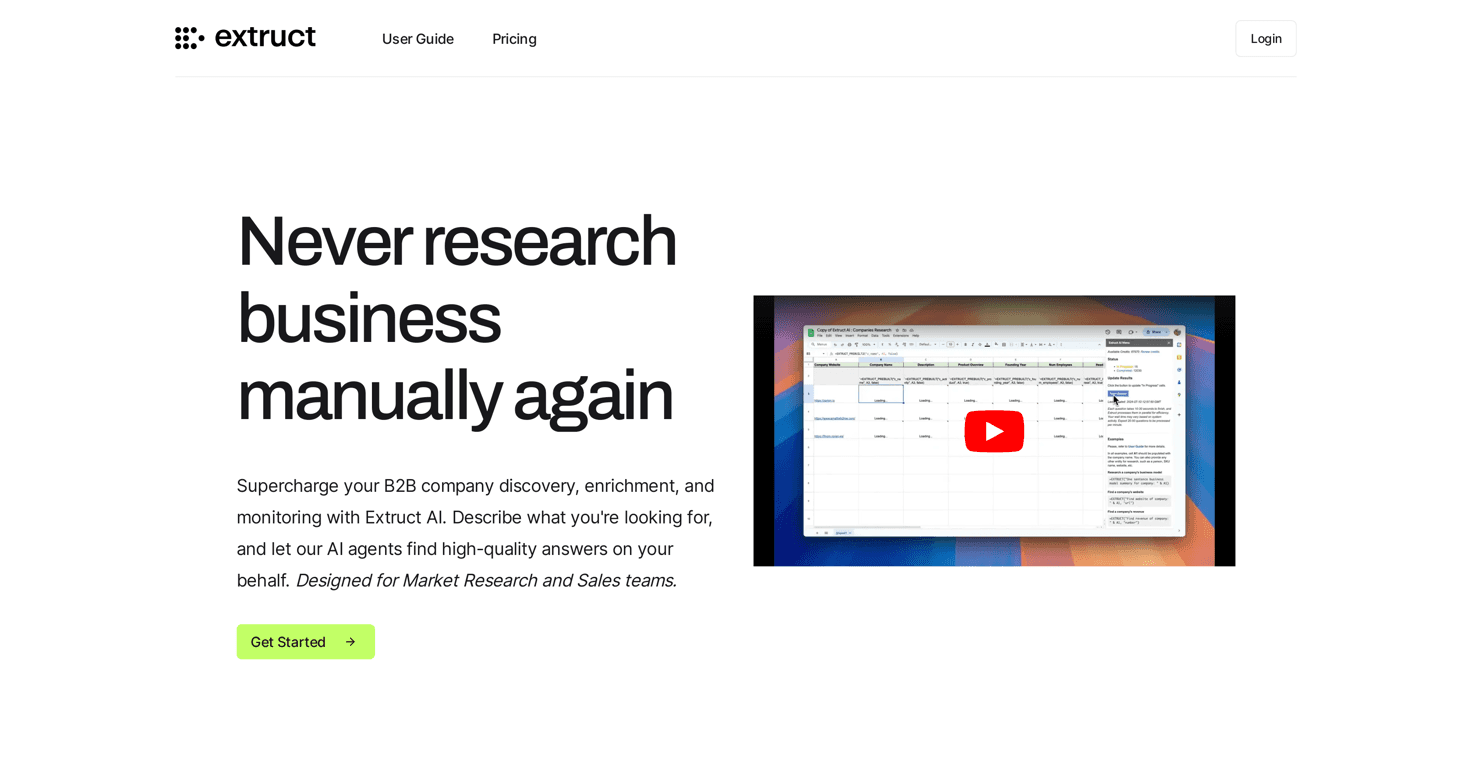
Extruct AI is a game-changer in the realm of company intelligence. Its autonomous AI agents work tirelessly to collect and analyze data, saving time for market research and sales teams. This platform not only helps in generating leads that fit your ideal customer profile but also provides in-depth market insights and competition analysis. The unique Company Discovery Engine ensures you can pinpoint relevant prospects quickly. With real-time monitoring and customizable data enrichment, you can stay updated on changes that matter to your business.
Key Features
- Lead Generation: Finds leads that match Ideal Customer Profile to streamline the sales pipeline.
- Market Research: Automates tailored market insights and detailed company analysis.
- Competition Analysis: Tracks and evaluates competitors based on key dimensions relevant to the business.
- Company Discovery Engine: A search engine crafted to find relevant prospects and understand market landscapes.
- Flexible Data Enrichment: Allows users to customize research workflows for specific company information needs.
- Precise Monitoring: Notifies users of company changes and market shifts.
- Finetuned Models: Offers high-quality data powered by AI optimized for market research and sales.
- Latest Available Guarantee: Ensures up-to-date data without relying on vendor data refresh cycles.
- Aggregated Data Sources: Provides access to diverse data sources within one platform.
Pros and Cons
Pros
- Automated research process saves time for users.
- Provides real-time and high-quality data.
- Highly customizable workflows adapt to specific user needs.
- Tailored notifications keep users informed about pertinent changes in the market.
Cons
- The effectiveness of the platform may depend on user input quality.
- There is no detailed pricing plan available in the extracted content.
Pricing Plans
The extracted content does not specify exact pricing details but refers users to the pricing page for further information.
Wrap up
In conclusion, Extruct AI stands out as a powerful tool for market research and sales teams. With its array of features designed to make research efficient, it offers significant advantages. While users should be aware of potential limitations regarding input quality and pricing transparency, the benefits of real-time insights and customizable workflows make it worth exploring. If you’re looking to enhance your research processes, Extruct AI might just be the solution you’ve been searching for!