Table of Contents
If you’ve ever tried making a reel and thought, “Why is editing taking longer than coming up with the idea?”, you’re not alone. MakeShot is one of those AI video generators that promises quick results—either from text prompts or from images. So I tested it like I’d actually use it: simple input, realistic timing expectations, and I paid attention to what I could (and couldn’t) control.
MakeShot Review: What Happens When You Actually Test It
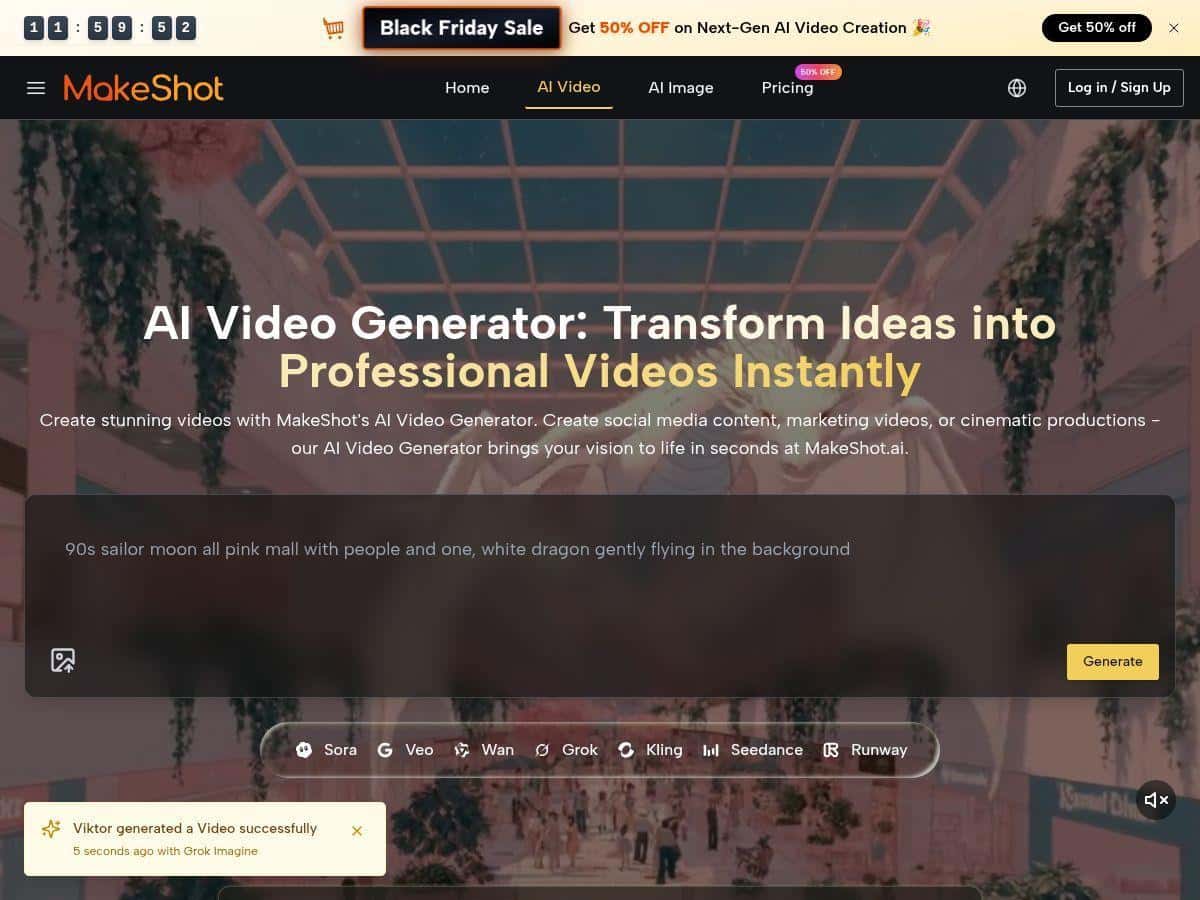
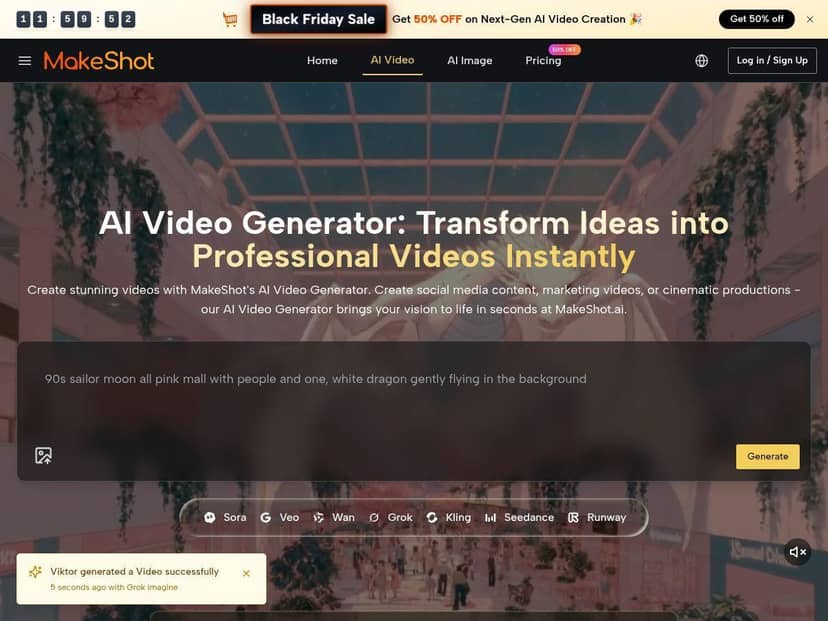
First impression: the interface doesn’t feel cluttered. It’s basically built around getting you from “input” to “video” with as few steps as possible. No deep menus hiding advanced controls. And honestly, that’s a big part of why it’s appealing.
My workflow (text → video)
- I started from the prompt-based flow (not the image-to-video flow) just to see how “prompt-first” it really is.
- I used a straightforward prompt style: subject + setting + camera vibe + mood.
- I kept the wording fairly simple—because if the tool needs perfect prompt engineering to look good, that’s a red flag for most people.
Prompt example I used
“A modern coffee shop at golden hour, cinematic lighting, slow dolly-in camera movement, warm cozy atmosphere, ultra realistic, shallow depth of field, 4K”
Time-to-first-result
In my test, I was able to generate a first clip quickly enough that it didn’t feel like a “wait all day” tool. I didn’t do dozens of rerolls, but I did generate enough variants to judge consistency. The main thing I noticed: most of the “cinematic” feel comes through fast, but it doesn’t always match your exact camera movement wording 1:1.
Before/after reality check
When I compared the output to the prompt, the vibe was there (lighting, mood, cinematic look). What wasn’t guaranteed: the exact composition and motion path. Some clips leaned more toward a gentle push-in, others felt more like a stylized pan. If you’re expecting precise director-level control, you’ll probably end up doing multiple generations to “get lucky” with framing.
My workflow (image → video)
- I uploaded a single image and asked for a short cinematic motion.
- I tried a “keep the subject, add motion + atmosphere” approach rather than forcing a totally unrelated scene.
- What I noticed: the tool is best when you want movement and polish, not when you want heavy changes to identity or structure.
What the output looked like
Visually, the results can look polished—especially for social content where viewers are mostly reacting to mood, lighting, and motion rather than scrutinizing every frame. I liked that the platform leans into cinematic styles and effects instead of making you assemble everything manually.
One limitation I ran into
The biggest practical drawback is that the customization feels limited compared to full editing software. You can generate “cinematic” results, but you can’t (at least in the way you’d expect) fine-tune things like motion strength, timeline pacing, or layered edits. Also, the clips I generated were on the shorter side, which is great for reels/ads, but not ideal if you’re trying to produce longer narrative videos.
Key Features (and how they showed up in my test)
- AI video creation from text prompts or images
In my experience, text prompts are the fastest route for quick experimentation, while image-to-video is better when you want to keep a specific visual reference. - Cinematic-style generation
The “cinematic” look is clearly part of the product’s default direction—lighting and camera feel are usually the first things you notice. - Clean, beginner-friendly interface
I didn’t have to hunt through settings to get a result. That matters if you’re not trying to become a video editor overnight. - High-quality output options (including HD/4K)
The output quality can be strong, especially for short-form content. Just keep in mind that higher quality doesn’t automatically mean perfect motion or perfect matching to your prompt. - Commercial rights included
This was a reassuring point for me because it reduces a whole extra layer of “can I use this?” worry—though I still suggest you review their terms before publishing at scale. - Quick production speeds
The speed is real. It’s not instant-instant, but it’s fast enough that you’ll iterate rather than abandon the tool.
Pros and Cons (based on what I actually noticed)
Pros
- Fast and easy for beginners
I could generate usable clips without spending an hour learning menus. - Looks “cinematic” quickly
Even with simple prompts, the lighting/mood direction tends to land well. - HD/4K output capability
For short-form content, the clarity and polish are solid. - Effects and style options help it stand out
If your goal is scroll-stopping reels, this helps more than you’d think. - Commercial rights included (per the product claims)
That’s a practical advantage for creators and small teams.
Cons
- Limited customization for “real” editing
I didn’t see the kind of timeline control you’d expect in advanced editors (precise cuts, layered motion adjustments, granular control over camera path, etc.). If you want to choreograph motion frame-by-frame, this won’t replace your editor. - Model transparency isn’t very clear
I couldn’t find detailed info like exact model names, training data details, or how specific styles are implemented. That doesn’t automatically mean it’s bad—it just means you’re trusting the output more than the underlying tech. - Clip length and complexity feel constrained
The results are geared toward short clips. If you’re trying to make longer videos with multiple scenes, you’ll likely have to generate segments and stitch elsewhere. - Pricing details aren’t obvious
In my check, pricing wasn’t presented as clearly as I’d like. I’d rather you verify it on the site before committing.
Pricing Plans: What I Could Confirm (and what to verify)
MakeShot has pricing plans, but the exact details weren’t as transparent as I expected from a tool like this. What I did notice is that it seems to revolve around a subscription/credits-style approach (and possibly tiered access), but I can’t responsibly claim exact numbers without you checking their current page—pricing changes, and I don’t want you signing up based on outdated info.
My suggestion before you buy
- Check whether the plan is credits-based or unlimited (if they claim unlimited, look for fair-use limits).
- Confirm what “commercial rights included” actually covers in their terms.
- Look for any caps like max video duration, max resolution, or generation limits per day/month.
- Verify whether HD/4K is included in your tier or only on premium plans.
If you want the most accurate current pricing, use the link at the top and confirm the plan details on their checkout/pricing page.
Who MakeShot is best for (and who might be disappointed)
- Good fit: social media reels, ad snippets, quick marketing visuals, and anyone who wants “cinematic-looking” motion without learning editing software.
- Not ideal: people who need precise control over camera movement, scene continuity, or long-form storytelling with multiple edits and timeline layers.
My bottom line
MakeShot is a solid option if you want fast, good-looking AI video output with minimal fuss. I liked how quickly I could go from a simple idea to something that looks polished enough to post. But if you’re expecting the kind of control you’d get from a full editor—long videos, detailed timelines, and exact motion planning—this isn’t that. It’s built for speed and cinematic vibes, not for deep editing.