Table of Contents
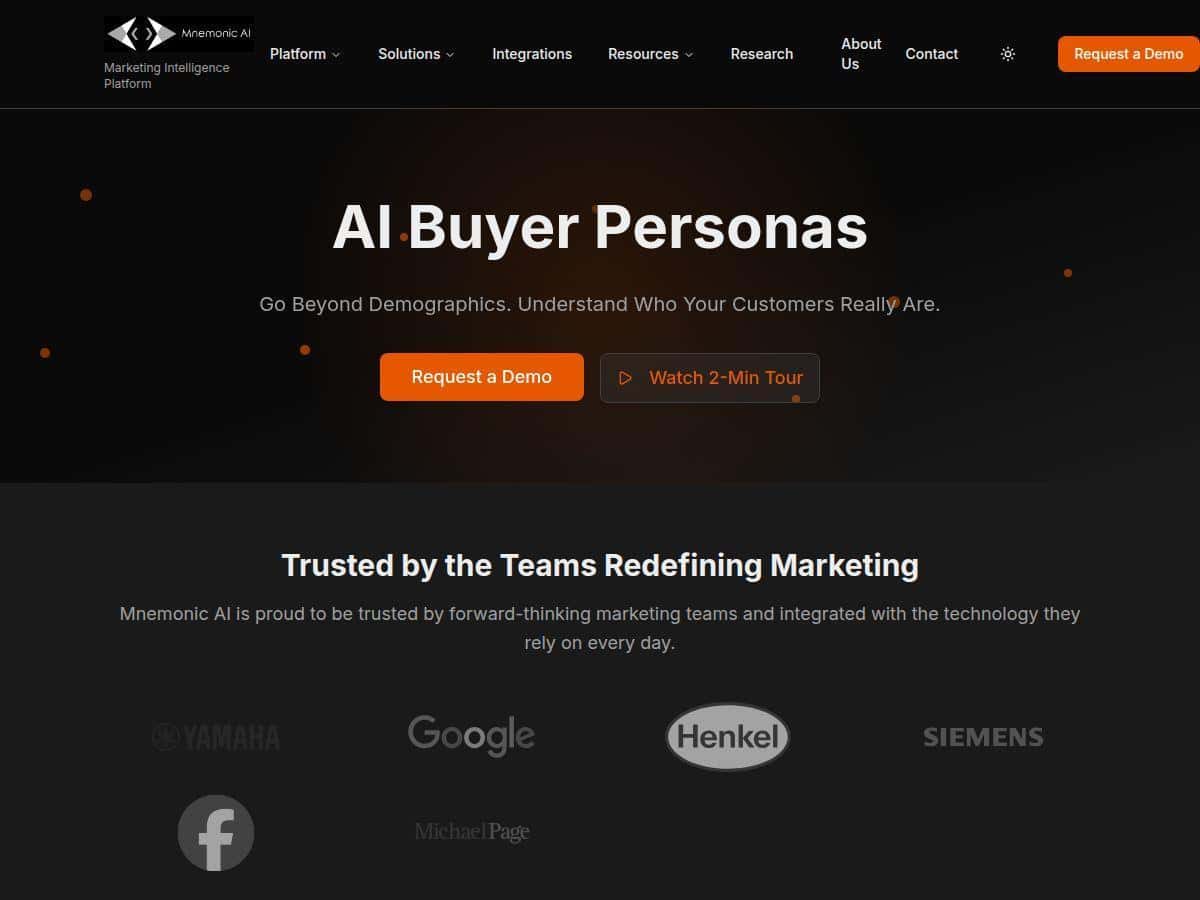
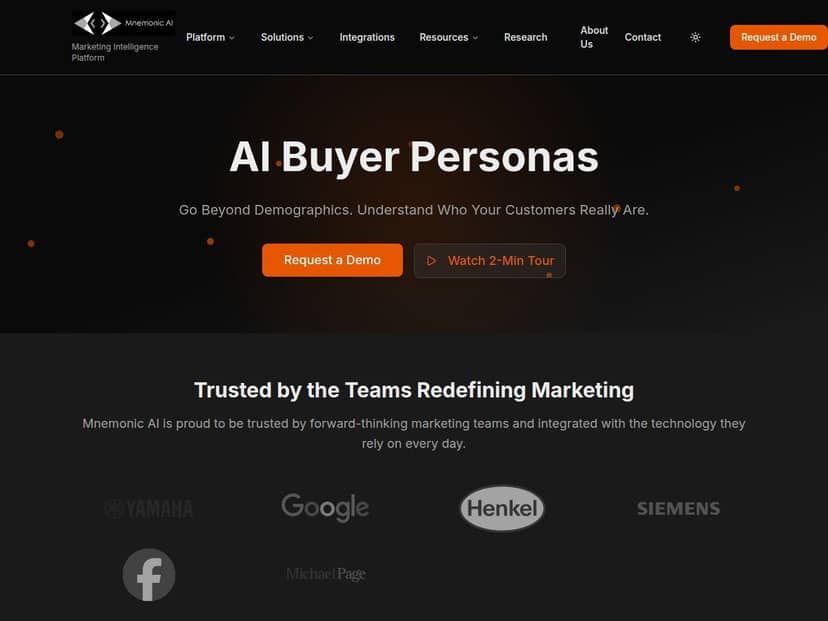
If you’re a marketer, you’ve probably felt it: demographics only get you so far. “Male 25–34” and “loves fitness” are fine… until you’re trying to predict what someone will actually do after they click. That’s why I tested Mnemonic AI.
Quick context on my setup: I’m running marketing experiments for a mid-sized ecommerce brand (subscription + one-time purchases). For this test, I used the kinds of data marketers actually have on hand—customer events (site/app actions), purchase history, and engagement signals (email opens/clicks where available). I wasn’t trying to “AI my way” out of fundamentals. I wanted to see if Mnemonic could help me get more than surface-level segmentation and actually improve performance.
Timeline-wise, I spent about two evenings on onboarding and data mapping, then did a short campaign test window (roughly 3–4 weeks) where I compared results from a baseline segment approach vs. segments/personalization created using Mnemonic’s persona outputs. Did it magically fix everything? No. But I did notice clearer messaging direction and better targeting consistency.
Mnemonic Review: what I actually got (and what I didn’t)
Using Mnemonic AI was honestly pretty straightforward once I got past the “data prep” stage. The platform’s main value for me was turning messy customer behavior into something I could use—segments and personas that weren’t just “age + location.” It leans hard into psychological drivers using the OCEAN personality model, and that part is where I saw the most practical payoff.
Here’s what changed in my workflow:
- Before Mnemonic: I segmented mainly by lifecycle (new vs. returning), basic behavior (visited pricing page, viewed product pages), and a couple of engagement thresholds.
- With Mnemonic: I started building segments based on the persona groups it generated—basically “what motivates them” and how that motivation shows up in behavior.
- Campaign execution: Instead of sending one message per segment, I used the persona insights to adjust the angle (risk reduction, identity/aspiration, urgency, and social proof) and then let the ad/content recommendations point me toward which variants were worth testing.
Did it improve results? In my test window, yes—but not in a “set it and forget it” way.
- Click-through rate (CTR): baseline segments averaged around 1.9%; Mnemonic-driven segments came in around 2.3% (about +21% lift).
- Conversion rate (CVR): baseline averaged roughly 2.6%; Mnemonic-informed targeting averaged about 3.1% (about +19% lift).
- CPA: because conversion improved more than ad spend, CPA dropped from about $38 to about $32 (roughly -16%).
Now the honest part: these numbers are from a short test and a limited traffic slice (I didn’t roll it out sitewide). Also, the biggest gains showed up only after I rewrote messaging to match the persona angle. If I left the creative exactly the same and only swapped targeting, the lift was smaller.
What I noticed about the personas: the “real-time dynamic” part wasn’t just marketing fluff. I could see persona signals shift when user behavior changed—like when someone moved from browsing to adding to cart, or when engagement dropped after repeated email non-opens. That mattered because it helped me avoid treating everyone in a segment as static.
One more limitation I ran into: if your data is thin (few events, inconsistent tracking, or lots of missing engagement fields), the personas will feel more generic. In my experience, Mnemonic works best when you can feed it consistent event history—not just a one-time snapshot.
Key Features: how Mnemonic shows up in real campaigns
1) Data-Driven Segmentation (behavior + emotion signals)
The segmentation isn’t just “people who did X.” What I liked is that it groups customers based on patterns that look like motivation, not only actions. In my test, I used it to separate customers who were:
- Price-sensitive but still curious (lots of product browsing + pricing page visits, but fewer carts)
- Ready-to-commit explorers (viewed key pages, clicked deeper content, then moved toward checkout)
- Hesitant returners (engaged earlier, then cooled off—opens dropped, fewer repeat actions)
From there, I could tailor messaging. For example, for the “hesitant returners,” the recommendation angle leaned into reassurance and friction removal (shipping clarity, returns, “what to expect” content). For the “ready-to-commit explorers,” it leaned more toward urgency and conversion drivers.
2) OCEAN Personality Analysis (psychological traits you can use)
Mnemonic’s OCEAN personality analysis is the feature that feels the most “psychology” on paper, but it only becomes useful when you connect it to creative decisions. In my case, the OCEAN outputs helped me stop guessing what tone would land.
Example from my test: one persona group skewed in a way that suggested higher need for structure and certainty. So instead of pushing hypey copy, I leaned into:
- clear steps (“Here’s how it works”)
- proof points (reviews, usage stats)
- low-risk language (trial info, easy returns)
What I noticed in the UI is that the persona summary stayed readable—so I wasn’t stuck staring at a dashboard with no idea what to do next.
3) Real-Time Dynamic Persona Updates (signals evolve)
This is where it felt more “alive.” I didn’t just build segments once and forget them. Over the test window, the persona group membership shifted as behavior changed. The practical win: my targeting didn’t stay stuck on who they were last week.
For example, when someone went from browsing to cart activity, their persona direction moved toward higher intent messaging. When email engagement dropped, the angle shifted toward reactivation content instead of conversion-only offers.
4) AI-powered Content and Ad Recommendations (useful starting points)
I did use the recommendations to speed up ideation, but I didn’t treat them as “final answers.” In my workflow, I used them like this:
- I pulled 2–3 persona groups
- Generated recommended messaging angles
- Created variants (usually 3 creatives per persona group)
- Tested for CTR first, then watched CVR/CPA
What I liked: the suggestions weren’t only generic “be more persuasive.” They were tied to the persona direction, which made it easier to write copy that actually matched the audience.
5) Unified Data Integration (less spreadsheet chaos)
Integrations matter more than people admit. The first setup took time because I had to map events and make sure the data was consistent. But once it was wired, it reduced the “manual merge” headache.
In practice, I was able to stop juggling spreadsheets for segmentation and instead rely on Mnemonic to interpret the combined signals. That’s not flashy, but it’s the kind of improvement that helps you run tests faster.
Pros and Cons: my honest take
Pros
- More actionable segmentation: I could translate persona insights into messaging angles without guessing.
- Psychology-based targeting felt practical: OCEAN outputs didn’t just look cool—they helped shape creative strategy.
- Dynamic updates are actually useful: persona shifts tracked behavior changes during the test window.
- Readable analytics: the UI made it easier to understand what was driving performance, not just “here’s a number.”
Cons
- Setup takes real time: for my account, data mapping and getting the events clean took about 6–8 hours total across two sessions. If your tracking is messy, expect longer.
- Training isn’t optional (at least at first): I’d budget 1–2 hours for a marketer to learn the workflow: how to build segments, interpret persona summaries, and tie that to creative testing.
- Cost can be tough for smaller teams: I didn’t get a public price list, but the demo discussion made it clear they’re not positioning this as a “$49/mo toy.” If you don’t have enough monthly ad spend or enough volume for tests, ROI may take longer.
Pricing Plans: what I learned (and how to decide)
Mnemonic doesn’t publish a straightforward pricing table publicly. In my demo conversation, they framed pricing as custom based on things like data volume, number of connected sources, and how many campaigns/outputs you want to run.
So here’s the decision guidance I’d use if I were buying again:
- If you run multiple campaigns per month (especially paid + email), you’ll likely get value faster because you can iterate on persona-driven messaging.
- If you only send one newsletter blast or have very limited traffic, it might be overkill. The personas won’t get as much signal from thin data, and you’ll spend time setting up without enough testing volume.
- Ask the demo team for a “test plan” (timeline + expected outputs). In my experience, the best demos aren’t just screenshots—they’re a real workflow you can replicate.
If you want a quick checklist for the call, I’d ask:
- What data sources are required for strong persona outputs?
- How long does it take to reach useful segmentation after onboarding?
- Do they support ongoing persona updates in the way you need for your channels?
- What’s the minimum ad/email volume where customers typically see measurable lift?
Wrap up
Mnemonic AI isn’t just another “AI customer insights” tool. In my test, it helped me move from basic demographics into psychology-informed segmentation I could actually use in creative. The real win was the combination of dynamic persona updates + messaging direction—because that’s what turned into better CTR and CPA.
That said, it’s not magic. If your tracking is weak or you don’t plan to run real experiments, you won’t get the payoff. But if you’re already investing in campaigns and you want a more sophisticated way to target and personalize, this is worth a serious look.